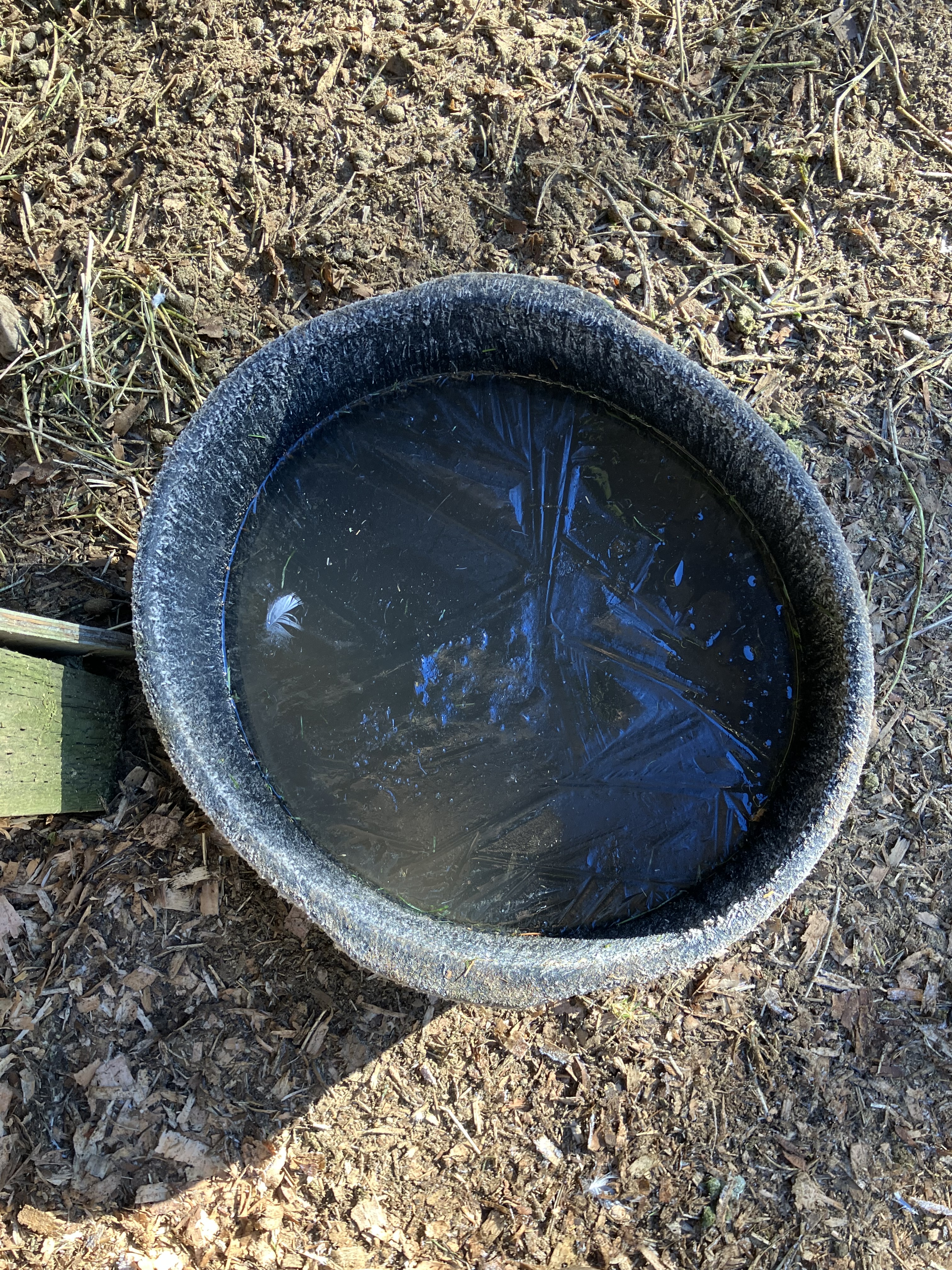
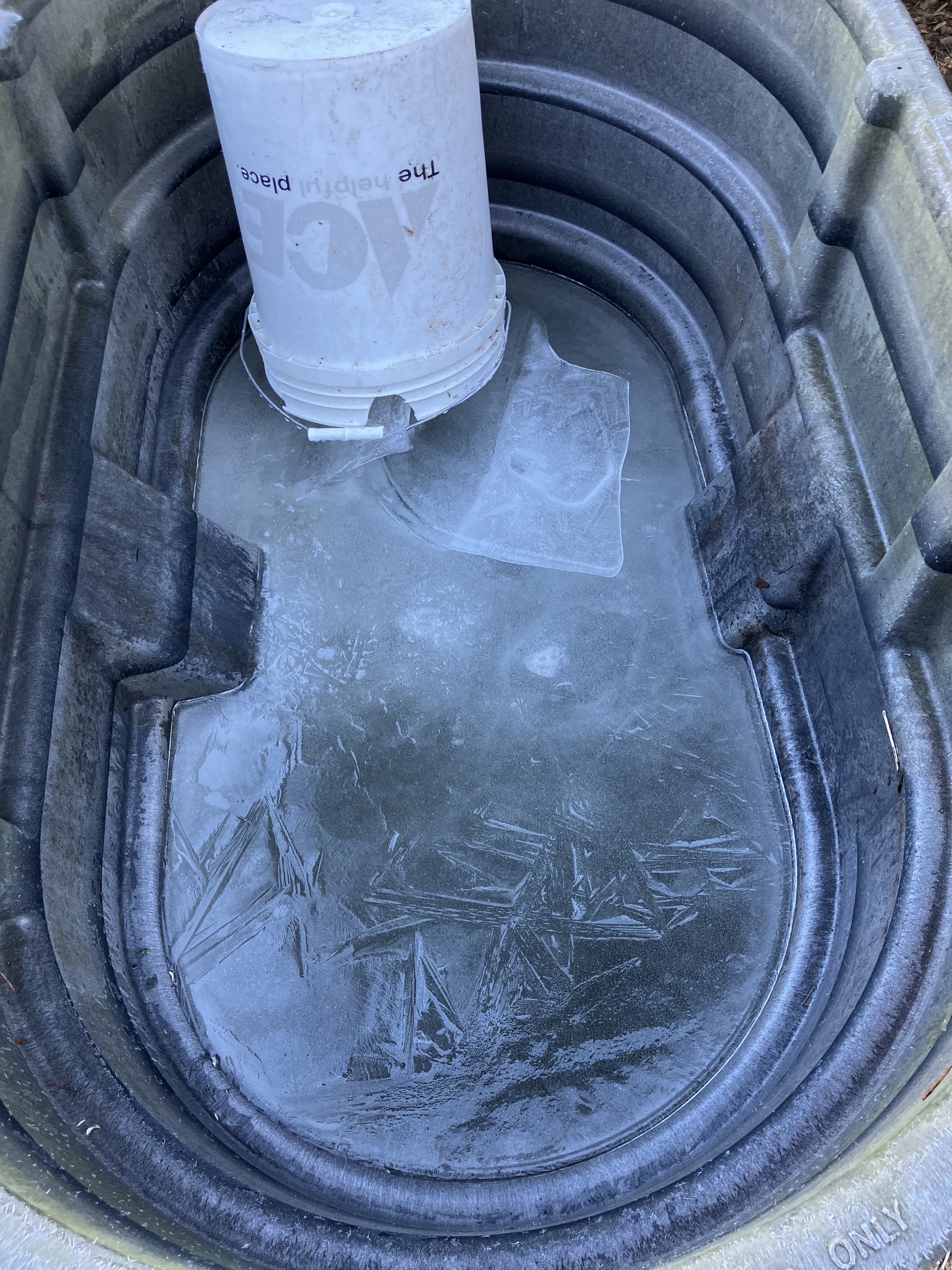
Hard step into what only a week ago sunk my feet into slick mud. The benefit is access, yet frozen water does not accommodate swallowing when we’re taking a drink. Most people would opt for plug in heaters, but not at this barn, we’re off grid, and until the investment of solar panels, the place is a little more work, but worth the observations and good animal husbandry. I like be attentive to the watering needs of my animals, it says a lot about their health and well being. The well water is well above freezing, and when I deliver it to them, it stays unfrozen through the day. In the evening, a second well water helping keeps much of the ice out. Edges still form around the edges of the buckets over time, so I rotate them out every few days for a passive solar deicing. The system folds in well with my trough cleaning duties anyway, and I don’t find I’m spending that much more time- the well is on the way to the barn, and the extra carrying is part of my complementary gym system, so I’m getting a well earned work out with custom weight lifting. What a life!
I’ve learned not to fight the ice, but to use patience and timing to aid in preventing build up. There are some systems that have to be abandoned in the short term. Temperatures have remained below 30 at night for almost two weeks. During the day, valuable sunlight raises the ambient air to well above freezing, and direct rays soften everything enough to knock out and refresh. The large open trough, which I usually scoop water from for the flocks and dog, remains full through winter rains. I leave the big trough to melt when temps warm up in a few more days- or after the snow storm this weekend? The start of February 2025 might see us get a dusting, or blanket of that white stuff associated with the season at hand. It’s a wild new frontier in weather folks, I’m excited.
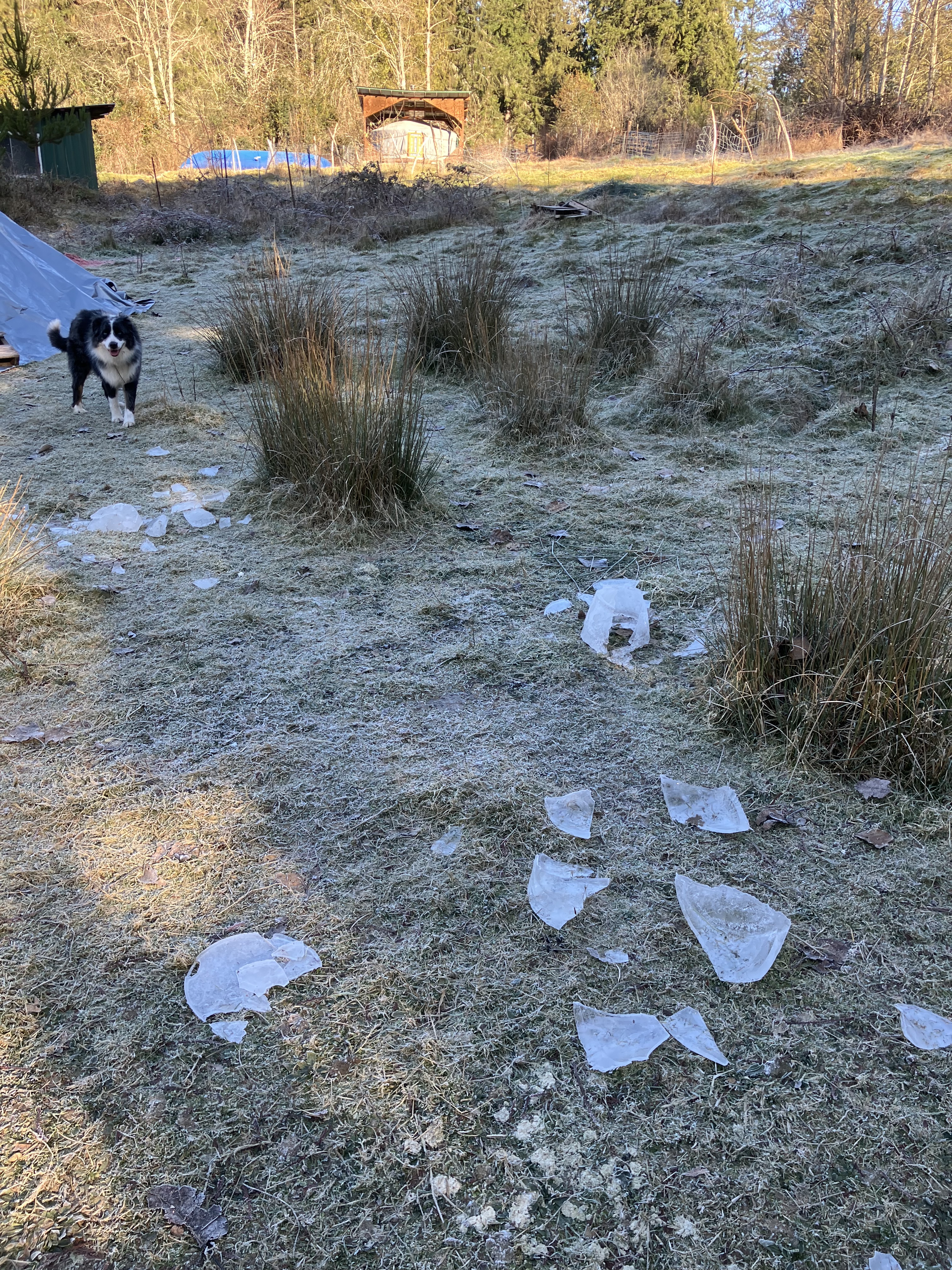

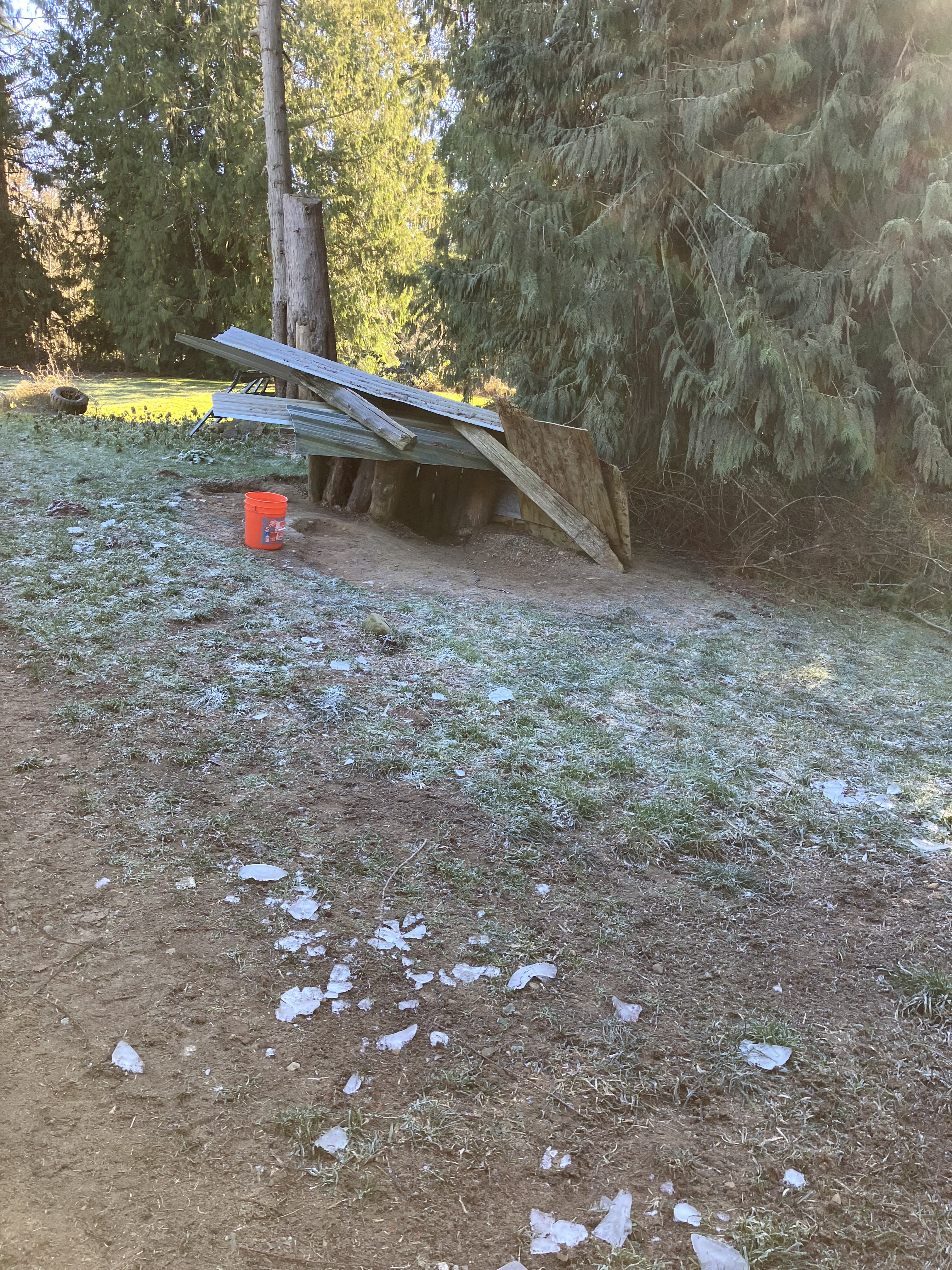
The geese are protesting this hard knock. The Cotton Patch originate in southern regions, where the material crop grows. I explained that even Louisiana is experiencing sustained freezing after a polar vortex bullied down from Canada. That’s what we get for calling it the 51st state- poor Porto Rico? So ice- yeah, that’s how my mind works. Shattered fragments scattered around the farmyard. (this metaphor is not lost on me) But here in Western Washington, the temperate returns, and all the clutter will slow melt back into the soil, hydrating and setting up for the spring sprouting soon to come. The Osoberry is my favorite timer for Spring’s return- it’s already got plump buds, you’ll see white cascading raceme flowers by March. Stinging nettle is popping up in the sunny spots. Microclimates are key here in Cascadia. If you know where to look, there’s always something in the pantry. With the ground as hard as rock, most of the food my livestock enjoys comes from a bag or bale; inputs still coming in on the almighty dollar. Thanks to all who buy food from this farm- it keeps overwintering possible.
I’ve talked about taking the animal systems down to a sustainable number for the farm to be completely self sufficient, but it would then be a homestead, not a farmstead. It might come down to that in future- that’s sort of the retirement plan. Today, ice is the trending encounter here at EEC, and it’s nice to see a solid freeze come, because it’s killing off some of the bugs and fungus and other living things that need a cull. These are such crucial cycles in nature, signaling my own body to get more sleep, slow down when it gets dark, rest. So I do. It’s a pleasant time to enjoy the hearth and home. Gratitude for this fire that warms my house and tends my spirit through the dark times. It makes going out into the cold to break ice and carry water good to endure.
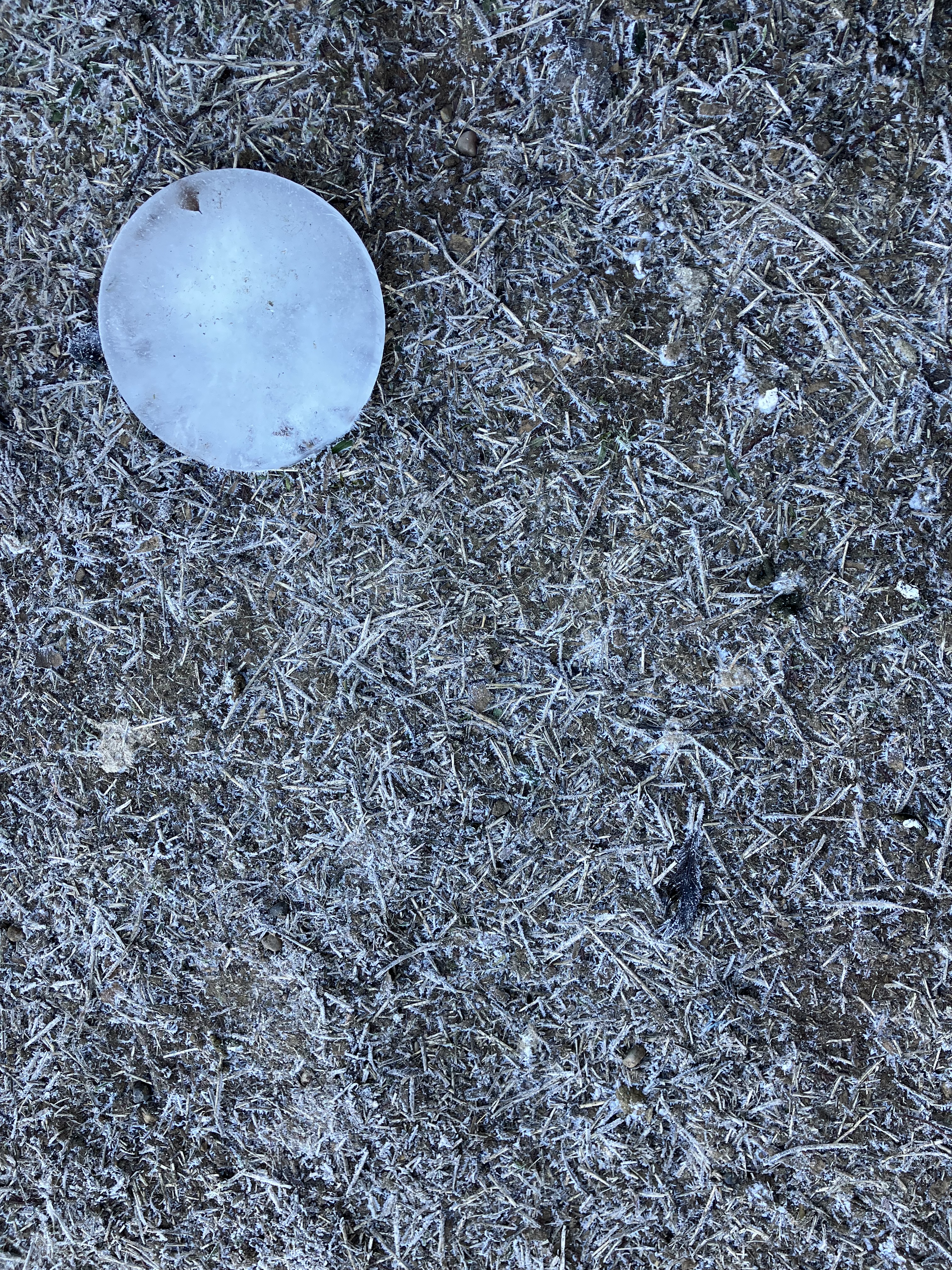
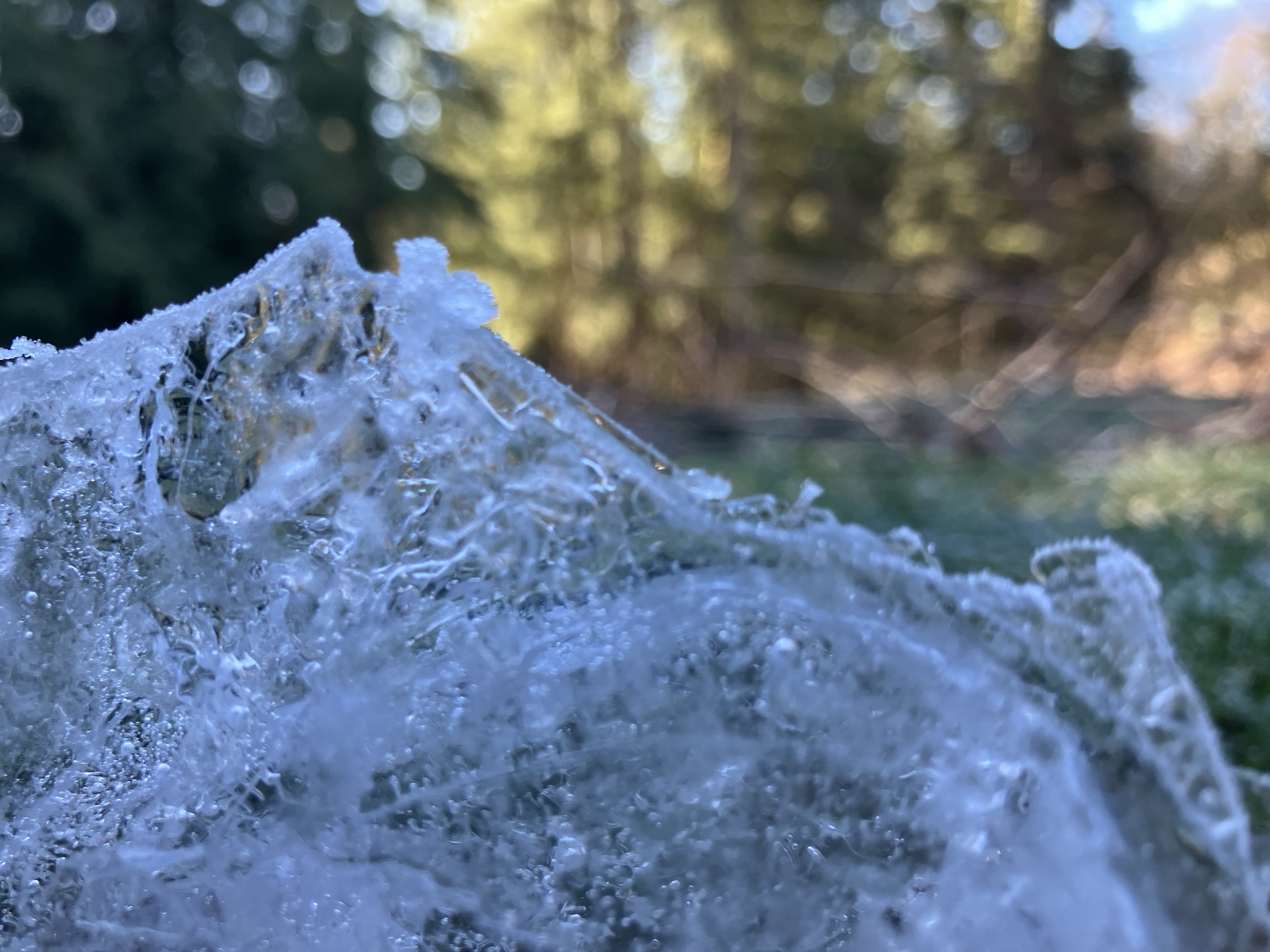
Light and time flow through ice- it’s in the shadows. Marking the melting point of each crystal, vanishing in the greatest magic- movement. Each blade of grass suspended in white frost, erect presence crunching under foot. Tracks of crushed green vegetation, erased by dawn stretching out across field and forest, deconstructing water, so many chemical changes in an instant, over and over again. This hold of winter’s grip- squeezing molecular structure so tight, the ground swells into crystal fingers pushing up out of the soil. This hardening of the ground becomes muddy in the warmth of the sun, but returns to concrete at dusk. Stark changes throughout the day, keeping me on my toes as I water and feed the flocks. The animals know change is in the air.
When I get up each morning, I put on gloves, layer to keep out the cold, and head to the well house where empty buckets await. 10 gallons go to the sheep, then another 10 between dogs, chickens, and geese. It’s a little more hauling, but again, I’m there in person, checking things, noticing two of my sheep are looking ready to lamb soon, and noting it’s time to add fresh bedding in the barn. Being present in these more extreme weather changes is crucial to good animal care. The flocks drink more when it’s cold, so again in the afternoon, I make the rounds of each trough, carrying another 10 gallons to top off water and lift out any remaining ice. As it shatters around me on the ground, I think about the next warming time, and know all this clutter will melt away on it’s own. Waiting out winter is an art we spend half our lives learning. The other half we sit in the warmth of a wood stove with hot tea in hand, thankful for a warm home and working well house.

 EEC Forest Stewardship