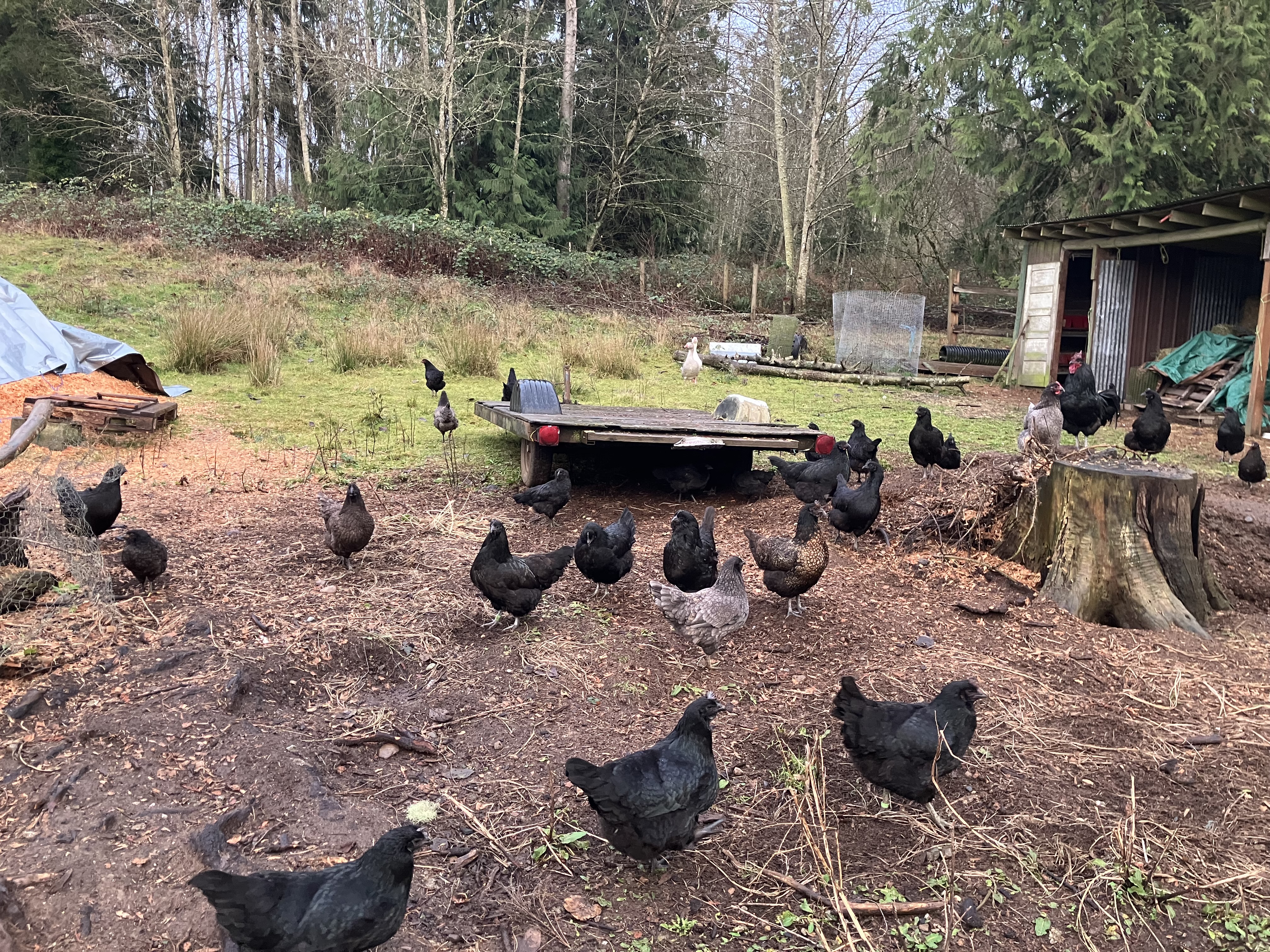
The chickens remain healthy, alert, plump, and laying there more modest schedule of 3-5 a day from a lock of about 30 hens, 20 of which, are mature layers, and ten are at various stages of young poullet, which is at little to no production through this part of winter, which is just fine, because I’d prefer them putting their energy into growing a strong body and taking the time to to do. Most broiler bird breeds, especially the industrially developed verities, are often too heavy for their legs and hips, becoming crippled in the final weeks of maturity for the fried chicken chains and frozen food sections of the world. Does this make it a well fed world?
These “fat birds” as I love to call the chicken flock, walking down to the coop each morning to feed the crew. They come running into the gravel drive and encircle me as we move as an undulating mass, towards the grain shed, where I will scoop out one glorious serving of golden grain, grit, and mineral mix from Scratch and Peck Farm. This modest home flock are my little experiment in animal husbandry. I’ve been breeding towards dual purpose Ayem Cemani base stock birds that are good free range soil scratches and crucially, self aware ground birds with the good sense to keep an eye on the sky. Black iridescent feathers are as striking as any corvid, which does seem to fend off many of the smaller aerial predators. To see this flock come together in a mob of darting beaks and talons even puts off the pair of cotton patch geese who outweigh the hens by double and tower over them with snake neck dexterity.
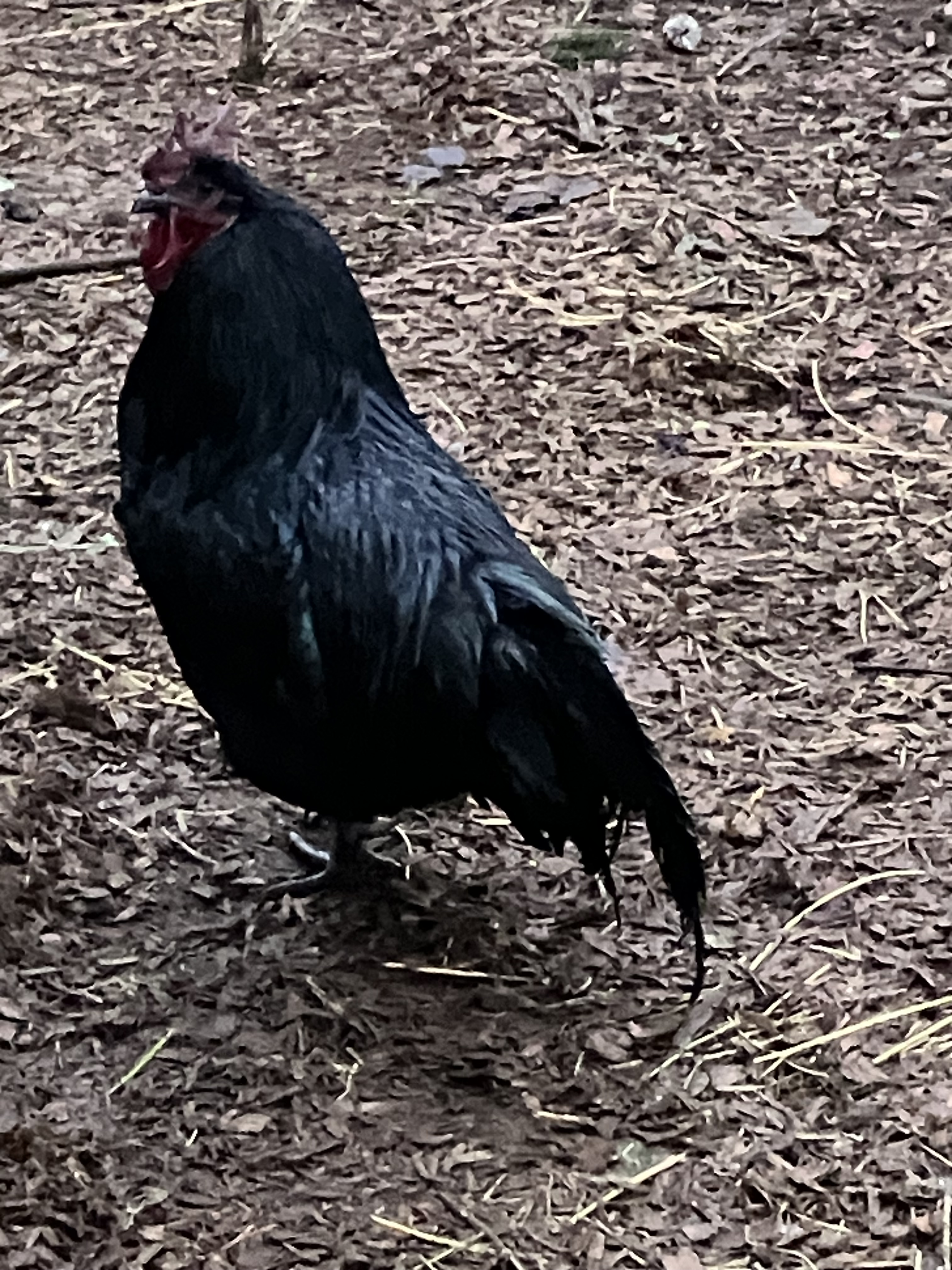
Our debonair rooster, Dragon, remains king of the roost, and guards the flock with his life, always the first to cry out warning signals, standing out in the open alone to face off with eagles and hawks that might alight on a nearby branch and stay too long. The yard guard that’s most vocal against aerial assault is Valentine. She’s running up and down the upper pasture, growling her territorial warning right back at a piping eagle or chirping accipiter. The chickens have learned to heed her alert barks and duck into the barn or hay shed, under the hay trailer or into the coop. Owls are the nocturnal threat, including at first light in the morning, when I’m glad the birds are shut away, else they begin an early wander into the open field to glean, and hear nothing of death upon silent wing. We lost our goslings this way last spring, 2024, when I discovered that the plucky little babes could slip through the chain link gate, and happily did so, straying off without any parental protection- their only protection.
The geese still have a lot to teach me, and I’m working hard to upgrade their accommodations to better insulate both the nesting female and her cantankerous offspring. Current renovations include chicken wire lined gate, solid board lower walls, and at least two nesting cubbies. This breed is relatively passive, but during the nesting months, which will start in late winter into early spring, I try to avoid getting into tight spaces with the geese, keeping food and water right inside the gate so I don’t get wing beaten or pecked by vigilant parents. A flock of two is still a flock, and these two geese remain great teachers and social creatures with great boundary skills.
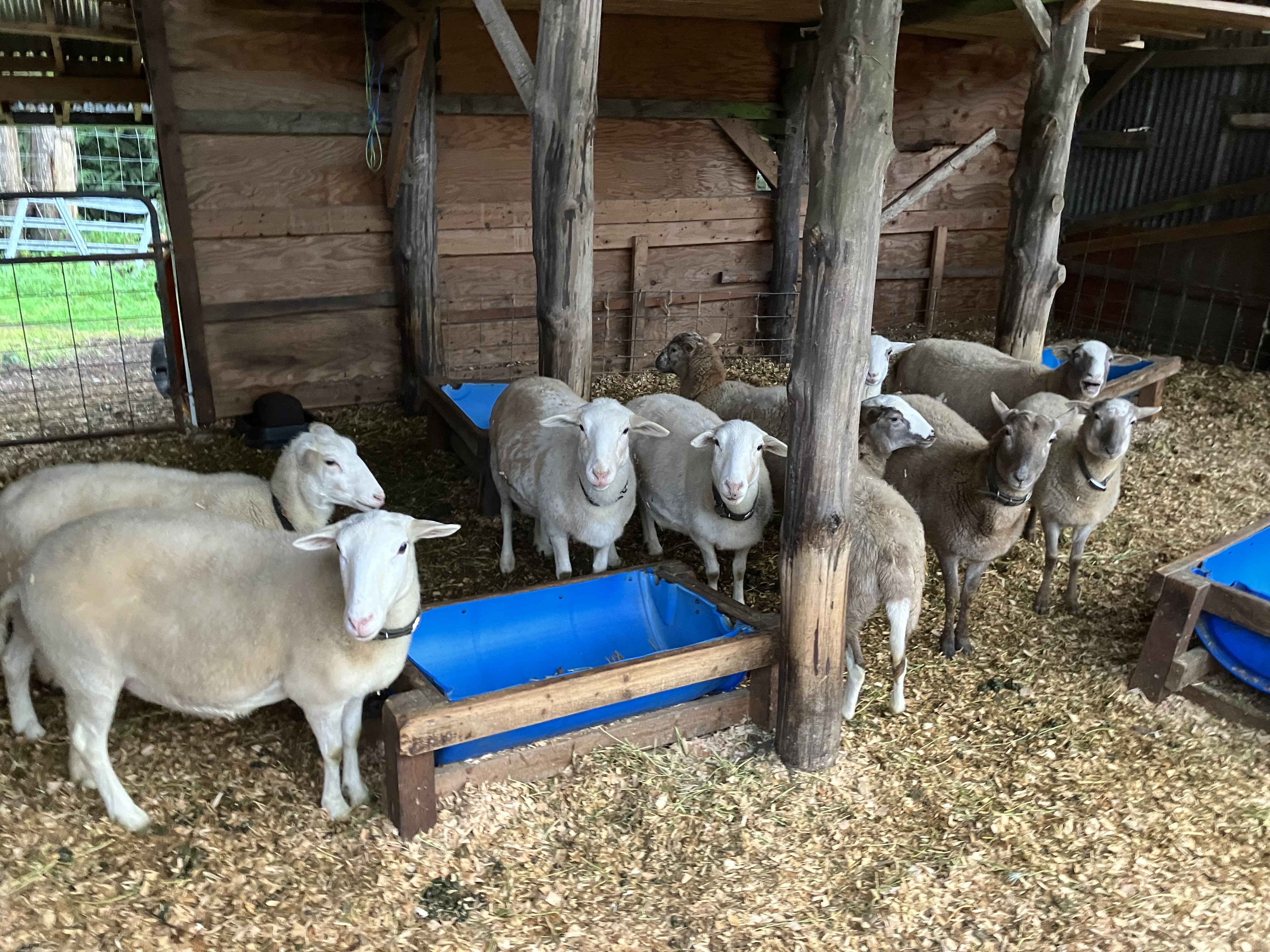
In another flock all together, pregnant ewes await their afternoon alfalfa feeding before settling down to chew cud and grow lambs. January is the start of possible drop, which will continue through early May. Most of these lambs should be born in the next few months, but the first years are sometimes later in Spring, which is fine, it just spreads out the lambing season, but with this small flock, that’s not a big deal. I’m overwintering 10 ewes this year, 2 more than I’d planned because of demand and great genetics in this most recent generation. 4 first years are in this flock. I wanted to see the range this new ram could throw, and some of them will certainly lamb this year. The biggest ewe lamb, Pacific, is already grown to the size of the second year ewes. She’s got longer legs, but a good meat sheep build and quick bulk up, but size it not everything.
Her mother, a 4 year old ewe born on the property, had a great build too, but dropped only single lambs. Pacific is the first of her size and growth rate, which is the meat sheep pasture to carcass gain this breed is known for, so I’m hoping she lambs this year. If she drops twins, she’s a keeper, even with the longer legs. Trait selection can be tricky, and with an armature eye and such a small flock of genetics to select from, there is a lot of personal preference I put into selecting each sheep. Personality, handleability, and good parenting are all traits my sheep must have. I also try to keep to the main breed standards by sticking with hair sheep, a good carcass growth on pasture, short legs to keep them in the electric mesh fencing, and even small heads for ease of birthing. These are some of many traits to think about when breeding animals, and a good shepherd knows the individual habits and mannerisms of every member of their flock to better the herd’s long term thriving and surviving.
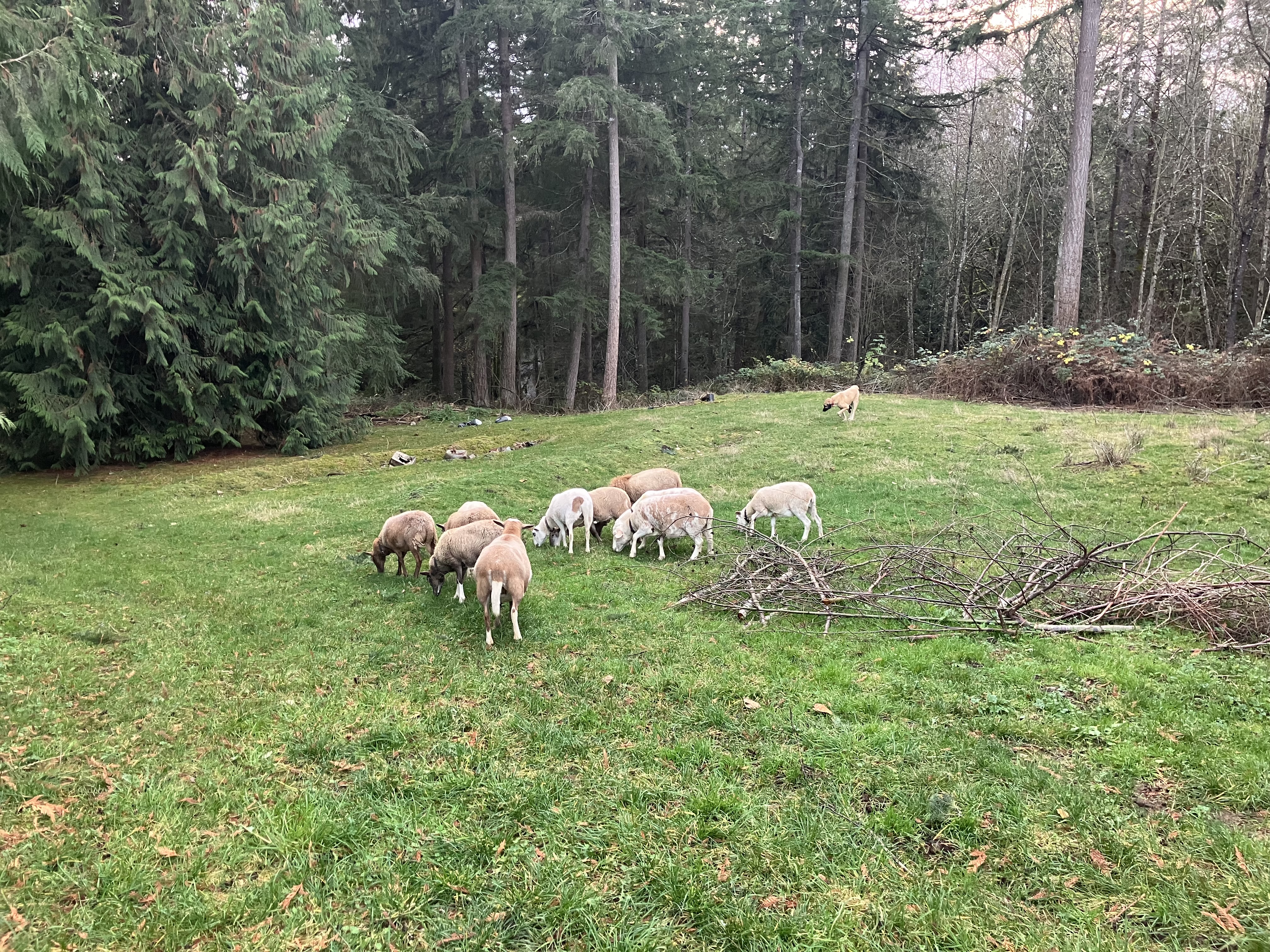
Gill is still also getting occasional flock visits. Out temperate winter climate at the end of 2024 has kept the grass growing slowly, still offering some quick grazing delight, and fresh greens to pregnant ewes. When there is a stop in the rain, I let the girls out for a stretch and a little veg while Gill does his rounds scent marking and visually reconnecting with changes on the landscape in his territory. A fallen branch becomes a good marking post, the deer leg bone he likes to chew remains where he left it on a good viewpoint in the field. The sheep circle across the grassy hillside. Eventually, I’ll ask Valley to help me round up the herd, returning them to the barn for an evening of laze and graze in their dry shavings with four walls to keep out the chilly night air. These sheep really do live the life, and share it gracefully with me, the dogs, the birds, cats, and all the wild critters that keep this cooperative collective of living organisms thriving and jiving.

 EEC Forest Stewardship