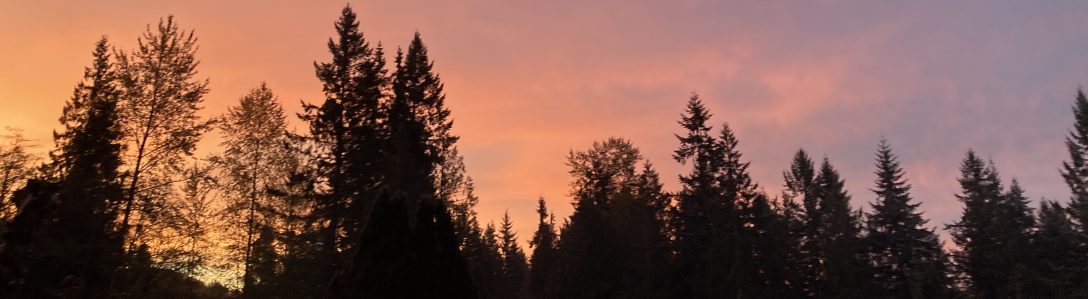
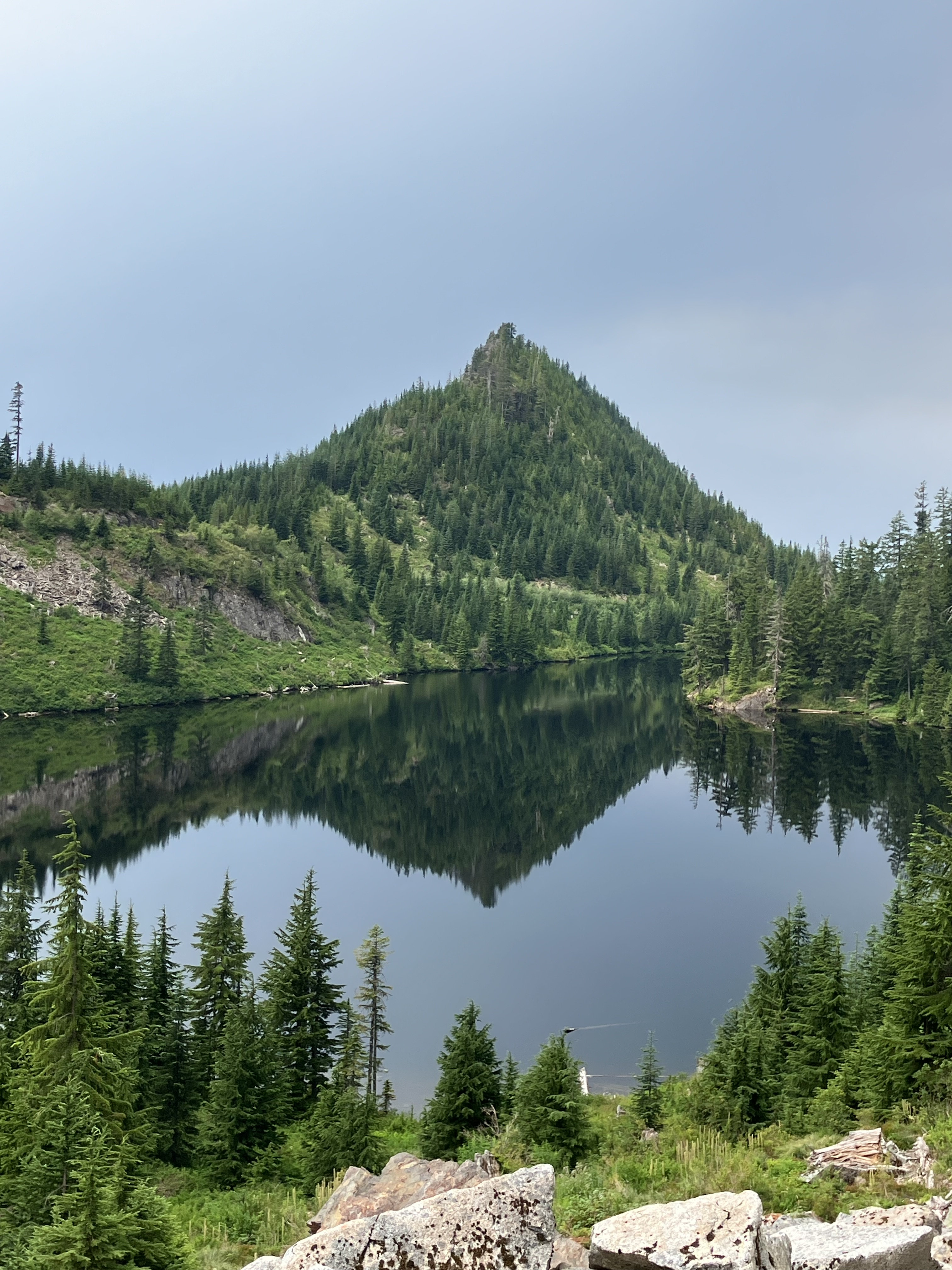
There are some truly magical places in The Central Cascades. I’m so grateful for the time, access, and those who have worked to protect these critical wilderness places near my home. Though these lakes were logged, and the trails left remain scars of logging roads from almost a century ago, the wilderness has returned, and offers breathtaking views of our beautiful mountains and priceless fresh water. I’ve spent a lot of time this summer exploring these higher elevation landscapes, and even swam in some of these waters where sometimes, there are not even stocked fish- amazing! The risk of going into these more remote places should not be taken lightly, and if you do go, look ahead and know the area and what to expect.
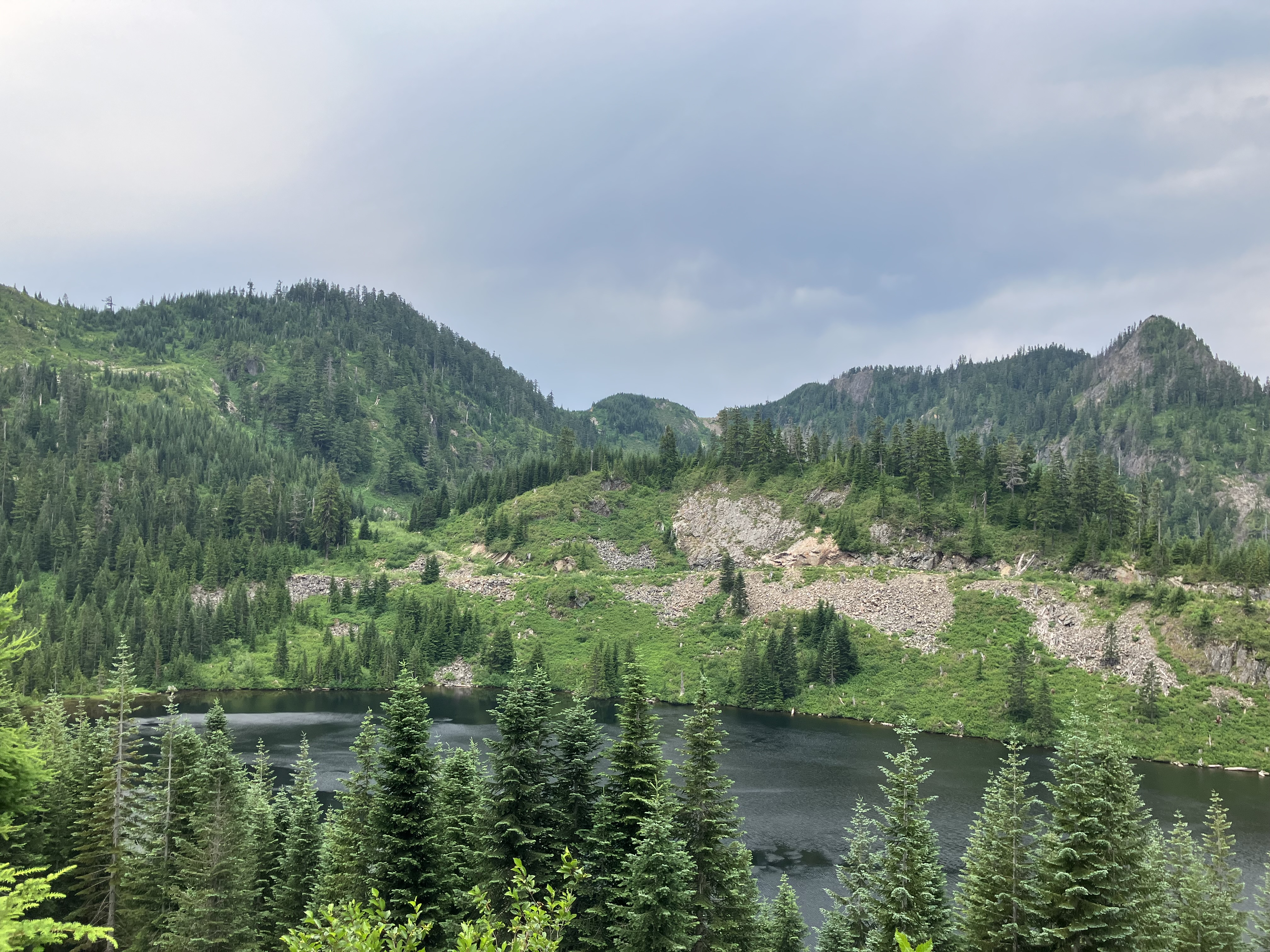
Alpine exploring takes a little planning and know how- I do not recommend just taking off on a trail without doing your research on place, weather, and what to bring to remain safe. There is wildlife here- some that could kill you. Not just bears and cougars, but also mountain goats, and then there’s the landscape its self. Massive rock slides that can shift at any time, steep edges with drops that you would not survive if you fell. Even a twisted ankle in the back country can put you at risk of not getting out before dark. At night, the temperatures at elevation drop dramatically, and without proper training on how to survive, you could be in for a fatal encounter with mother nature. On this day in July, 2024, I hiked up into The Central Cascades when there was a front moving in. No rain was expected, but I brought extra layers and kept an eye on the sky to make sure the weather cooperated. Since the mountain peaks make it hard to see the horizon, you won’t know if a storm is sneaking up on you till it might be too late.
My planned hike stayed below high ridge lines, so lightning was not a major threat. Always get down off high points if the weather is changing fast. My trail was well marked and not much elevation gain, so the day was relaxed and the distance short enough that I could get back to the truck quickly if the weather started to shift. Moody skies are important to read, and though the weather predictions were showing sun in the afternoon, I remained vigilant and timed my hike to be back out well before late afternoon. I was dazzled by the wildflowers and charmed by lakes that were glassy reflections of the peaks one minute, and then restless crushed velvet as the wind picked up. The gusts would come and go, but their signal of change kept me watching and feeling the air as I hiked on. By early afternoon, I felt the temperature dropping and turned to head back to the truck.
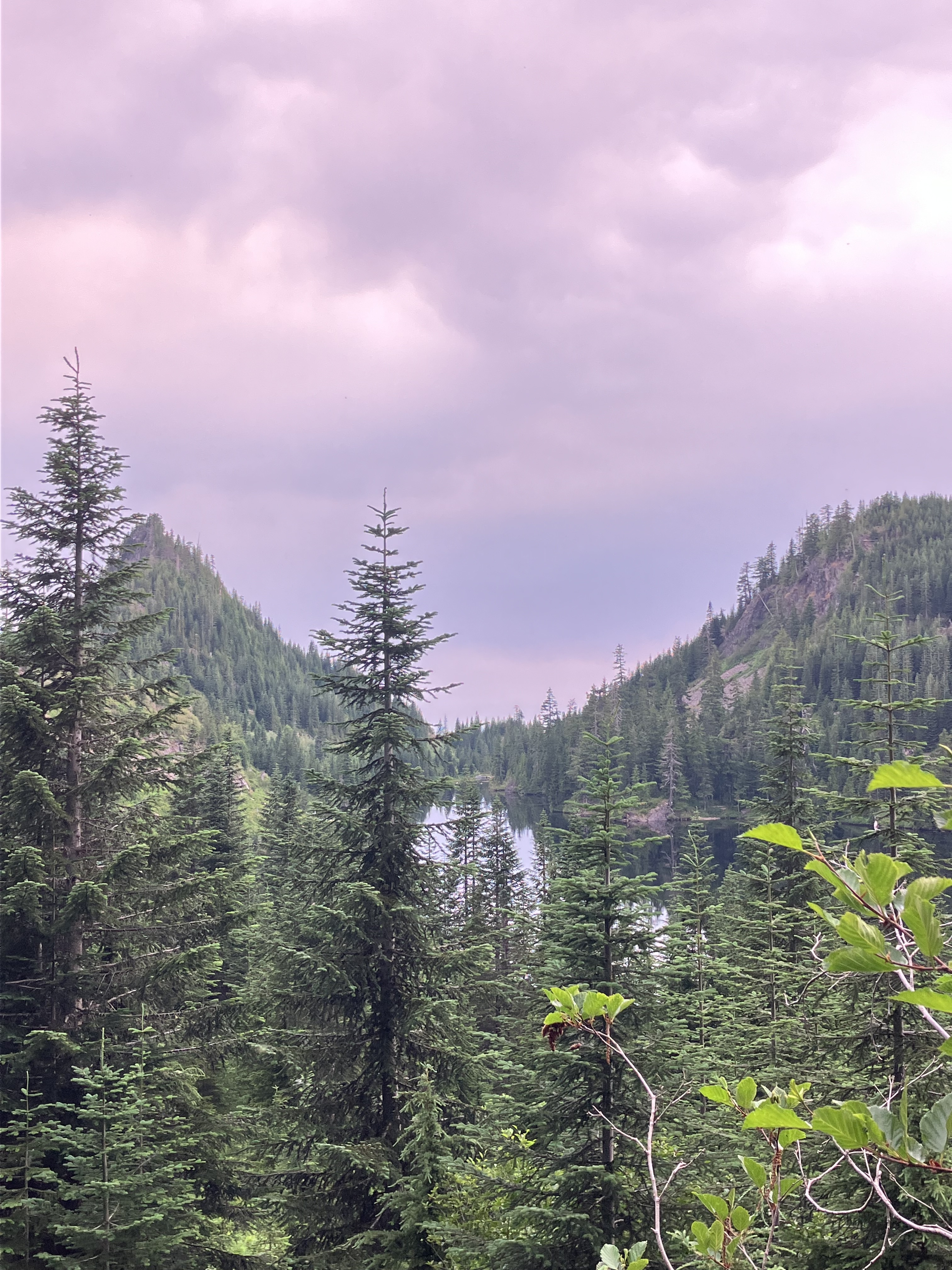
The sky darkened, and I felt a few drops of rain. The weather was changing, and that cold front was moving in. I remained calm, rushing would only raise my risk of falling. I continued to scan the landscape around me, stopping occasionally to listen, and watching my dog when she would stop and point. I do not hike with a gun, but I also don’t assume I am alone. People are the most dangerous thing you might encounter anywhere, but wildlife is also still a risk, and remaining alert and aware helps prevent unwanted encounters. You are more likely to die from hypothermia in the mountains than anything else, so please keep that in mind. A gun will not save you from freezing to death or becoming too dehydrated. Pack extra water and food when in the back country, and leave a clear map of where you are going with a friend, along with your planned time of arrival back home.
As I walked out, more wind picked up, and I watched mounting thunderheads forming in the distance. It was a good feeling to know I was heading towards the truck as the rain began to pick up. Still, it was relatively warm and the rain was not soaking through, so I felt comfortable and calm as I stopped to take a few pictured of plants to ID later at home.
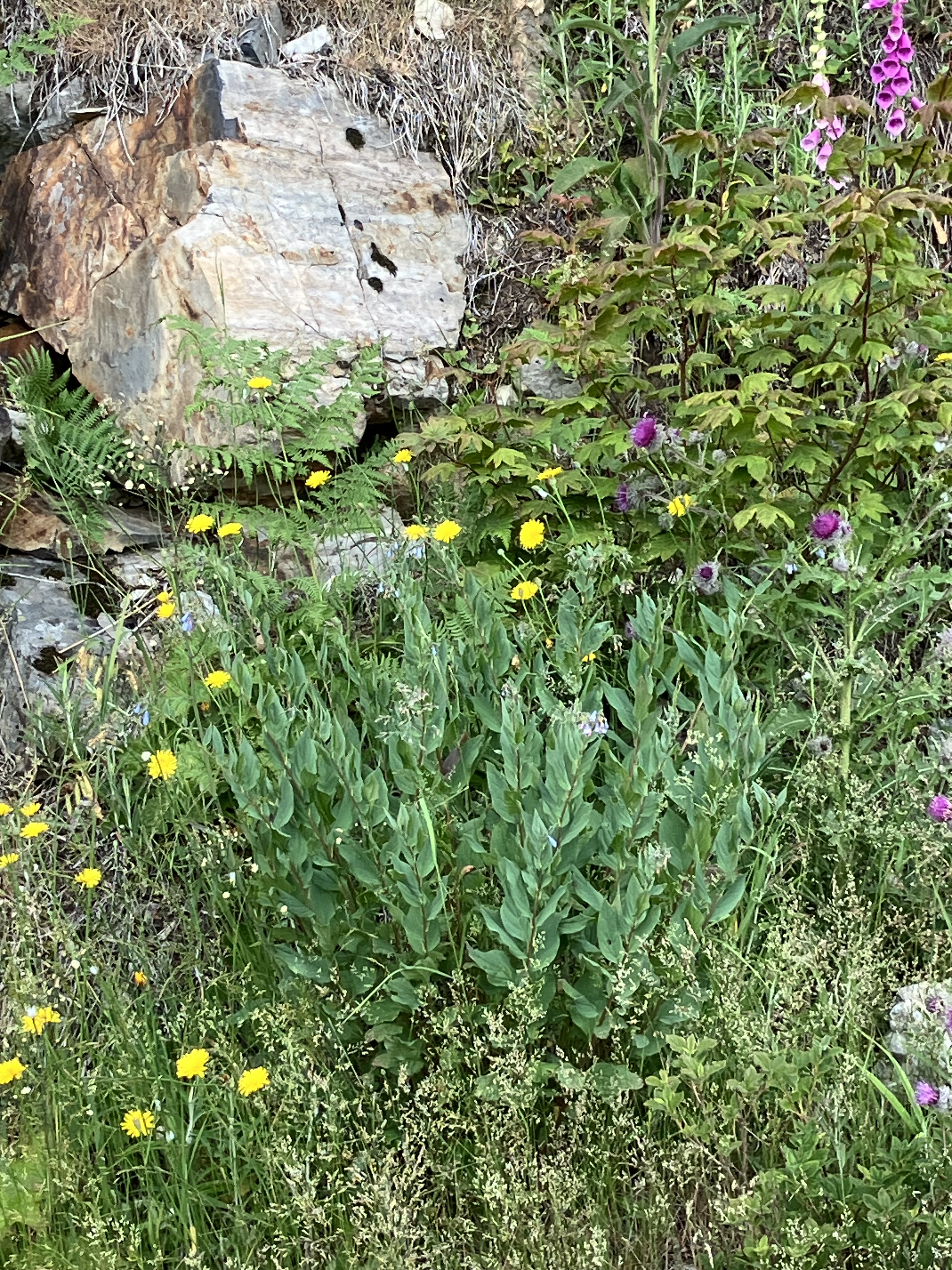
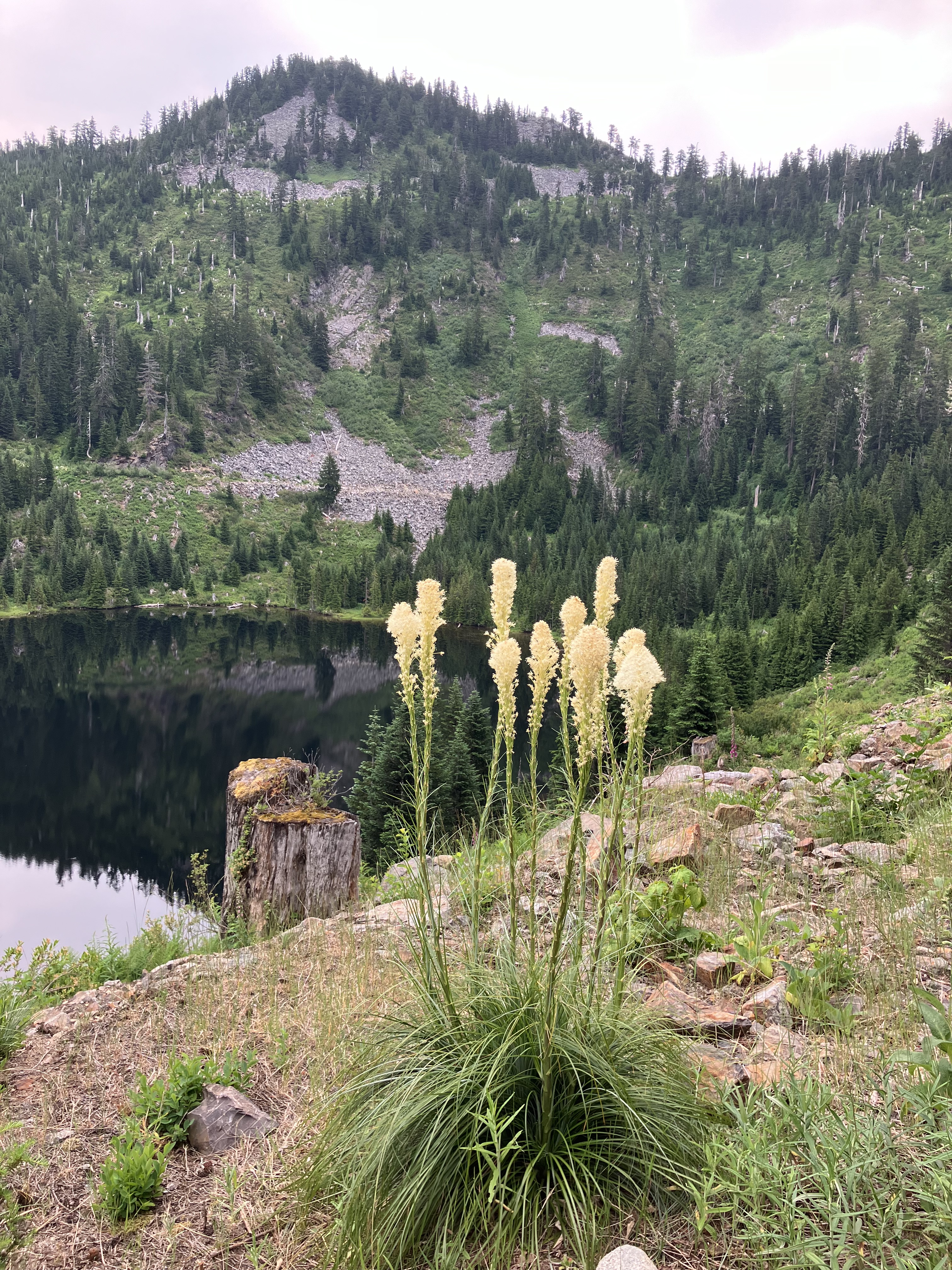

As I came into view of the truck, I also saw the clouds curling down out of the sky and into the peaks around me. The front was arriving, and it was time to pack up and get down out of the clouds before I was socked in. As I began to drive away, the rain picked up, and I was graced with a show of incredible transition as the weather demonstrated her tour de force in the elevations. Imagine if I had still been on the trail hiking out when this fantastic transition occurred.
I watched my truck thermometer go from 68F down to 58F in seconds. The rain continued as the cloud bank blanketed the mountains and covered everything in a thick fog. Winds swept up from below and there was a mild sense of vertigo as my vision was obscured. In seconds all know landmarks disappeared, the wind picked up, and the damp rain continued. I was in the truck, safe and dry, heading out on a familiar road. If I had been up on the trail, I might have easily lost my way, become disoriented, and become yet another statistic in back country mistakes. Luckily, I had planned my exit and gotten out in time. The clouds continued to mount above, but I was heading down, and soon broke out of the mountain fog to see a familiar landmark below.
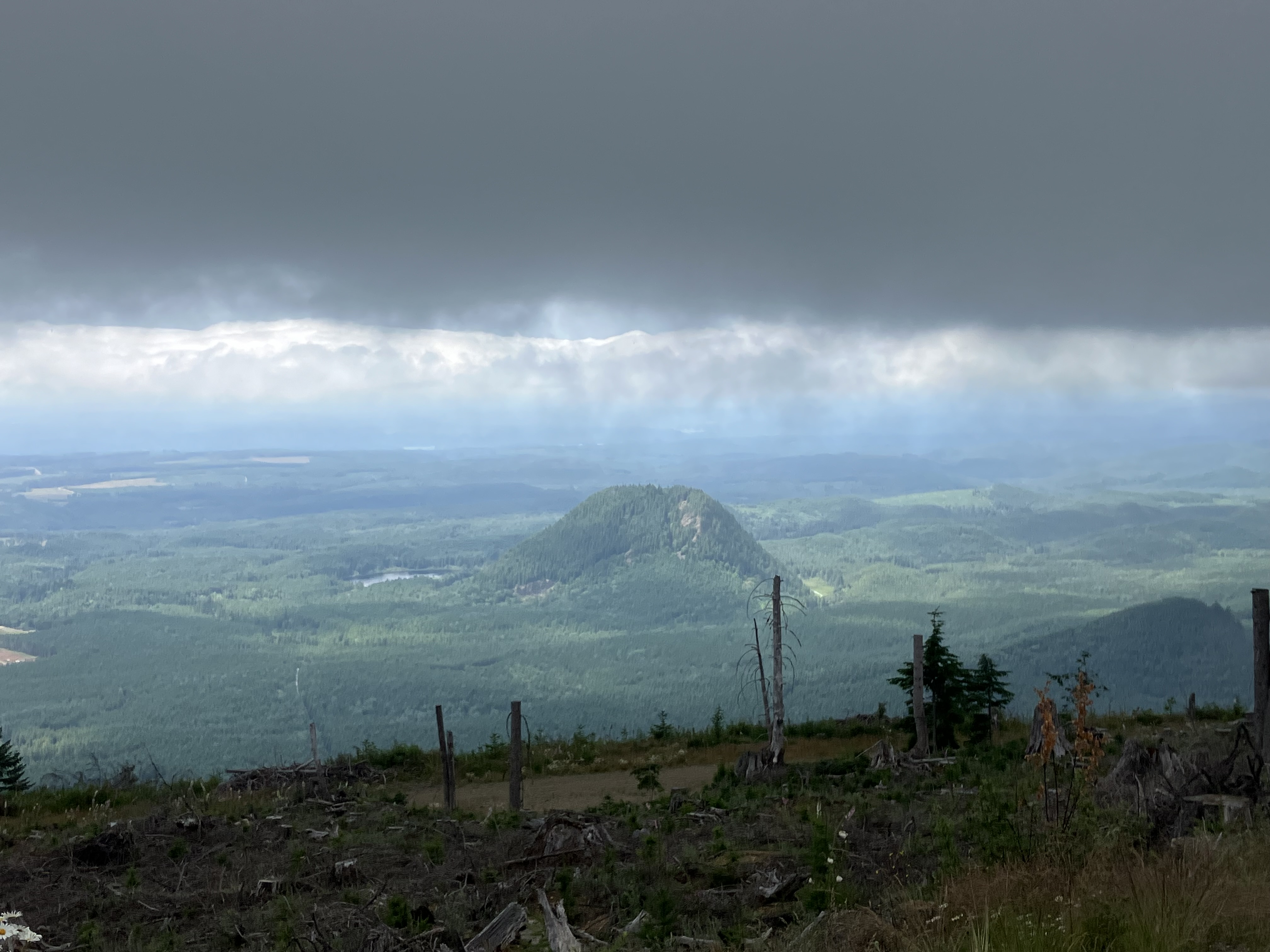
Fuller Mountain is an anomaly in The Upper Snoqualmie Valley which is an easy landmark from the western slope of my home range. The valley was in full sun, no one would have guessed what was happening a few thousand feet above. It’s always the unexpected that ruins our well laid plans. I’d been lucky with my timing. I had not know exactly when the front would be coming, and I could have been caught up in the clouds with only my familiarity with the trail to get me back out. This is how bad things happen in the mountains, and without careful planning, familiarity with the terrain, and a good exit strategy when it’s time to go, things can be very rough out there in the wilderness.

 EEC Forest Stewardship