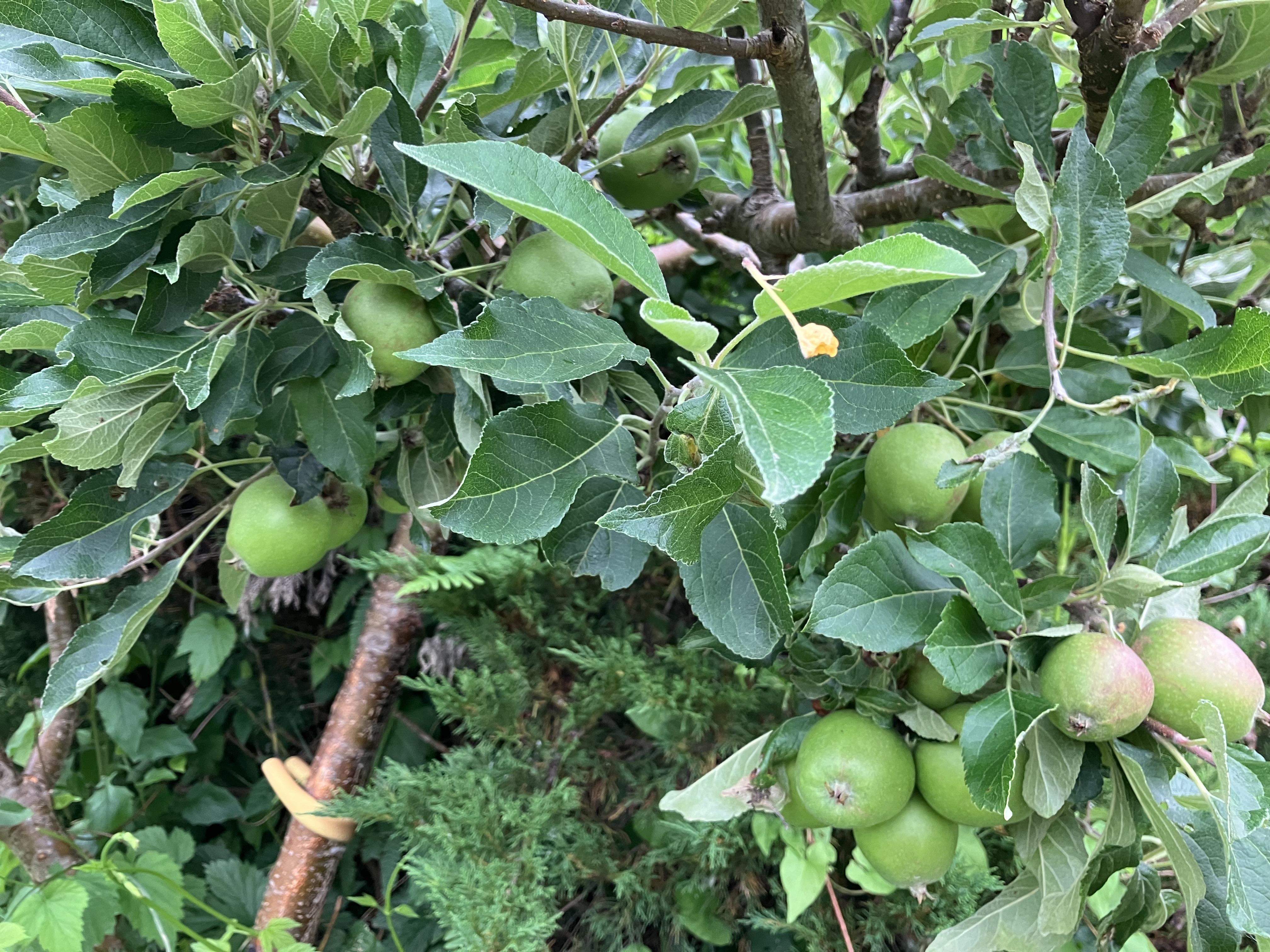
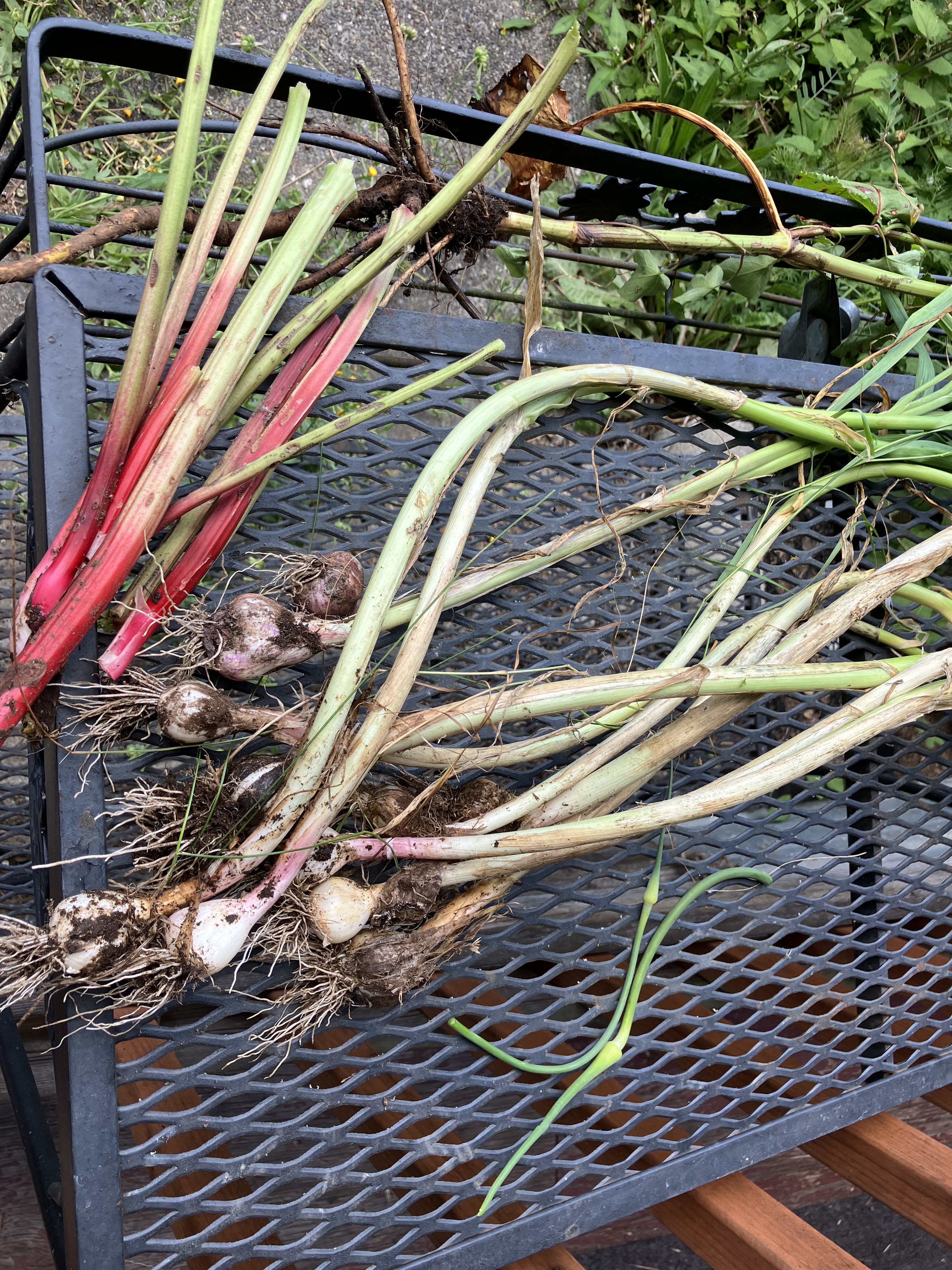
There are abundant cultivars at work in the landscape of EEC Forest Stewardship. Apples are putting on size and blushing red color on the branch while rhubarb and garlic spring out of the garden soil. So much abundance keeps growing all around and the harvest keeps on through these warmer months of high production. Apples and pears are the most common fruit trees on the landscape, but peaches and cherries are starting to gift us with seasonal bounty, and the plumbs manage a little fruit for mid summer too. Most of our apple trees aren’t ripe until fall, but peaches are almost ready by the end of July, and cherries finished at the start of summer. The variety of flavors and plant based foods here at Leafhopper Farm continue to diversify over time. Aronia berries and quinces are newest on the list of newly planted fruits, while grapes took five years to establish. As climate change continues, we’ll be watching all the effects on our numerous verities to keep selecting towards the successful adapters.
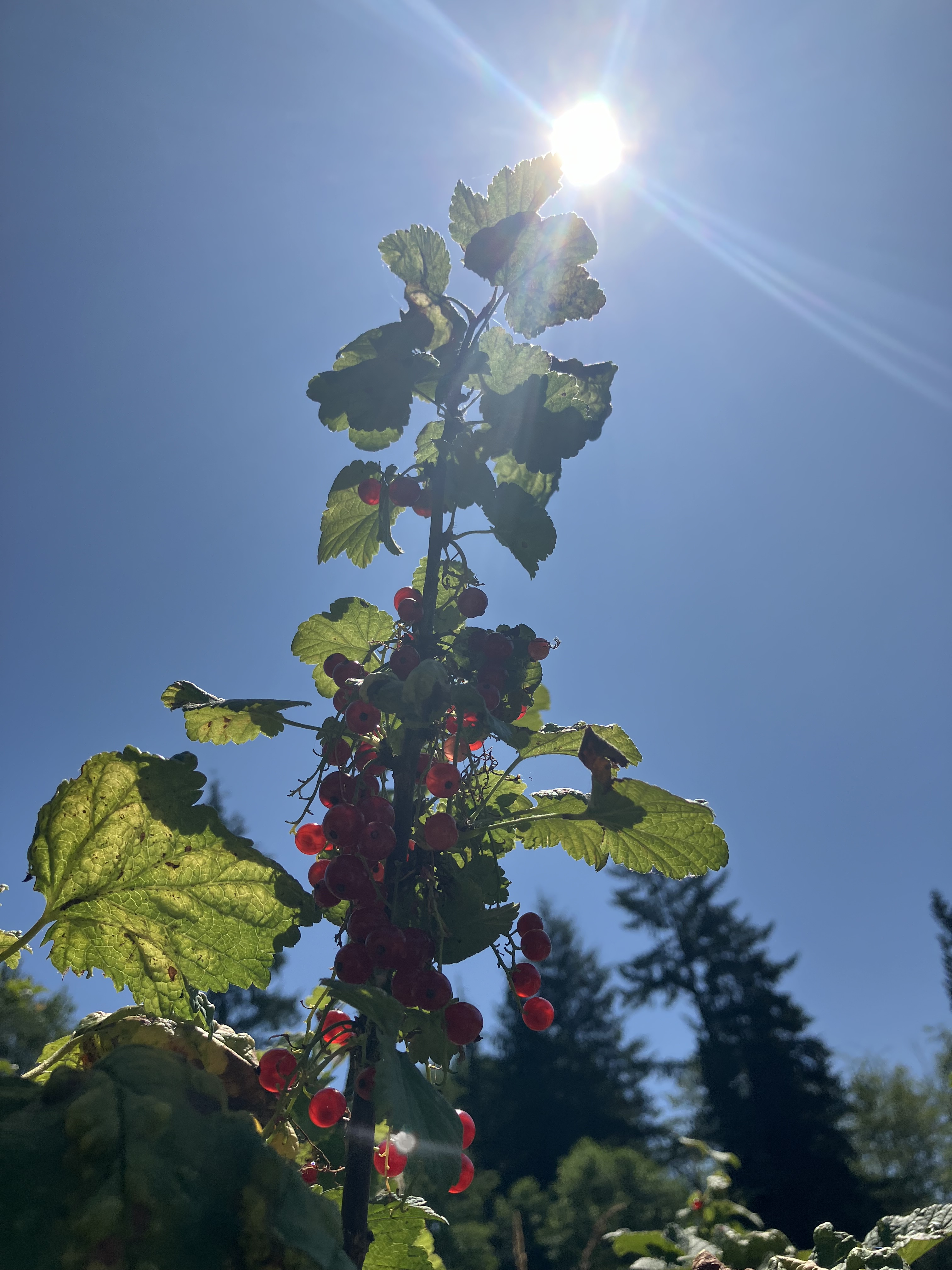
The currents (pictures below) have been quite abundant this year, after taking nearly 7 years to fully establish. I love these often overlooked cultivars, as America only legally allowed their cultivation again in the 1960s after a blight that shook the timber industry at the turn of last century. This is the main reason currents still lag behind other much more popular berry crops in The U.S.. Our native current types on the land are red flowering Ribus sanruineum, black gooseberry Ribus lacustre, and stink currant Ribus bracteosum. The cultivar verities have much more flavor and abundance, so we’ll keep bringing them in for palatable eating.
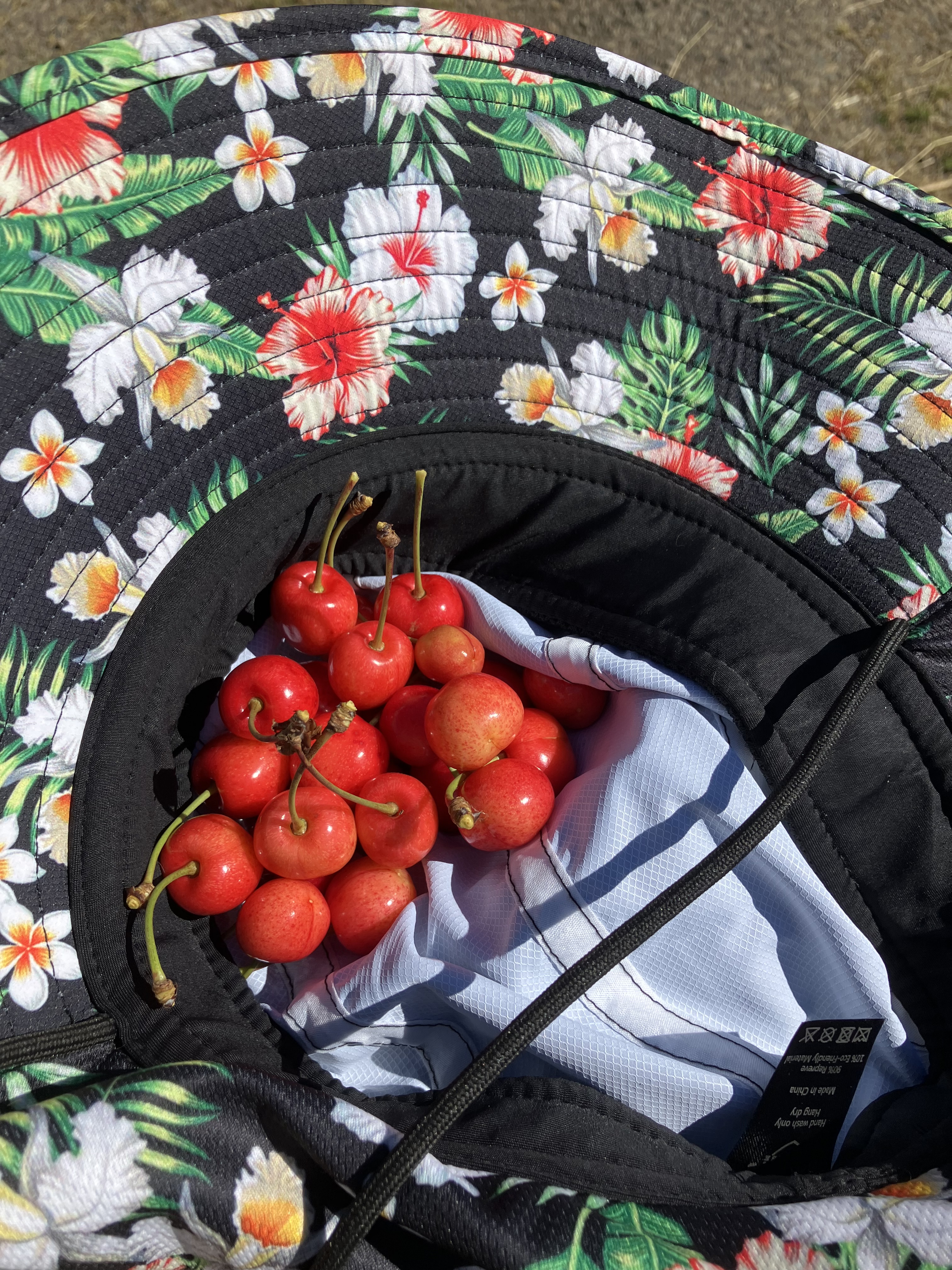
Stone fruit is so popular, and cherries are easily grown here in Washington. Our native species is choak cherry- and as the name suggests, they are not very tasty raw, with a large pit to catch in your throat. The sweet cherries we know and love today originate from Asia, but were brought to Washington in the mid 1800s. Today, you can walk almost any trail in the area and run into this endemic fruit tree in one variety or another. People have been spitting out pits for almost two centuries now, and escaped cultivars thrive on the landscape. Many revert back to being twenty feet tall, so a lot of the fruit is never enjoyed by people, but birds love the fruit, and find it easy to reach in the lofty heights. At EEC, we’ve planted both the dwarf and natural sized trees, but only recently began picking fruit with success. More of these trees are planned, but they are often susceptible to blights, which lower productivity and lifespan. Still, the fruit is delicious and the trees don’t need a lot of pampering to establish, so they make a great choice of food crop in our small holding.
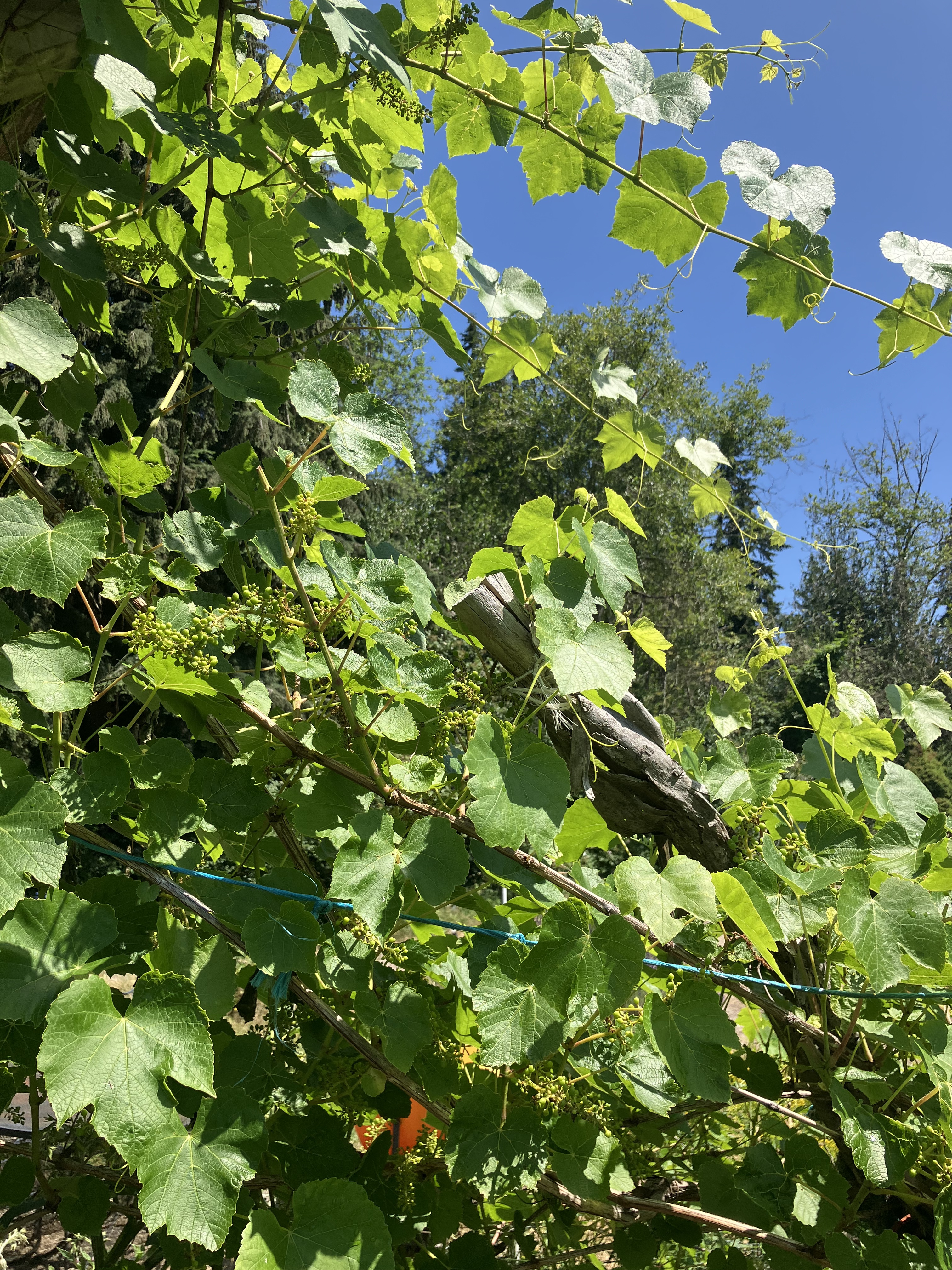
The grapes are coming on nicely this year. I’ve spent some time actually pruning this vine, as it reaches up the side of the porch from our small kitchen garden. Last year we enjoyed a couple of bunches, but this year, the vine has received enough water, light, and warmth at the right time to develop what looks like a bumper crop of fruit. Pollination was a bonanza at the start of July, and I often had to stay clear of the eager bugs flying in and out of this towering green gem. The fruit is some of the sweetest I’ve ever had, and seedless, so we’ll be taking cuttings to propagate this beautiful fruit. Our other grape, an Austrian Grüner Veltliner, is also trying to make some fruit this year. It’s a wine grape, and though neglected at best, it’s managed to fight off blackberry and drought to remain alive and well. I’m planning an actual arbor for this tough little vine, and hope one day to make a few bottles of one of my favorite white wines.
With summer setting in, we’ll keep watering and monitoring the modest fruit gains here at EEC, and plan for future plantings to come. All the trees are in need of fresh mulch and some companion planting, the development of food forest continues, slowly but surely here at Leafhopper Farm.

 EEC Forest Stewardship
Simply lovely and yummy : words & photos!
LikeLike