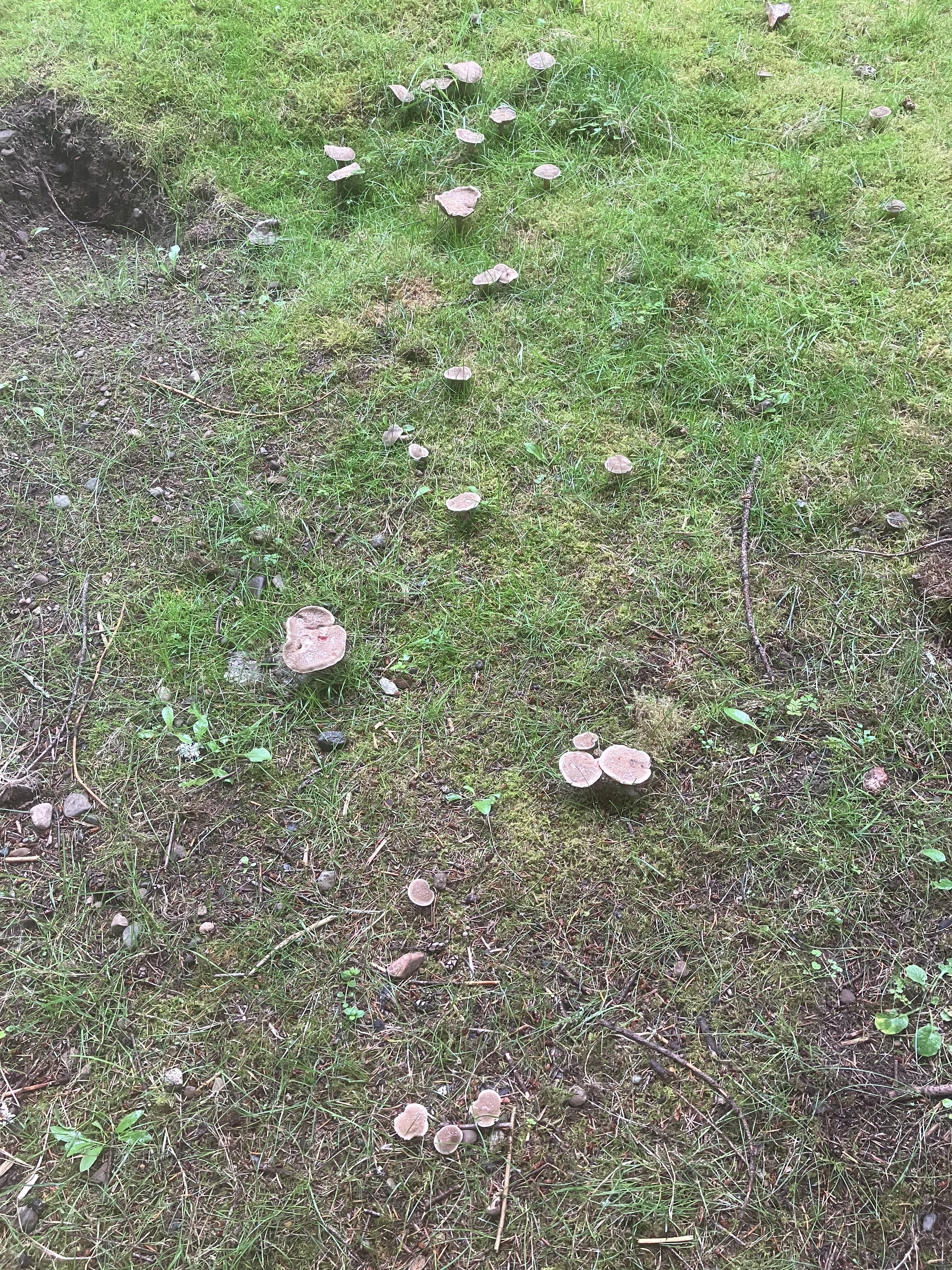
Red crackling bolete is popping up across the landscape here at EEC. Forest mulch paired with grassy, dappled light across the ground invites perfect terrain and substrate for mycological bloom. I’ve been harvesting this wild patch in the upper pasture since first arriving on this property. Over the years, with careful timing, the patch continues. I have to keep the livestock out in early fall, after a week of 40F nights and enough moisture in the air, even without rain, mushrooms leap onto the scene to spread spores and generations of this truly strange fruit. It’s a bolete mushroom- no gills, yellow sponge like spores under the cap, a red fibrous stock, and the brown cap with red cracked patterning, all staining blue when bruised, makes for mushroom descriptions which usually point to poison warnings. But this friendly field specimen is a perfect fresh ingredient for any stir fry or stew. It should be cooked separately to sweat out any water and crisp the meaty caps. Stocks will also brown and crisp with regular stirring in the medium heat pan.

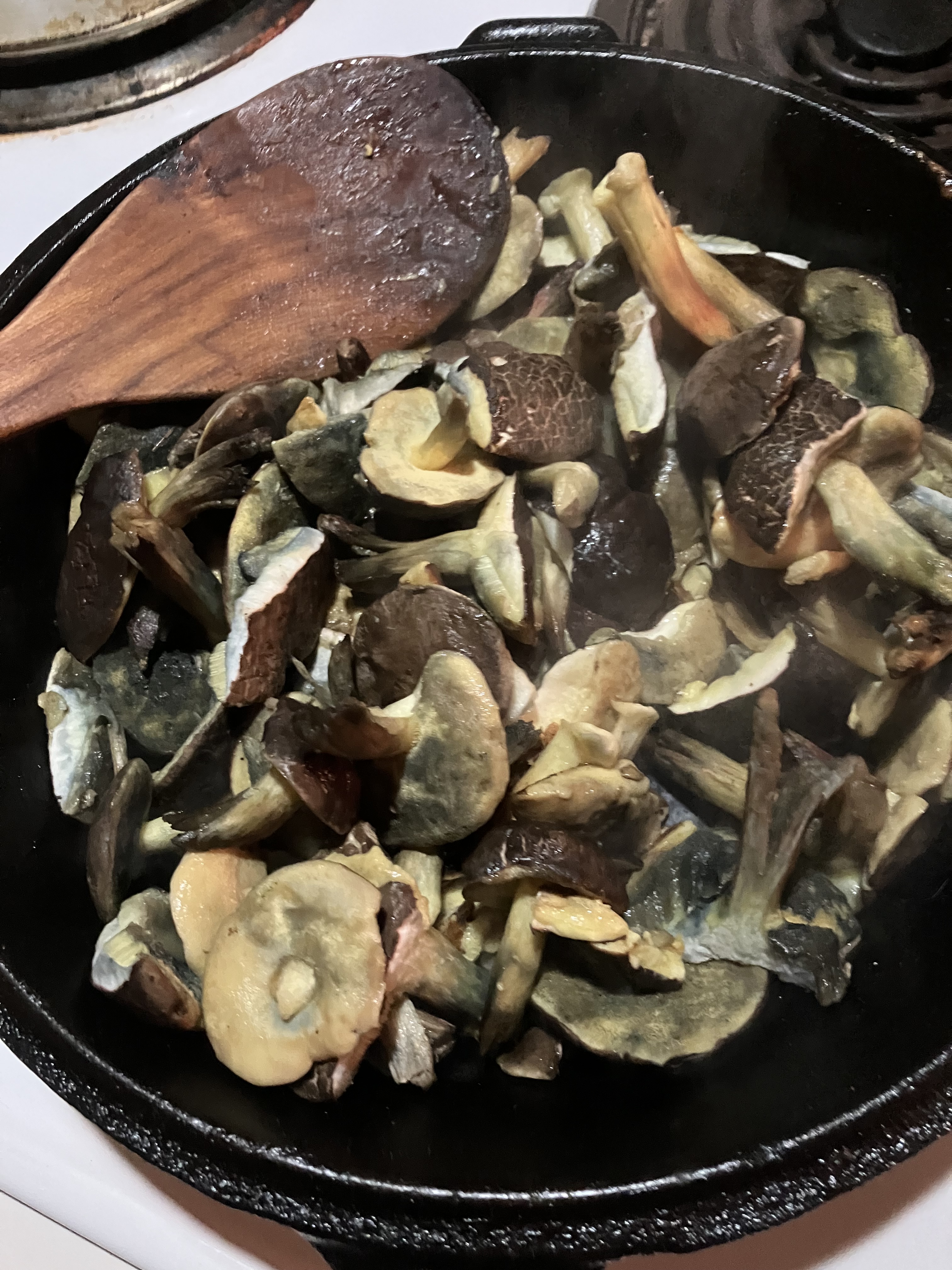
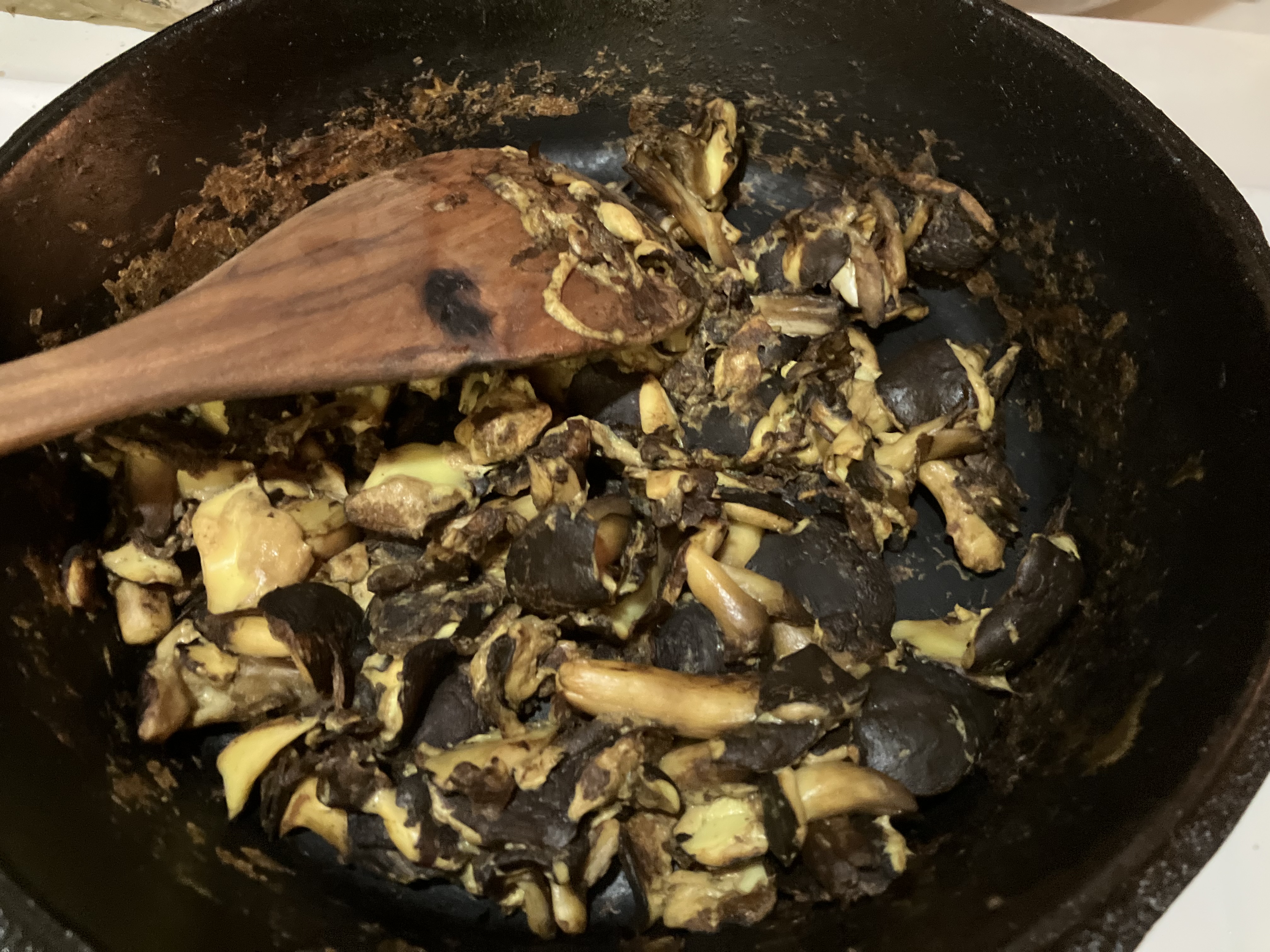
No oil should be added until the mushroom are browning, then I usually add butter or olive oil if needed, bacon grease if you are decadent. These mushrooms when into a tomatillo sauce with a little chicken. What a tasty fall treat! Any mushroom cooking I do works best in the cast-iron skillet. From Porcini to these humble cracked boletes, the mushroom spring brings ample flavor from the decomposition all around. Great thanks to the mushrooms and their close connection to this table and the complex ecology all around. When we can eat from the space we tend, there is humbling abundance and direct tending like no other I’ve ever found on this earth. It’s getting close to what I call, original instructions- like any other living organism, we eat, and we drink, interact with what’s around us, and become part of our ecology, which is more screen time and commuting for many. I’m staring into these figments of light shapes as word, typed, for written script is as rare as any hunter gatherer societies in The United States, well, maybe not that rare. I’m hunting, and gathering, so there’s one, but one does not make a society.
The fragmentation of individualism has gotten the better of us. I’ve watched it in less than two decades, and for older generations, I’m sure it’s been a thing for centuries- particularly to precolonial encounters here in The Americas. In an appreciated frank talk with a First Nations friend the other day, I was talking about people’s plan for the apocalypse- if it happens, and she calmly pointed out that her people had been living in a post apocalyptic world for generations. It was one of those- “oh yeah, I’m a privileged white person” moments. So grateful for honest truth from friends with enlightening perspectives. Listening to voices of others helps us all acclimatize to a broader world view. That’s what inclusivity (had to add that word to Microsoft dictionary) is all about. But what’s all this got to do with mushrooms? A lot.
Most people won’t find or harvest many mushrooms in their lives, especially here in North America, where there is a cultural history of avoiding fungus- mostly European biases. Granted, mushrooms can kill you if you are misinformed, so I can encourage a healthy fear of fungus to prevent risk. Boletes are realitivly safe here in The Cerntral Cascades of Western Washington. As I’ve mentioned many times before, know your local bioregion well before you start harvesting, and only go with mycologists, or people who have been in the field for a while. If you meet someone who tells you all the mushrooms- they are probably not what they seem, because most of the species out there take a lot of microscope time and DNA testing to affirm. But for the humble crackle cap bolete, having a strong familiarity and continued fruiting in the same place year after year had built a highly localized relationship for me that affirms confidants when harvesting in this situation. There are still many mushrooms I don’t know, and many more I’ll never meet, but the boletes are gentle teachers, with only the bitter bolete in our area to deliver a pungent unpleasant taste if you mis-identify. None of our local boletes are killers- maybe intestinal upsetters, but not major organ melting. Still, don’t try harvesting mushrooms on a whim, or because an ap taught you.
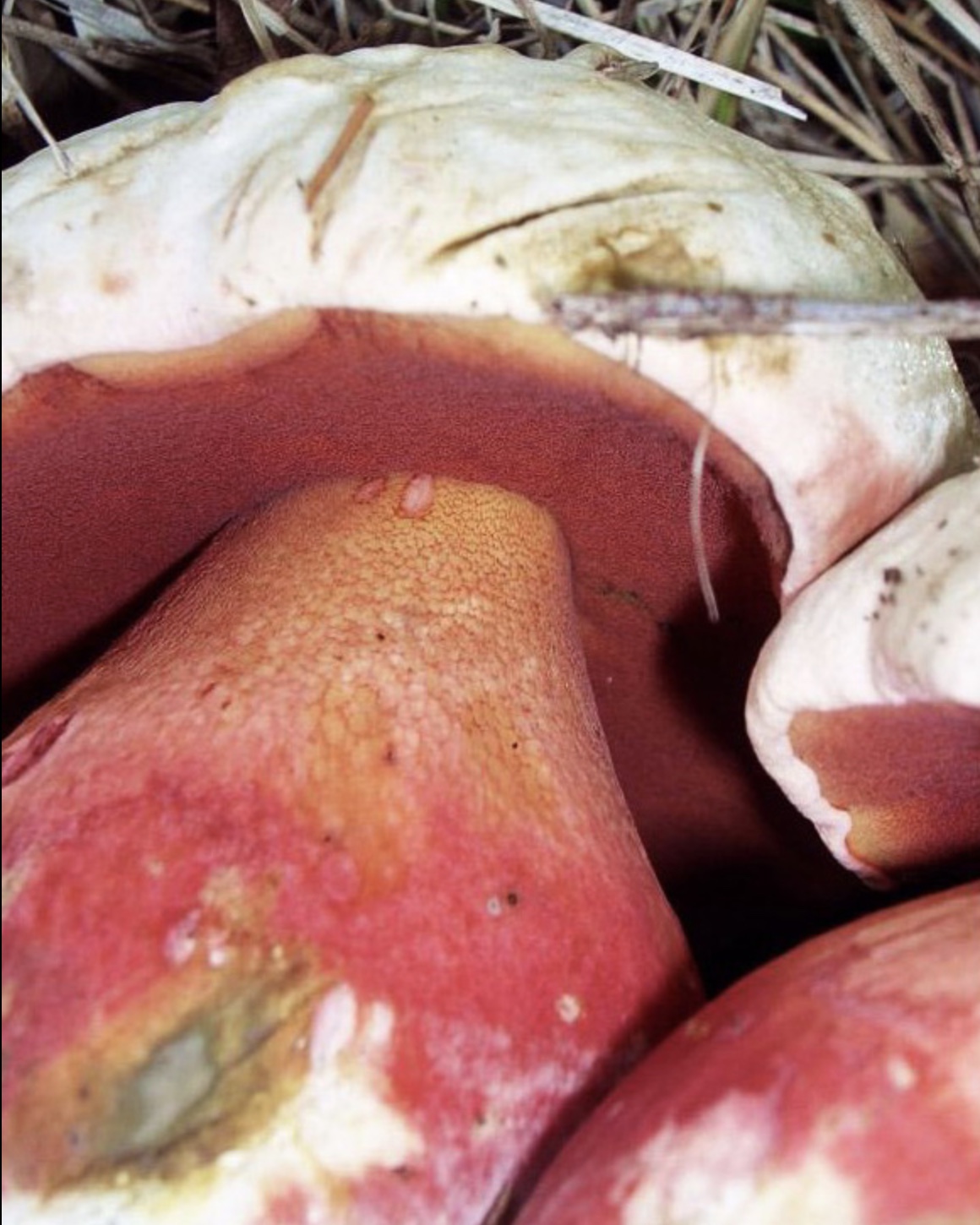
This is Satan’s Bolete, a poisonous bolete most often found down in California. It has a white cap and a heck of a lot more red on it than our brown capped crackled bolete, but for a newbie to mushrooming, it could still be confusing. Here’s a fun site for bolete sorting that might be fun to learn from-
It will also help you see how vast the bolete family is and why specific regional identification is crucial to narrowing down your specimen. I would not eat what you find using any online key without extensive in the field experience with experts. Mushroom observing and picture taking is always a fun way to start learning on your own. You don’t have to be out harvesting every mushroom you see to ID. If you are lucky enough to have a crackle cap patch close by, enjoy these underrated edibles. The home grown here at EEC are still popping up with this early onset weather, so I look forward to many more mushroom feasts.

 EEC Forest Stewardship