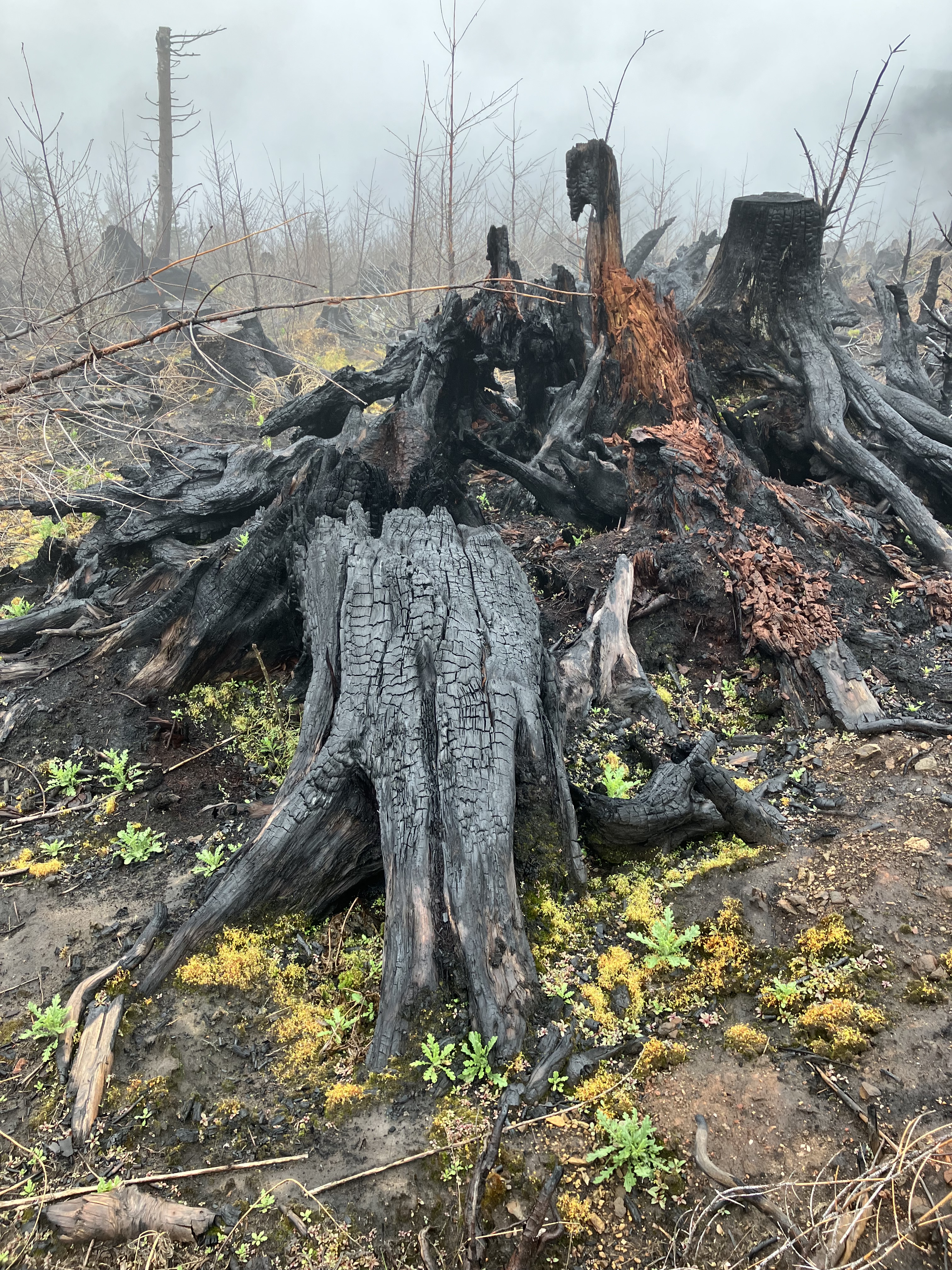
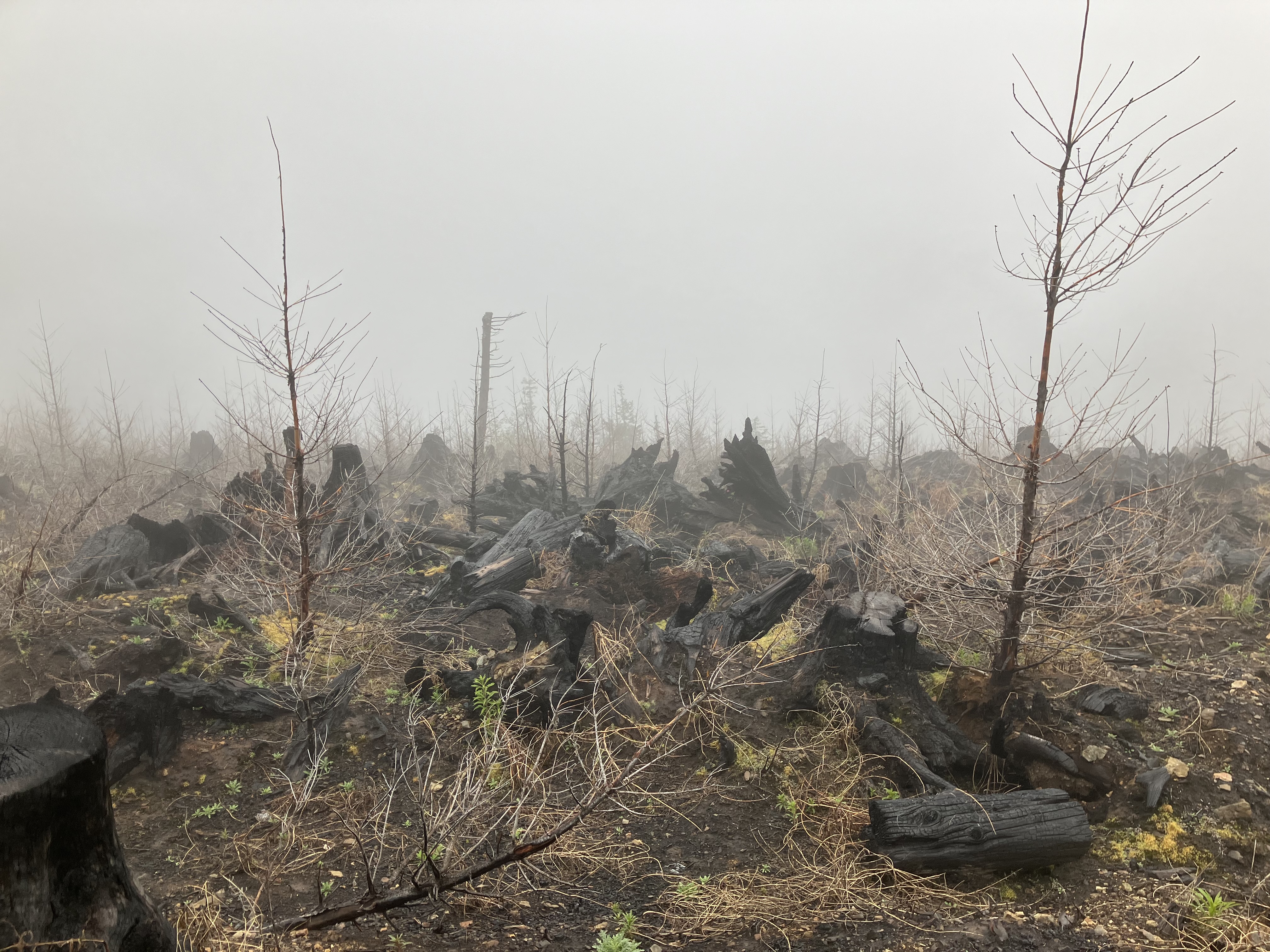
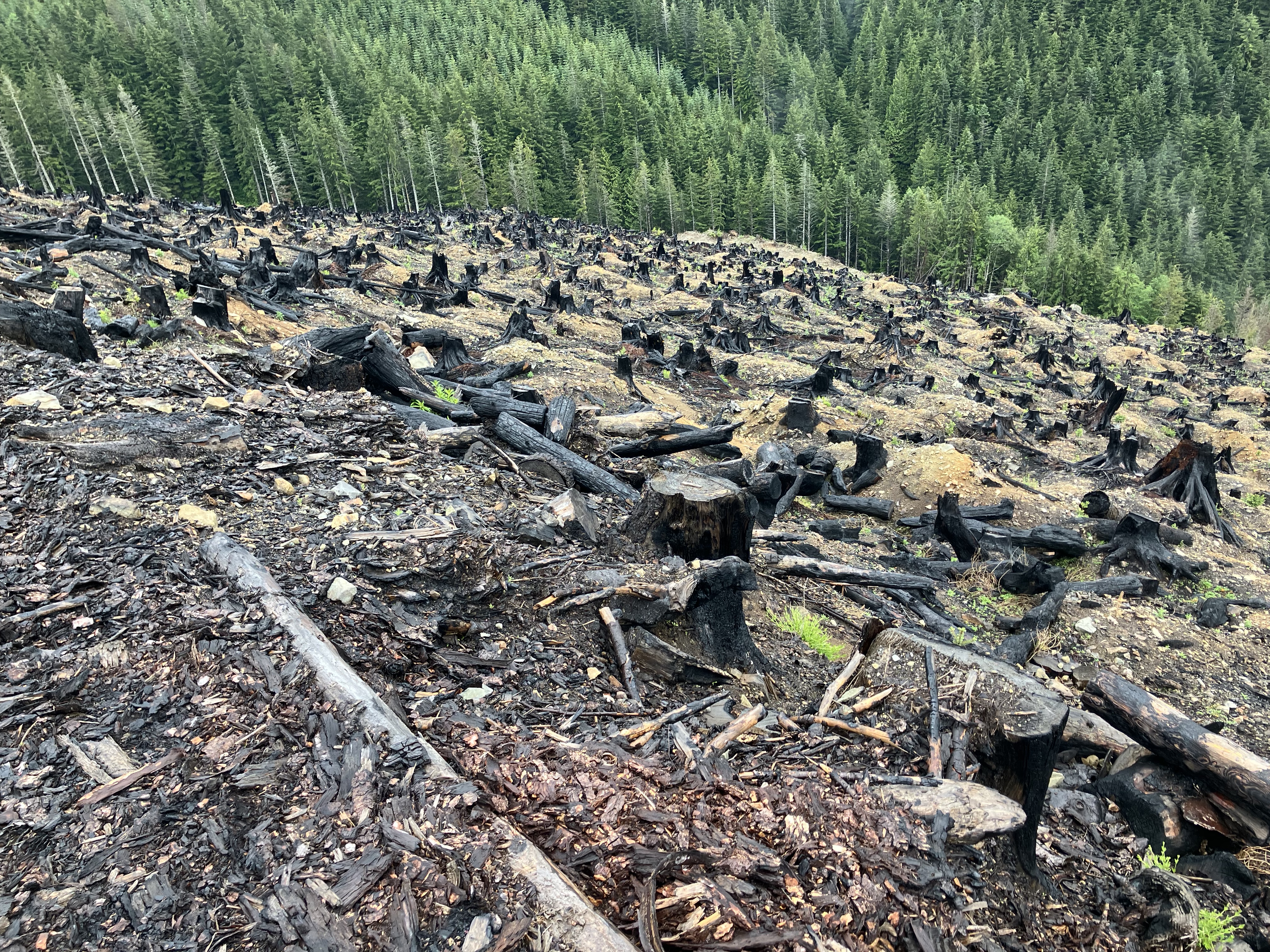
The first thing I noticed when I looked into the burn at the tree farm was a near total lack of regrowth across the landscape. Usually it only takes a year for new vegetation to come into a burn site, because of all the rich carbon from ash and charcoal. But in a hot burn, caused by too much undergrowth and not enough natural burning in the past, the soil is sterilized by heat, destroying all the living biomass in the ground that would invite restorative growth to return quickly. On top of not reseeding the ground, two years of total exposure to the elements, has drained the soil of any remaining top soil fertility, setting back recovery for years to come. Since this area is a commercial tree farm, replanting monoculture trees and the spreading of treated city sewage will fix the problem, as far as industrial planners are concerned. The landscape will not have long term capacity to regenerate, and perhaps that’s why nothing has been done in this two year old burn.
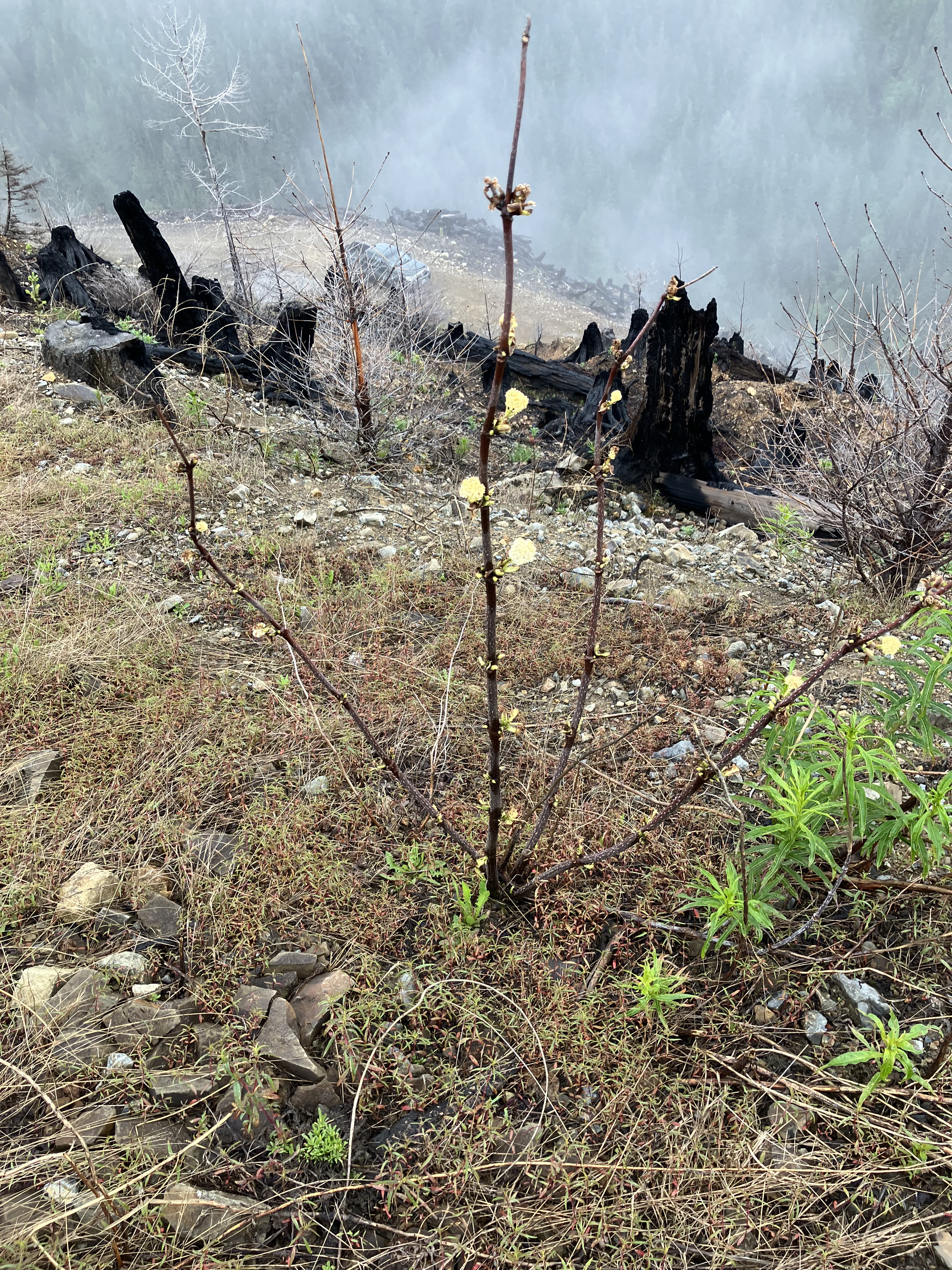
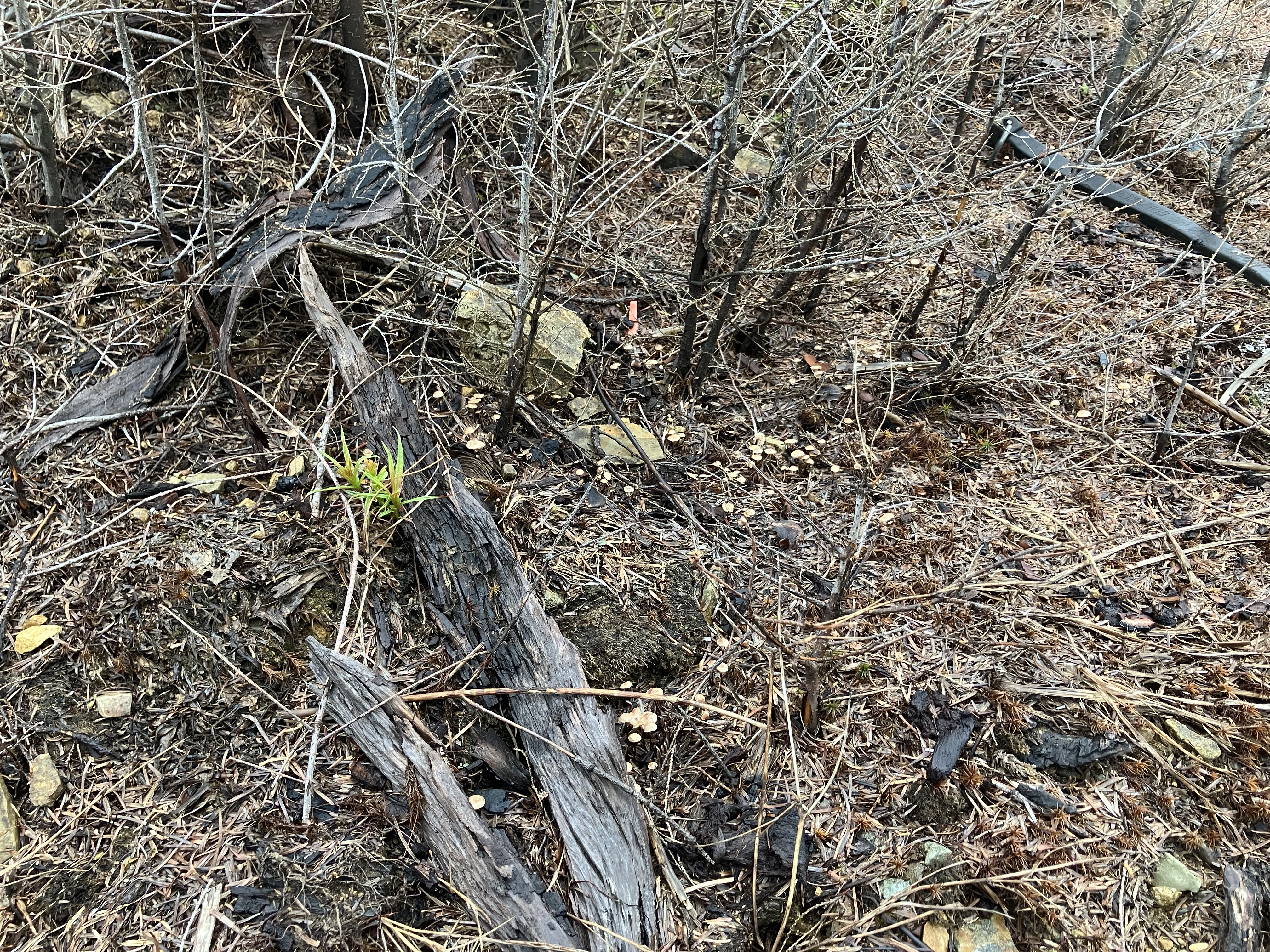
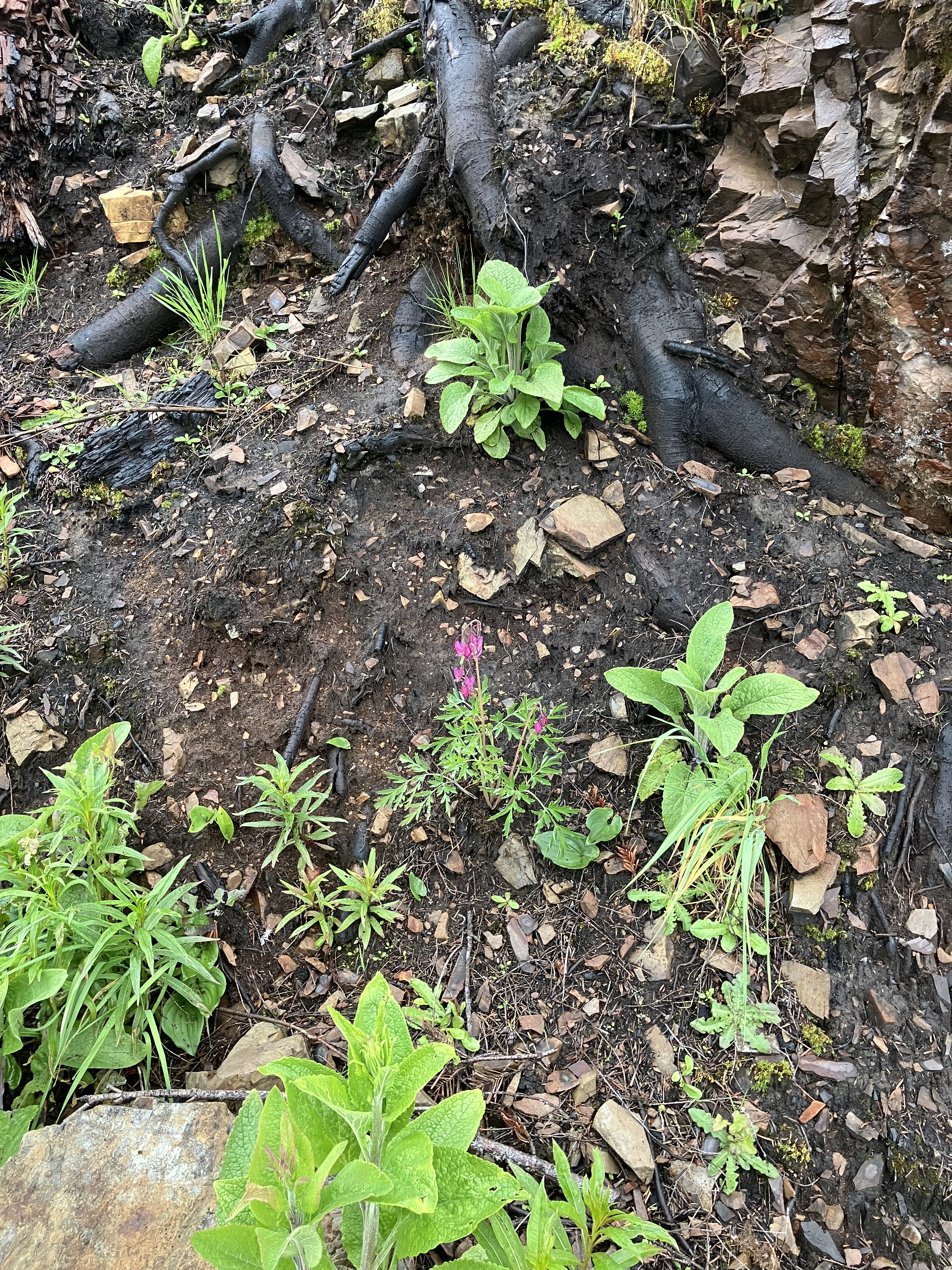
Red elderberry attempts to flower without leaves as some stunted fire weed breaks through on an edge next to the road. Dead replantings stand as testament to the failure of young trees to survive in this sterile soil. I wonder why there was no attempt to mulch with seed and straw as a way to help the land recover faster, especially on these steeper parts of the mountainside. There is one burned ridge that remains covered in standing dead forest, a good thing for long term restoration, if the forest company lets them remain. It’s a trend in forestry that is a step in the right direction- let things be and see. The timeline is much longer, letting the trees fall as they decompose, allowing mycological fungi to take over and replenish the complex underground systems of living microbiome, which in tern, transfer important minerals to the plants to encourage growth. When hot fires burn through, they kill these microbiomes and make restoration slow. The land will still restore its self in time, but we can help or hinder depending on patience.
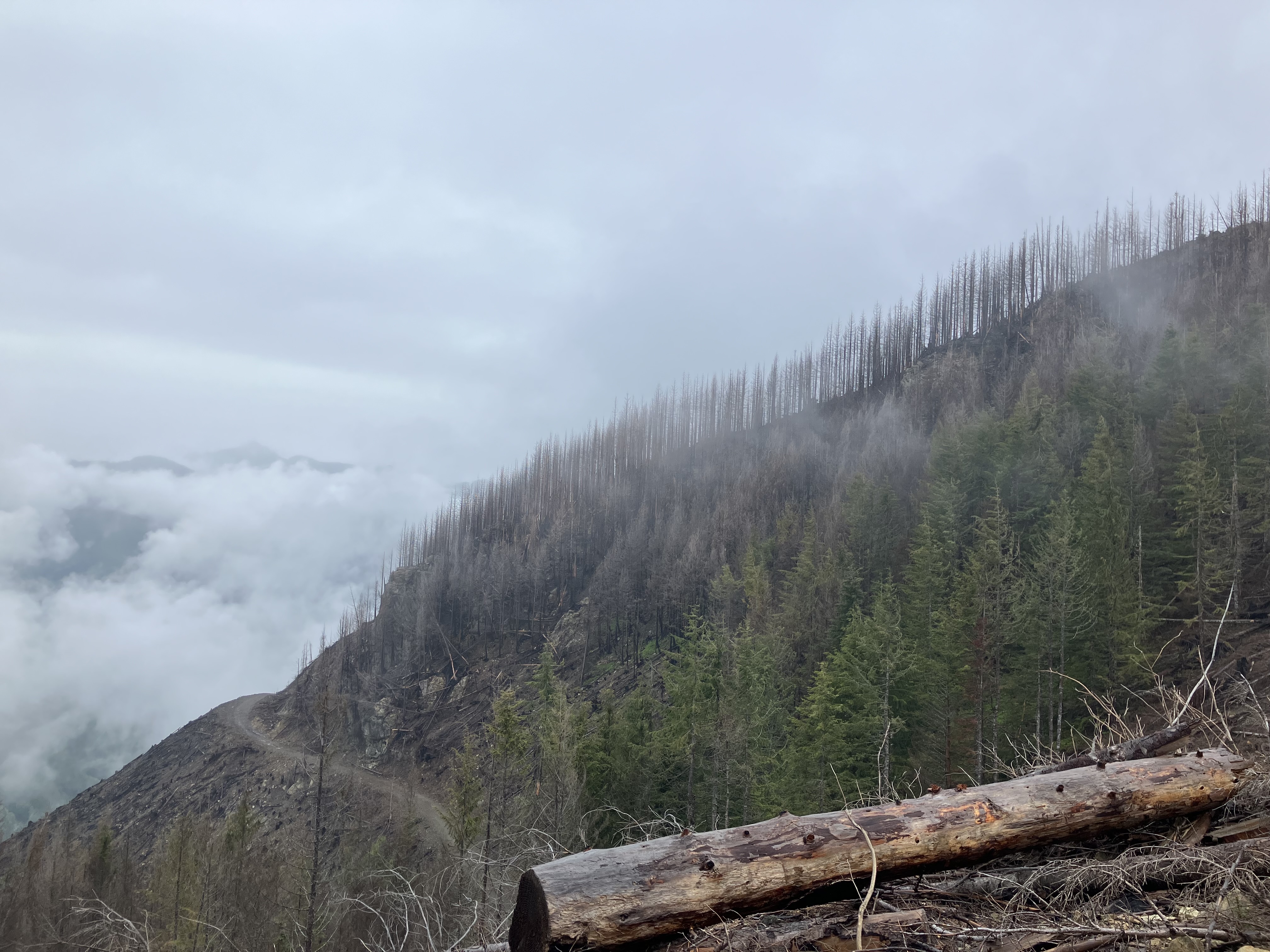
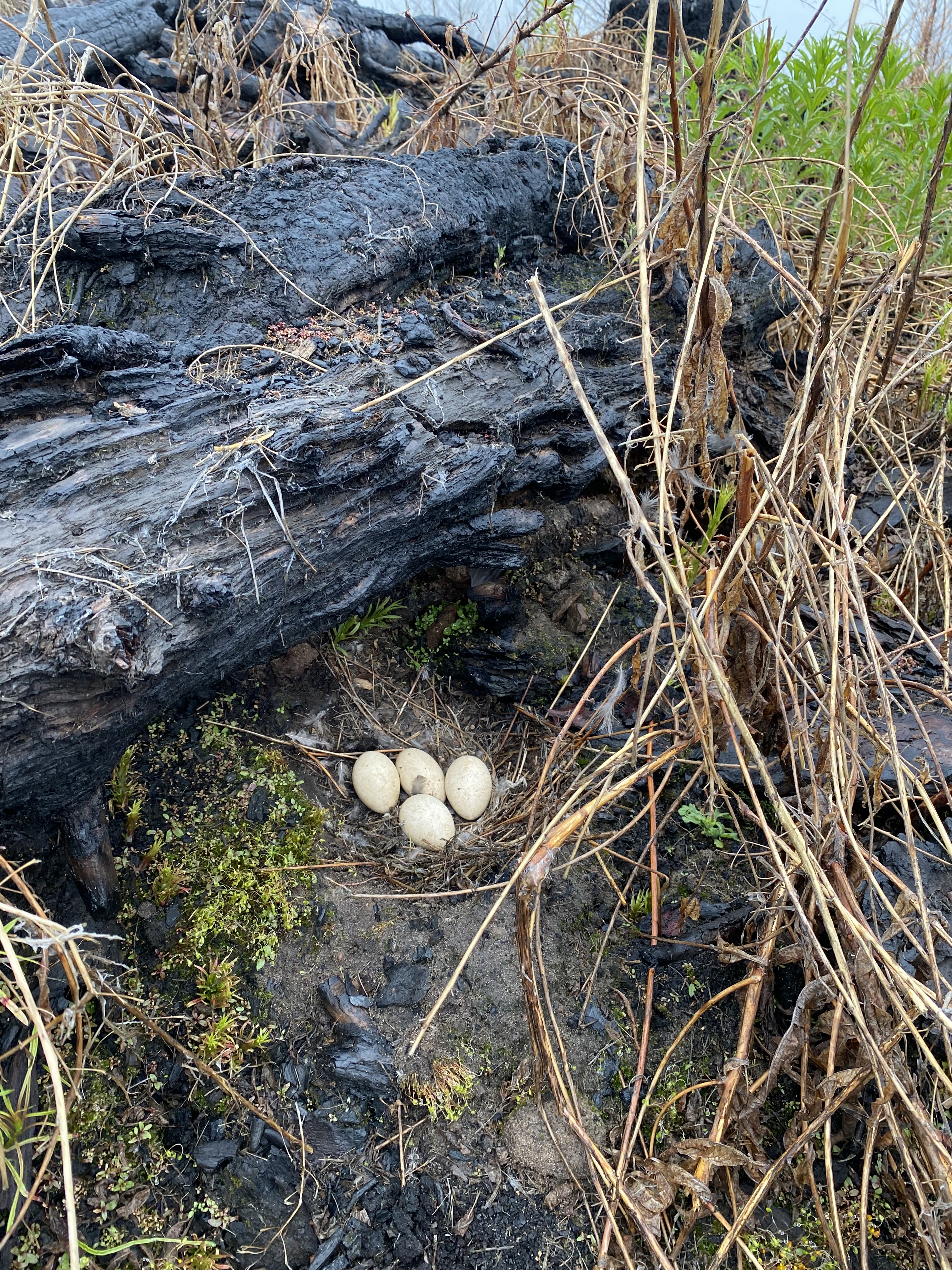
Within the commercial timber world, standing dead wood is a disaster waiting to happen. Dead wood attracts wood eating insects and fungus, which can spread into living forests nearby. I’m going to keep a close eye on this standing grove of chard trees to see if they are allowed to stand. It could be a grand experiment for the timber growers, or a nightmare they are planning to rectify once summer heat makes the ground solid enough for the large machines to go in to cut down and remove the “bad” wood. These burn scapes are such important habitat, it would be a shame to remove them. As we walked around in the burned area, there were many subtle and not so subtle signs of life, including a rough grouse on her nest of eggs, and a sensitive bleeding heart established on a steep bank, which sheltered this face of hillside from the extreme heat.
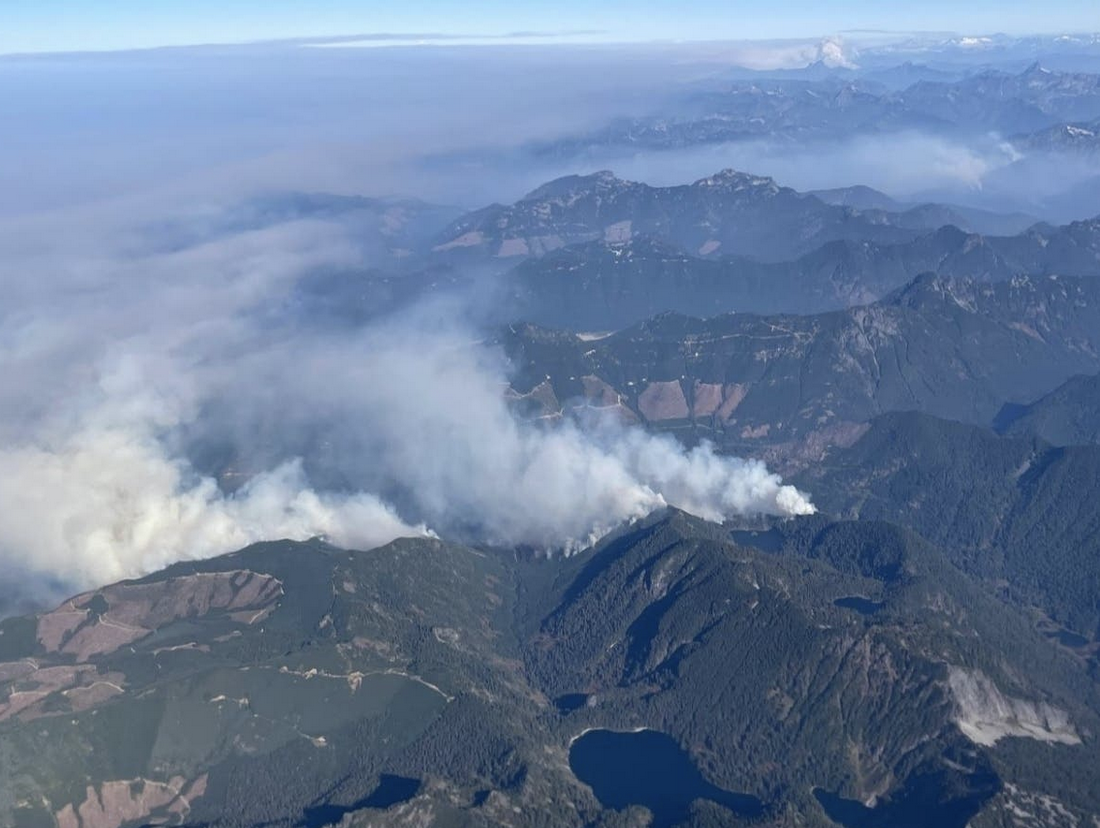
Fire is an important part of ecological change across the living land. Forestry practices are starting to understand this complex relationship, and trying to accept burning as part of the life giving cycle necessary to keep soil and growth healthy. The challenges of seeing this action through in commercial forests is not yet embraced, and I’m not sure what the best answer is, but mono-plantings are certainly not fire resistant, and the management of timber lands remains anti-fire at all cost. Still, fire will find its way in, and this particular blaze was human caused. Though it was under control relatively quickly because of a lack of wind, location on the top of a hill, and fast acting fire prevention for land and sky; the smoke and licking flames sent a chill through the surrounding community as we watched our neighboring west side forest burn. This fire was less than 15 miles from EEC Forest Stewardship. That’s a first for us, and it won’t be the last.
What are ways to create better fire resistances in our local woods? Well, in a temperate rainforest, deep rooted trees in layers of debris create a sponge for water to stay in the soil. The trees here are partners of fire- with thick outer bark to protect against burn, and expansive wetlands that keep fires low burning as they move across the landscape. We humans prefer to drain wetlands and clear forest to open up the land for commercial agriculture. For generations we have pushed out water and planted stands of one type of forest with no understory sponge. Water tables drop, the soil gets parched, then weeds and bramble come in, creating a tinder nightmare excellent, which when burned, created an oven of heat to kill the living soil. Humans think we can simplify the land for our short sighted capitol gains, but while making a profit, we destroy what nature took millions of years to create. With the total erosion of the once rich sponge that held the water and protected against hot burns, we replaced it with bone dry clay and rock, with little retention capability. This makes it much easier for heavy equipment to work in the timber farms, but no protection against fire in the event of a burn. Sadly, this is the only way to perpetuate industrial extraction of our crucial ecological home.

 EEC Forest Stewardship