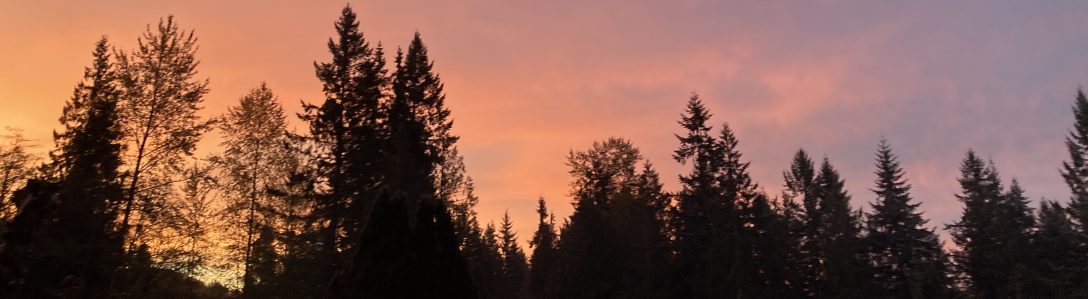
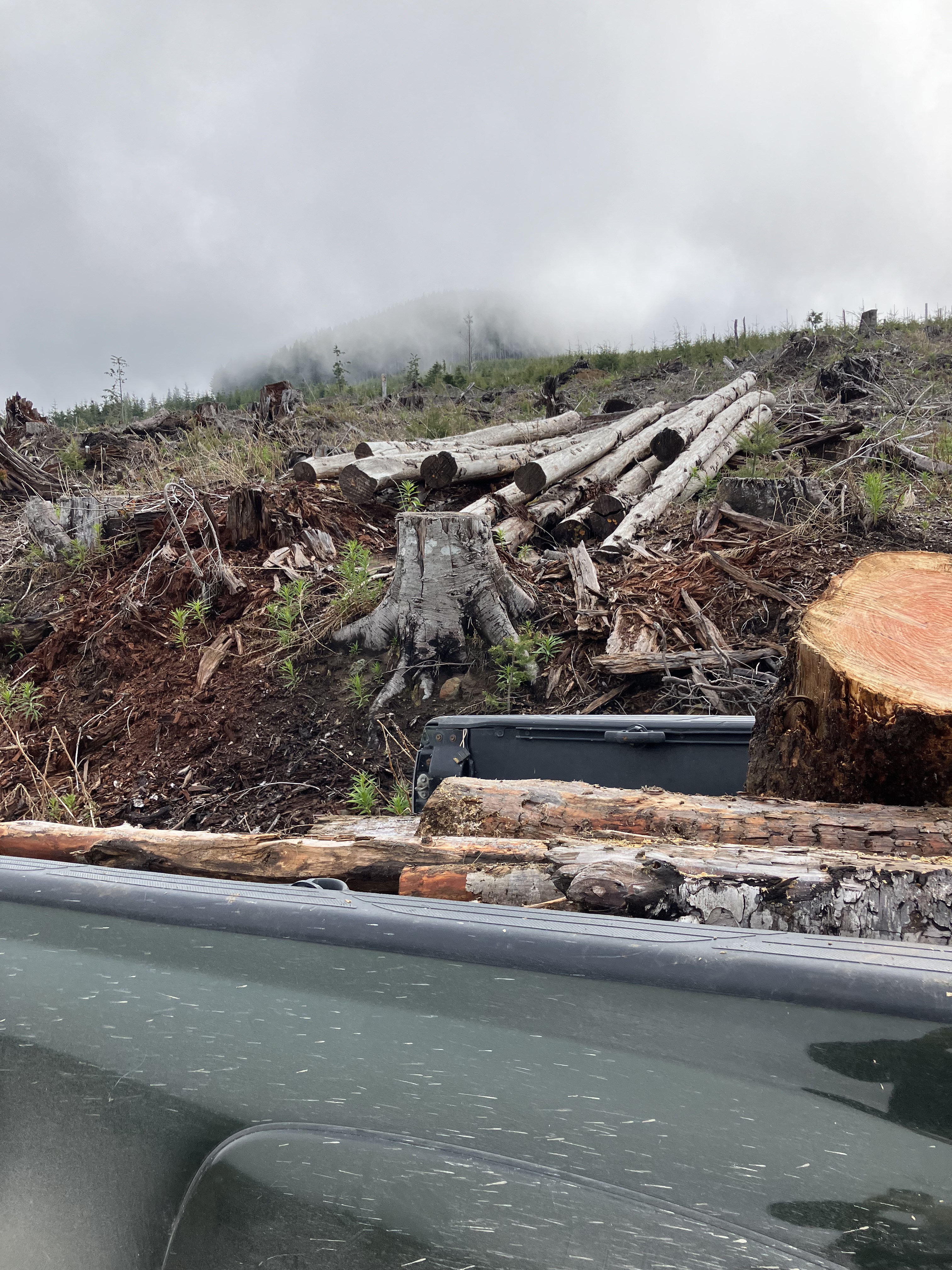
It’s that time again- cutting and hauling wood to heat the house with next winter. Each spring I take several trips into the local tree farm to harvest firewood. I have a pass with legal right to 7 chords from already cut and stacked logs in specific sites set up for us in advance. I’m not going into a forest and cutting trees- you can’t do that without proper permitting, unless you own the land and know it’s legal. Even on private land, there are often minimum standing tree regulations on the books, so consult with your local governing bodies before you cut. I’ve been harvesting in the local tree farm for a decade now, and it’s hard work, but very rewarding. These trees are commercially cut, and the stacks left for us to harvest from are usually manageable diameters- though there are sometimes huge logs that I usually try to avoid because of the time and strength it takes to get them cut and loaded into my truck bed. Know your limits and don’t take stupid risks. Chainsaws are no joke, and to throw out my back trying to lift a log to big for me would be at great cost to my own body, and my livelihood back at the farm. Work safe!
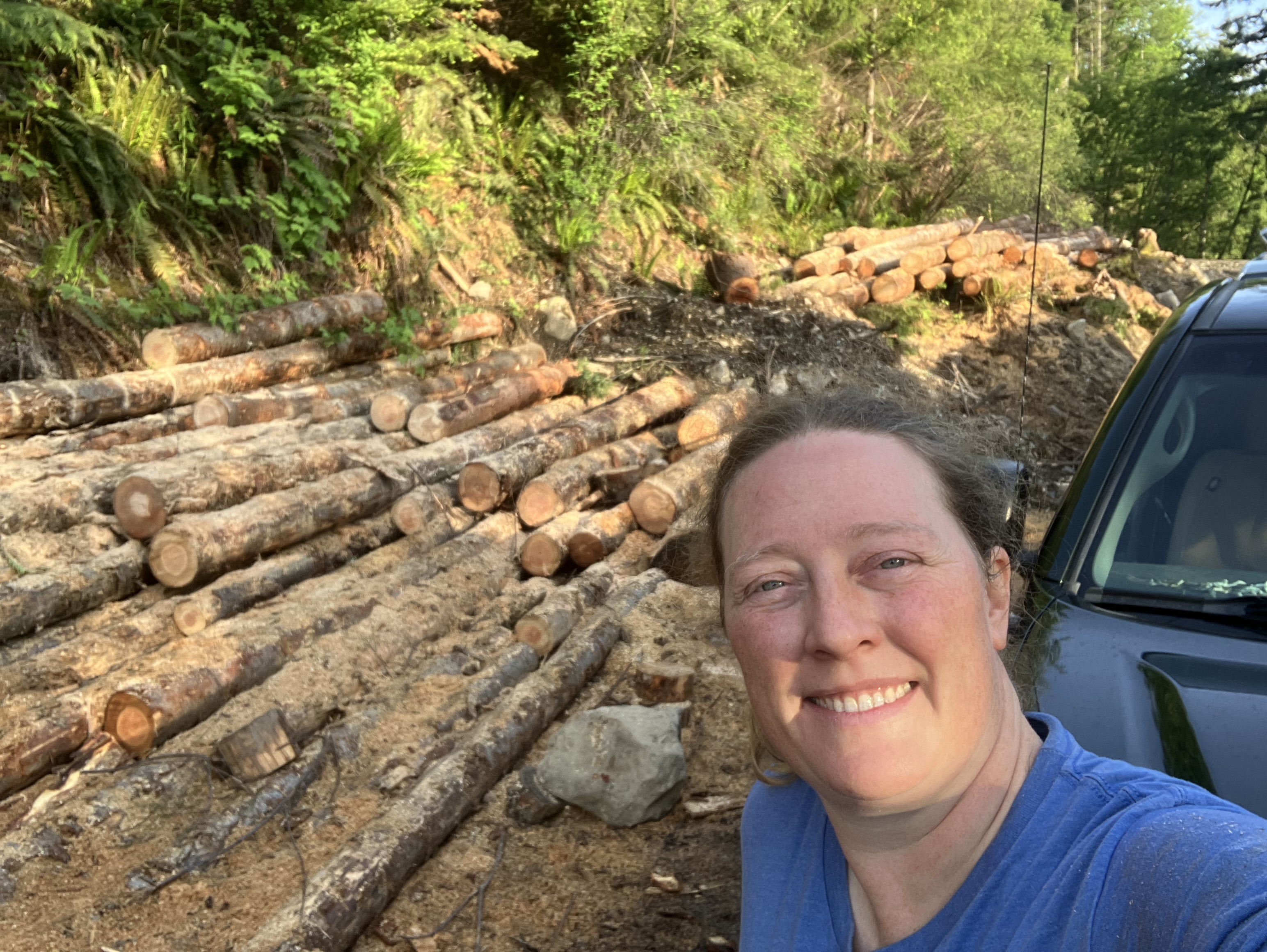
I love hitting up the wood piles in early spring, scouting the maps and also future hunting spots next fall. Fresh logged areas are usually active habitat for deer once the understory starts to grow back in. For now I’ll be hunting good log piles that are easy to access right next to the road and safe to cut. Some stacks are too precarious for me to risk climbing into. The worst thing would be to have a log roll onto me while cutting. That’s also why I stick to the smaller wood. I’m usually out cutting alone, and though that is not ideal, the laws of the tree farm are strict, you can’t bring friends in under your pass. So I roll solo and always let someone know when I go and return.

These landscapes are often quite bleak after a recent cutting. I think it’s important to see what our modern timber industry does in the surrounding hills to appease our consumption of wood products. Everything from your commercial lumber to the paper towles in your kitchen came from trees. I certainly still use toilet paper- which is more likely to come from imported wood products these days- from forests where there is less oversight and often much more degradation. Please know, IKEA is a huge player in the abuse of wood cutting in Europe, so stop buying cheap things from green washing companies. Know where your forest products really come from and at what cost. My firewood comes from an active timber forest that is cut and replanted in what is called sustainable forestry, but if most of the biomass is leaving, there is not much left for the soil to rebuild for the next batch- except King County is fixing that by introducing human treated sewage into the forest as a nitrogen fix for the landscape. That’s a kettle of fish already covered in other writing on this blog.

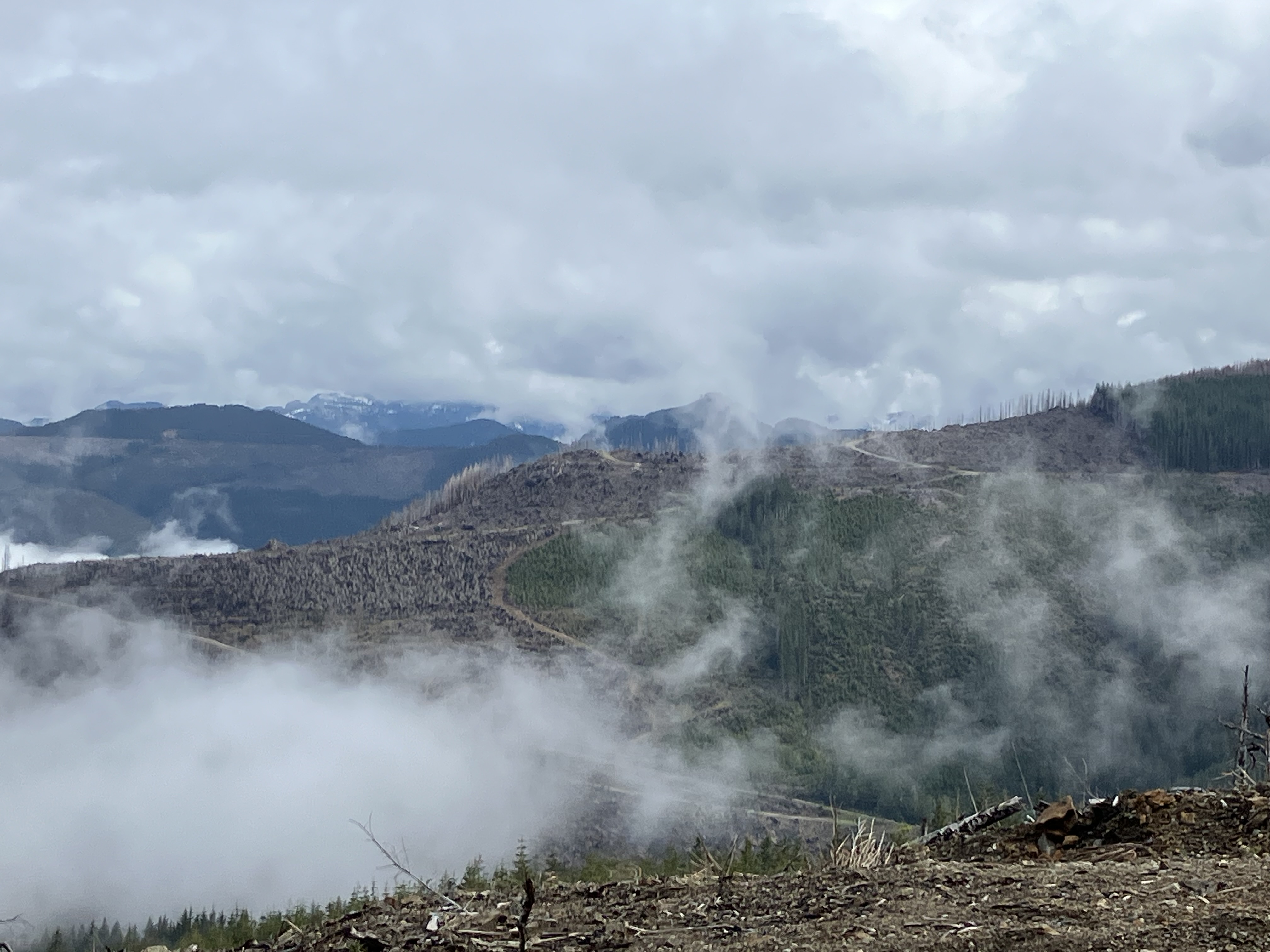
The map above shows available sights I can go to harvest the logs set aside for personal use. If you cut in the wrong place, you can loose your permit, so it’s important to know where the sites are and how to get there. It can be a maze of roads that all look the same, and clear cuts certainly look the same, so know the area and what’s legal before you go. This year, one of my chose sites overlooked a burn area from a few years ago. There was still a lot of snow on the ground when I was harvesting wood, so I was unable to get over to the next ridge until later in the spring to have my first look at the burn of 2021. I’ll have a separate blog post about that experience later this summer. Below is a picture from where I could see the burn from across the ridge.
I burn about 5 chords in a winter, and any extra is always rolled over to the following year so I always have wood at home to keep things dry and warm. Sometimes I have a fire as late as June if the temps are down and it’s still wet. Keeping the house dry is just as important as warmth here in the temperate rainforest. Each truckload I haul home is about half a cord, so it takes about 10 trips to get enough for one year, and that’s some work. It’s my gym membership, and the chainsaw work keeps me sharp on my cutting skills and safety routine. I wear Kevlar chaps, hard hat, safety glasses, and ear protection. Heavy gloves are a must, because most of this wood is Douglas fir, which is full of slivers that can even go through my jeans, so I appreciate the chaps for more than just protection from the saw. There are strict harvesting times of year too. By the end of May, the cutting is shut down so we don’t cause an accidental fire. Chains can catch in stones and throw sparks, so summer drought is not a time to be running the saw. I got 4 loads this Spring, and will get another 4-6 in the fall. I had some roll over wood, but I try to get as much as I can during the open windows of harvest to keep a stockpile.
When cutting in the field, I measure out 6′ lengths for the bed of the truck that I can lift. About 8 logs get into the bed before weight limits top out. My bed can hold about 900 lbs safely. That’s about what I can lift in one session anyway, so it’s a good limitation. Why do I not buck the wood into splitting rounds in the field? Safety. The less time my saw is running out there where I am alone and far from any help, the better. I’ll have plenty of time to buck at home, where I have a cradle to hold the wood for me to make cutting more ergonomic. I’ll also borrow a splitter from friends to make light work of all those rounds. I’d say there are about 20 hours of work involved, from harvesting to staking the split wood. It’s a great series of workouts, and worth it to have a low cost heat source for the year. I burn from late October through May consistently- a little over 6 months of the year. Electric heat costs keep going up, so the wood keeps living here affordable. Since we are in a forested environment, wood is a good choice- in a modern, efficient stove. Older stoves throw out more pollution and waste a lot of heat, so make sure you have the best setup possible to burn efficiently.
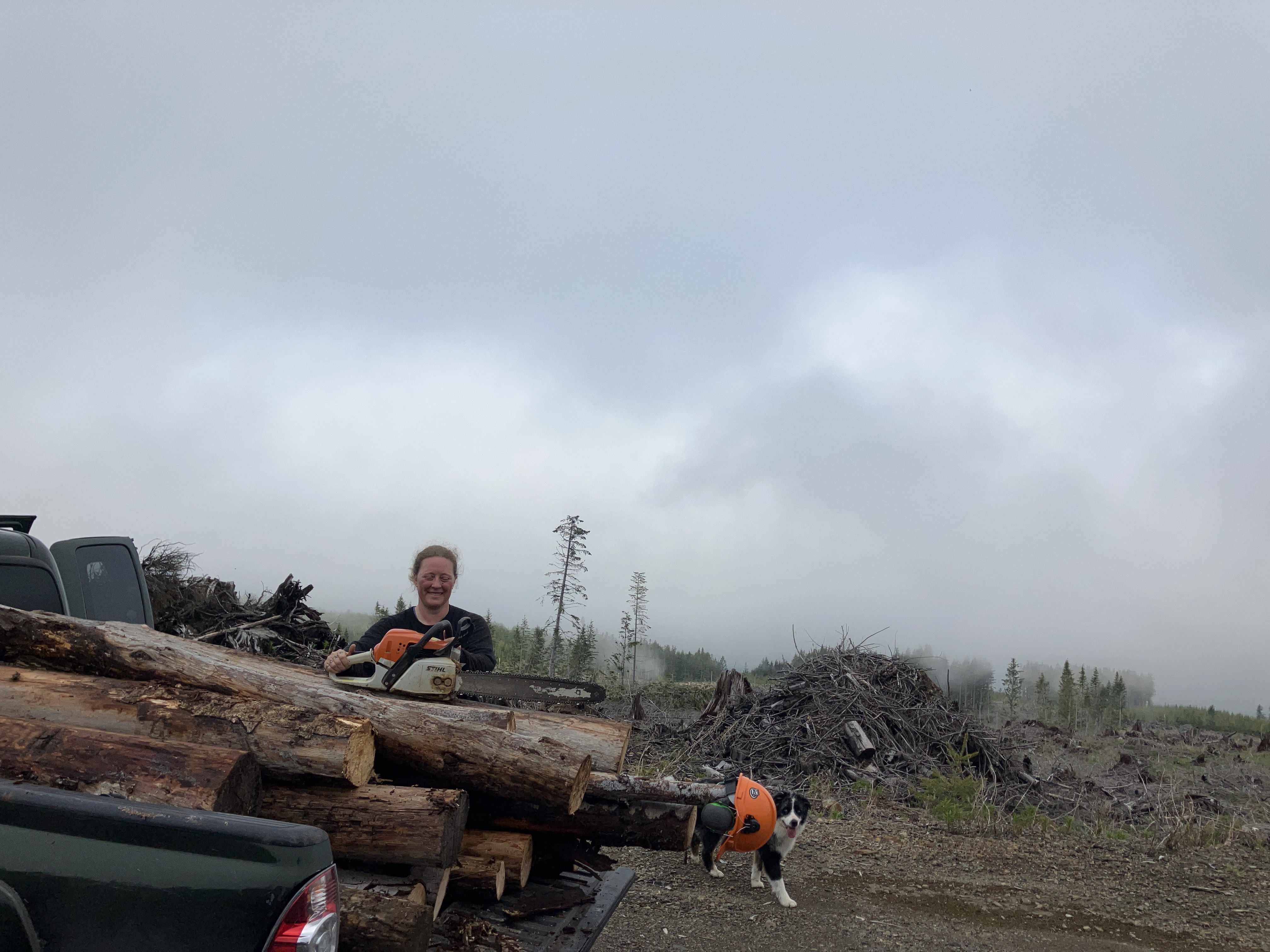
Being out in the wilds cutting wood is a great feeling. I love my trips to the tree farm because I get to see what’s going on where the active cutting happens and know what kind of clear cutting still goes on in our commercial forests. It’s telling to see the trucks hauling out smaller and smaller trees, because we’re now making so many wood products from particle and pressed molds. Large beams are layered together using veneer. Very little timber wood in produced in Washington today- it’s mostly imported from Canada, where the cutting of old growth continues. Please be aware of our forests’ depletion all over the world, and use your buying power responsibly when buying forest products. I can also tell you now, any “tree planting” rewards with your buying power is replanting these commercial timber sights- not virgin forest in The Amazon. Those trees will be cut when they reach 20-30 years; chipped up to make particle board or pulp for paper. That’s the carbon credit system corporations are using now to cover up bad ecological practices. Don’t fall for the green wall of wash.
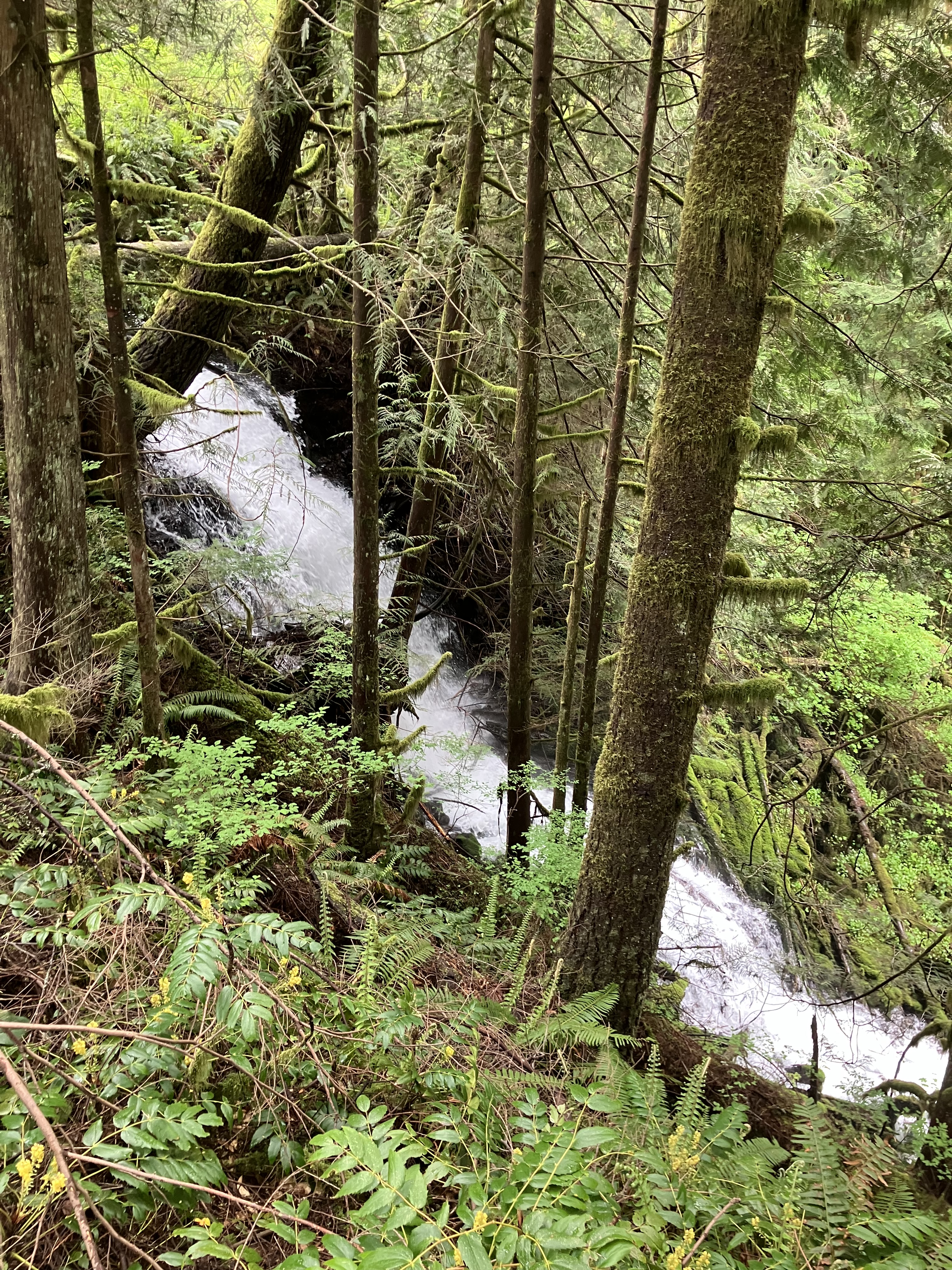
Taking time to return to a landscape and watching the changes is an important way to stay connected to place. I come to the tree farm many times seasonally, fishing, hiking, hunting, harvesting wood, mushrooming, and more. I’ve seen incredible wildlife, tracked cougar in the snow, had bobcats pop out of wood piles nearby, had eagles fishing with me in the lakes, and coyotes darting past while driving. It’s the edge of the wilds, connecting up into The Cascades I call home. Even with all the cutting, there are pockets of protected wilderness around streams, rivers, and lakes. These are the beautiful places I access when I need to refresh and revive my senses. Thankfully, most of these sensitive places are protected and will be there for generations to come.

 EEC Forest Stewardship