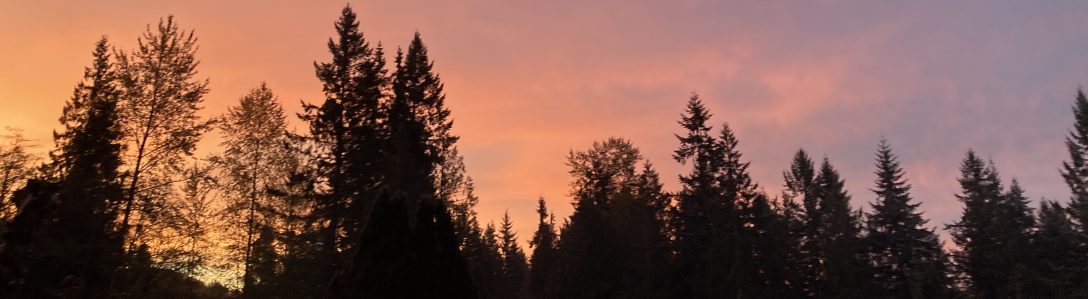

I live here, and show gratitude for the privilege to wander these hillsides, mountains, and river valleys; home of sdukʷalbixʷ The Snoqualmie.
There are glimpses of what has, and could be again, in a fauna restored to old growth temperate rainforest with massive water systems in rivers, wetlands, tidal bays, delta outflows, and ocean tides. This land is legendary, once roaming with countless elk, where now only echos of mega-fauna, wandering in fractured herds along the valley lowlands in unsustainable patchwork “habitat”. Developments continue to push the last creeks and wetlands into parkland space for RVs and horses. Wilderness flickers in final forages along edges, with few avenues into quiet repose. Two stroke engine noise pollution running daily all around, dogs, hikers, electric bikes, and recreational vehicles push further into what was once peaceful wilderness.
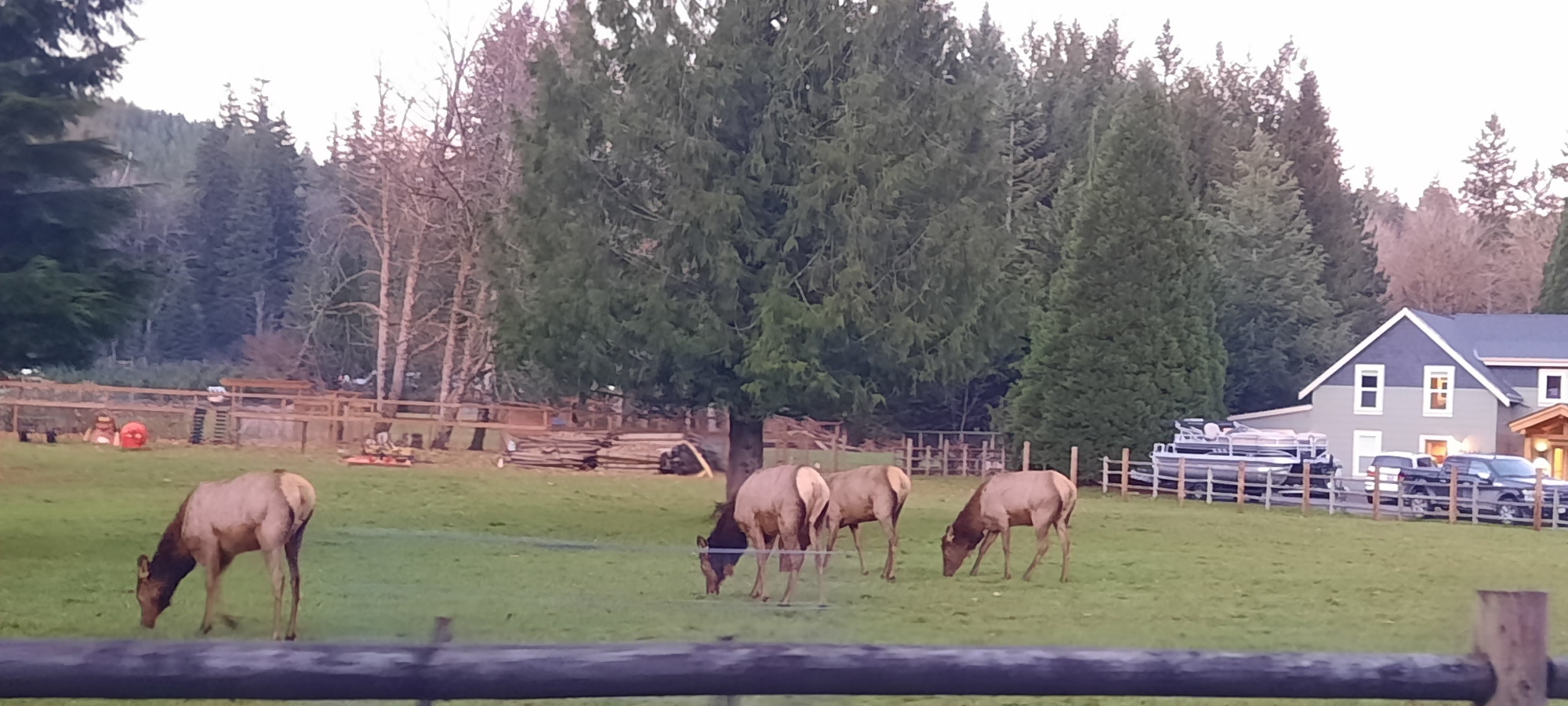
Our encroachment continues, as King County, where EEC Forest Stewardship resides, is the most affluent and economically successful county in Washington State. The northeastern part of said county, where Duvall was founded, is the furthest out you can get and still be in King County. People pay a lot of taxes on these properties, making it harder and harder to afford a life here. More and more houses are built, just as more and more homes are put up for sale. There is a retreat of older locals out of the county, as more young tech workers move in- closer to Seattle and jobs. Salmon, elk, deer, cougars, bobcats, and all the countless forest plants and other animals are removed to make way for more people with grander lifestyle. In the more rural counties, people pushed out of the expensive areas are still expecting the convinces of city life, and so, strip malls and fast food trails after them, broadening the footprint of country beyond designed capacity.
What do we do? Well, the underlying issue around much of the current development is maintaining what’s already there- or not. Usually not, and it’s costing us as tax payers, which developers always fail to talk about when presenting new build. What happens when the new build gets old, and no scheduled upkeep causes rapid urban decay? There are countless empty buildings standing in many cities now, in a post COVID world. No one wants to pay the cost of rent in cities now, and no one can afford housing, yet empty buildings remain, and everyone looses. But in rural areas like Duvall, the gluttony of development is strong- tearing down old farms to make way for expansive apartment complexes, now called town houses, to make it sound fancy. There are hundreds of new build 3 story homes going for 800,000 or more, and offer rural charm with city access- though traffic is an elephant in our proverbial zoo that is a two lane state highway.

The traffic on a typical weekday evening is backed across the valley and up to a mile beyond, making the quaint 45 min drive from Seattle a 3 hour ordeal in the last ten years of growth. Where do the new family sedans and midlife crisis vroom vrooms go? Line up and wait- but Light Rail is coming- 30 min away when there is no traffic, but there is- from Redmond to Duvall, light rail won’t change that, but it will let us get to Seattle from Redmond on reliable public transit. Our other Valley Shuttle, runs from the backyard, to anywhere else you might need to go within Snoqualmie Valley. It’s delightful to know your public transit options to help make an impact on emissions and traffic. If more people could rely on such options, we’d have a much better flow in commuting and commerce. Do I? Light Rail once to the airport- but usually, I put in less than 30 miles of driving a week total, but if I ever need to do daily commuting to a job in town, I’d have public transit. Once the Light Rail gets to North Redmond Transit Station, I’ll be able to take public transportation, at reasonable hours, all the way from Duvall to Seattle with ease, which might solve the traffic headaches.

The backyard plan at the old farmstead is that pair of mules and a wagon. I’d like to find a possible rout from my house to town, but the turn out my driveway heads onto a 35mph double blind well paved road with frequent drivers doing over 50. The mule team and wagon wouldn’t have a chance if a logging truck came flying around the corner. Just as I was planning to move West from Vermont, I began dreaming about riding in a wagon cross country. It was then I looked up possible success stories and only found this. Needless to say, I dropped the whole idea at the time, but am now back to the dream, a little scaled down to my own backyard. It’s a future possibility, but not right now.
These days the truck is a loyal worker, hauling mulch, shavings, firewood, camping supplies, livestock, fruit trees, and more. After ten years of hard work, we’re still a great team, with a fresh set of back country tires, “Reptile” as she’s affectionately named, will be spending more time in the wilds through the seasons at The Snoqualmie Tree Farm, where I hunt, fish, harvest firewood, hike, and snowshoe. Though my most recent late May visit to the higher elevations in that private 90,000,00 acres surprised me with several feet of snow still on the ground in some places. I was not dressed for the weather, but still enjoyed a splendid hike up to some alpine lakes on a foggy day.
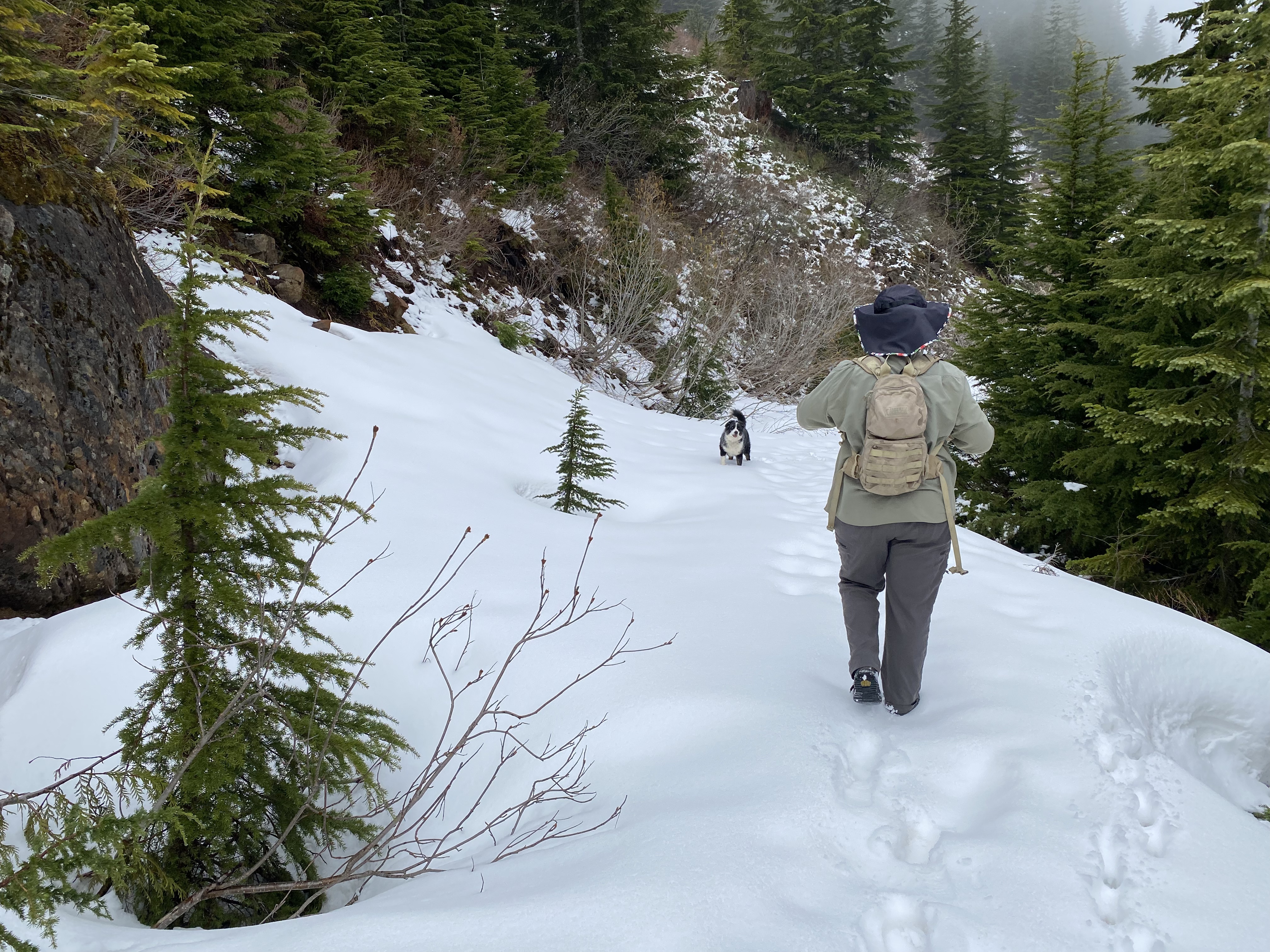
The Central Cascades are right out the back door, and within a few hours drive, you can be at over 4,000 feet of elevation and on a trail taking you into back country magic. You can drive another three hours in the opposite direction and find yourself facing The Pacific Ocean, and endless beaches and tide pools on dramatic scale. What an epic coastal landscape, and though EEC is tucked away in the hill country of The Puget Lowlands, it’s a jumping off point to wilderness and adventure just a few steps out the door and down the trail. One of the most often used treks in my own life is The Tolt Pipeline. This fantastically uneventful avenue is safe for dogs and easy to navigate, offering some intense up and down climbs with well drained gravel course to allow smooth foot travel or a breeze in the saddle. I still have to brave about a quarter mile of Big Rock to get to my local access, but once off the blacktop and onto the gravel trail, it’s smooth sailing all the way into The Tree Farm and beyond. I even accesses some good hunting spots by bicycle- and might again off Kelly Rd.
The Tolt Pipeline offers a variety of side trails, but the 8 mile stroll (one way) from my house to the foot of The Cascades is beyond where most people tread. Where the trail terminates, the pipeline continues, all the way to the reservoir up in the lower start of the mountains- as shown on the topographic map below.

This trail is still public right of way, though the access is not easy to find, and the gate is locked, so you’re still on foot, bicycle, or saddle. There is access into public land on the north side of the trail, but the south side remains tree farm, and as you continue east, you’ll end up being off the right of way and in the tree farm, so have proper permits to enter if you want to get to the elevations on this rout. I love it because it’s out the back door without the need of a vehicle, but to get into the tree farm with my truck, I have to drive south about 45 min to get in through the gates we get keys to when we buy a rec pass from JP Morgan. Corporations are people too, and they can own vast swaths of natural resources in a landscape near you. At least I can by my way in, and have for the past ten years. May the access remain available for years to come, as I get much of the wild food I enjoy from this access, and the wood that heats my house in the winter- another crucial part of my personal survival.
Even the water I drink from my well is part of this larger landscape, so water, shelter, food, and mental/physical well being rely on the surrounding backyard, and that goes for most everyone. Sadly, a lot of folks are suffering from ecological amnesia, and it’s costing us our basic needs. If you can’t drink from your tap, there’s a problem. If you can’t access locally grown affordable food, there’s a going concern, and if you can’t find peaceful mental relaxation in a green space within a few minutes of your dwelling, there’s a blow to mental wellness. If there is no access to wild places, clean water, and food- quality of life suffers, and eventually, the human condition breaks down. When society begins development around finite resources and basic needs, when the wilds are given space to breath, when people find caring to be more productive than manipulation for personal gain, when the people can look one another in the face and say hello, ask for help, and trust one another; when that world arrives, I’ll have my two mules and a wagon in the backyard.


 EEC Forest Stewardship