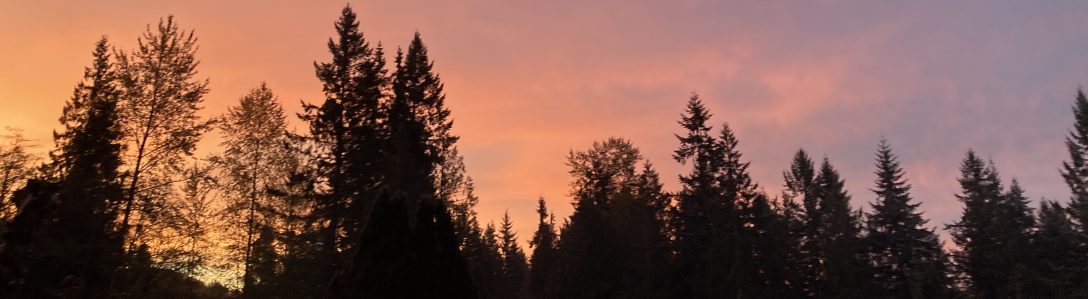

The birds had us this year, with cold, wet weather and gusty winds, the morning was adventuring and scouting, with good company and great land exploring. My hunting buddy also taught me a lot about state forestry practices and improved habitat initiatives- including snag preservation and leaving larger trees, already well established, to improve future groves. There were hundreds of burned acres we witnessed, but stayed out of, for a myriad of reasons, including erosion prevention and completely denuded landscape, which gave no cover, food, or shelter to wildlife; thus barren of Turkey. Environment is unraveling, yet also spinning new webs of restoration, sometimes tangled, uncomfortably rough, wearing raw emotion.
Dynamic movement up and down ridges and hills, circling tight patches of public land, and seeing the human nature of ownership, and short sighted carved up natural resources. Turkeys were brought to Washington State by ignorant colonizers. Ecological preservation had no cognitive ring to end industrial extraction genocide- it’s still only buzzword with little substance for profit father god. That’s to take in, with slow breath, then exhale in disgust and live on. Stepping back into the field, where a friend and fellow environmentally aware woman, hunter, and professional conservationist shared pursuit of invasive species offering a good meals and well earned dirt time. Possible harvesting of our favored galliformes– the heaviest member of that order. We were mesmerized by larches still grasping their needles of golden majesty. What spelndor set against dark green fir and pine, undulating in the wind, up and down hillsides, an ocean of once flowing forest now worn to patches dotting here and there.
Turkey like large open spaces, and fire naturally accommodates this, opening up new seed dispersal avenues for terrestrial birds to scratch and peck at, spreading vegetation and new plantings throughout exposed soil. Surprisingly, humans clear with even more enthusiasm- with no intention of restoring habitat for anyone but themselves. The productivity of barren land declines into desertification. Agriculture relies on inputs- heavy labor extraction, and exposes ground eroded by the elements, robbing the land fertility. Many clearings here in east central Washington are residential development. The resort sprawl off Waitts Lake caters to many an exposed cut and unchecked edge clogged with young pines and brush. A resident flock enjoys dust bathing and endless forage in the needle beds and weedy mounds between RVs and little cottages all in a row.
Our other major sighting on our one full day of hunting, reside at the municipal water treatment plant. How delightful, a sort of hot springs, if you will. These birds are fat and sassy. One tom was actually presenting to a mixed flock, which stirred up the other males and sent the hens scurrying off to forage in peace. It was out of season for courtship, but an El Nino year paired with exponential warming climate makes for confusing times. Our red alders are still clinging to green leaves in late November. Change continues, though on a much faster track than most of us realize. Still, turkey adapt well, and have established a thriving presence around the country.
Where a new species establishes, it usually pushes out another- directly or indirectly. Our native grouse populations on the east side of the state have been deeply affected by fires in the past decade. Habitat loss has and will always be the number one harm for all wildlife, but we like to skip over ourselves as responsible, thus putting more effort into profits as usual. The amount of subdivided lots for sale around The Coleville National Forest was a little shocking. Countless 5-10 acre lots with fresh clearings, barbed wire fencing, and an RV or trailer home on a freshly poured pad mark each domain. It did remind me of EEC lands back in Duvall- a lot of similarities could be drawn. But these lots are recent development in an area with high fire risk, slower recovery time, and strained resources. Turkey thrive here, but grouse and elk struggle in an ever shrinking habitat.
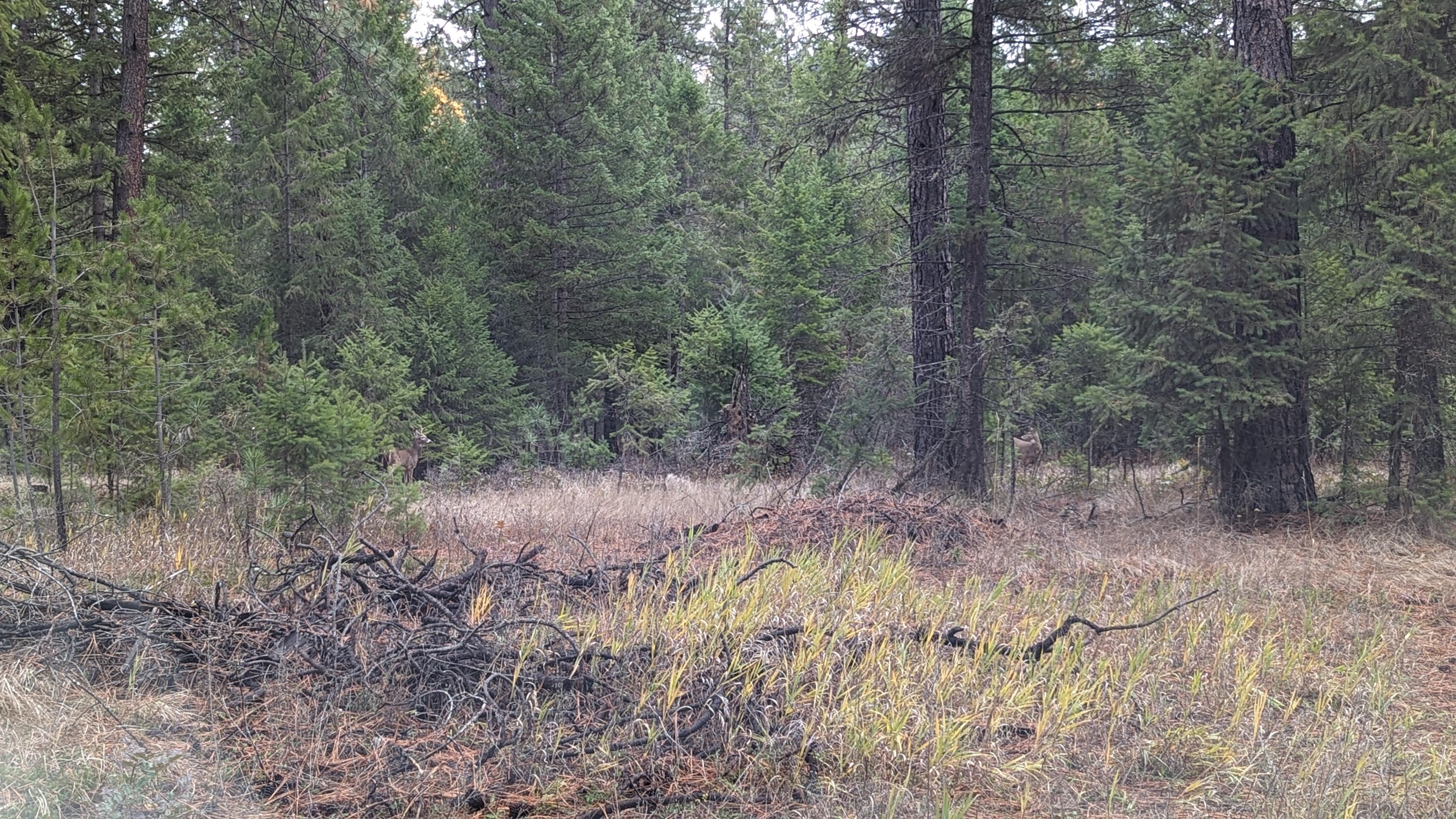
On our hunt, we followed a pair of mule deer through a stand of more mature forest, but quack grass chokes out native ground covers like kinnikinnik, a favorite ground bird foraging berry in late fall. Invasive plants exacerbate burn hazard in the environment. Evidence of much needed fire control could really help these lands, but too much fuel has created tinder boxes, and we continued to see vast acres of hot burn, scorched earth across many hilltops. We never saw any evidence of turkey in these overgrown, forb-less ground spaces. Though fire does play a crucial role in habitat restoration, it takes years for the land to fully recover from hot burns, and often, development uses the scorched earth as an excuse to barge in and build on “destroyed” land. Thankfully, science is showing us how important it is to let burned soils rest, or even encourage reseeding with straw mulch where applicable. The wild turkey support recovery by spreading seeds, scratching up the soil, and pooping fertility across vast acreages. Though they are invasive, these birds are also filling gaps in the ecology, where once thriving populations of grouse would have played a similar role.
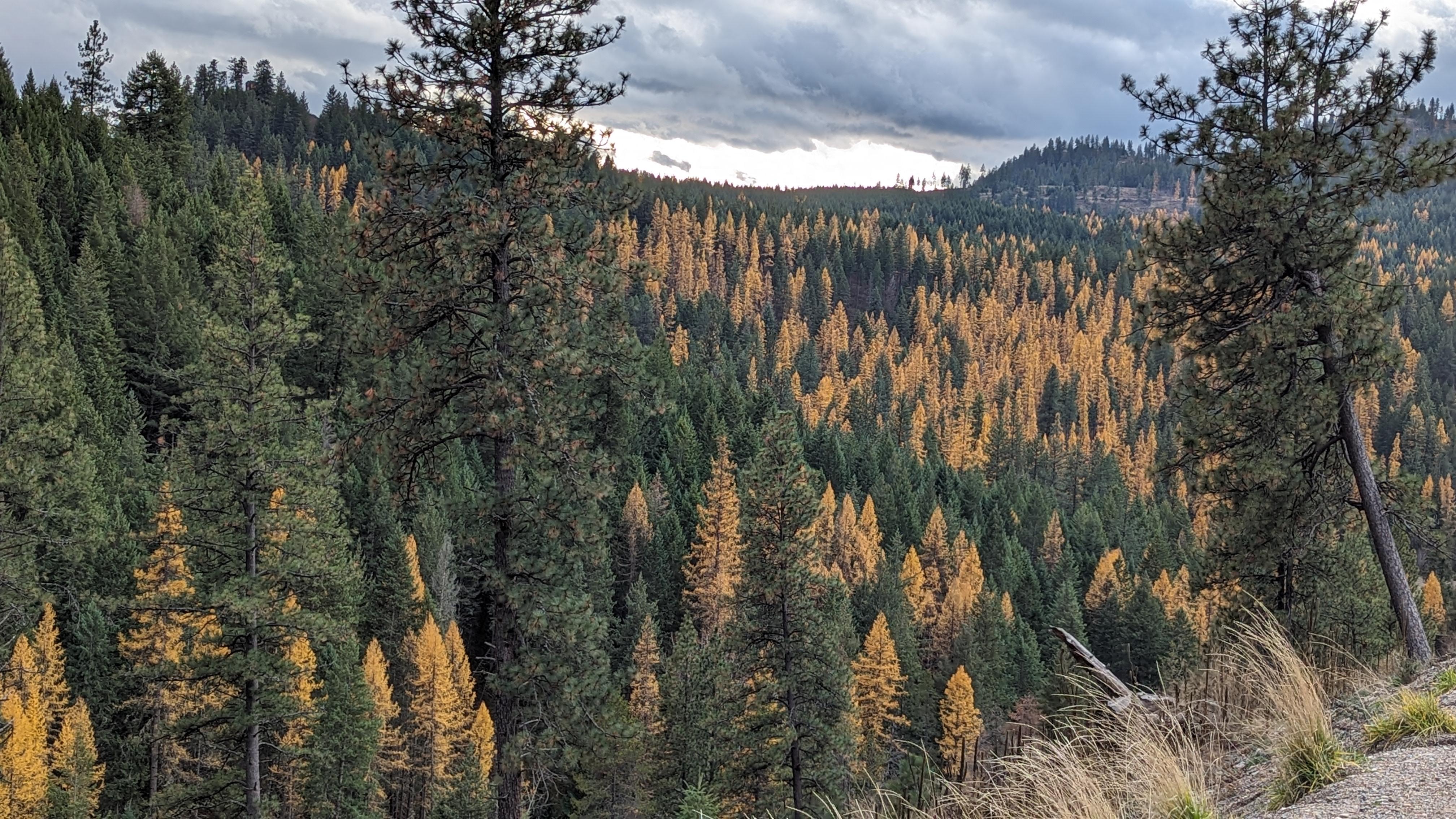
The season is not over yet, and another trip to the east side this winter might allow for more hunting opportunities, but it’s a heck of a drive to turkey territory, and our home flock of Cotton Patch Geese are thriving here at EEC Forest Stewardship. Still, getting out in the larch and pine forests over The Cascades is always a great change of ecology and learning adventure. So much gratitude to the land, friends who share a passion for hunting, and the living world we are deeply connected to once we’re out in it.

 EEC Forest Stewardship