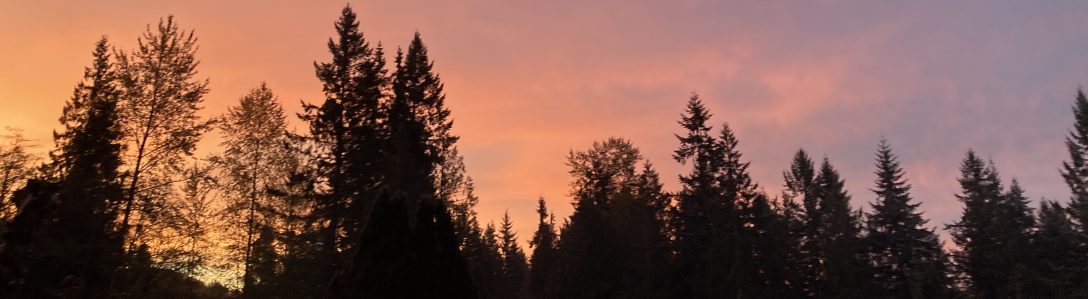
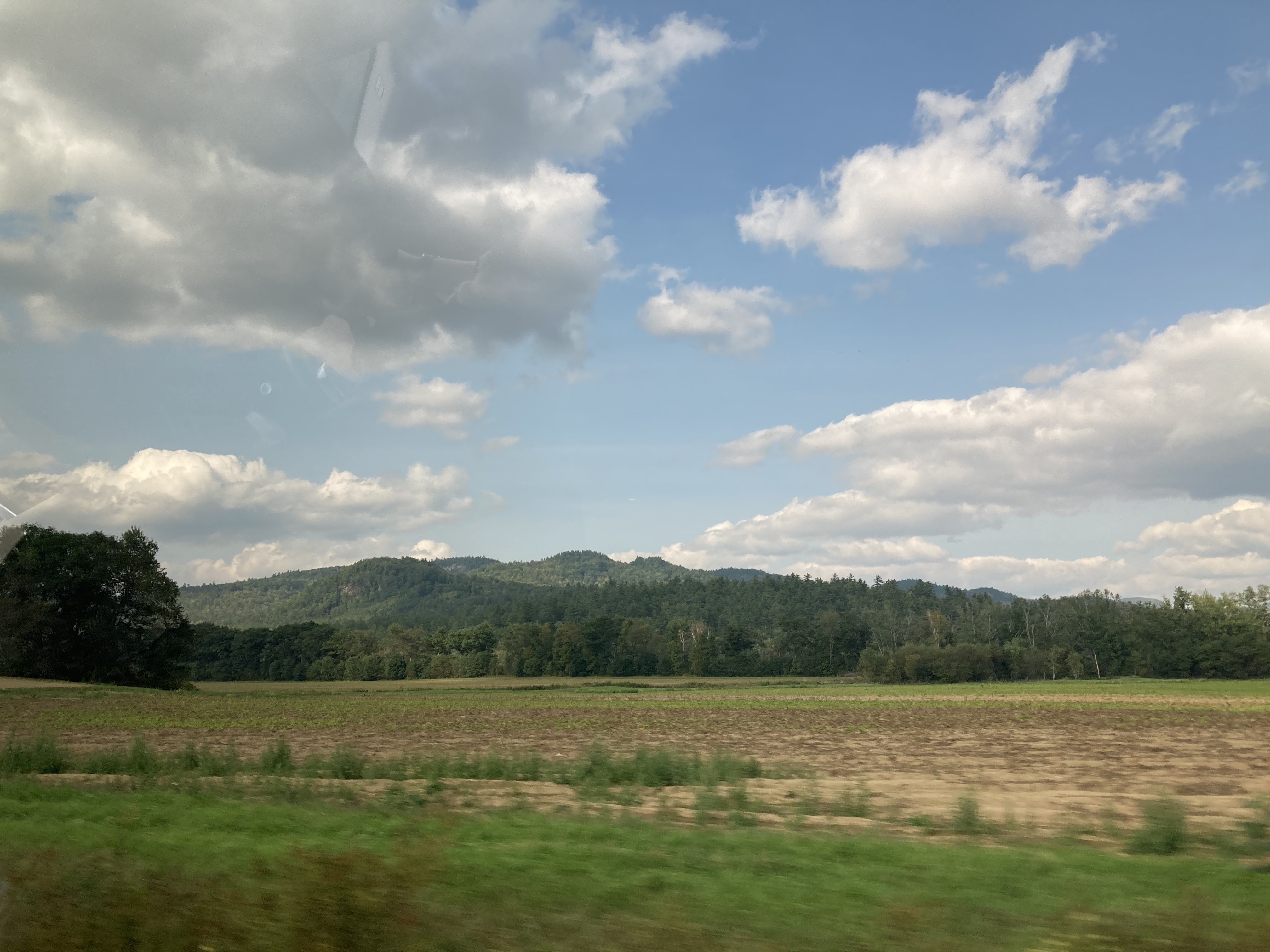
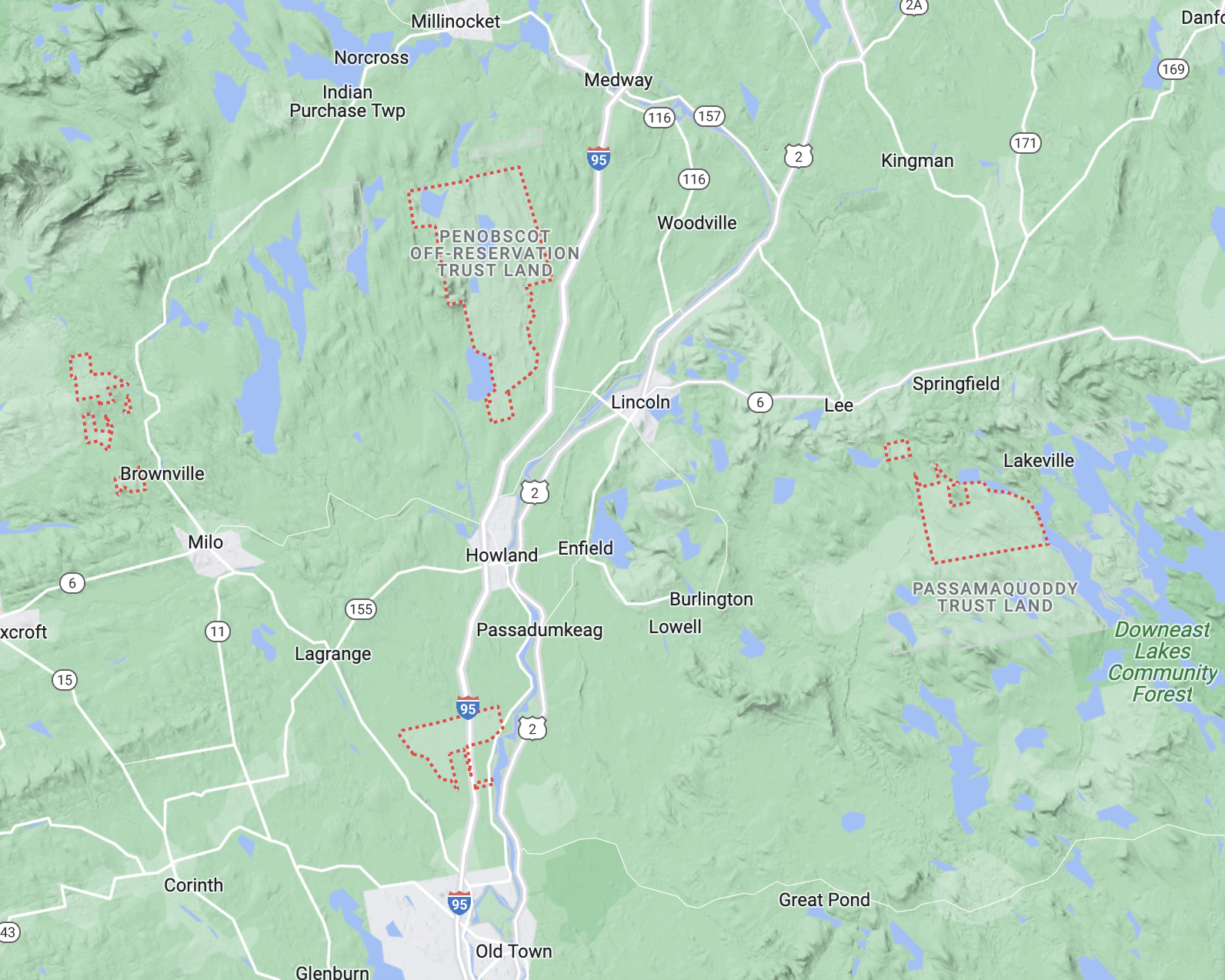
Rolling hills and monumental wonder towering in the distance, these hard wood oak and maple dominate deciduous forests mingle with occasional white pine and red cedar. We’re on The East Coast of USA- New England- where the history comes from. Bottom river farmland called to early settlers (1700s in what is today The State of Maine), and as infrastructure blossomed on the ocean shores, inland resources in good logging timber, right of ways, and mining shafts sprouted like weeds in the fertile land. Pushed out tribal people echo in place names- Massachusetts. The Penobscot people remain recognized in the area today. Below is a map of their currant reservation trust lands in Maine. Place remains important to most First Nations’ Peoples, their deeply rooted link to ecology and society woven within habitat once depended on by all, reduced to oddly shaped cut outs of a once vast and thriving wilderness.
As colonial settlement established along The East Coast, fortunes blossomed as extraction industry raked in endless woodland timber for export back to Europe, where all the great forests had already been cut to supply overpopulated regions for too many generations. Now these same families who destroyed their own lands came to America for more. England owned The Colonies initially, but by the founding of Andover in today’s Oxford County, ME, a revolution had put the lands of New England under a star spangled banner and veterans who fought to form a new nation were moving into the more remote reaches of wilderness in search of space to survey, develop, and capitalize on. Andover, ME Wiki entry describes a snapshot of its early Colonial settlers.
The town was first settled in 1789 by Ezekiel Merrill and his family who were transported there from Bethel, Maine, in canoes managed by members of the local Pequawket tribe. The first saw-mill was built on the East Branch of the Ellis River by Col. Thomas Poor in 1791 and was used to provide the lumber for the still standing Merrill-Poor House.
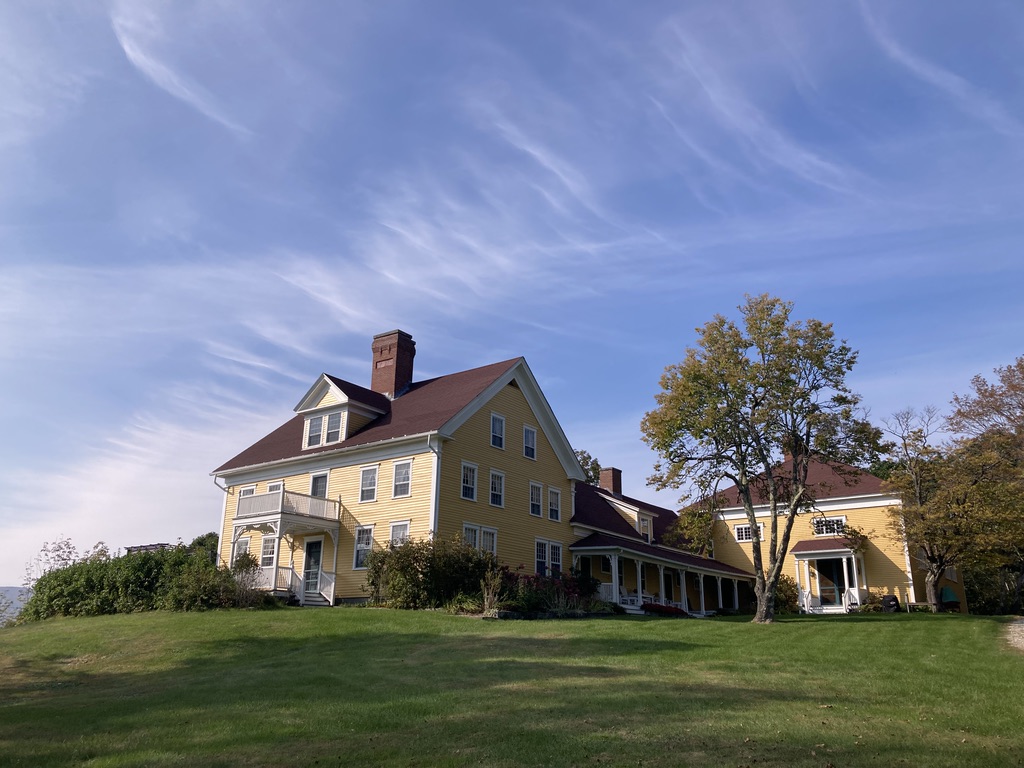
What a house! Imagine showing up along the banks of a river to build a life, believing you are compelled by a “God given right”, and motivated by economic industry to begin cutting the forest en-mass, while digging up ground for smelting and future rail expansion to bring more destructive hands to the region for personal gain. The family lore today continues to claim Indians were supportive of Ezekiel Merrill and his vision to settle the wilds of Maine. Most new settlers to the area were seeking a better life, but still, generations later, we don’t fully comprehend or acknowledge the harm done. Perpetuating a story of Indian Princesses as a token of good intention does not change a simple fact looming like an elephant in the room. The tribes are gone, many in New England are extinct, and the European lineage continues in a legacy of resource extraction enabled by railroad expansion and manifest destiny.
Looking out from the house, over the green forest hills and open fields of once cultivated land, progress rests its laurels on saw mills, lake front homes, and Appalachian Trail adventure. Smoke from wild fires, a climate change disaster, looms in a discolored sky. Through the process of gentrifying, colonizing, and capitalizing on the raw essence of nature, we ignore the consequences of our greed in generational extraction economy, and continue to accept old notions of convince and prosperity, without measuring our quality of life, or projected long term survival as a species. Sadly, this mindset will not give way to reason, and we continue to propel ourselves into greater disparities and divorce from reality into economic fantasy.
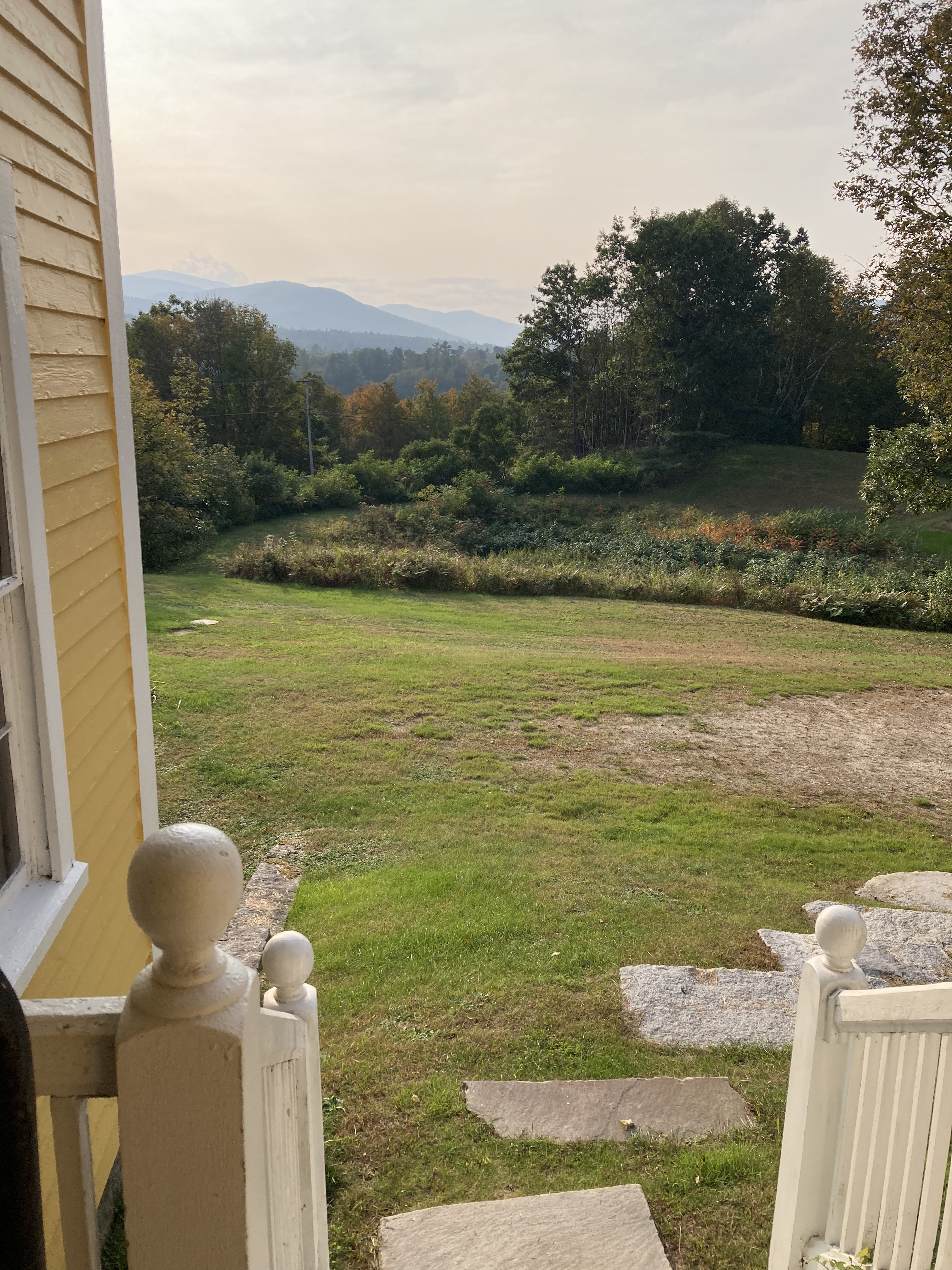
What is next for this great house and surrounding country side? The current generation is struggling to figure out how and why. This house holds childhood memories of fantastic summers swimming in nearby creeks where trout fight on the line and a fish dinner still offer solace in a strange world of upside down priorities and selective history. Under the very stones of this historic family home, perhaps a tribe once harvested food and lived without the need of a mill or flag to claim any land. Place is not something to own, but to be a part of. After only a few generations, Merrill House was used seasonally, with little interest in staying beyond pleasant vacation weather. By then, the tribal peoples were completely removed from the landscape, and Eurocentric narrative subdued any guilt of personal responsibility for “the natives” or the ecological devastation that will take many more generations to recover- if ever.
Still, the family history is impressive, and a lot of American economic life prospers today because of early settlers with great ambition. We learn that this kind of drive rewards- and the records of wealth glimmer in faded velvet furniture and brass lighting fixtures. Memoirs and diaries tell of decadent dinners and high powered board meetings at great oak tables, deciding the future of industry in New England. As the application for historic preservation of the house and grounds states, in Yankee Family, a study of the Poor Family, James R. McGovern describes this grand space as:
“A house which had once declared the needs of a successful American frontiersman
now bespoke those of an industrial lord, Will Poor, who often came to Merrill House
to entertain his business and personal friends. Visitors were fascinated by its
beauty then, just as they are today, Merrill House looking much as it did when
Henry and Will Poor lived there.“
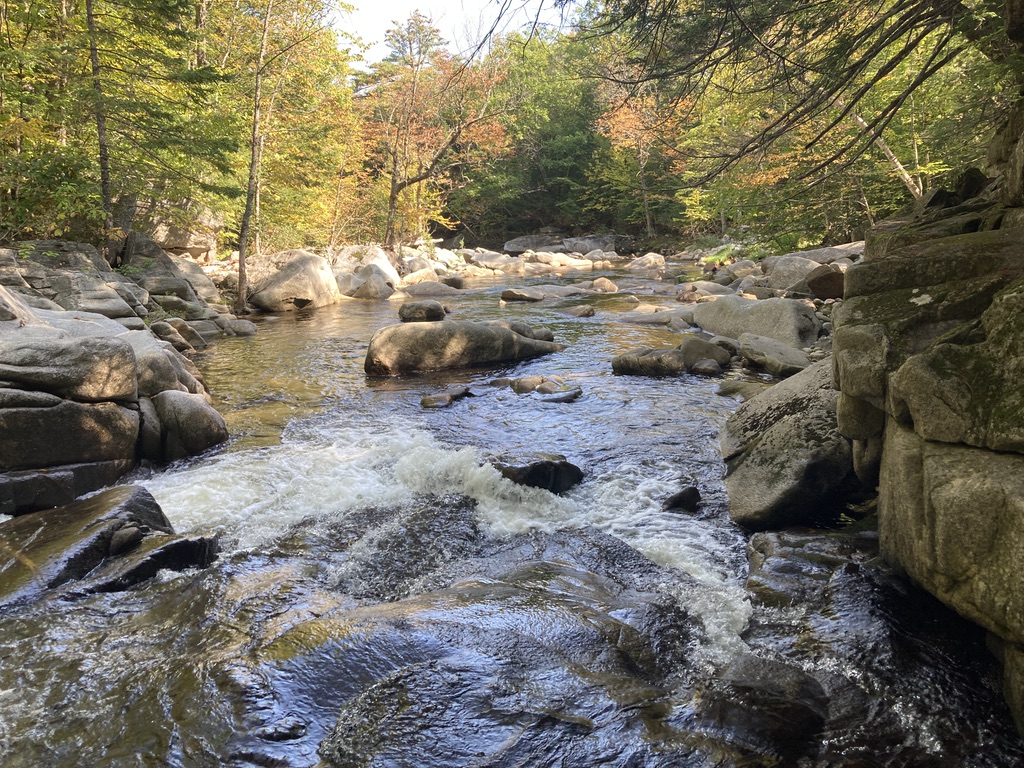
Lording over wealth may sound great, and prospects one hundred years ago, before income tax, made unimaginable wealth for a select few white European men, and today’s generation still craft the country for their earning prowess, learned from their forefathers. Fortunes may be won and lost, but tribal nations lost homeland and will never get it back. Imagine having everything you need, being deeply rooted somewhere for thousands of years, then within two generations, being almost wiped out completely by frontiersmen importing disease and colonial laws your culture has no concept of. In 1755, the governor of Massachusetts put a scalp bounty on The Penobscot (greater Abenaki), who were becoming “hostile” as more settlers pushed them out of their ancestral lands. The fur trade had also reduced wildlife down to unsustainable numbers, causing winter starvation for many First Nation People. After reading The Phips Bounty Proclamation, I found it hard to understand why any Abernaki, especially an “Indian princes” would help English settlers with their colonizing, unless coerced under duress.
It might make our ancestors look a little less draconian to slip in a sympathetic story of noble savages, but we ourselves are the true savages, and continue to perpetuate dominion today. Americans are not generally thinking about how to live together, with the land, as one people. It’s not in our cultural heritage to share or believe we are owned by the land- just the opposite in fact. Our justification for this continued shortsightedness? The fear that someone else might come and take it from us. We perpetuate this action ourselves, believing we have a right to things, not that we have a responsibility to tend and let live. Standard and Poor continues to reaffirm economic dominion, along with a legacy of historic homes, lands, and titles we stole from people we thought less than ourselves, and still do. Not many people are signing up to give stolen land back, but we can at least stop claiming to have been friends with the best intentions for our tribal neighbors in the early days of America’s founding.
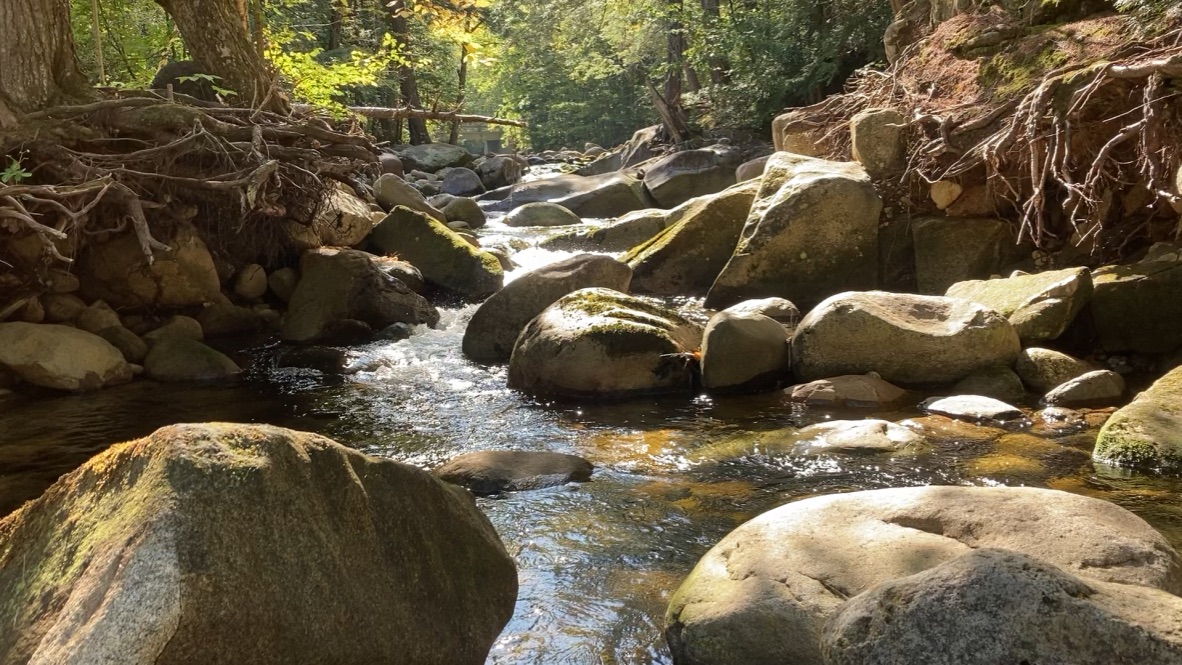
It was not by accident that this post happens on American Thanksgiving. Please take a moment to look up which tribes once lived where you and your family are now and take a moment to give thanks for the people who were tread under our stars and stripes as we perpetuate The American Way- a way of prosperity through taking what is not ours to claim- place. It is our place now to look at the history and learn the truth about our ancestors and the abuse they brought upon a land never intended for them. Though acknowledgment and the renewal of America’s true history, we can perhaps, better understand what it takes to perpetuate mass consumerism and convenience for the few at the cost of so many. How can things change? It’s starts with learning the truth about out past and at least accepting our ancestor’s failures to avoid repeating the same mistakes. Check out Land Back movements around the world and ask how you might help.

 EEC Forest Stewardship