
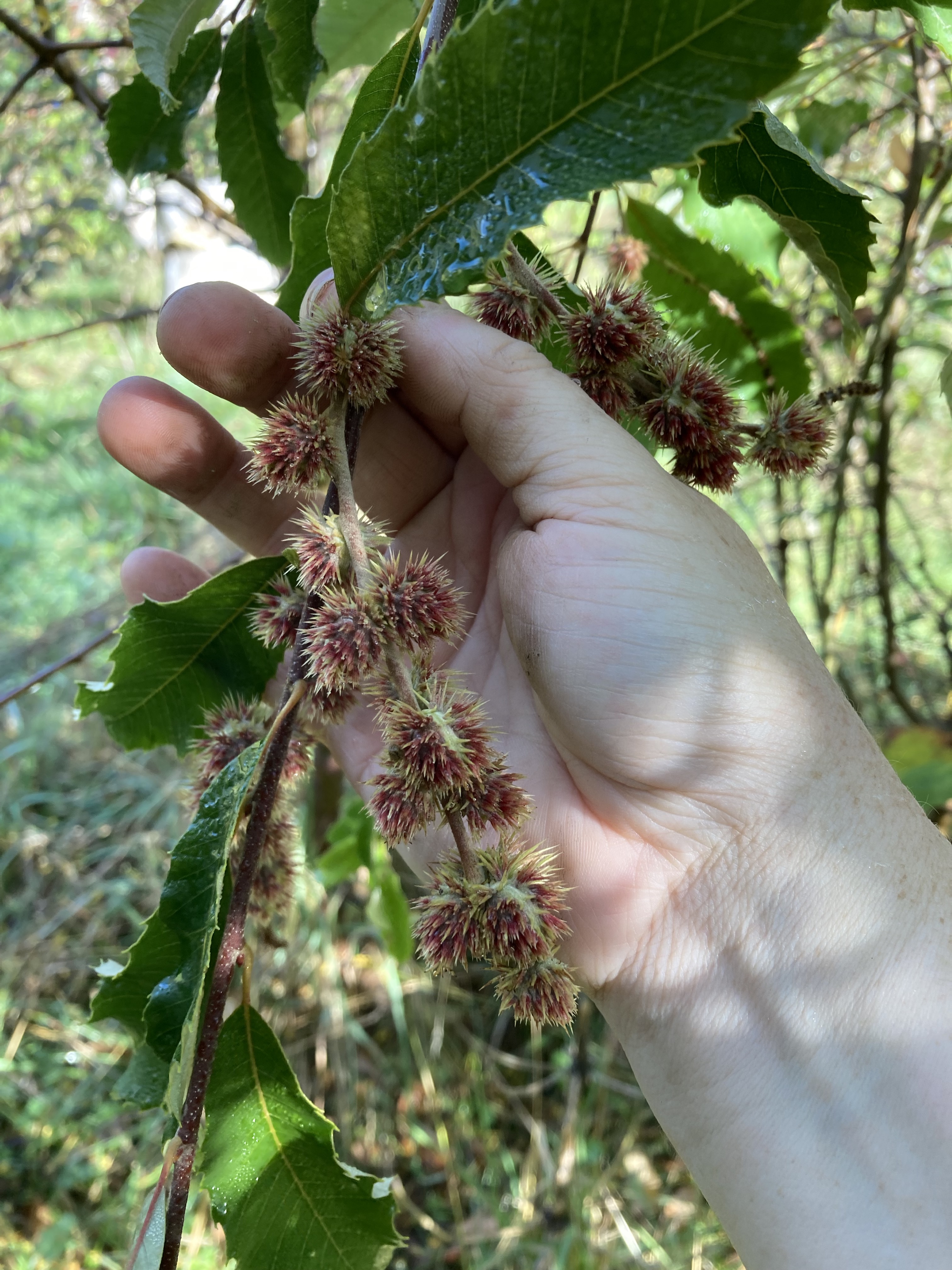
Our surviving chinquapin Castanea pumila, has produced an abundance of nuts this year, 2023, and we’re happy to have a glimpse at one long term species survival in our long term mixed nut and fruit groves. Though the chinquapin is more like a beech nut, the seeds are still a possible gleaning food, and wildlife larder. This deciduous hard wood tree with edible nut is adapted to hotter summers and colder winters, and has, so far, acclimated to wetter weather with little complaint. It’s even outpacing a nearby red oak. This species is not meant to grow huge, but the success so far encourages more propagation.
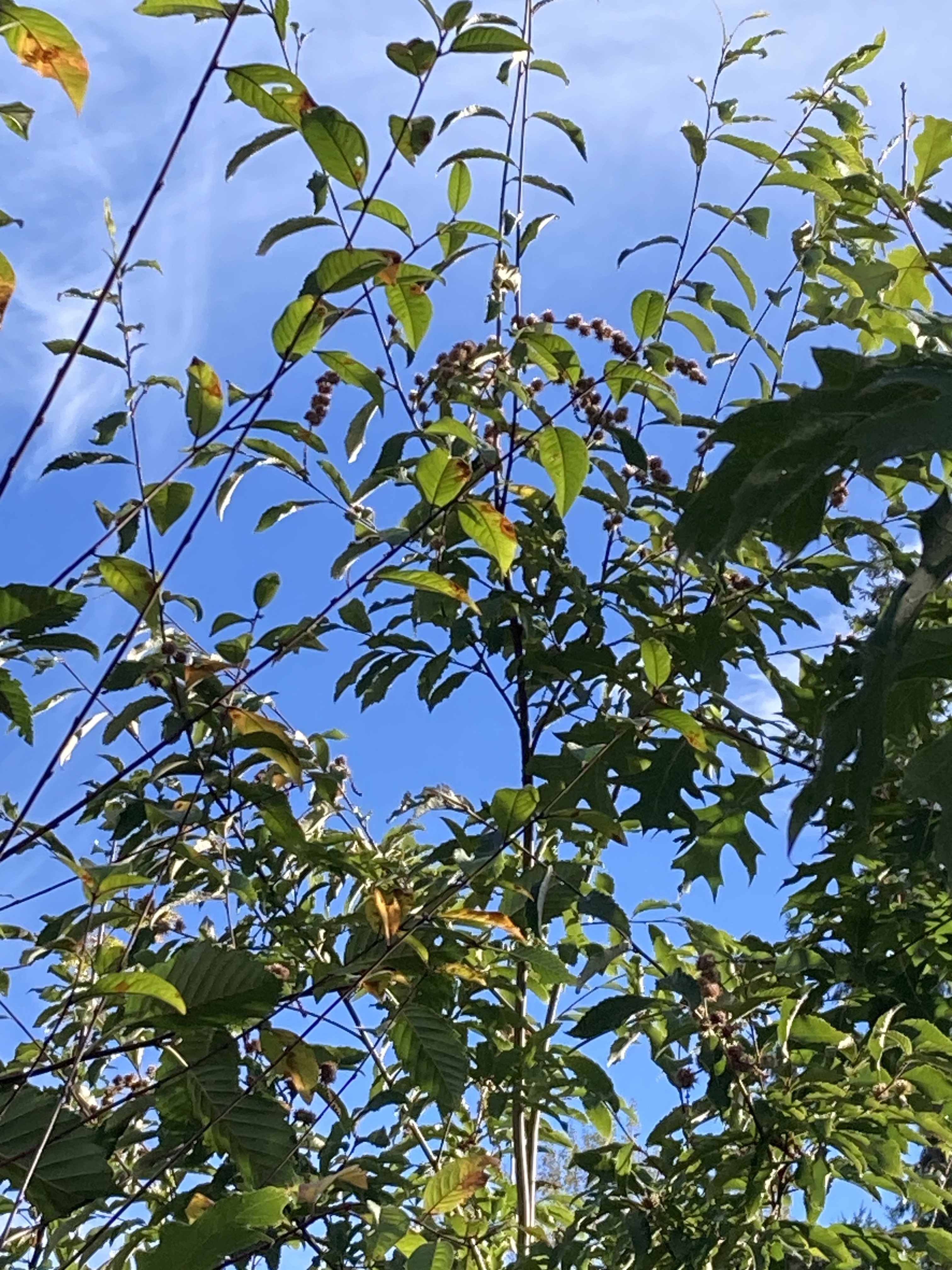
Drought tolerance, food crop, seasonal canopy, zone hardiness- all these aspects go into selecting the right cultivars for a climate change future. We’re glad this species is thriving after the initial five year establishing time used to determine initial success, but blights, pests ,extreme weather events, and more can hinder or expel these experiments in decades to come. Keep in mind how long it takes tree species to mature, and all that could happen along the way. EEC Forest Stewardship welcomes the chinquapin, but it’s one of many but bearing deciduous tree species we’re planting to diversify our food forest and plant an abundant future.

 EEC Forest Stewardship