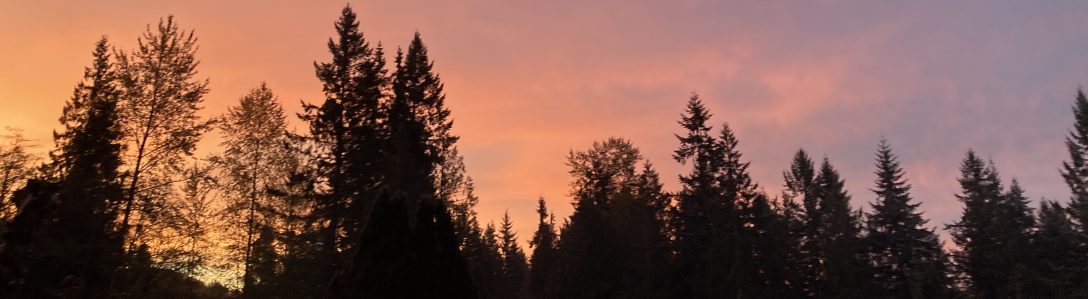

Washington State is truly one of the most diverse bioregions I’ve ever had the pleasure to call home. It’s why I’ve chosen to live here, especially living that life outside for most of work and play. Usually, that outside time is terrestrial, with a few special trips to the western coast or eastern step desert. EEC Forest Stewardship resides in Western Washington’s temperate rainforests, with coniferous dominate stands and alder/maple on the edges. There is an abundant aquatic mix of freshwater ponds and alpine lakes cascading out of the mountains, feeding salmon streams and rivers spilling into saltwater slews of Puget Sound. If you then go a little bit further west, past another great rainforest and towering Olympic Mountains, you’ll reach another shore and, facing west at the edge of North America, you’ll behold The Pacific Ocean.
This vast waterscape holds many great bounties, including crabs, ,oysters, salmon, and mussels near shore. Going further into open ocean takes some expertise and seasick prevention medication. For a very landlocked human, like myself, it was a real edge experience, but to catch tuna for the larder, you have to go our to sea.
Waves rolled our 29′ sport offshore pilothouse vessel neatly over 8′ swells, though bracing against something was necessary, especially when the boat was moving. This footage was taken at trolling speed in deep water. Closer to shore, conditions were shallow and choppy, but we traveled rapidly over the rough water, and our diligent captain knew when to slow down or change angle of approach on the larger waves. It took 2 hours of relatively fast going from the harbor to tuna fishing grounds. Once out, our crew put the boat on auto pilot, dropped in three trolling rods, and began spotting the horizon for terns, and surfacing albacore on the hunt.
We used live sardines as bait, and hooked them behind the gill up through the side. The tuna wanted live, active prey, so the sardine had to swim fast through the water on the line. Reeling out was one of many arts to this fishing skill- and not jerking the live bait was crucial in keeping the action fresh for the hunting tuna’s taste. As soon as the sardine hit the water, you had to let out line and not pull back on the excited, darting lure. When you had a good swimmer, the reel would wind out quite fast, sometimes overturning, which would tangle the spool. Keeping a light thumb on the reel to steady the outgoing tension just enough to prevent overturn took some time to hone. We were often switching poles too, so your working tackle might change from setup to setup. After an initial tangle, when in our first encounter fish hooked all six poles at once; we used a three pole approach to avoid hangups. It also made things easier for our crew, who had immediate oversight of our operations.

By the end of a full day of fishing, our team had collectively harvest 12 tuna and 2 mackerel. This entire catch was divided up evenly, leaving me with 2 albacore (35lbs of fillet and belly meat), and a fillet of mackerel. It was a worthy day of hunting to fill the larder with more delicious wild food. Though this adventure was rewarding, both in catch and learning, I don’t think I would do it again personally, but would encourage others to invest in a one time experience like no other. Our outfitter was professional and successful in connecting us with a very hard to track species. All Rivers and Saltwater Charters also showed great support and care towards the entire party, including a refreshing absence of man-splaining misogyny a woman might encounter in male dominated activities. Our crew of two were diligent, kind, and incredibly patient throughout the day.
Tracking down tuna and catching them takes a lot of experience. I had no idea what to expect, and learned tuna hit fast and run faster; stopping to feed in a moment, then moving on lighting quick once the captured members of a school become apparent. The albacore are not stupid, in fact, a veteran fish- named that because of it’s smarts, took my line under the boat and rubbed it back and forth on the keel till it snapped. The first mate watched it happen and told me there was nothing I could have done, the fish had been caught before and learned the trick to escape. Even once a fish was on the line, there was no guarantee the hook would stick, you could not set it. If you jerked the line at all, your sardine would become inactive, and if the tuna felt the pull, they would spit out the bait. However, with the element of surprise, and the tuna’s veracious appetite, with a little luck and captain’s coaching, we all landed fish, and experienced the fierce exchange between an ocean legend and human innovation.

My first tuna hunt became my first personally caught tuna rolls, which I had never dreamed of. We also smoked the mackerel, basting the honored fish in locally distilled vodka before lighting it on fire and enjoying a spectacular pyrotechnic show. Gratitude to these delicious fish and the ocean for all the great lessons and abundance. Thanks to the experience and skill shared to catch these amazing wild foods in our home waters, and returning safely to shore with catch and camaraderie.

 EEC Forest Stewardship