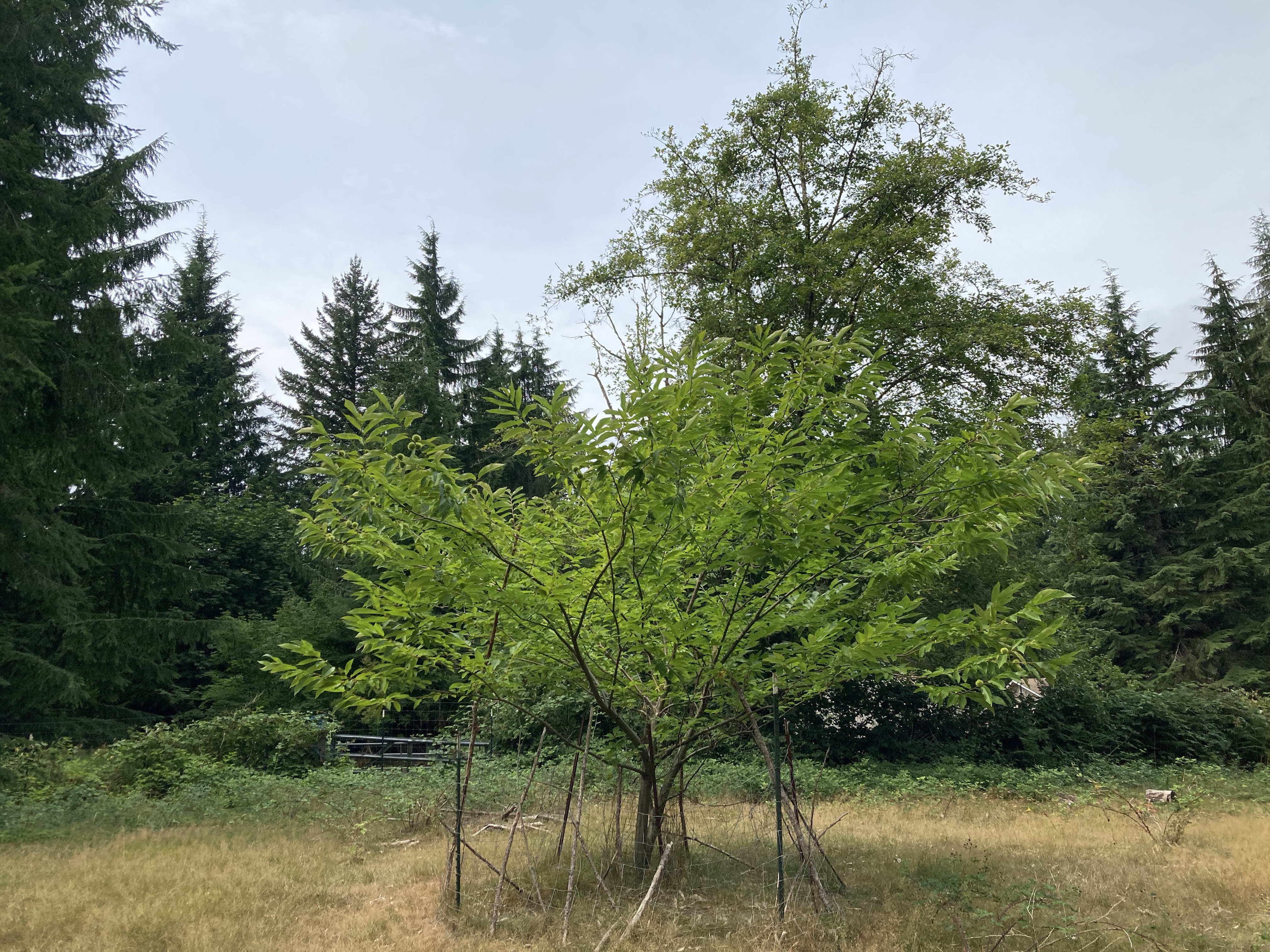
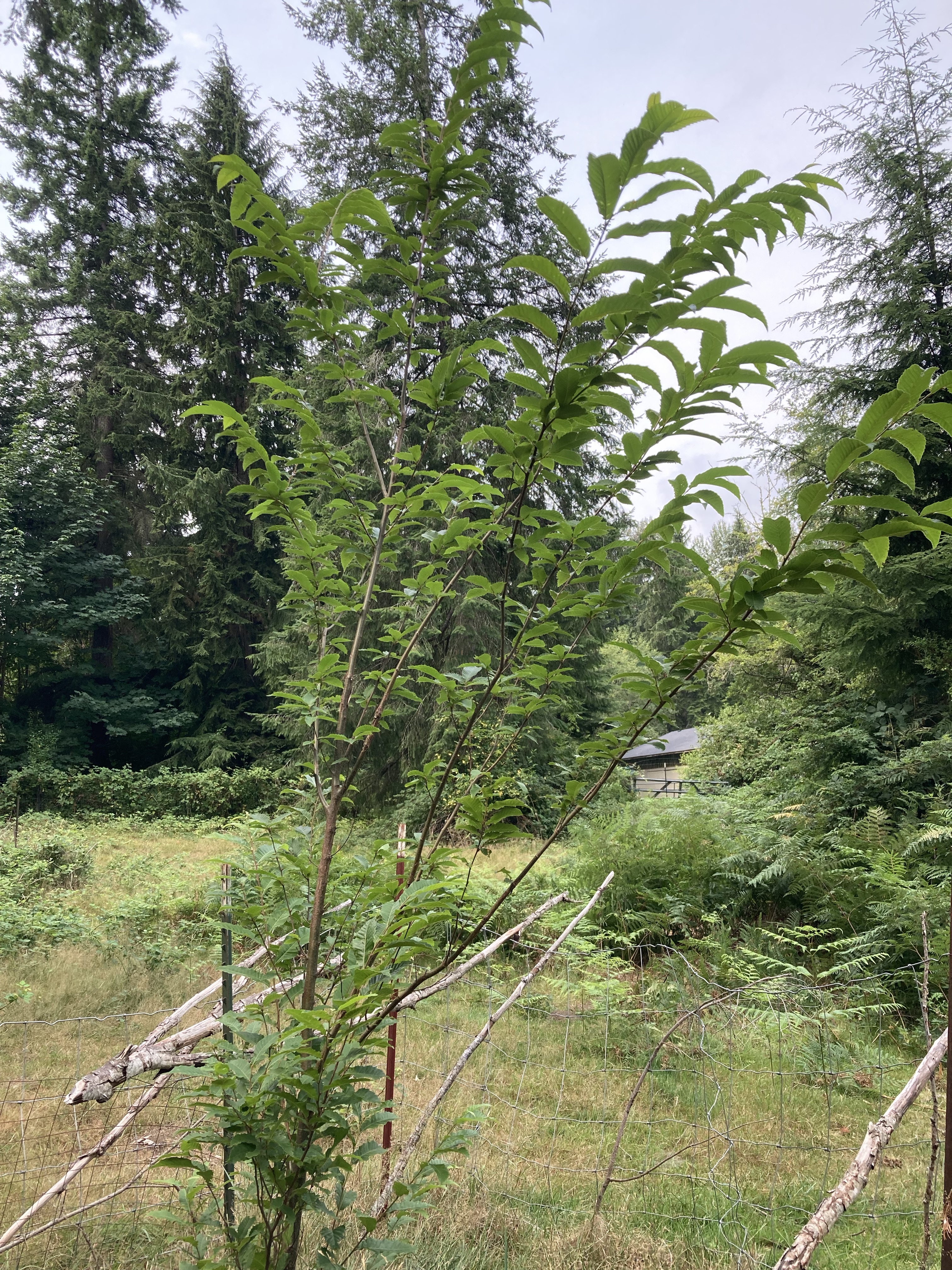
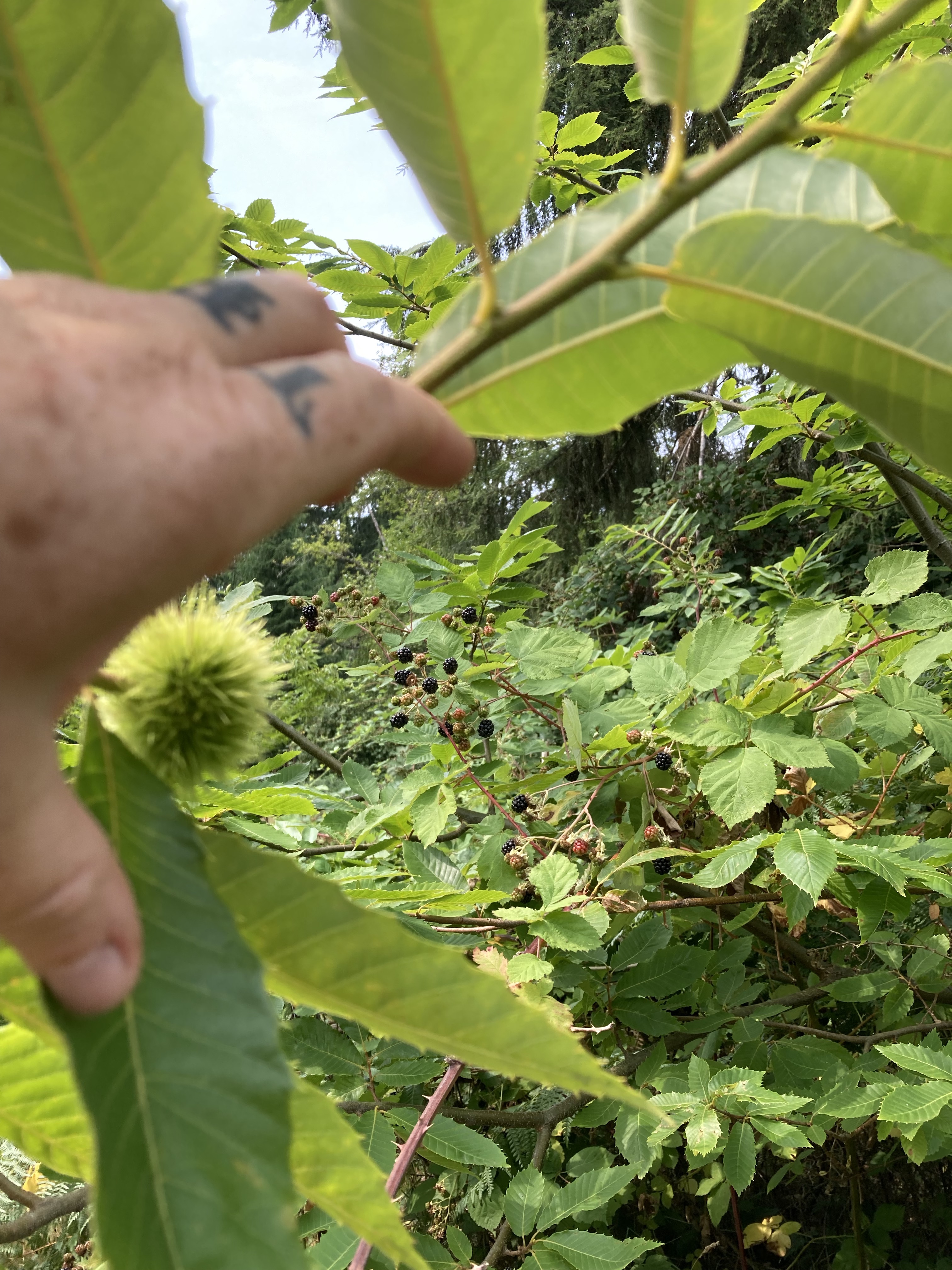
It’s been about eight years since we first planted our chestnuts and the crop this year will be a first. With no irrigation or mulch or other inputs besides occasional weeding, these trees are developing into a future nut factor extravaganza! The Colossal variety has been most successful, and are projected to be early producers. Our other varieties are slower growing, and hold a few nuts, but need more time to develop enough canopy spread to be viable producers. It’s also hard to tell if we’ve lost the graft on one pictured below. It’s got a lot of sucker mess closer to the ground, I’m going to keep observing and hope nuts come on in the next few years. If not, we’ll still leave the tree as shade, deciduous leaf shed for mulch and fertility, and possible root stock genetics to perpetuate for future grafting.
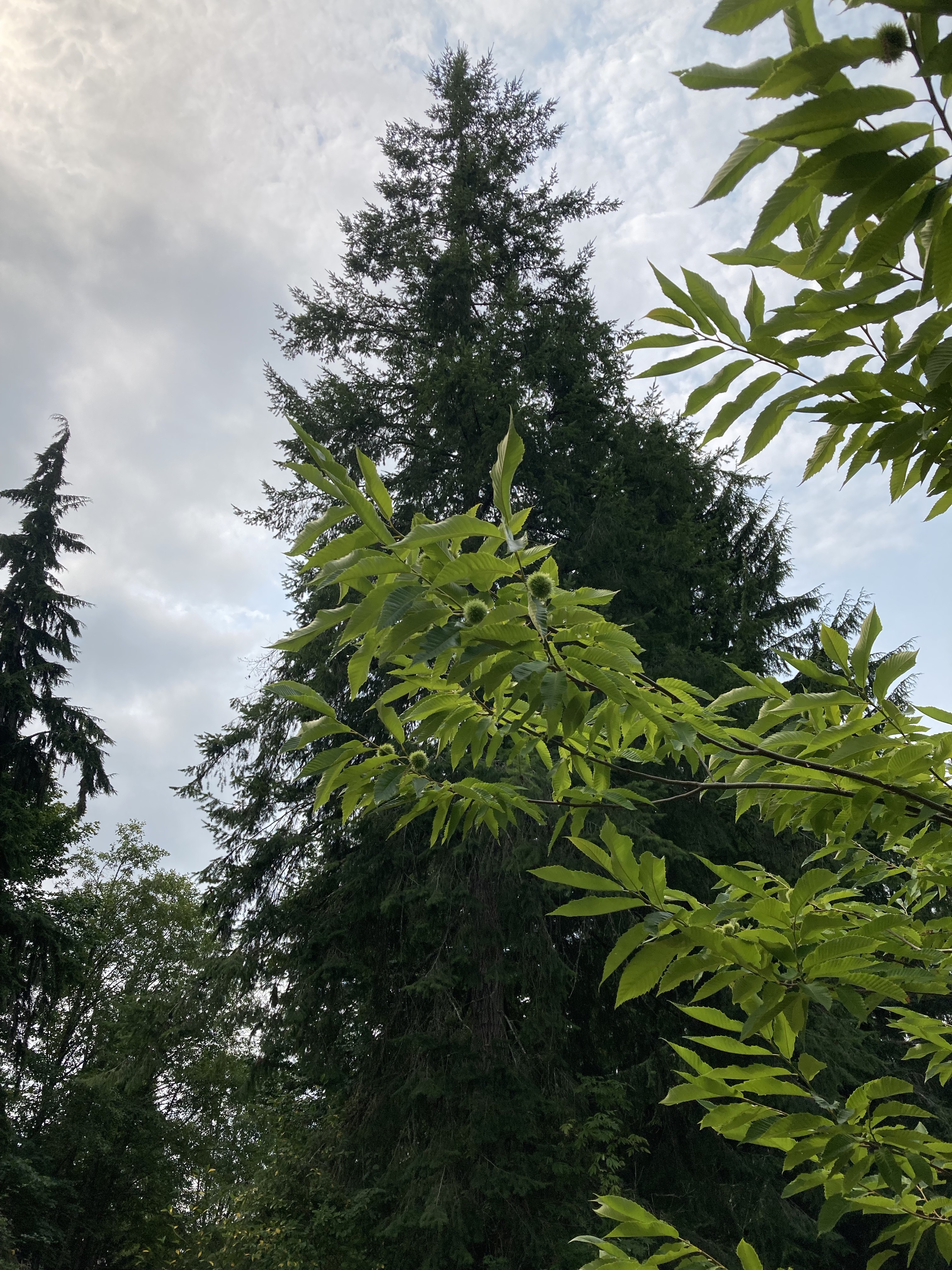
When to gather the nuts depends on when they drop in the Fall.
(4 paragraphs and some lovely links were lost in an epic freeze up of WordPress and I don’t have the heart to rewrite it) in short- companion planting, good fencing protection, and a future plan to irrigate future oak and pecan trees. I’m sorry folks, worked many hours on this post and when it froze up, I was able to copy the last two paragraphs, but not recover the rest. This is my protest to WordPress and some compensation for my loss.
This particular article talks more extensively about companions for fruit and nut trees, and other important topics like pollination and soil health. It’s always good to have a plan for your plantings, but understanding your soil, weather, and seasonal shifts on the ground takes time. Ten years in, we’re finally getting the rhythm of the earth and investing for the most successful restoration in food, medicine, and material crops hand in hand with both native and cultivar species.
To be clear, we won’t be planting cultivars in the native restoration areas, like our salmon stream wildlife corridor, but in the highly altered agricultural fields, mixing in cultivars improves overall productivity and diversity in a fast changing climate. Navigating the vision of adaptation, human use, and wildlife preferences; we continue to plant, plan, and plant some more. We’re also maintaining boundaries- most of them hard fenced in nature- to keep our livestock from over maintaining- as in predating our more vulnerable crops- like the chestnuts. With good fencing and occasional weeding, our trees are now capable of fending off most browsing, but we’ll leave the fencing to help protect understory verities as they establish. We don’t yet have a bumper crop to crow about regarding our young nut grove, but it’s well on it’s way, and this year, we just might have some sweet chestnuts roasting on an open fire.

 EEC Forest Stewardship