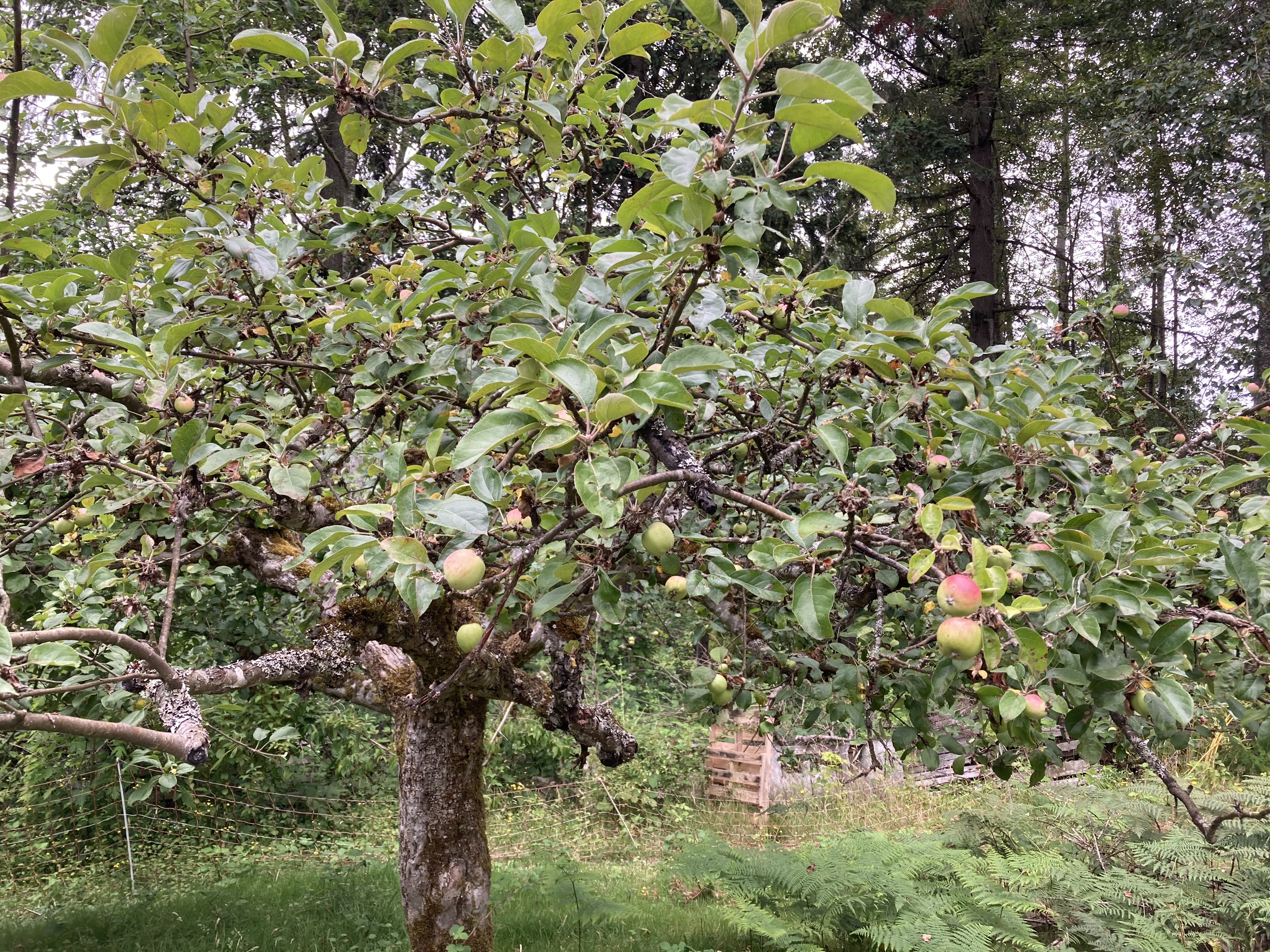
Apples are ripening and peaches are plumping up at Leafhopper Farm. We’re watching the summer drought and maintaining an irrigation schedule to support maturing fruit across the landscape. Apples are well established at EEC Forest Stewardship, with a variety of grafts and root stock to support long term genetic success in orchard development. Most of our apples are dwarfs, which will stay low on the horizon, letting our good southern exposure shine through. The mature, and in fact, declining older trees are on the far west side of our human habitat zones 1 and 2 on the property. Some of the trees support two different grafts on one trunk. This is common in smaller home orchards where space and time management of individual trees is limited. There is some risk in that a graft which fails could mean complete loss of a variety, but the surviving graft will take over and still produce. We’ve grafted a few of our own multi variety root stalks and most of them are still holding true.
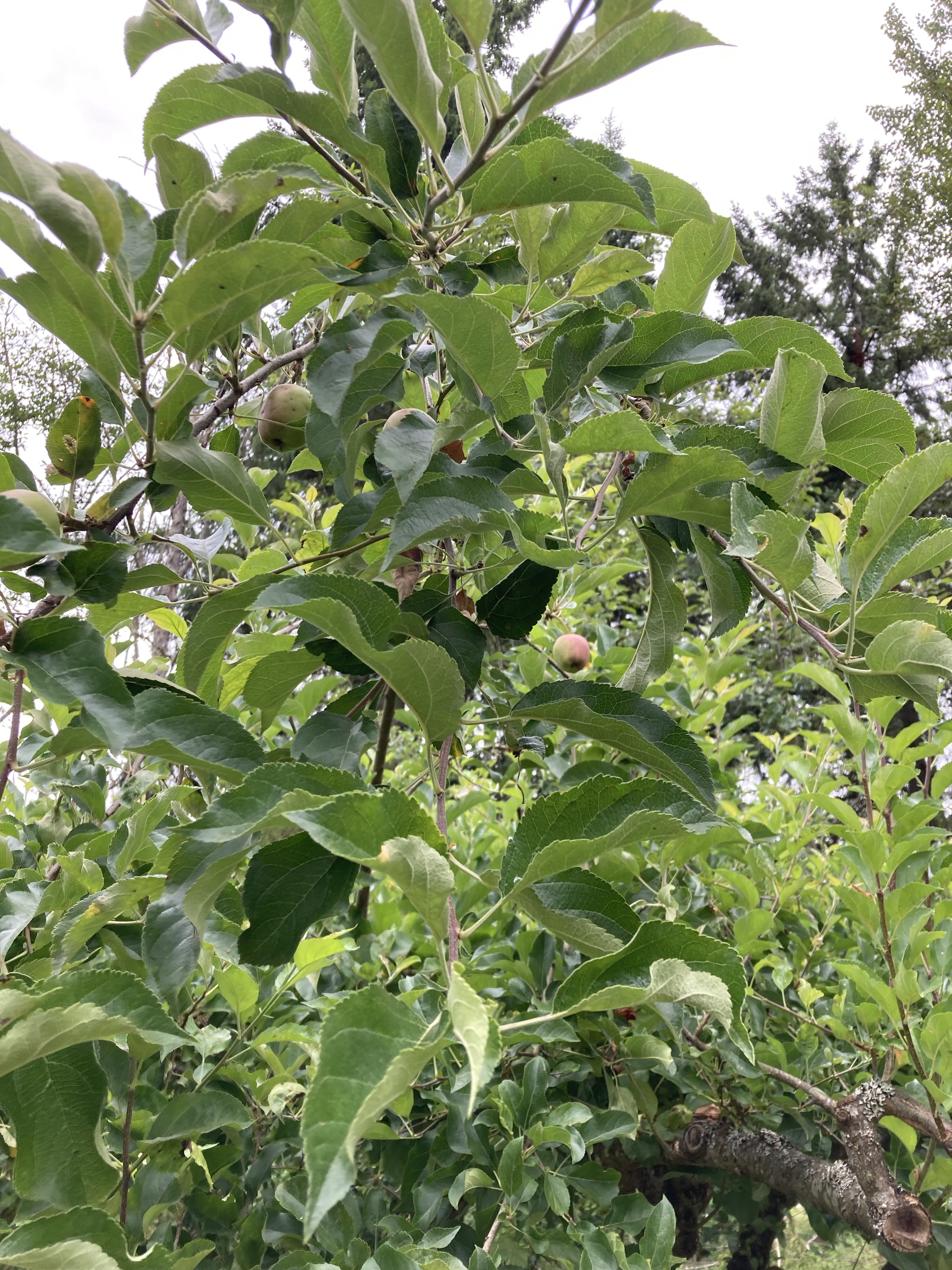
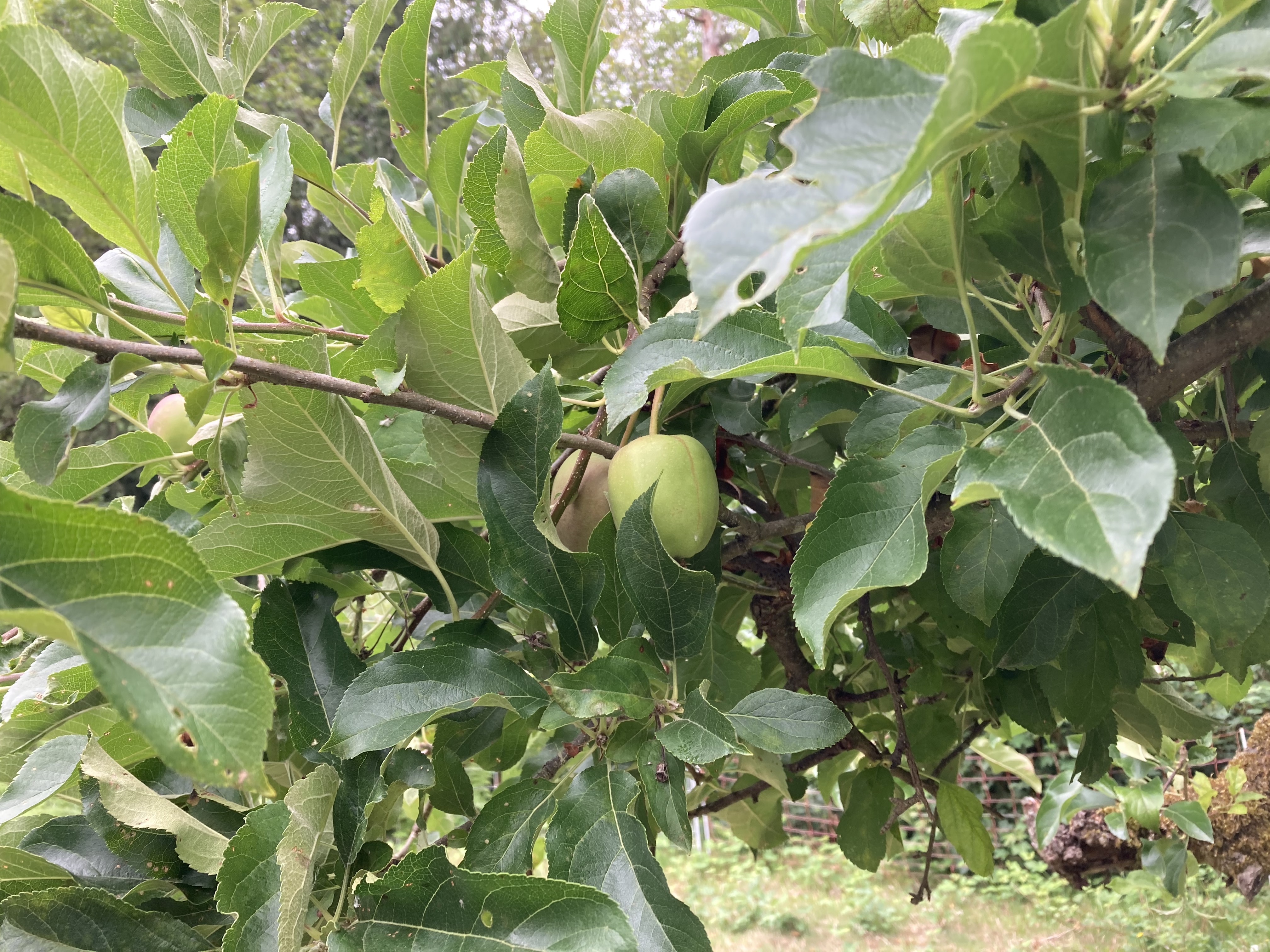
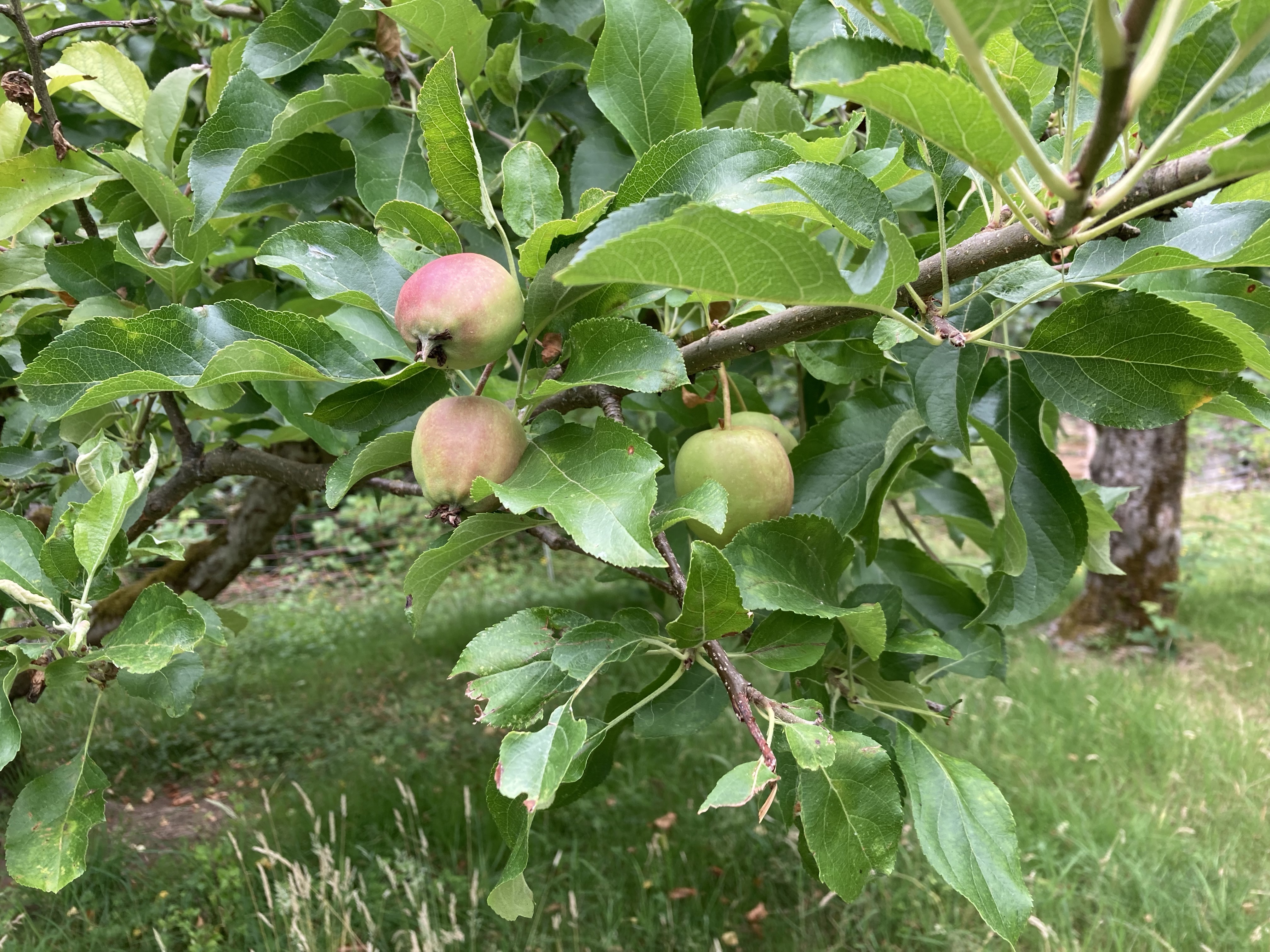
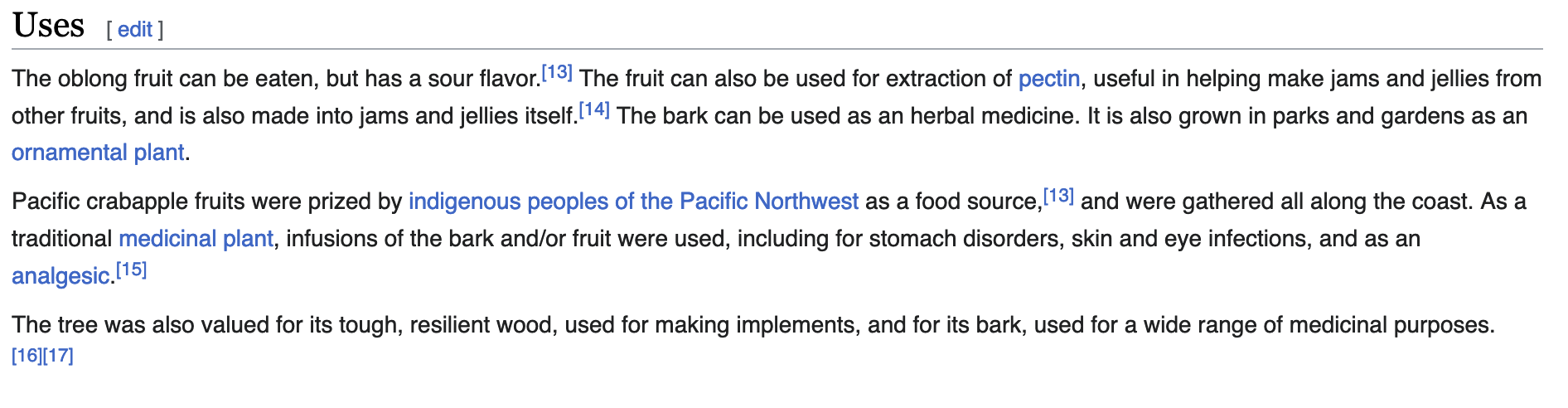
Our crabapple varieties are also thriving. These smaller rose hips (yes, apples are roses) can still be sweet and rewarding as a food source, yet they are more drought resilient and generally hardy. There is a native variety- Malus fusca, which is planted around EEC as well. Our planting plan includes this often overlooked native plant and its important relationship with First Nations. After reading Keeping It Living, and understanding that stands of crabapple were often present at traditional village sites, I began planting them around the zone 1 and 2 areas. As they mature, berries have begun attracting our local bird population. The fruit stays on the branch into winter, and becomes an important food source once snow and ice set in. Below is a good list of known uses of our native crabapple from Wikipedia.
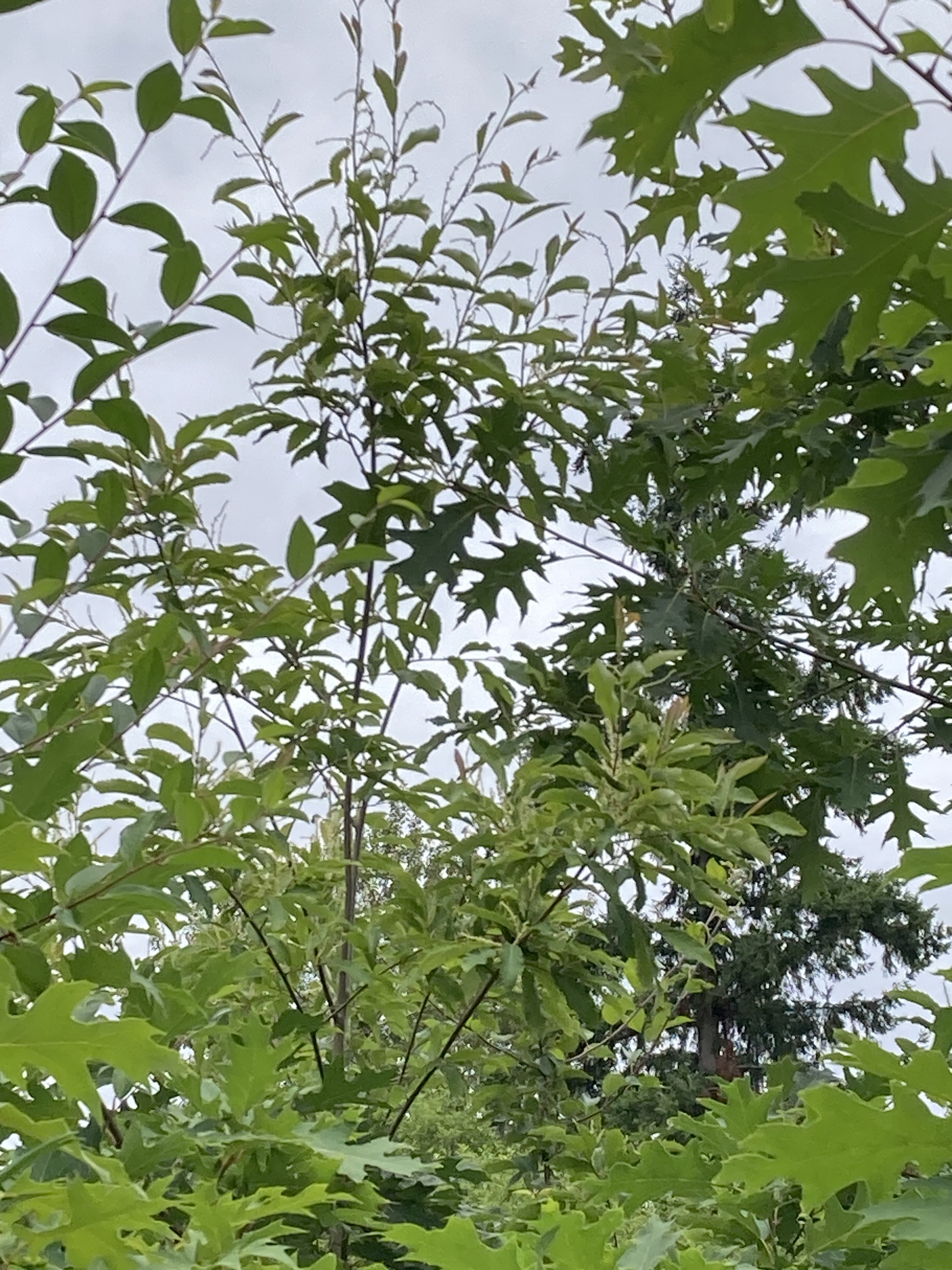
Folded in with some of our crabapples is the illusive chinckapin. We’ve got a few surviving- and even thriving at EEC Forest Stewardship, and this modest chestnut relative might be a future food crop for us in times of need, much like the crabapple. Modest fruit producers can still play a major role in orchard development. The flowers of these species is still attractive to pollinators, and the nuts and berries are often perfect winter forage for wildlife, specifically birds. Also note the acorn bearer in the foreground of the above picture, with chinckapin towering above and sporting its own serrated leaf. Oaks are the future for us here in The Pacific Northwest. White oaks are ideal for acorn harvesting, but even this red is welcome to diversify species. Mixing up your orchard venue adds resiliency against pests and diseases. It adds in nutrient production and creates an intact system of fertility which will bank it’s own soil over time.
Commercial orchards of today are monoculture wastelands soaked in chemical poisons and often in need of added pesticides because of pest species resistance and dead soil with no helpful bacteria to protect root stock. The rows and rows of mechanically maintained trees is a frightening industrial prospect when viewed from the air.
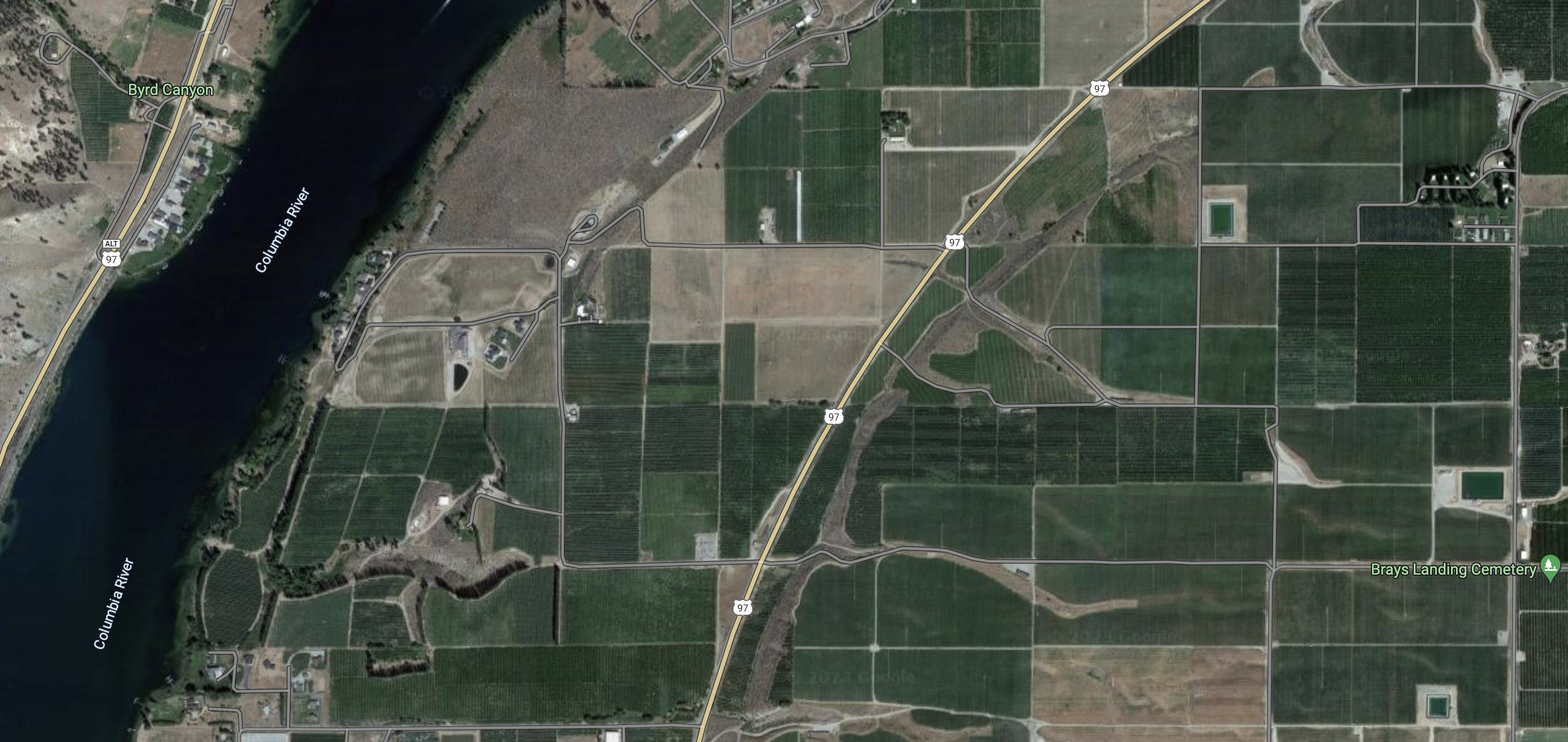
As you see, a lot of the area remains orchard today, and areas closer to The Colombia River’s shore are being converted to homes and estates. The frightening thing about all this is the long history of toxic chemical use on orchards in The Colombia Basin. Here is a direct quote, from a Washington State Department of ecology publication entitled Model Remedies for Cleanup of Orchard Properties in Central and Eastern Washington, that is particularly chilling to read:
“Former orchard practices caused widespread soil contamination in agricultural areas
throughout Washington. This guidance addresses properties that were impacted by the use of
lead arsenate, a pesticide used from the late 1800s until approximately 1950. The
resulting lead and arsenic contamination is similar to what is found within the smelter plumes
of western and northeast Washington.”
Below is a map of historical orchards from Chelan to Wenatchee along Lake Chelan, The Colombia, and The Wenatchee Rivers. This is the legacy left by industrial farming, and the irrigation needed to perpetuate the orchards, in step desert, included damming The Colombia River in multiple places. But we get a lot of cheap, green power. Well, at the cost of ecological systems like salmon, and perpetuation of expansive settlement in regions prone to fire. Electricity is convenience, and as a Wenatchee elder said in talking about the power lines over a sacred space- “Convenience is what allows you colonizers to be here, take it away, and the land returns to us.”
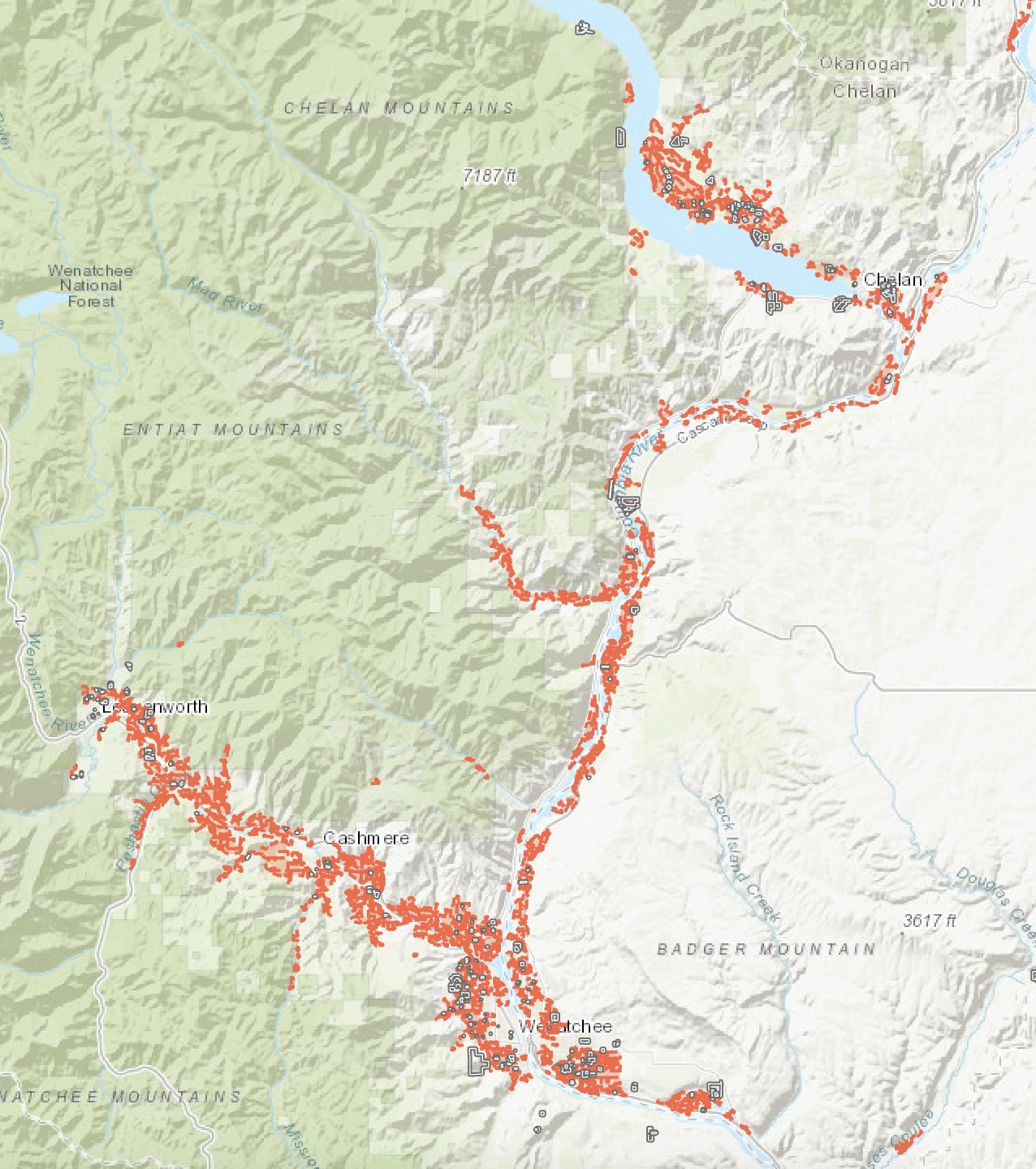
Orchards are such a nice idea, and the history of grafting fruit goes back hundreds of years. Humans have developed a lot of production driven plants to make agriculture more successful- it’s how we’ve fed and grown humanity into a staggering juggernaut, and people are still needlessly starving all over the world. Apples are still pretty cool, and where there is extensive land and water to cultivate sprawling plantations, why not? More fruit more earnings- but also more chemicals, pests, degradation of the environment, and long term loss of fertility. In small scale orchards, like the ones at EEC Forest Stewardship, we neglect the trees to better natural selection. Our peach gets leaf curl, but also gives us a lot of peaches, and that’s enough. The sweetness enjoyed still counts, and in a good year we can put away a few gallon bags of the succulent fruit to enjoy in cold winter months too. That’s enough.
Our plumbs have been teaching a rather important lesson about the vulnerability of grafted fruit. Only 1 out of 4 plumb trees planted has kept it’s fruit bearing strain. I just picked about a baseball cap’s worth of fruit, each one about the size of a ping-pong ball. The branch is withering in our summer drought. The part of the tree which reverted to root stalk, is lush and green, much larger than the fruit producing branch, and thriving though the summer with no problem. Why is the grafted branch so much weaker? Because we selected it for the sweet fruit, not drought resistance. We made a resilient natural thing into a vulnerable, easily compromised low reward specimen- but man, that fruit is good, melts like candy on the tongue. I hope to re-graft off of this branch to take back my other plumbs, but it’s perpetuating that vulnerability once more. Perhaps we’ll save the pits from these plumbs too- plant some new genetic stock and hope one produces decent fruit. That kind of food evolution could take lifetimes, so I understand why people are so into current fruit strains like the most recent here in Washington- Cosmic Crisp.
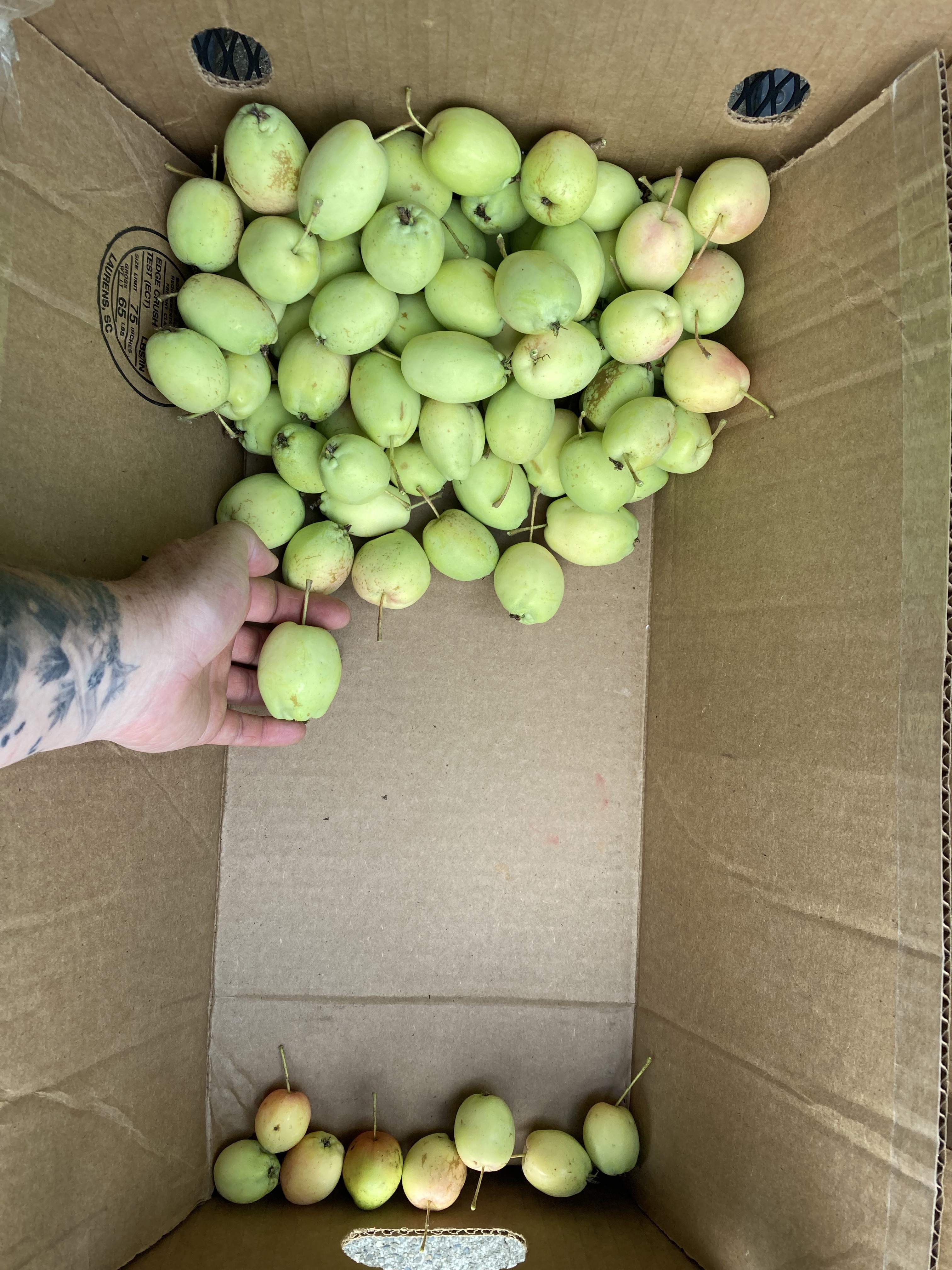
At EEC, we’ve been shifting away from heavily developed apple strains back towards the more primitive crab-apples of olden days. Though the Pacific Apple is regarded as starvation food, there are some cultivars that have decent flesh and flavor. This picture above is a first harvest from our not irrigated tasty crabapple. 3 other varieties were put in this year to compare. It’s a modest producer, but the fruit is sweet, and getting fruit without irrigation is a plus. This tree handles the drought well and graces us with a modest, but delicious reward for our efforts in cultivation. Orchards can be small and still abundant. You don’t need chemicals, but expect blemishes. Pick your fruit quickly too- the birds love predating on ripe trees. I’ve had a lot more success this year grabbing all the fruit at once and letting the under-ripe mature a little more on the counter or in the fridge.
Upcoming harvests include peaches, more apples, and hopefully some chestnuts this fall. Our pears are also looking great this year, and we hope that as more orchard trees mature, we’ll have more than enough fruit without having to hassle with chemicals, pruning, or irrigation as canopy cover spreads, and understory companions move in to complete the ecological circle of nutrient dense vegetation from soil surface to tallest mast in the forest. We’ll keep picking, planting, and preserving!

 EEC Forest Stewardship