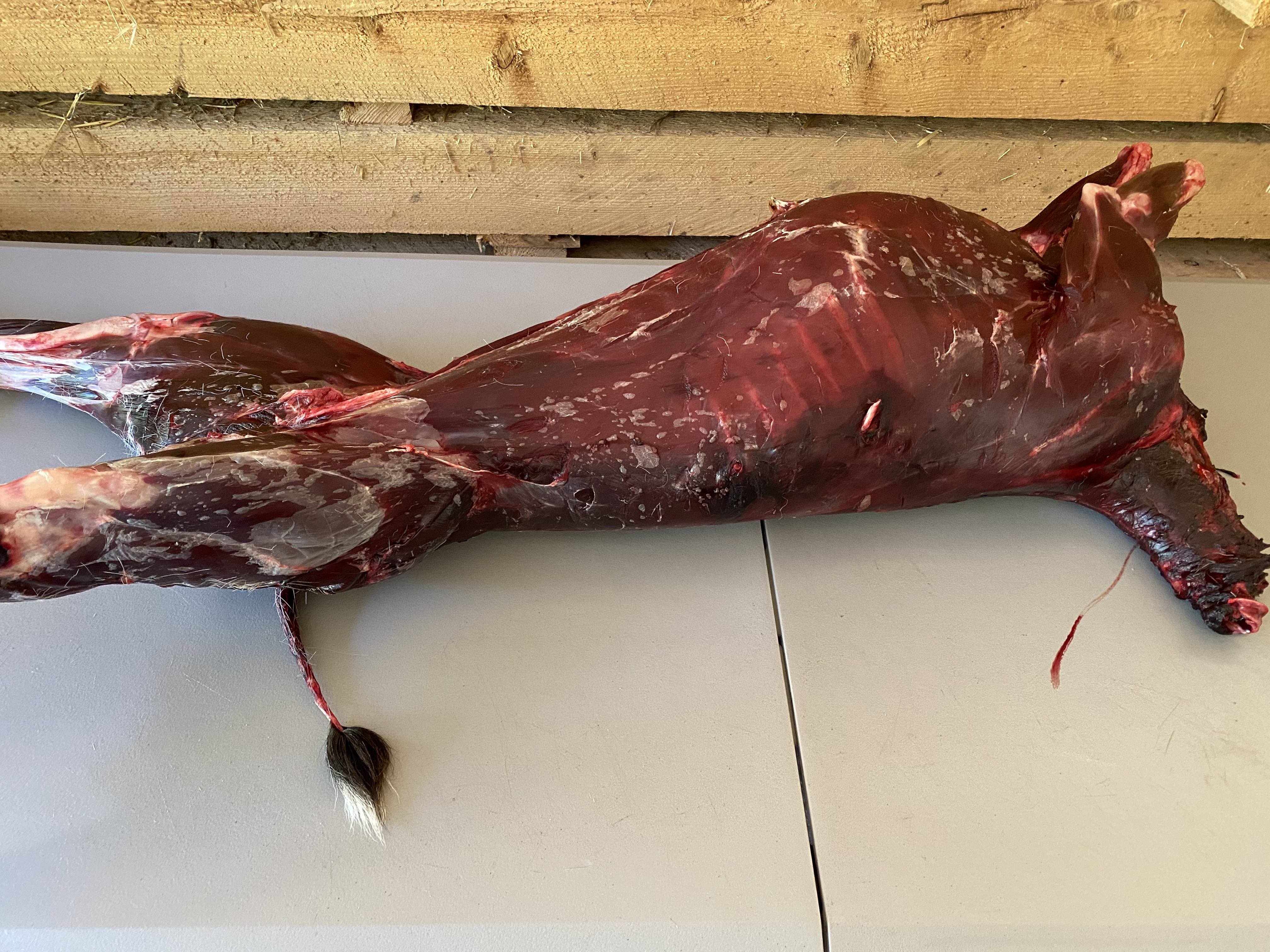
My partner called me on the way to work, early this morning, to tell me he’d seen a dead deer on the road near our house that looked intact. I promptly grabbed my truck and headed out to check the carcass. It was 54F outside- cool and dry, ideal “summer” conditions for road kill salvaging. Note- salvage tags are legal here in Washington- but you have to file them ASAP with WDFW. Not all state allow this activity, so know the laws where you live. Please also know the risk of salvaging meat and do not attempt without some experience, especially if it’s a warmer time. Bacteria can set in fast, and road kill usually involved some serious blunt force trauma to the animal, with a high probability the innards will rupture and spoil a lot of the meat. Not only was our deer fresh (still warm in the chest), on a cool morning, with a broken leg and some minor lower back bruising. The intestines looked intact and the carcass was not bloated at all, so I hoisted this amazing gift into the truck and got her hung in the garage for a full inspection.
Opening up the cavity, in a normal gutting routine, the animal was undamaged inside- yay! The smell from a ruptured intestine would be enough to let you know if there was compromise. With a great fresh meat smell in the air, I gutted, skinned, and cleaned up the beautiful doe and hung her in the walk in to fully cool and set. What a great spot by my partner! He’s not a hunter, but that doe in the cooler is one above my count this year. Gratitude to the animal, her life on this landscape, and her death being salvaged to feed others, rather than rotting in a ditch- though the dead always feed the living, and scavengers have a sacred role to play too. They will also receive some of this meat in thanks, along with bones and hide, so nothing goes to waste. It is always better to salvage what you can from nature’s bounty, and recovering almost a whole deer is certainly an unexpected boon to our larder in 2023/2024.
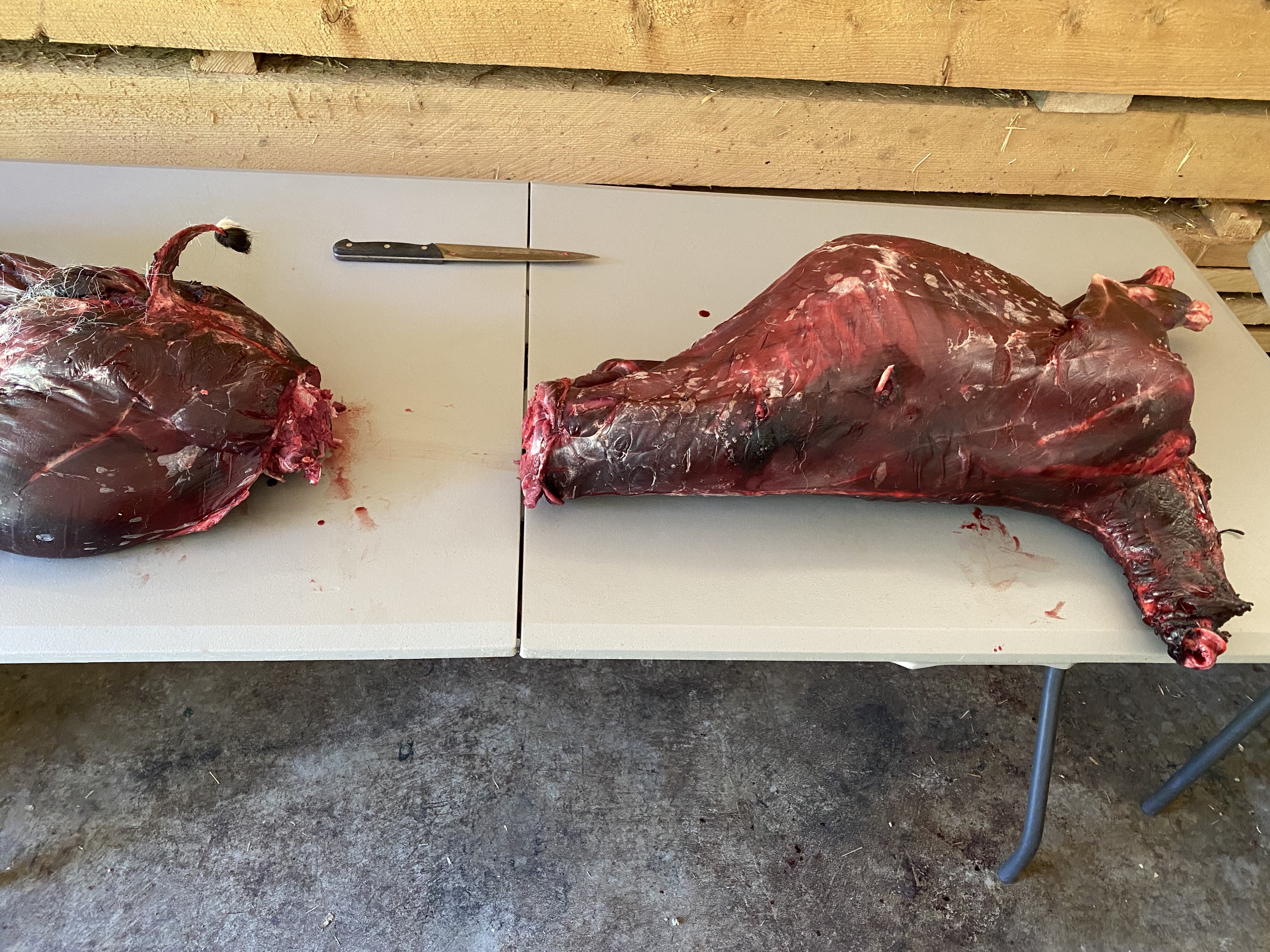
After the carcass hung in the cooler for a week, it was time to butcher and freeze the meat. I always start by separating the carcass into two halves at the loin. Then I can put half back in to keep cool, thus giving me more time to work on each part without worrying about spoilage. I’ll keep the front half out to work on first, separating the loin roast, shoulders, and neck into good family dinner portions.
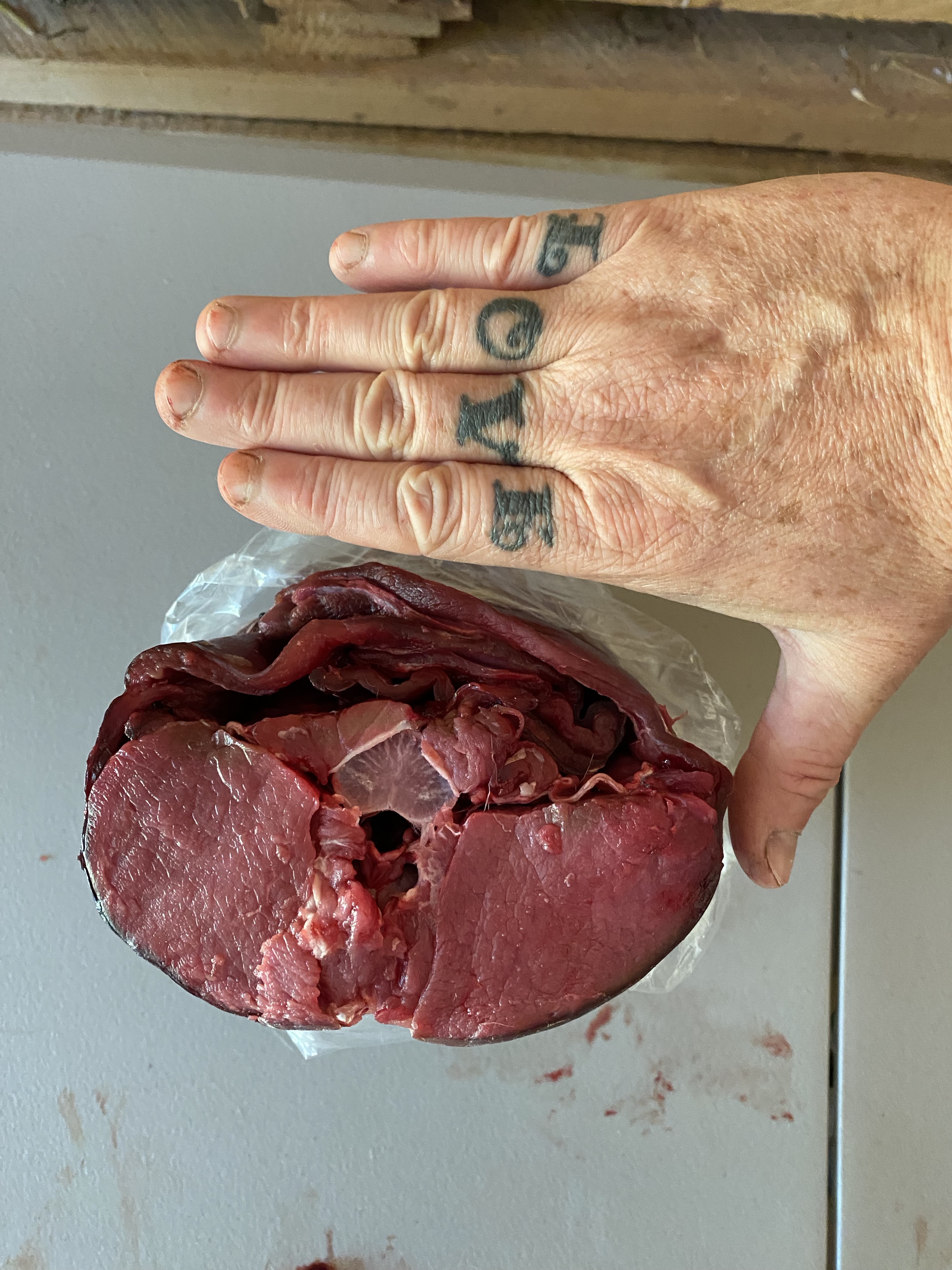
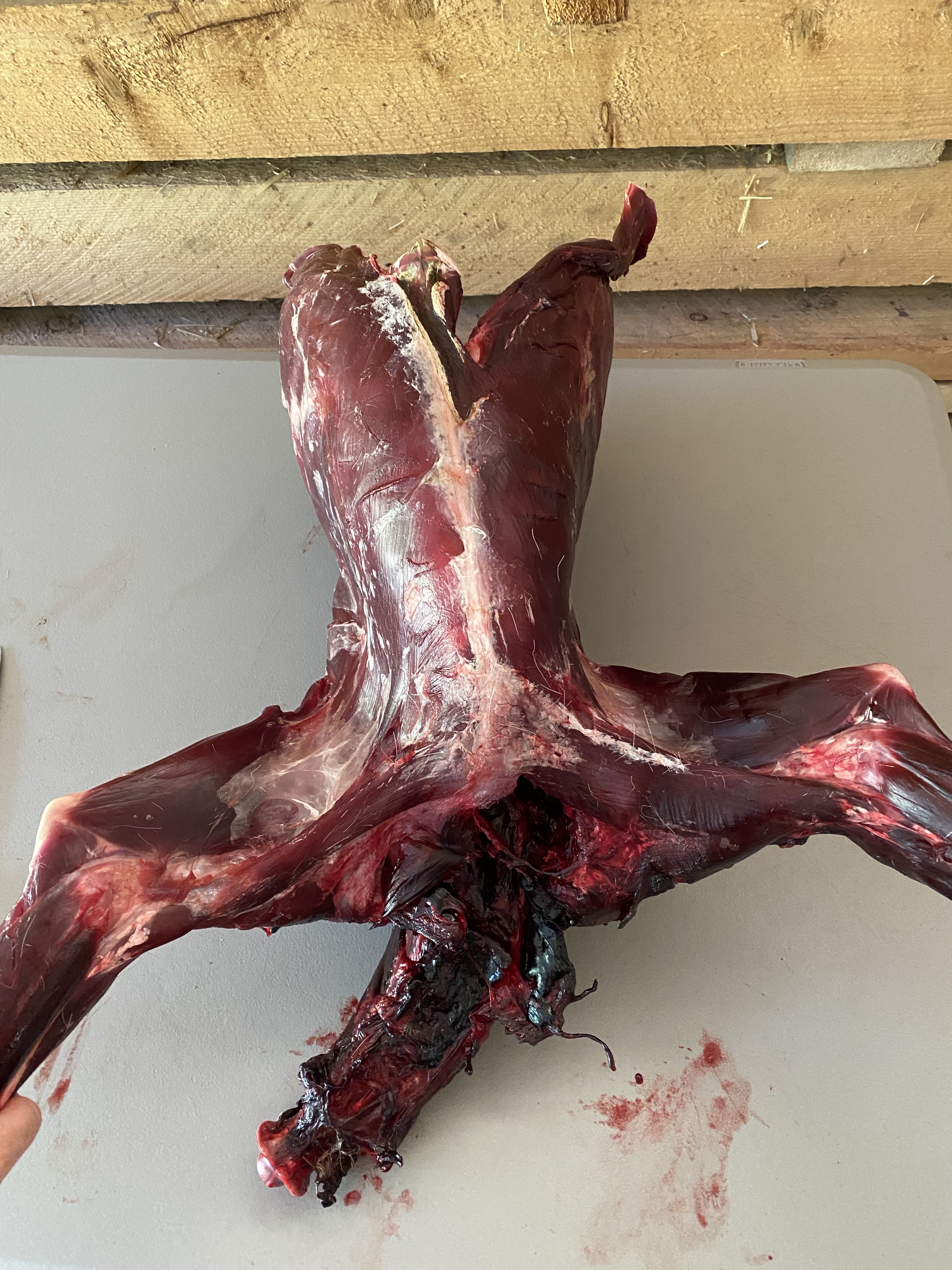
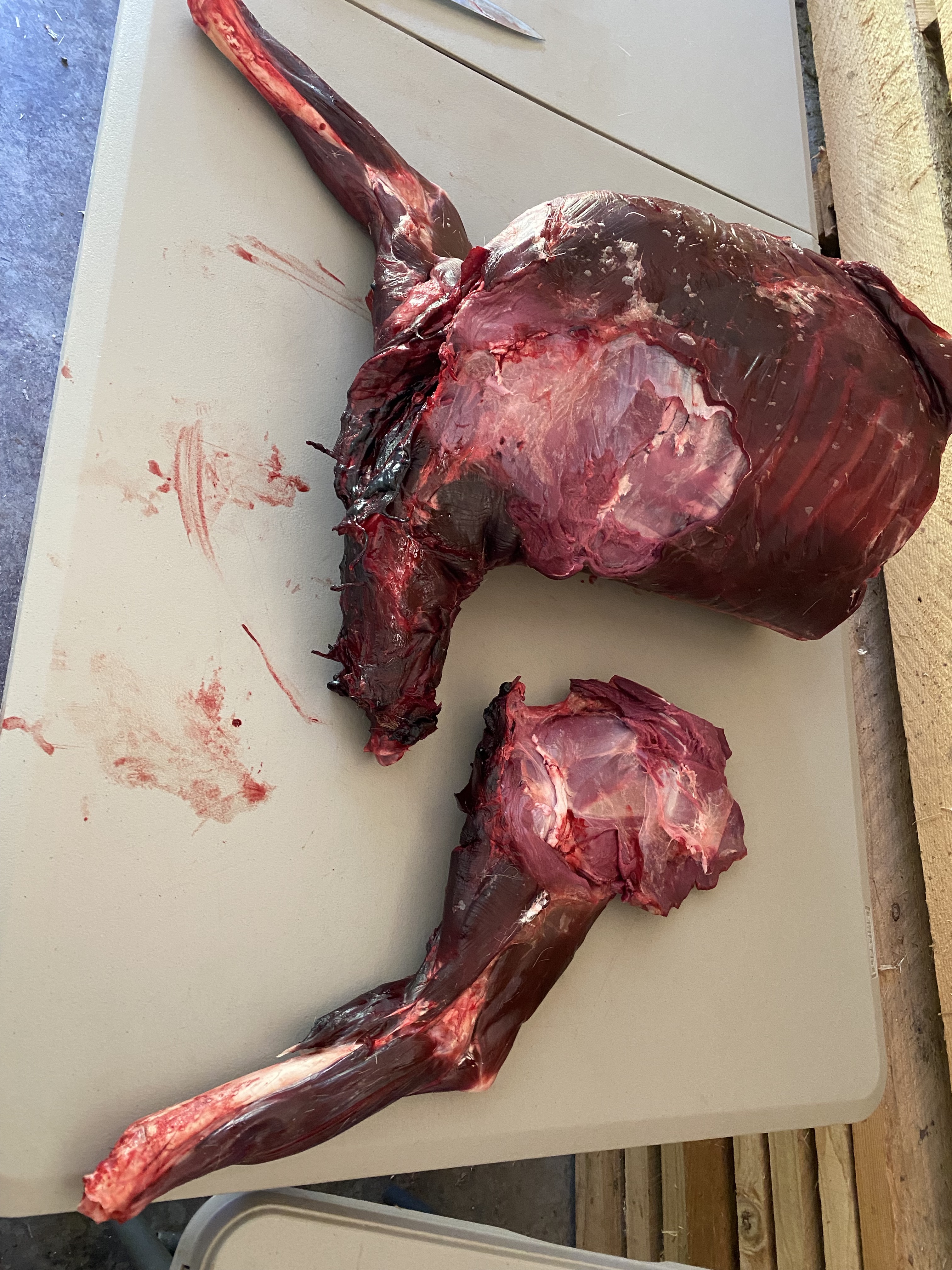
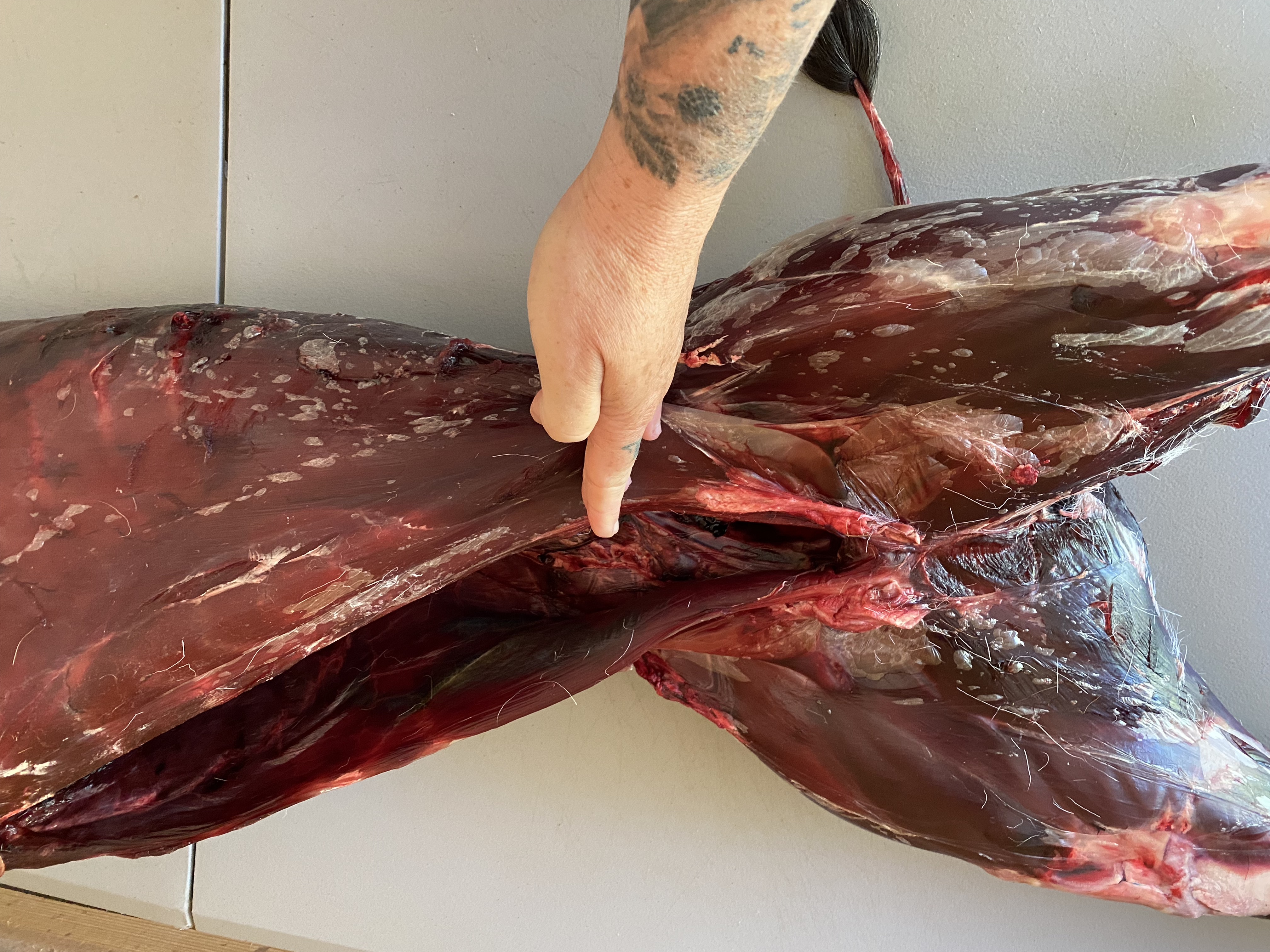
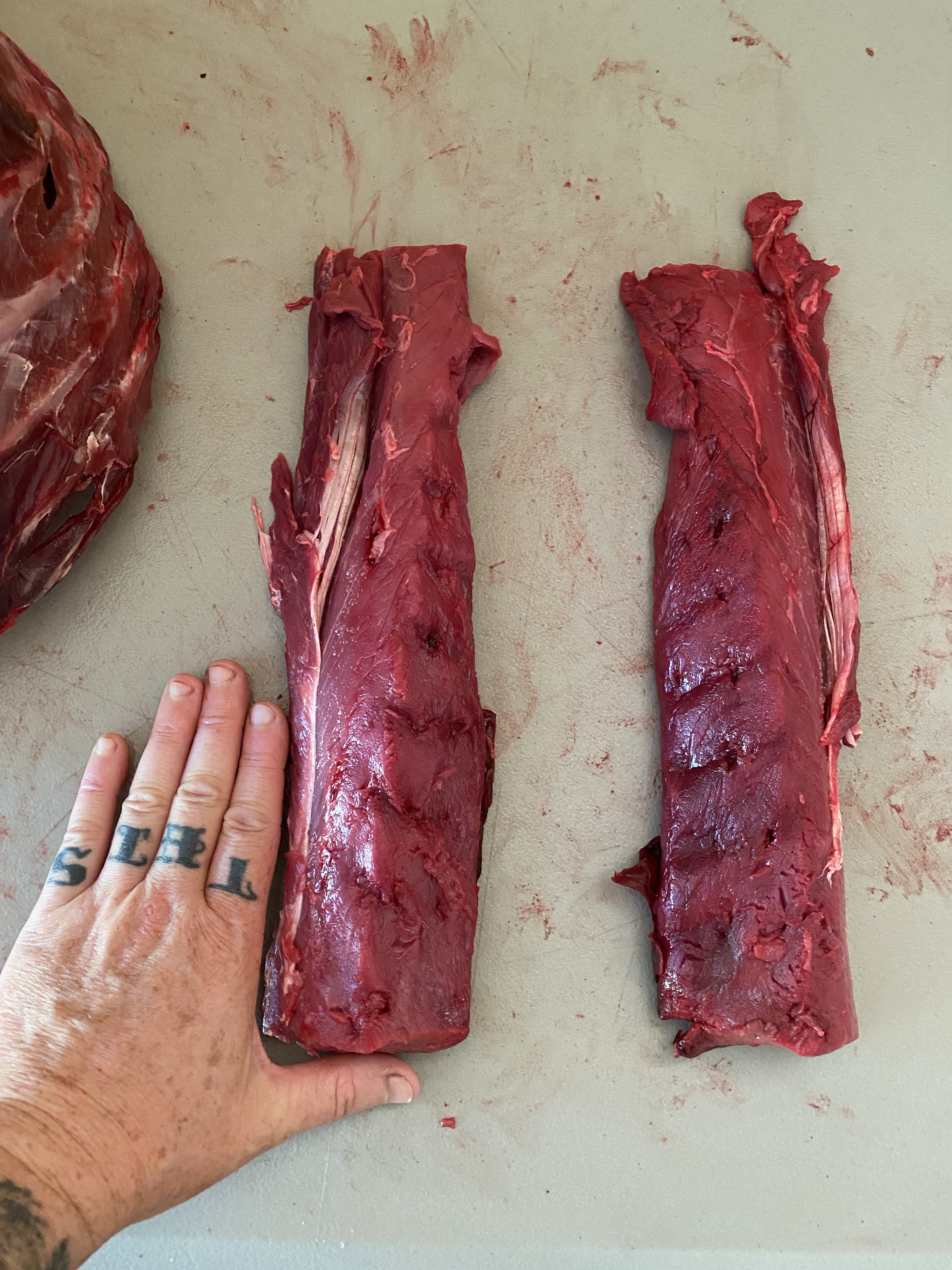
The loin roast I cut her (with hand above), had the best cuts and a cute little heart shape in the bone. Back-strap and loin cuts are dreamy, and putting them together in one single package makes for a great shared meal with friends and family, giving a real wow factor to the meal. We’ll still have some good back-strap on it;s own in another cut later in this breakdown. With most roasts I leave the big bones in for flavor, and also to save time in the tedious process of de-boning. You loose a lot of meat de-boning, and less cuts means less work and less chance for bacteria to get in. Separating the front legs from the ribs gives you two shoulders to work with, followed by neck removal. I usually leave neck together and use as a soup stock item. You can cut most of the neck meat from the bone if you want to save freezer space or avoid those complicated vertebra.
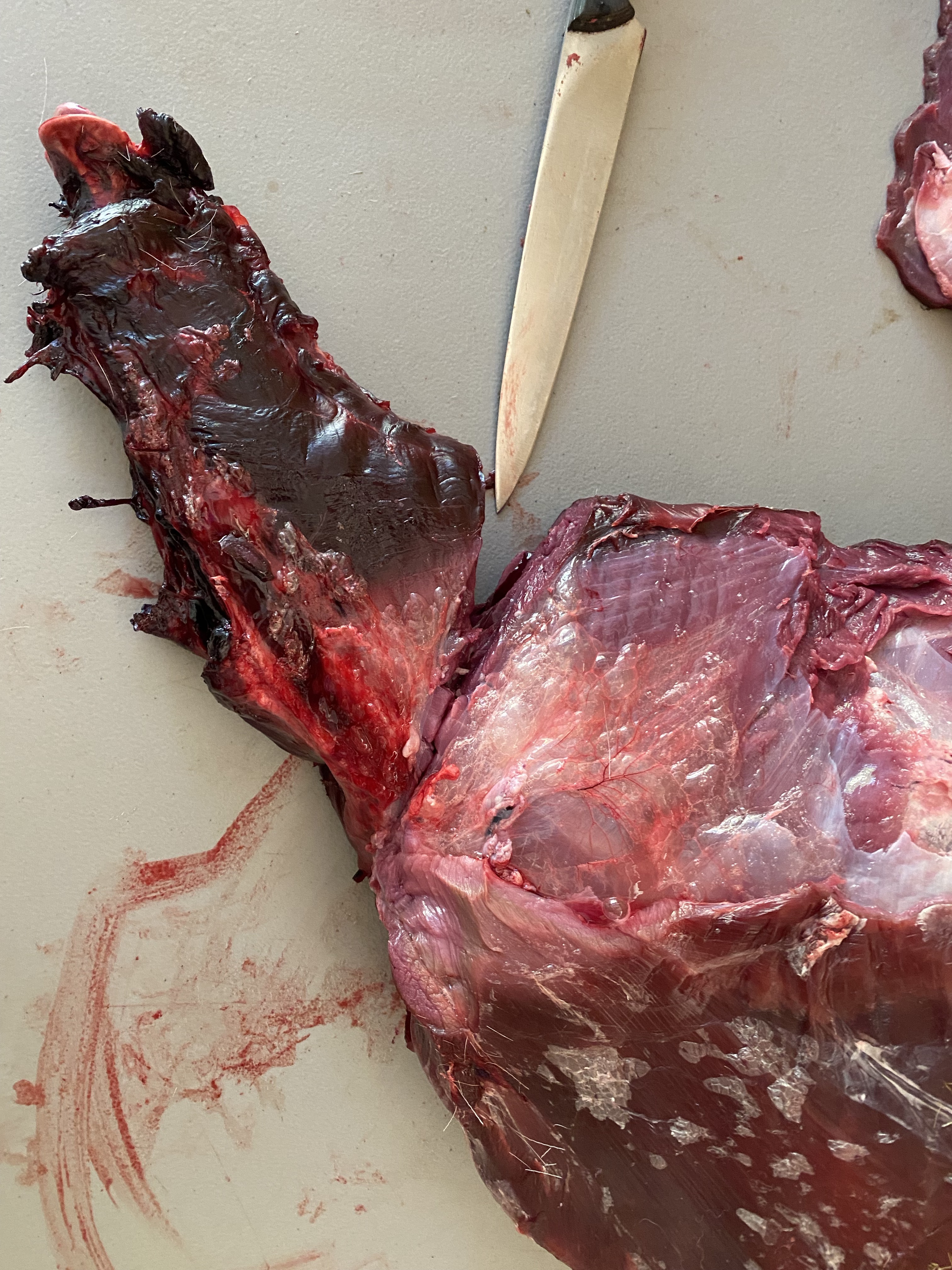
Next we turn to the front legs, often underappreciated because of the scapula bone, but shoulder roasts are delicious and easy to carve out once you find the right approach to the cuts. I’ve done two different presentations of the shoulder- one with bone in and one with bone out- I know which one I like better- what do you think?
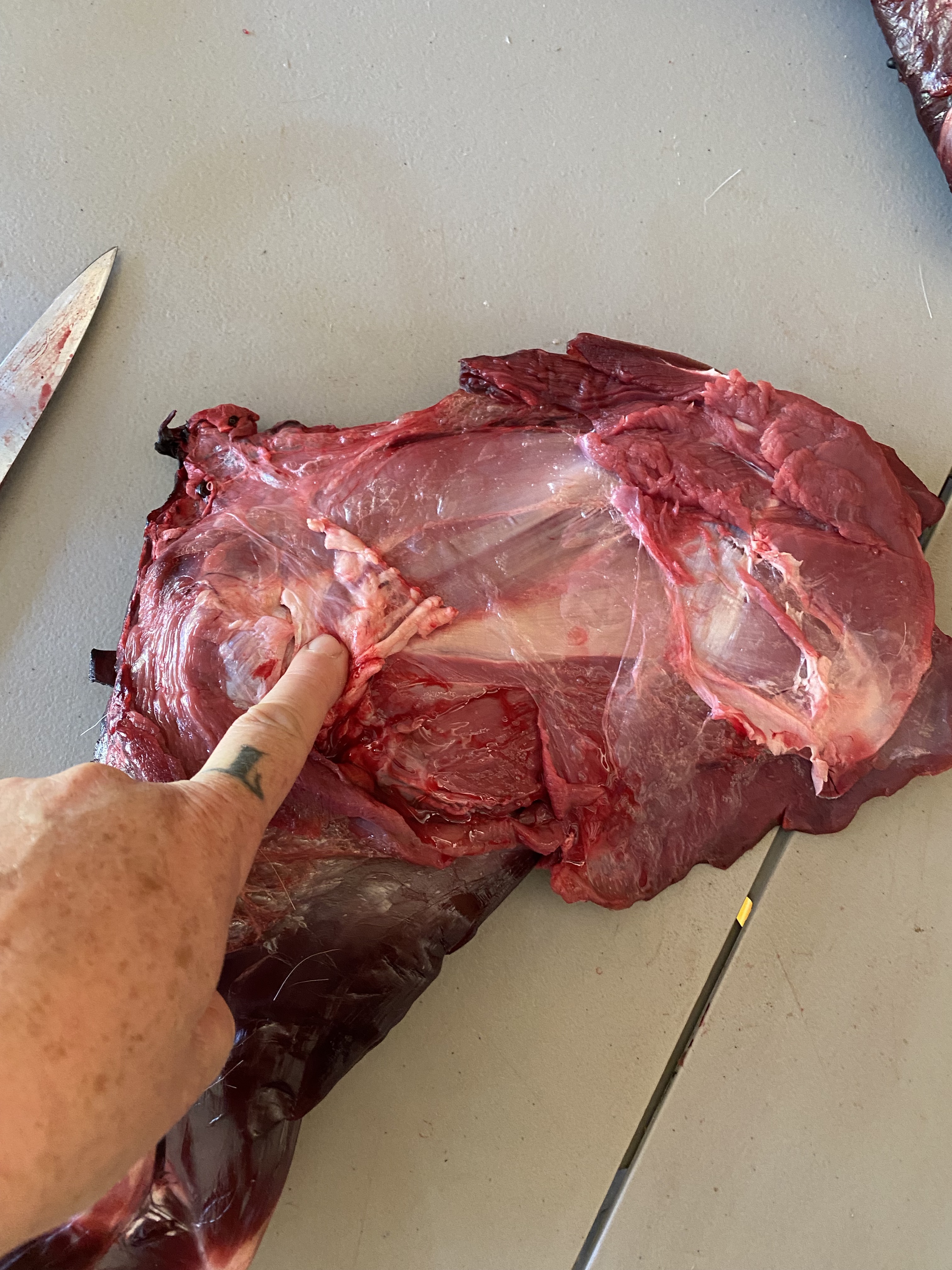
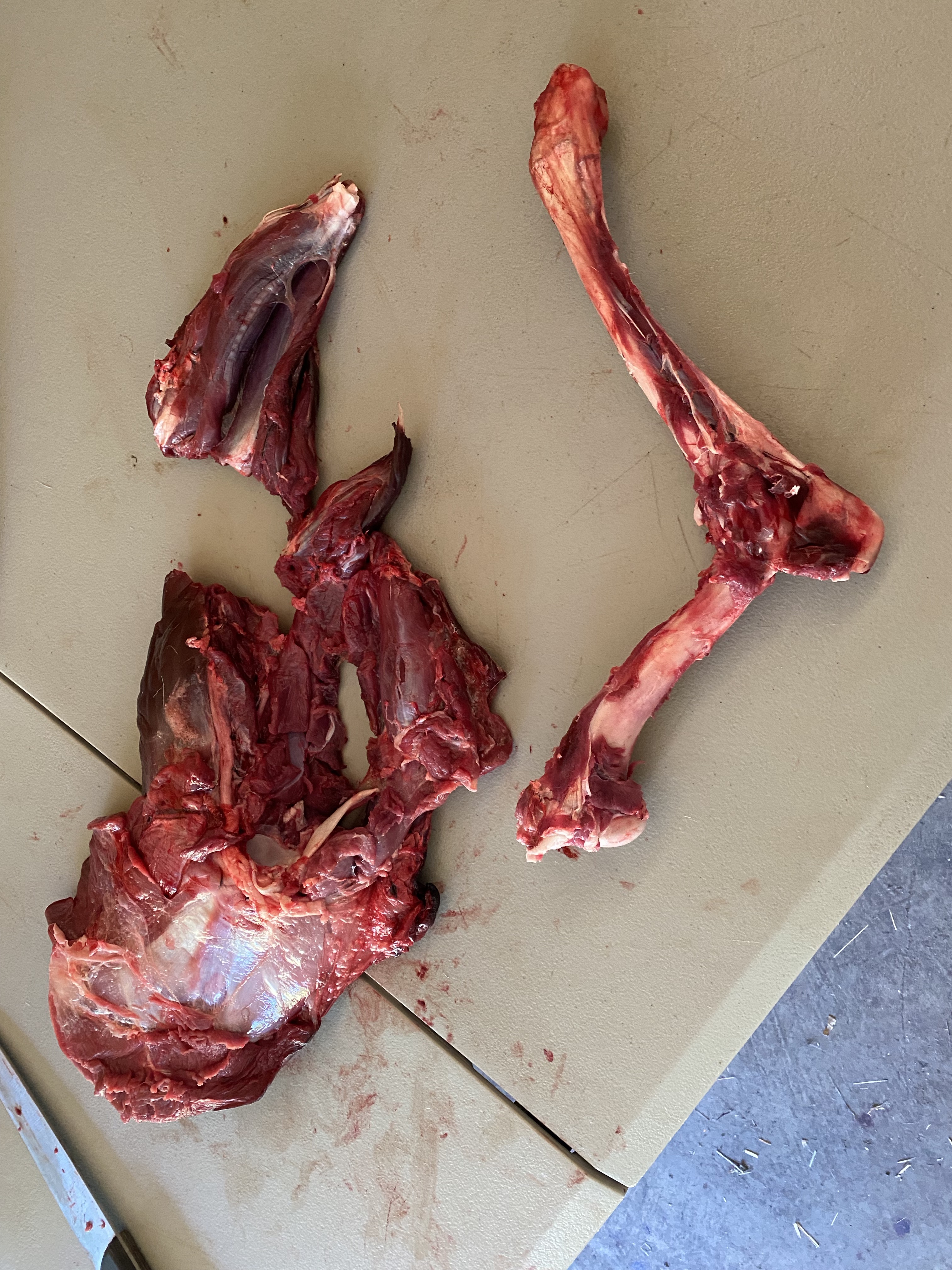
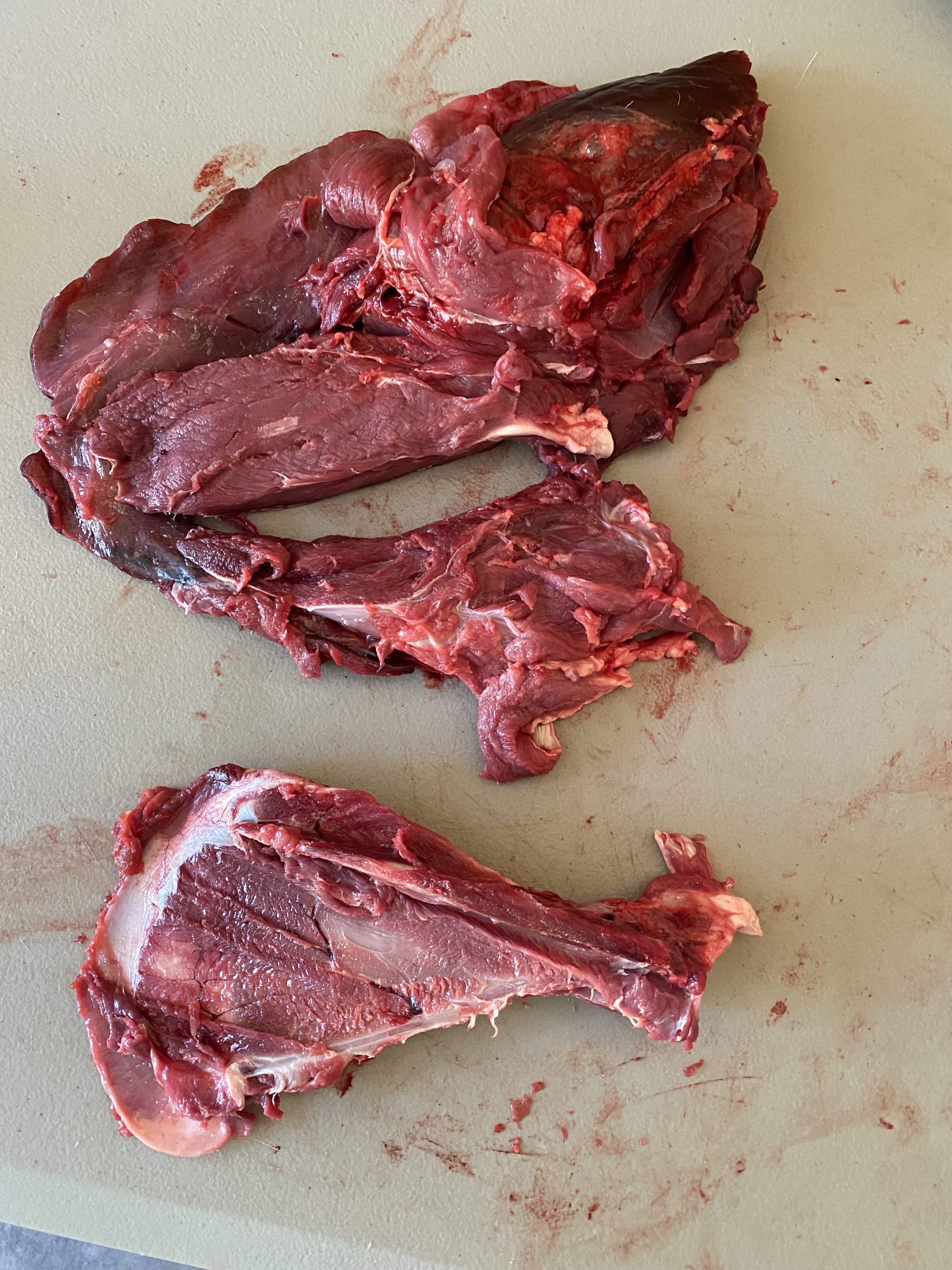
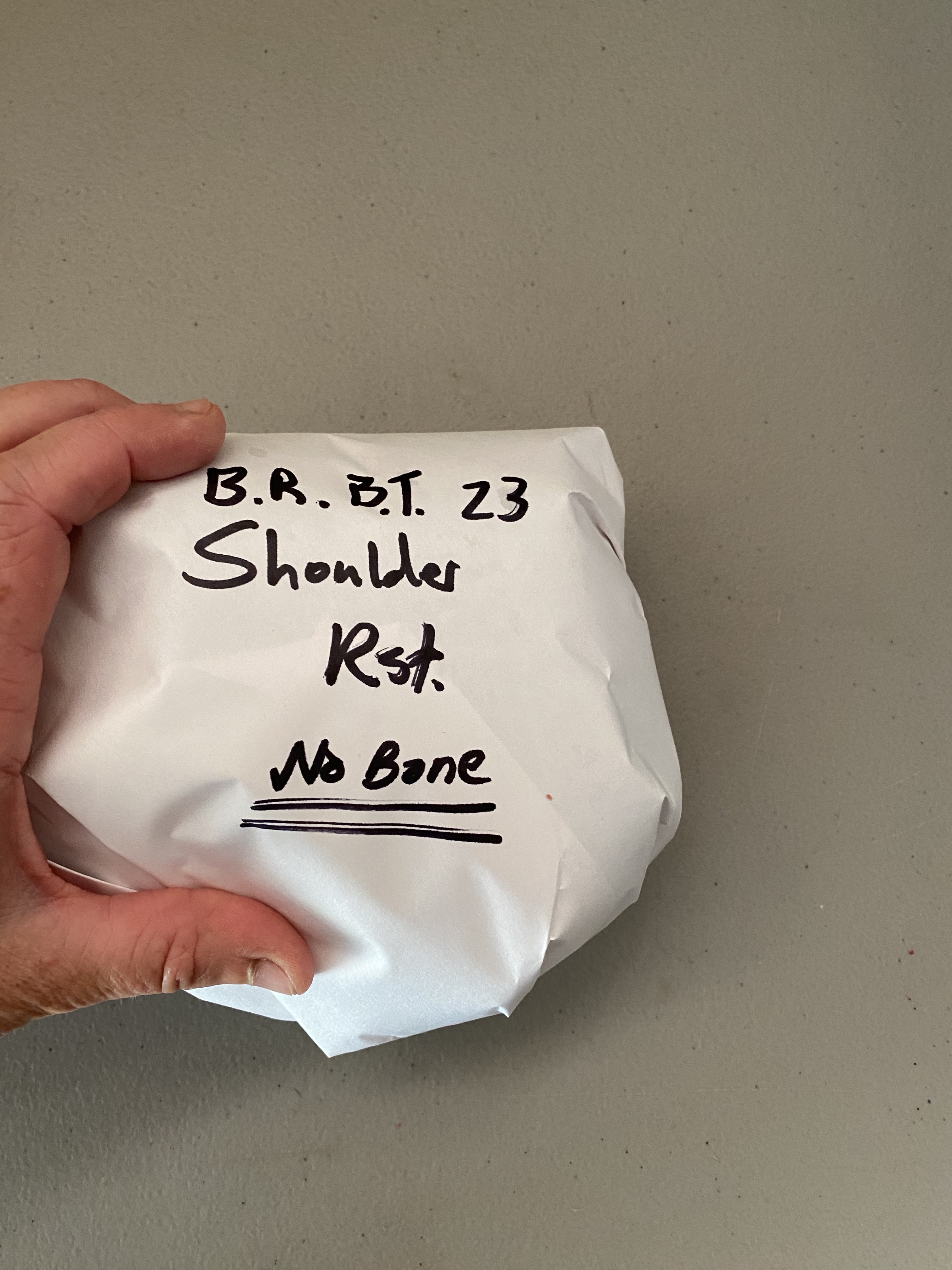
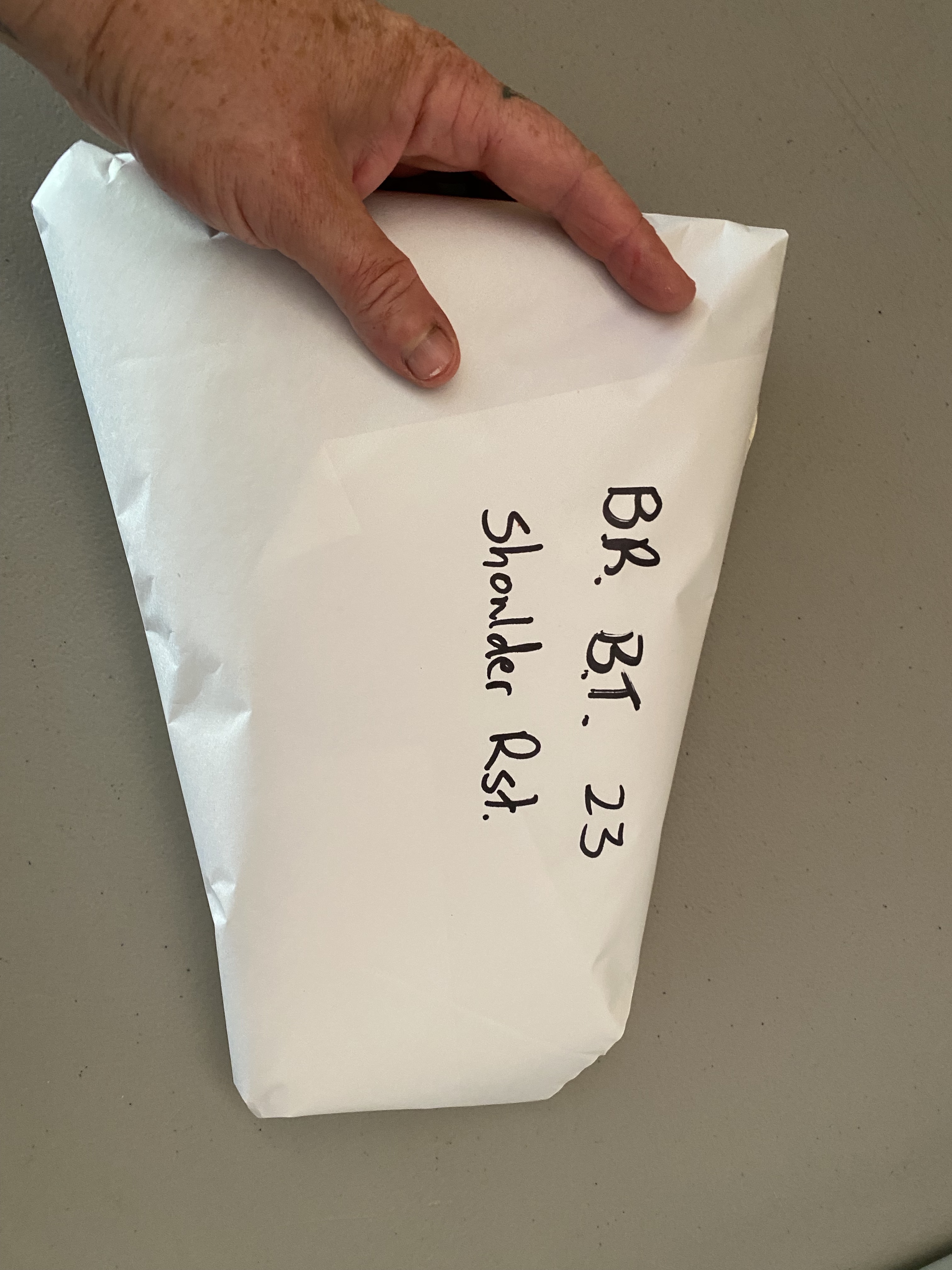
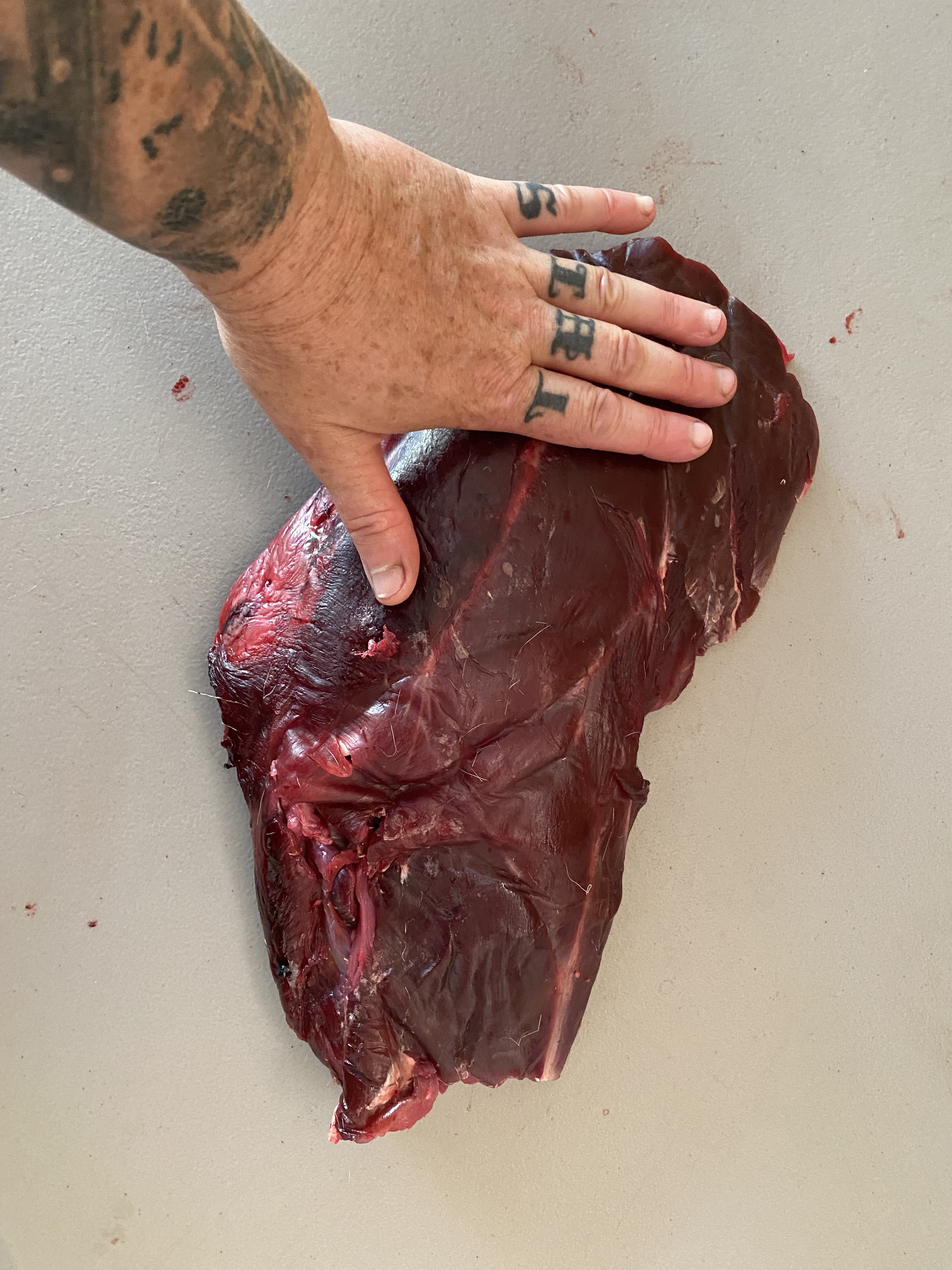
Shoulder bone in looks so good- and reflects the typical cut you would buy in the store. It’s easy to wrap and cook too. Great way to keep as much flavor and meat together for taste and presentation. Because we’re working with a damaged carcass, some of our cuts are going to be a little different, but this doe was only damaged in a few places, so most of the meat will go in the freezer. Take a look at these two back-straps- that’s some delicious, melt in your mouth cuts. The meat is fresh, red, and lean. I’ll pack them together in one package and then cut them into fancy medallions for a meal when I unfreeze them. Again, you don’t have to cut the meat into smaller servings until you are ready to use them. This also prevents freezer burn.
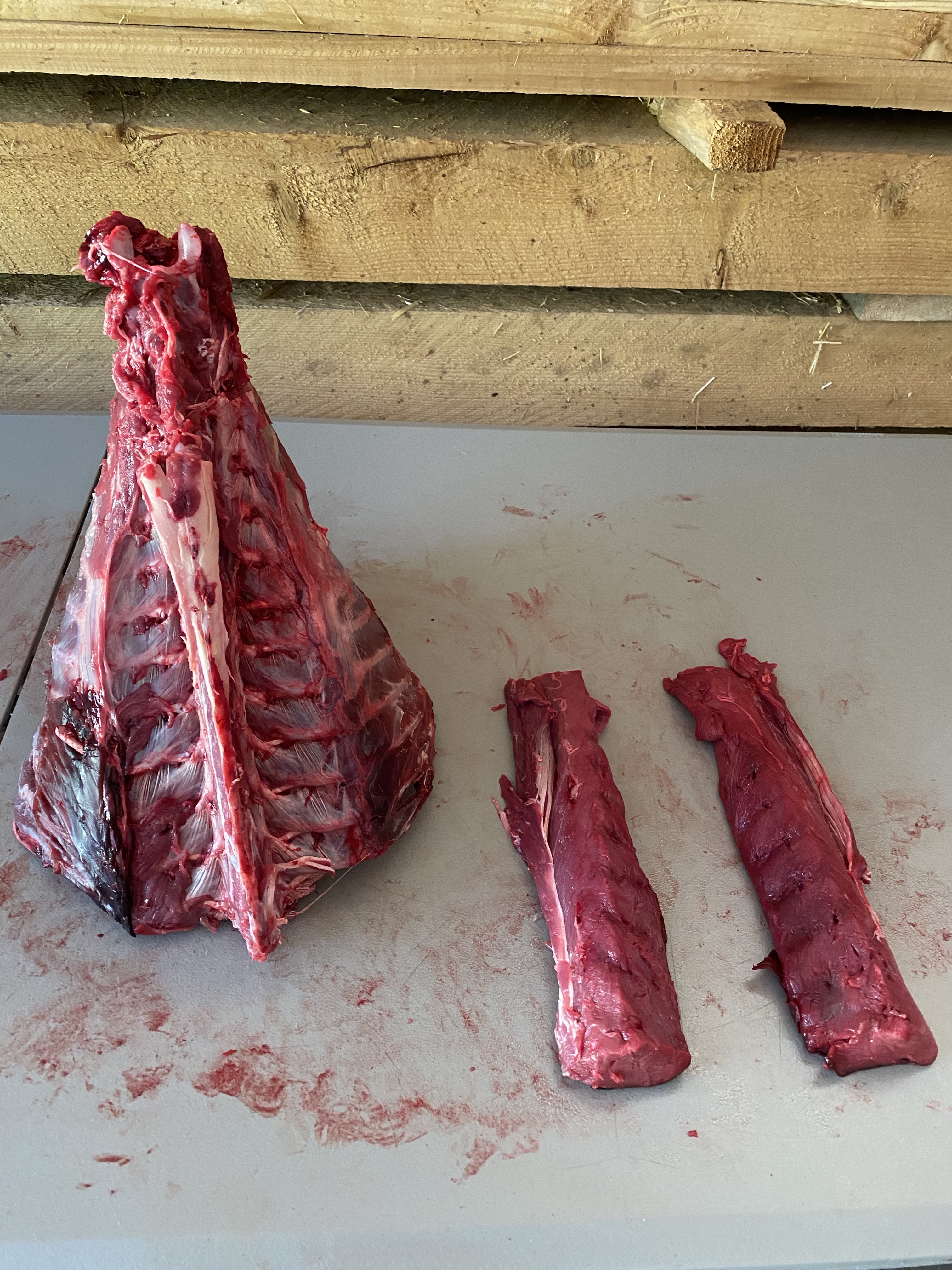
Rib cages are often a challenge, and though I love roasting a rack after I’m done butchering, this rib rack will go to the scavengers to reflect my gratitude for this abundance of wild food. I did scavenge more meat off the bones for our grinds bag- always good to put the trimmings in a bag to grind later for deer burgers. On my sheep, I take the time to carve off the brisket, but deer have little fat in that area, so it went to the woods to feed others. There was also some bruising in the ribs, with a few cracked from auto impact. Bone fragments can become a real danger in the meat; swallowing one can injure a person, so a lot of caution goes into cleaning a scavenged deer. As I began on the back half of the carcass, I found another major injury, which was the cause of the deer’s death. Her right side took full impact, breaking the right metatarsus, cracking several ribs on that side, bruising the lower back, and, as I cut into the pelvis, shattering the right hip entirely into fragments, which I only discovered once Ii began butchering the hind end- can you tell just by looking?
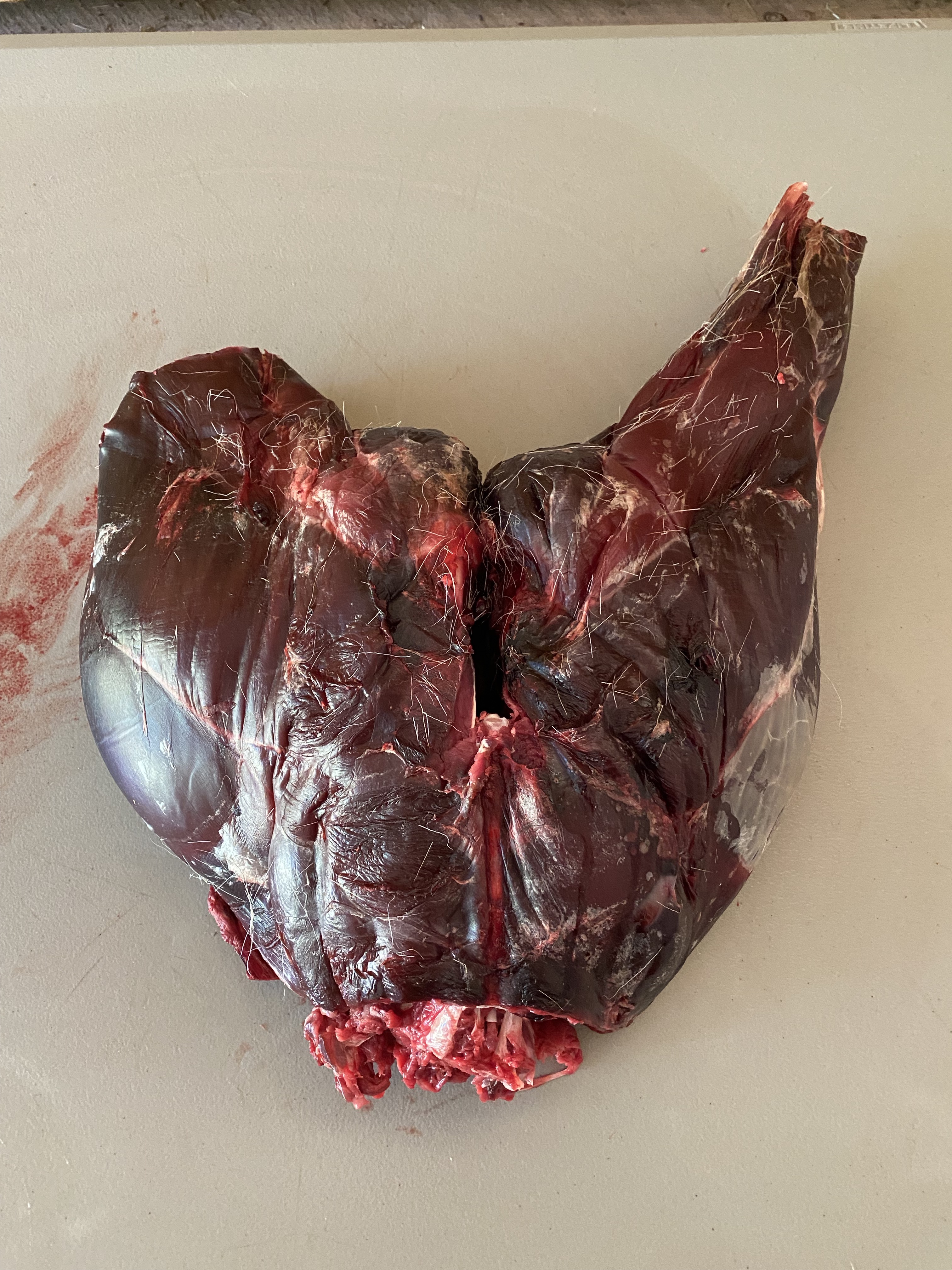
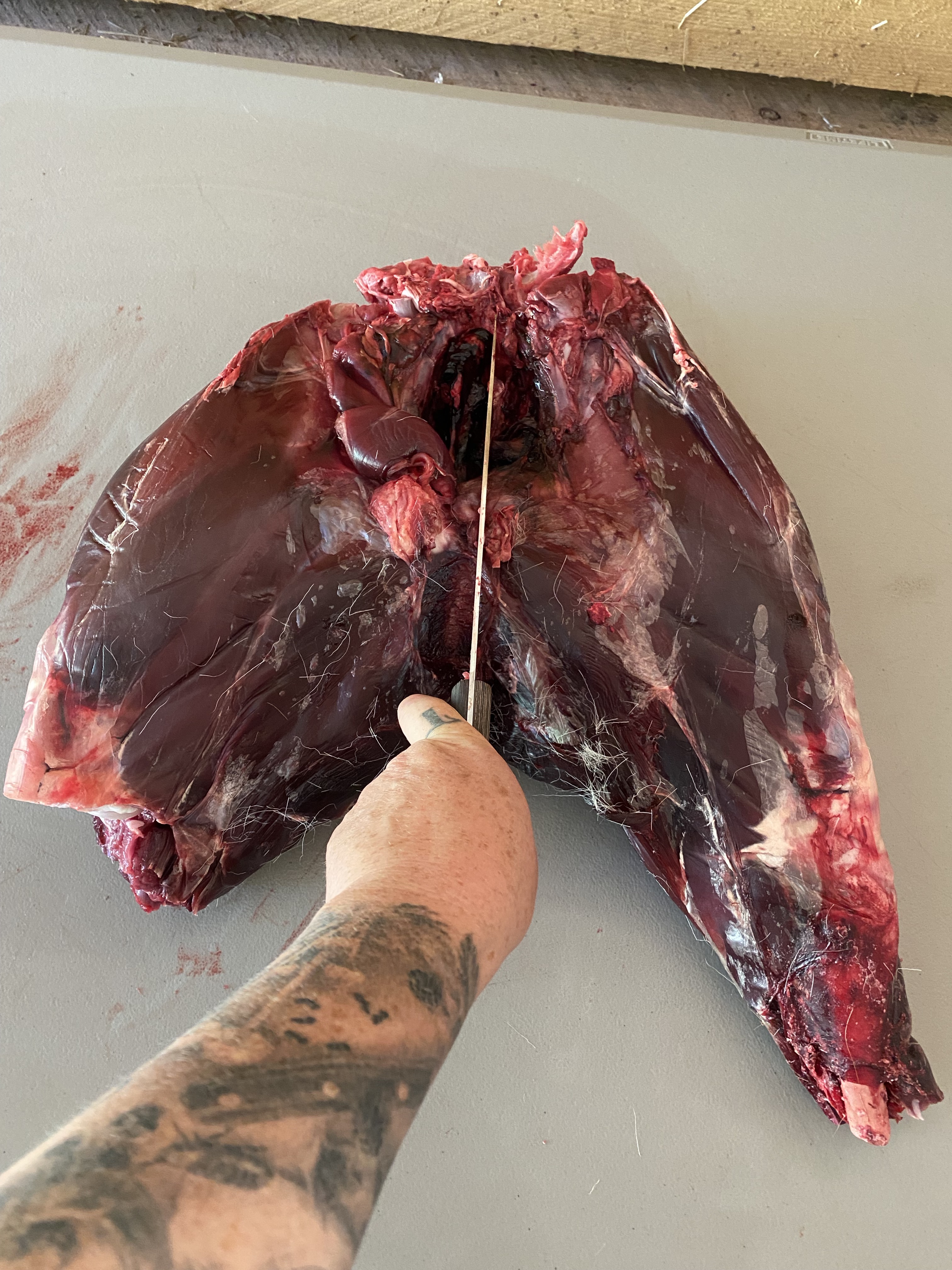
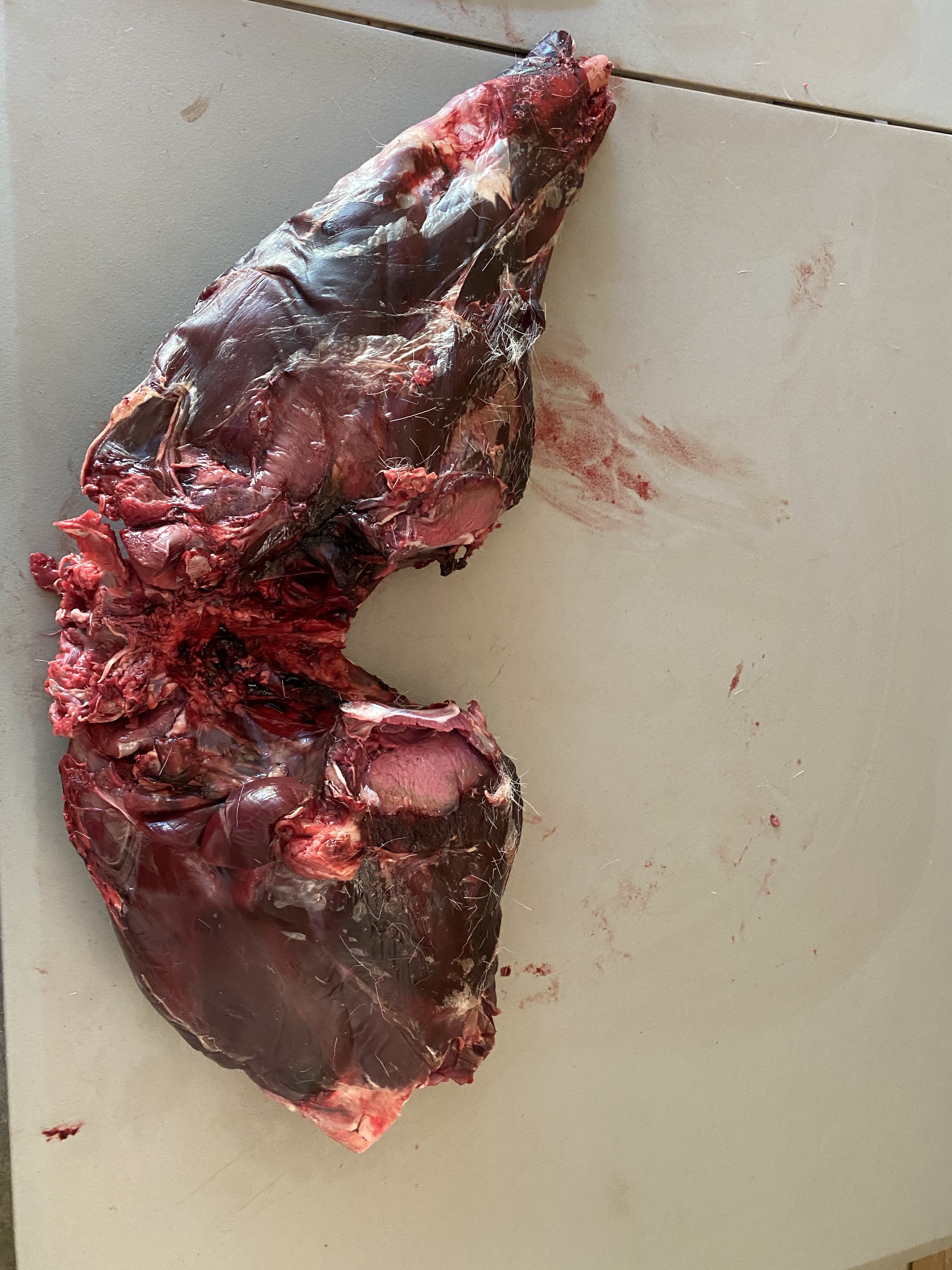
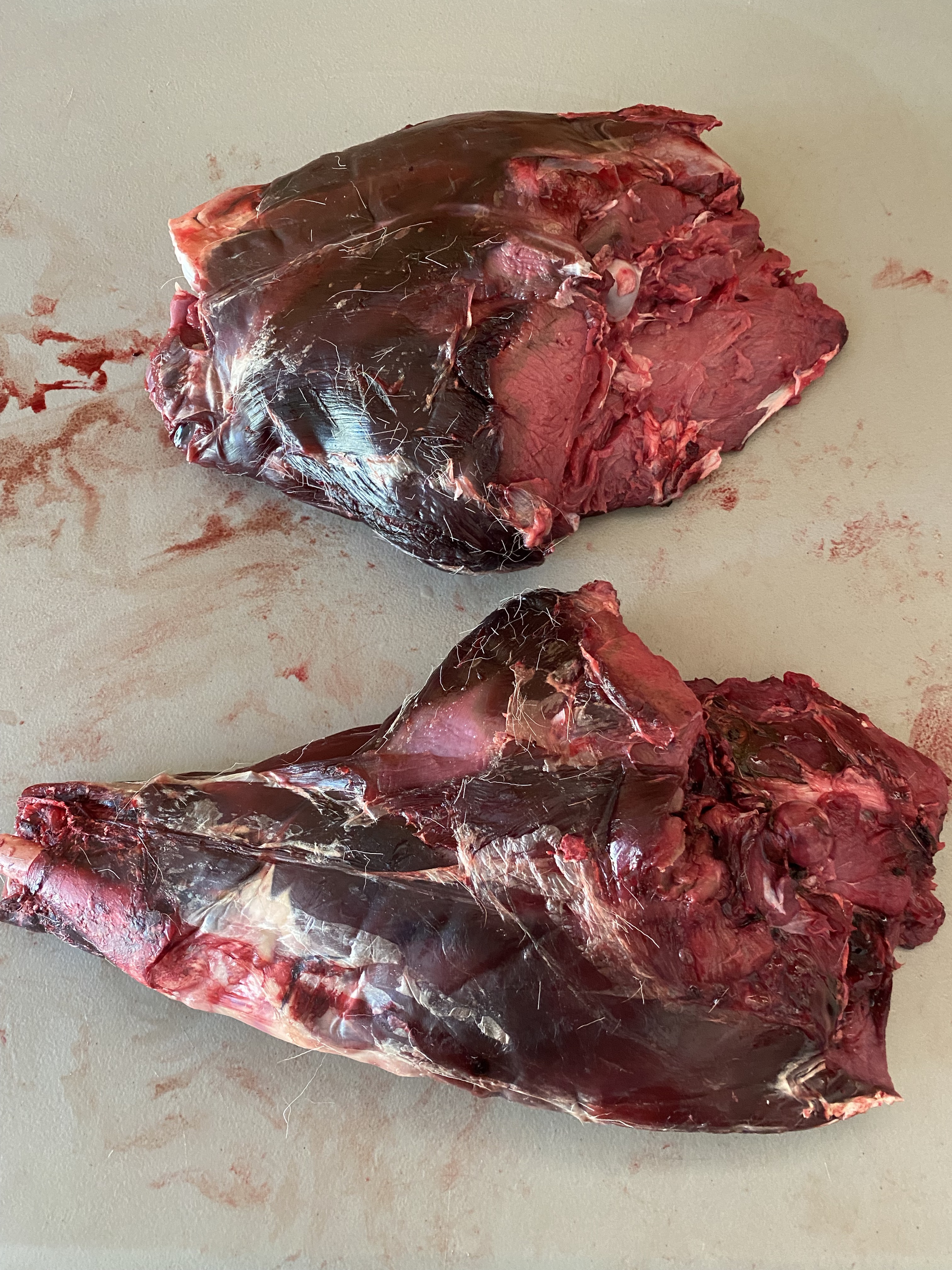
Leg roasts are the largest cuts I make on an ungulate, and it’s a great cut if you can split the pelvis well. I often use the edge of a table as leverage to separate bit bones. It saves on the knife sharpening, my hands, and take apart time. Some people like to carve it up for all the nice little stakes you can get out of those big muscles, and hey, stakes are good, easy to cook, and approachable for those who don’t want a lot of meat at once, so go to it if it’s your thing. Really, if you’re the one cutting it up- do it your way. I like big roasts and less cutting, it also makes wrapping a breeze. I wrap all my cuts in plastic cellophane to keep the freezer burn out, and cover in lined butcher paper for long lasting freshness. Bone in cuts should be eaten within a year, but if you take the bones out and wrap well, frozen meat will stay good for many years. We tend to eat ours in a timely way, but still wrap everything to last.
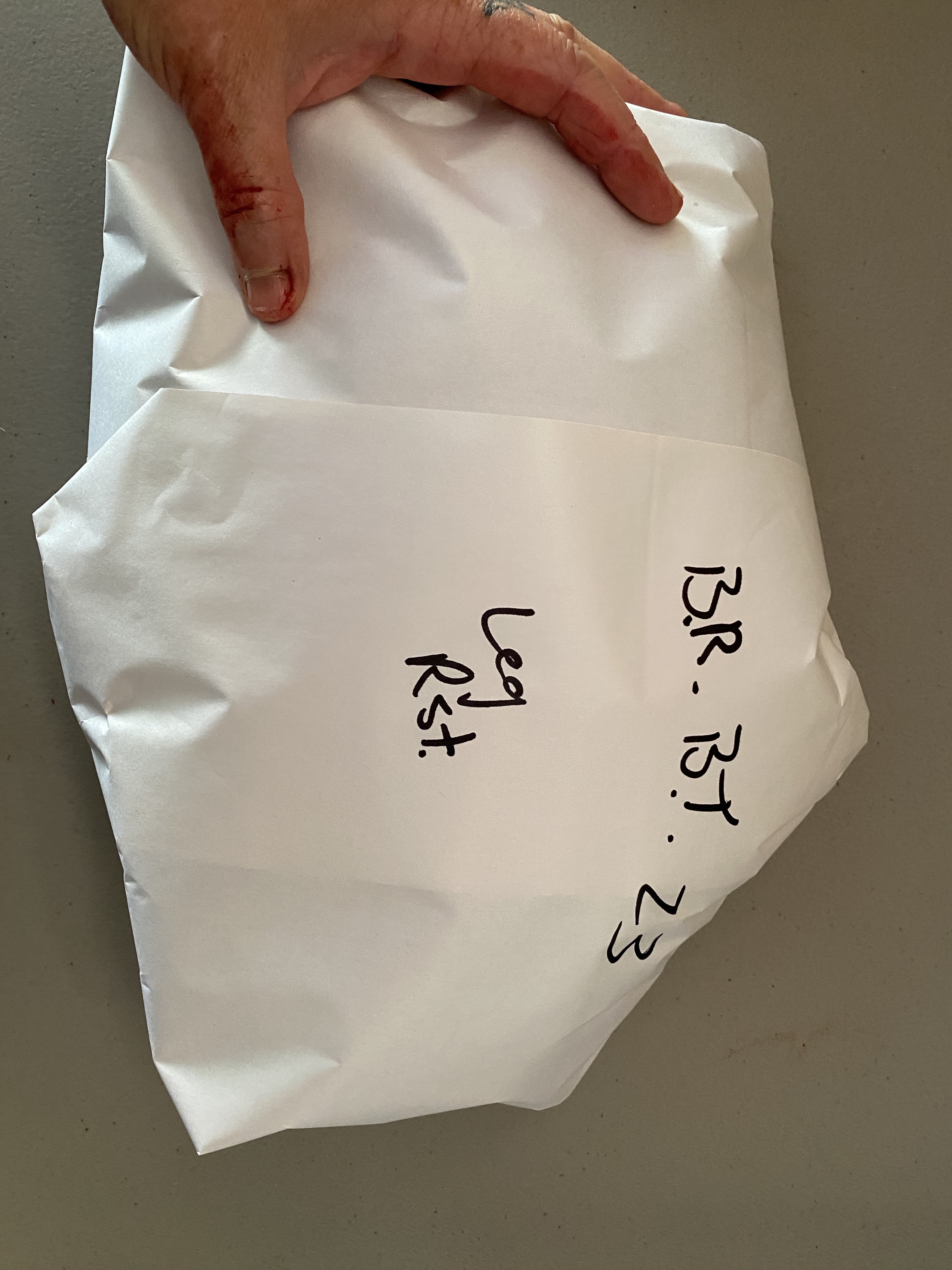
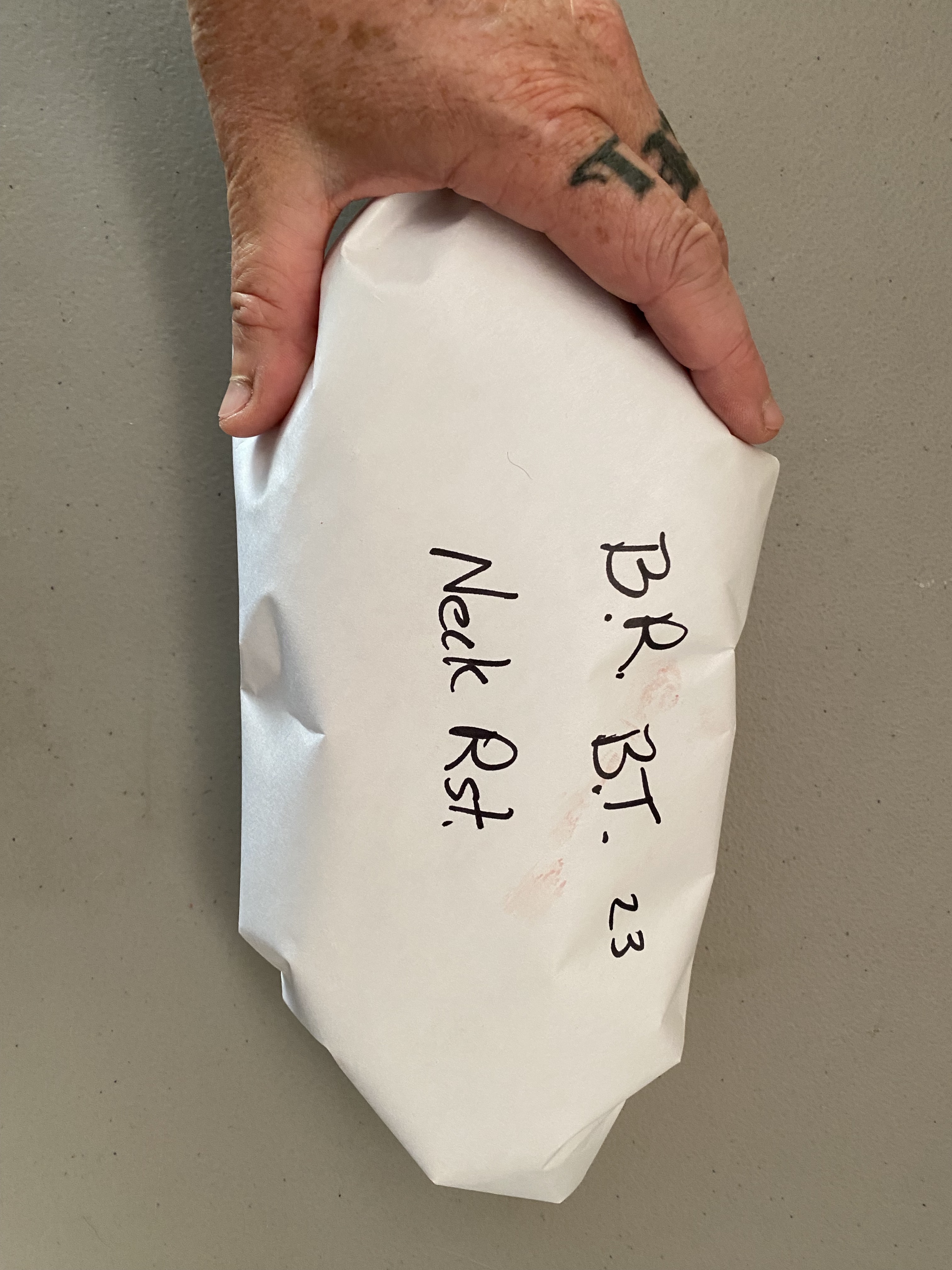
Labeling your cuts to keep a single animal together and to know what’s in each wrap helps when you’re stacking a lot of different things in your freezer. B.R. B.T. 23 means Big Rock, Black Tail 2023. I know where I salvaged this animal (big rock rd.), what species (black tail deer), and what year. Some people put months down too. When I label with Rst. (roast) that means bone in. If I leave the bone out- I say so on the wrapping. Any cuts not a roast are labeled with part names, like back-strap or grinds. Grinds go in a zip-lock to freeze. I’ll grind all my meat at once later this fall, after slaughtering season is over and all the need to grind meat it bagged and frozen. Freezing meat breaks it down a little more, making it easier to feed through a grinder once defrosted again. Pro-tip: cut grinds up well, ,or clog the grinder with sinew and enjoy the headache of constantly taking your grinder apart to fix the blockage.
Well, that’s a short preview of cutting up a salvaged deer. Thanks for your interest and support in harvesting wild foods of all sorts. For those seeking wild meat, but unable or uncomfortable with hunting, this is a great way to enjoy some good venison, and help prevent waste in the often violent death of animals on roads. Again, this encouragement is for deer salvaging, where it’s legal, when it’s the right time, and the carcass is intact. You can still learn and practice butchering on a bloated deer if you want, and I have- any learning is better than none, and experience is the best teacher, but stay safe and know your own limitations- also remember those around you, not everyone is ok with the smell or mess that could happen with roadkill. Be mindful of your surroundings and keep your area of butchering clean and sanitary. Have the freezer space ready, and know what you’re going to do with any leftovers. We put our bones and viscera in the wildlife area of our property, near a trail cams so we can capture images of the other animals feeding and thriving off this windfall. Turkey vultures, bears, coyote, opossum, racoon, mice, crows, ravens, and all the bugs and insects are feasting away, and so will we.

 EEC Forest Stewardship
Love this!
I always learn so much…
Thank you and also for the yummy meats!
😘
LikeLike