Fleece Fleece Hair

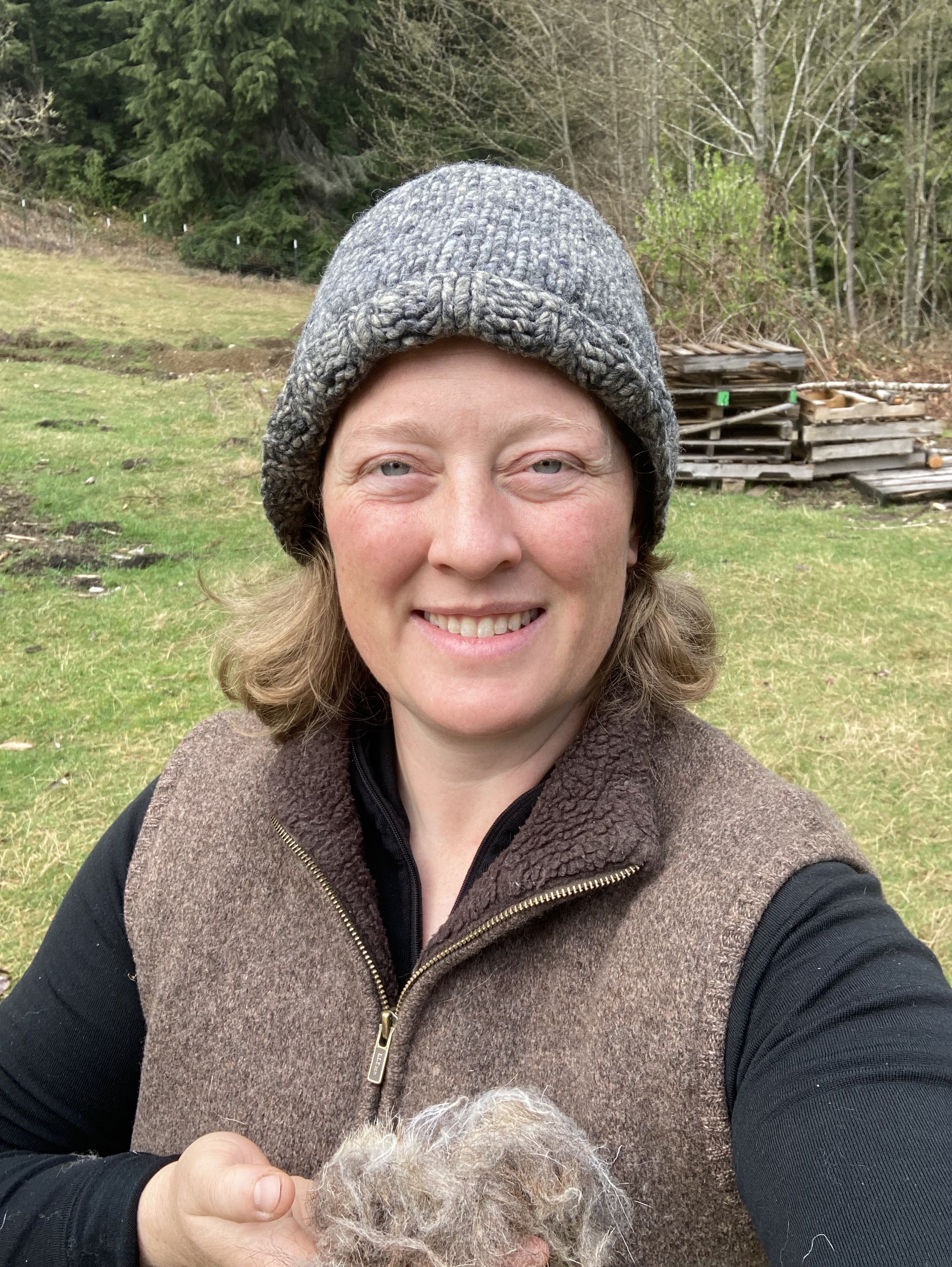
This is a picture comparing my wool fleece (on the outside) vest with shed hair fleece from our Katahdins. I’m often asked if we process our sheep fleeces into yarn. Well, the short answer is no, our sheep do not produce wool. Wait! What’s that shaggy growth on the Katahdins then? Glad you asked! Hair sheep shed! Hair- not wool. The difference is clear when you start picking apart Katahdin sheds. Wool has long, plastic (meaning stretchy) fibers that lend themselves to spinning into yarn. Wool can also be felted, and Katahdin fleece does have enough wool in it to felt, but the hairs dominate Katahdin fleece composition, and hairs are short and stiff, which makes for a brittle fiber, not conducive to pliability, which is imperative for clothing.

Some hair sheep have a higher wool count in their fleece, the most important aspect of a hair sheep’s coat is shedability. Hair sheds, wool must be shorn. A mix of the two must still shed on a Katahdin. If the coat does not fully shed, that animal should be culled from Katahdin stock to prevent the laps back into wool. In the same way, fiber sheep should not be crossed with hair sheep, or the quality of the wool will decrease. The clump of shed hair below looks very woolly, and indeed, the fiber is longer and wavy, but sheds properly as hair. The ewe producing this coat will most likely be culled sooner, we’ll see how her lambs turn out. The climate of Western Washington is getting hotter, so we’re selecting animals that are more comfortable in summer temperatures, which shedding sheep like Katahdins excel at.

Much of hair breed sheep were developed in tropical climates adapting to humid conditions. Katahdins are a mix of many Caribbean hair sheep and some naturally shedding UK varieties. There is a great summery of this animal’s development by Michael Piel here. The coat of these sheep was bred to shed because wool lost its value. The lanolin in wool is also part of the cause of most sheep meat being greasy, and falling to mutton status after a sheep matures. Katahdin sheep don’t produce a lot of lanolin, and use the energy that was put into wool growth, into meat growth instead. What you end up with is great flavor and a low maintenance fleece. The shed hair clumps up around the landscape, but is put to good use by nesting birds, borrowing insects like bumblebees- who use the fleece as insulation, and the soil its self, receiving rich calcium through the breakdown of hair on the ground.

Wool is still a great fiber to invest in when shopping for durable, warm clothing, but the time and energy that goes into shearing, cleaning, processing, and weaving to make wearable clothing from such material would be a full time job unto it’s self. At EEC, we’re looking for smart livestock operations offering good food, great ecological return, and easy maintenance. Katahdin hair sheep rise to the occasion on all fronts- with the self shedding fleece.

Below is another great picture of two different fleeces from our Katahdin hair sheep. This short, course hair will not make a sweater, but it keeps the sheep warm in winter, and relives it of the burden once warm weather arrives with no stress to the animal, or added cost and time to the farmer. Shedding season may be less flattering for the sheep, as they look mangy at best when the chunks of hair start rubbing off- most of the sheep spend a lot of time against the fences and barn posts working to loosen the itchy hair as it releases. Sometimes a partially shed fleece will naturally felt up and shed as a tattered mat. Ideally, the fleece should fully shed from the animal by early summer. All my girls have started the shed season, but it will take about a month for a full shed to complete. Once the old coat is gone, a sheen of fine new hair begins its slow growth into thick fleece by next fall.

Cascade Katahdin Lambs

Cascade Katahdin lambs hiding in a cedar grove at EEC Forest Stewardship are the newest generation of sheep at Leafhopper Farm. We’re into our 4th year breeding Katahdins, and the work continues to show in fine lambs. Ten is the final Spring count, spanning January through March. Eight ewes out of nine dropped four sets of twins and two singles. The singles are from one line, which I have kept for genetic differences, but will be phasing out, because twins are expected in Katahdin ewes, and lack of fertility is a cull trait. There are two teats on a ewe’s milk bag, so two lambs are ideal. Many commercial operations push for maximum output, at the cost of the ewes health and longevity of the offspring. More is not always better- lots of other stresses occur for the ewe and her lambs when 4-6 offspring are produced. The amount of inputs to get such gestation to term and remain within the healthy limitations of nature remains impossible. I import alfalfa for the winter months, and it could get too expensive for our operation limitations, so we’re drawing down our herd numbers again this year. If there was more time and pasture, if there was a greater need, we’d be able to expand the flock for food demand any time, and that’s where we’ll continue to be prepared to grow.

The young lambs are frisky and fun, charging around the fresh grassy field after weeks in a barn. When lambs are born, they are vulnerable to cold and wet, so in this environment, we keep them inside till they are well fluffed up and carrying enough body mass to be outside and not get cold. Cold lambs won’t grow up to be strong, fatty lambs. Cold animals have to eat more just to keep warm, we’d rather they be well fed and comfortable to keep the weight on. The ewes need milk fat, so keeping them fat and happy keeps the lambs the same. Fresh green grass helps a lot, but minerals like salt are still needed, and when the flock is in at night, alfalfa still fills the manger. We are starting to have warmer nights, allowing the flock to stay out all night. We’re also teaching the lambs about electric mesh fencing. After just one or two shocks, most soft noses stay clear of the fence line. It’s important that a lamb’s first encounter with electric mesh involves a shock. Without it, the lambs will quickly learn to get tangled in the mesh and such behavior can lead to choking and death. A hot fence sets the tone for a solid barrier, creating a healthy relationship for the sheep in the electric mesh fencing.

We’re selling another starter flock this year too. Two of our ewes and three lambs are currently listed to go as a group for a small scale livestock system. Fold these five in with some chickens in a pasture rotation, and you’ve got an easy setup with parasite management built in. Katahdins are naturally resistant, but keeping the bugs in check is still important, so chickens add a strong layer of gleaning and cleaning to disrupt parasite lifecycles. The hardiness of these sheep is what makes them a great starter sheep for new livestock enthusiasts, and their easy temperament is a joy to work with. What really separates Katahdins from other sheep, besides shedding their coats and being easy to maintain, is the incredible flavor of their meat. This is a meat breed, but it was also bred for flavor. There’s no grease, mutton, or game taste in this gourmet delight. The frame of this animal is stocky and long, to accommodate good portions of thick roasts. These sheep have no mutton taste to them, so the trim fat adds a sweet flavor. Even our ram meat is mellow and good. We’ve had a lot of fun blind tasting friends- who are willing participants.

Everyone enjoys the taste of our Cascade Katahdins, and our wait list for lambs continues to grow. In 2023, we had a client enter one of our lambs in their non-profit auction. This is a very exciting way to connect more people to great local food, while also supporting local conservation in the ecosystem EEC Forest Stewardship Cascade Katahdins reside. Sheep can be a great restoration species to utilize in building fertility for future forests of Cascadia. They are also a low impact source of healthy protein and taste delicious. We hope to inspire more people to work with the Katahdin Breed and form closer relationship with food and the soil it comes from.

Lambing is a joy for us here, because our ewes are independent mothers from birthing to weaning, and the quality of our lambs reflect the health of our flock and the environment they thrive in. Katahdins brows shrubs and trees, which is unusual in sheep behavior- most graze grass and nothing else. Because of the diverse diet, Katahdin sheep are great blackberry devourers, and keep pasture edges cropped so bramble does not invade, while remaining light on the land, preventing erosion. Like any livestock, sheep must be rotated off land to allow its recovery. Rotational grazing is the key to maintaining abundant pastures and woodlands. With a smart restoration plan, Leafhopper Farm’s Cascade Katahdins play an important role in building fertility through the conversion of grass and shrubs into meat and manure. The meat is delicious for us, and the manure feeds the plants to maintain ecological health and nutrient balanced soil. It’s a win win for all in this holistic practice.

Breathtaking Cemani Color

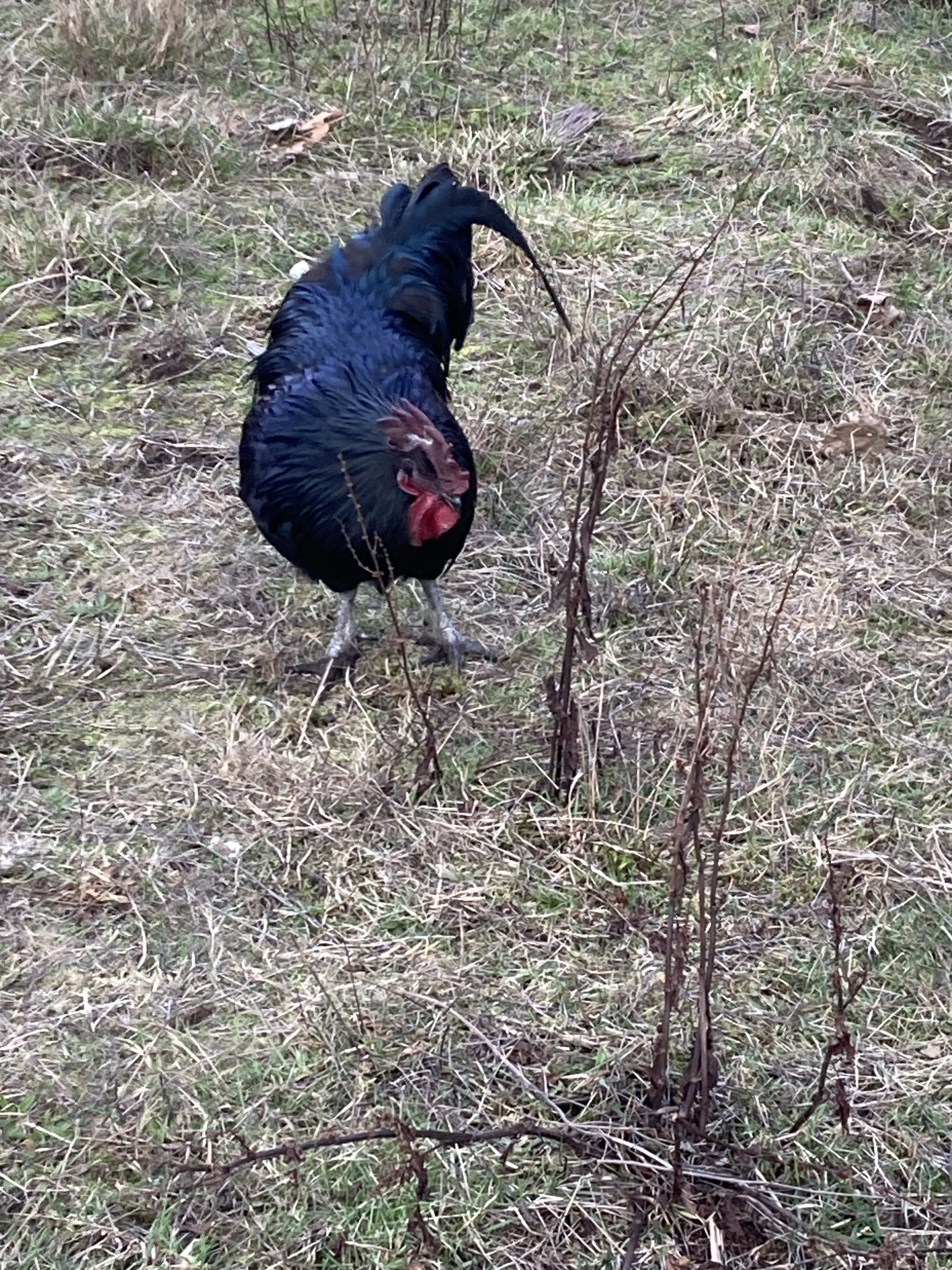
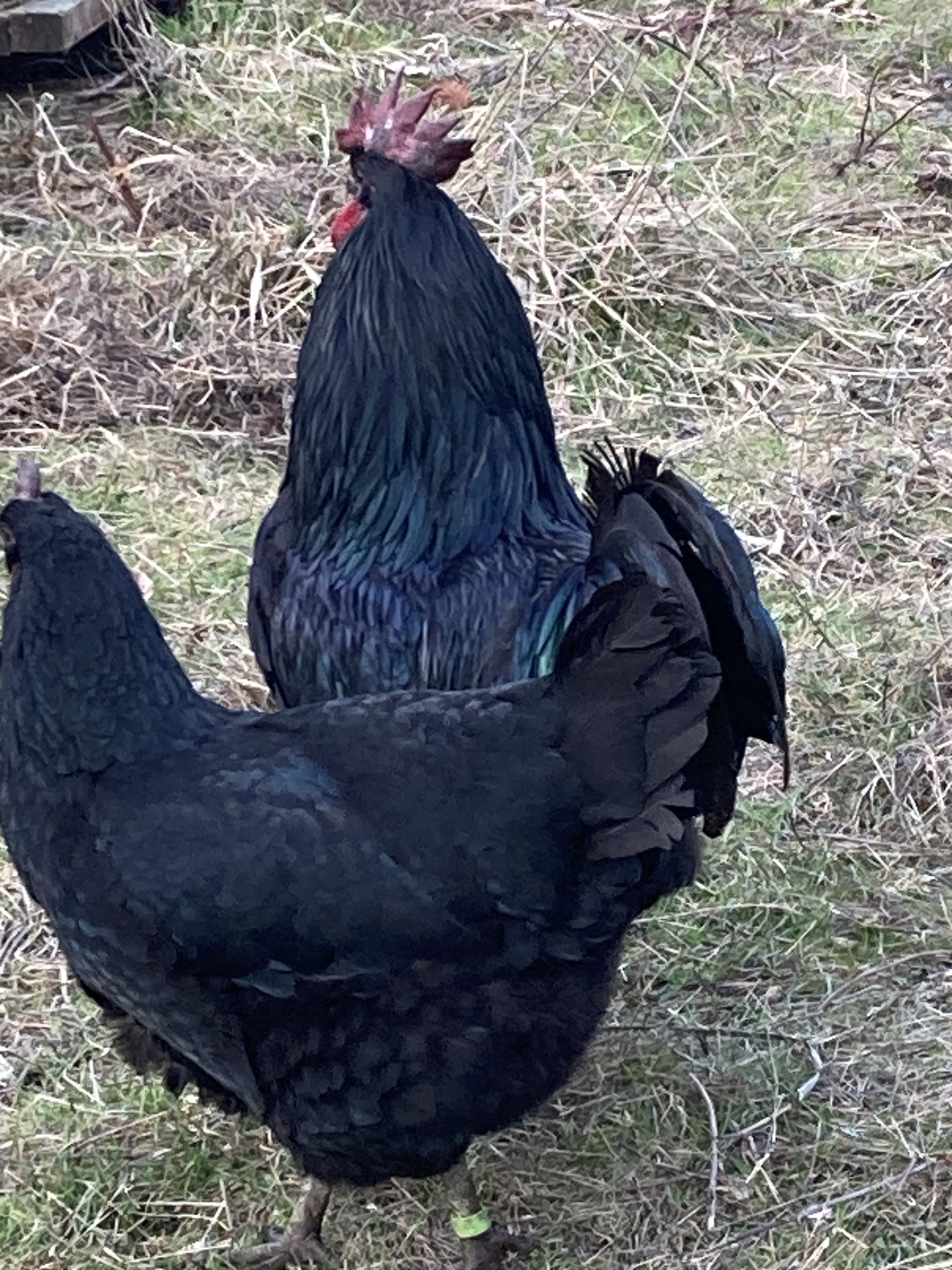
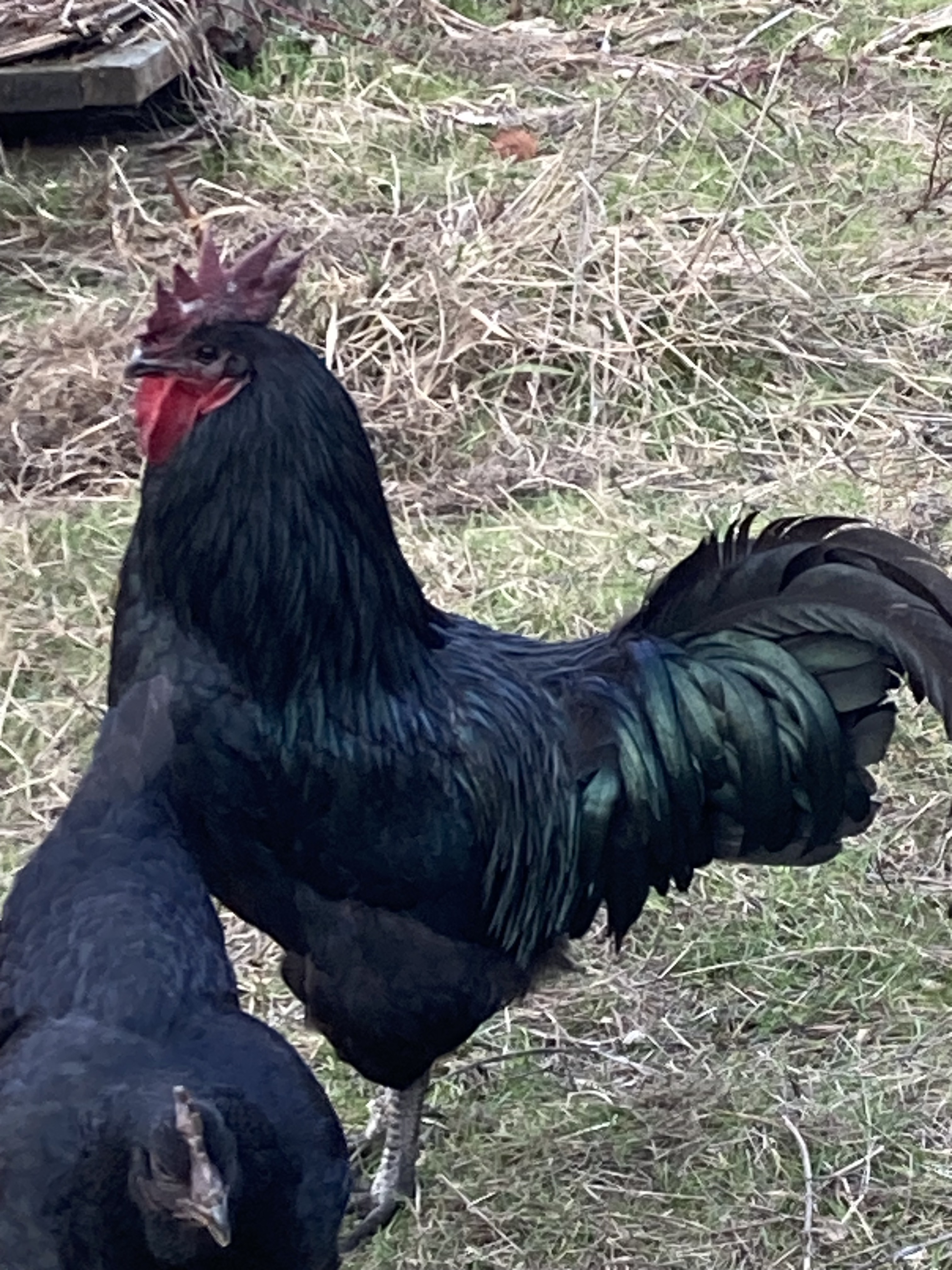
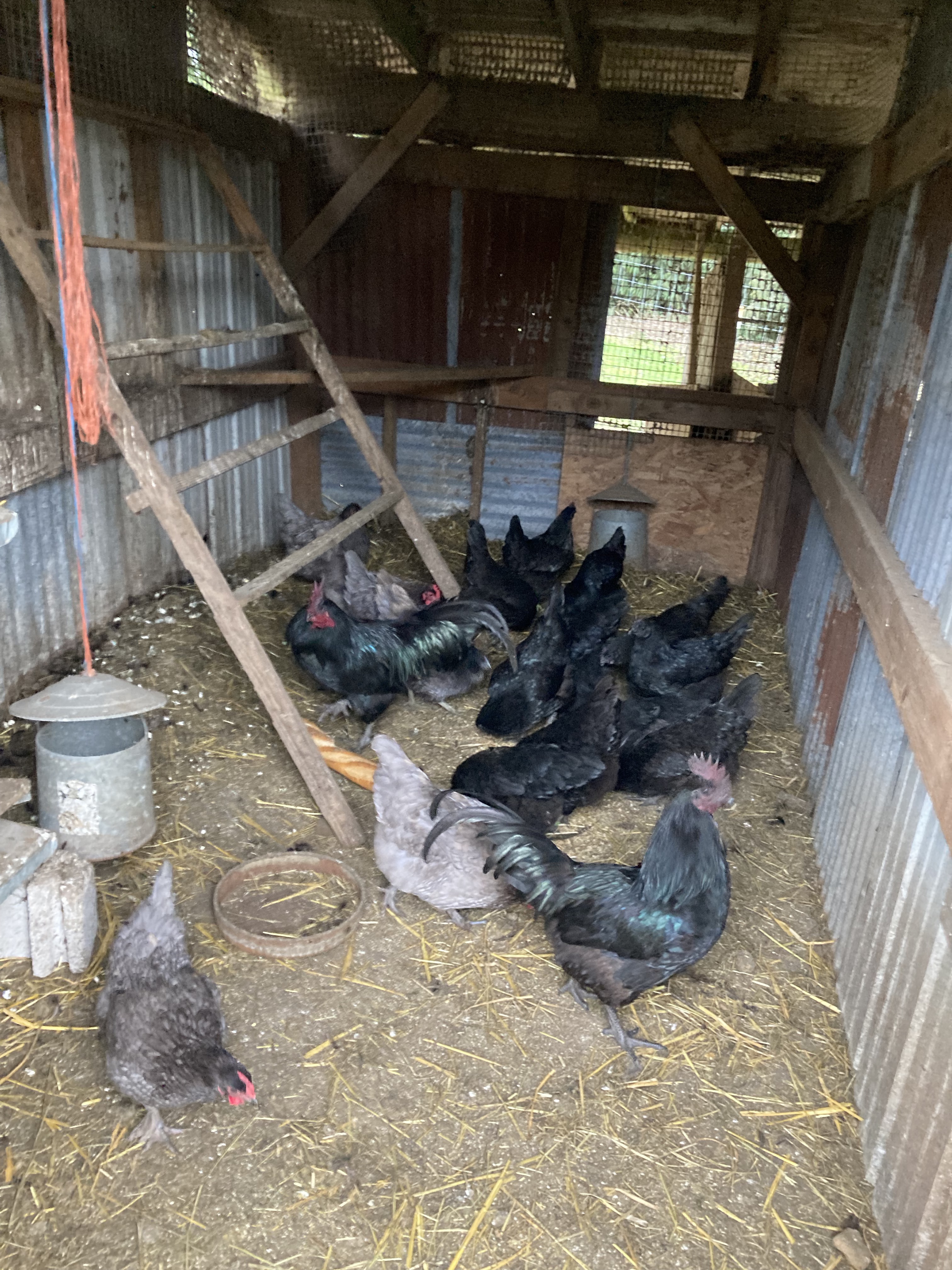
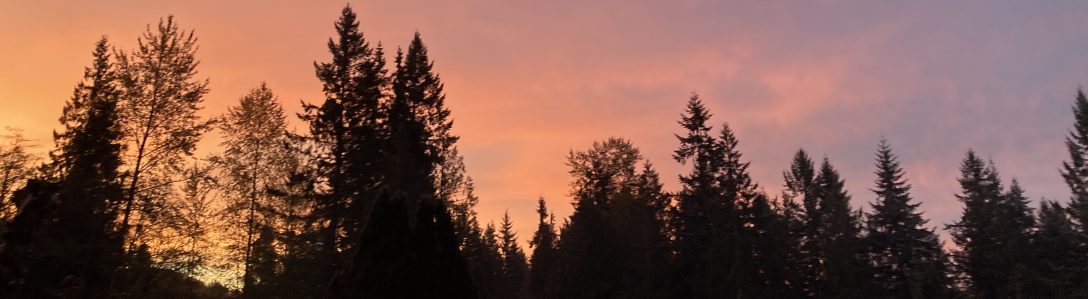
It’s the end of the day here at EEC, and the evening light catches across the landscape, splashing pastel pinks and violet evening tones through field and forest all around. While putting the chickens away, I caught my rooster, Chanticleer, strutting around in all his regal glory. Appreciating the light, and the photogenic moment, I took some good shots of his majestic color. I’ll point out the red comb and acknowledge this rooster is not pure Ayam Cemani, but he’s a legitimate offspring from our pure-bred stock, and is currently breeding to keep these wonderful colors in the flock.

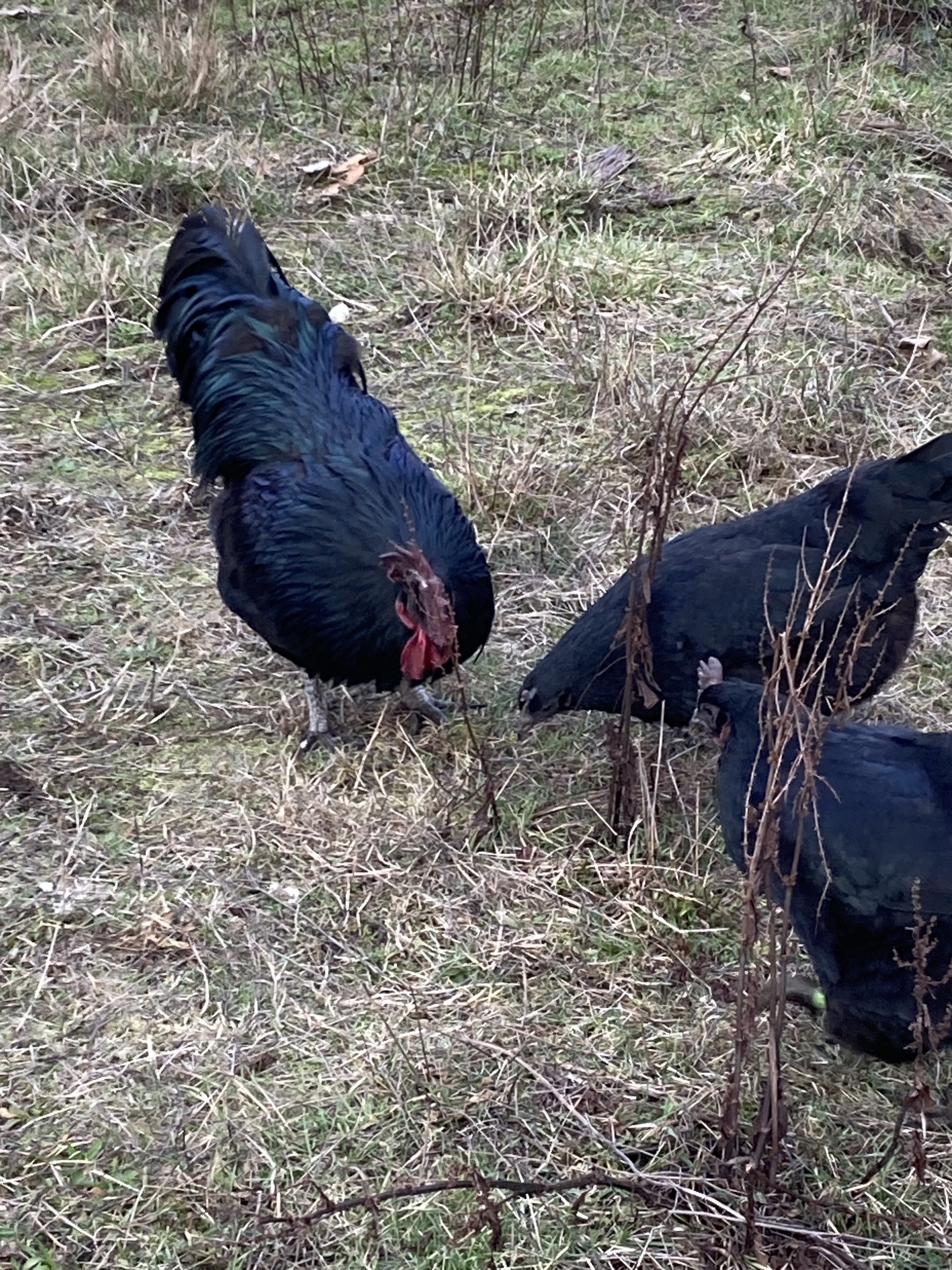
The younger up and coming rooster we’ve selected for next generation is darker in overall coloration, but a little smaller in stature. It may be hard to tell based on the picture below, but the younger male in foreground is still growing, but lacks some of the blue of his father. Green is easiest to get in the sheen of this bird, but blue and purple are preferred, so we’re playing with that in the back seat of genetic traits to breed towards. Leafhopper Farm Cemanis have come a long way from jungle fowl, to a larger, more egg producing cross with dual purpose breeds like brahma and orphington. The farm was recently gifted some Blue Copper Marans, which will be an interesting mix into the flock.

The bird below is a typical Ayam Cemani in Java. They are small, upright, game bird structure. This rooster has a lot of good purple and blue, though some might say the comb and wattle could be darker. Hens lay one egg a week and go into complete non-production every 8-10 months for 2-3 months to recoup. Our hens are laying every 3 days or so on average, even more in summer, and still lay through winter, though scarcely, and we are ok with that, as the hens need a brake to live and produce longer. Quality of life does pay off for farm profit and bird comfort. We do like eggs, and sell them, so having a more productive genetic string in our birds is a goal. Dual purpose is also important at Leafhopper Farm. We eat what we raise, and would like a bird with more than stock pot potential. Cemani’s are not stocky birds, but our flock is getting there fast.

Genetic inputs show up quickly in the birds. In less than 5 years we’ve almost doubles the weight of our birds and increased peak laying from 1-3 a week to 2-5 on average. It’s a blessing to have great breeds to work with in adding what we want into our Ayam Cemanis. To also retain much of the unique pigment is also fun, and we’ll keep at it, with no expectation beyond healthy, happy birds.

Archipelago Adventure

Taking a detour away from the backyard, our intrepid adventurers embarked from Anacortes to Orcas for another seascape exploration in the northwestern islands here in Washington State. The PNW has mountains to sound beauty and outdoor panorama like no other, and in early April, it’s still snowing in the peaks- even Mt. Constitution (2,399′) on Orcas Island had snow pack. At sea level, the temperature remained moderate enough to pitch a tent, with well staked fly, and enjoy ocean front views for a few days. Rocks, gentle swell of sheltered cove, crying geese and seagulls, and the whisper of breezes through pin; it’s just a few hours from home, and part of why Washington is so magical a place to live and thrive.

We packed up the truck and headed an hour and a half to the northwest corner of Washington to enjoy a little island time. From our front door about an hour in any direction will get us something completely unique and enjoyable. Anacortes is the last stop on the mainland leg of our journey to hop a ferry. Below you can see the blue line on the left map stretching from Anacortes into The San Juan Islands, and across to Sidney, BC in Canada. For this adventure, we hop off the ferry on Orcas and arrive in the heart of this beautiful archipelago. Early Spring is a great time to get out to our islands here in Washington State. It’s warm enough to camp, yet misses the peak crowds who will soon descend as the warmer months arrive. During the peak tourist season, you’ll need a ferry reservation to take a vehicle on the boat. We avoid all this hassle and stress by using the edges, and the open camp sites and trail head parking lots made exploring the island easy. Town is walkable- and town is Eastsound, which has an airport for the rich and famous, and FedEx.

Archipelagos offer so much varied terrain to traverse and explore. Land and water, endless shoreline fills the senses with texture, movement, sound, and sight. Water laps at volcanic outcroppings uplifted in the turbulent tectonic tension. The San Juans are at the tail end of a long chain of coastal ranges arching up through British Colombia into Alaska’s Aleutian Islands. This corner of the ring of fire sits in a quiet tapestry of inlets and coves in protected seas. The rocky beaches rise into fir forests and craggy moss covered balds where deep lacerations in granite stone show the power of glacial grind in more recent geological time. For a deep dive into this history, our own National Park Service has a wonderful website here.

Sometimes I’d forget we were on the ocean’s front stoop. Overlooks like the one below at Turtleback Mountain on Ship’s Peak feel a lot like New England finger lakes or somewhere in Michigan, but we’re looking across to Canada here on The West Coast. It’s still got a lot of familiar friends, from Bald Eagles to Oaks, but Douglas Firs and the squabbling call of a Stellar’s jay grounds us in Pacific North West habitat. Damp mossy evergreen forest clutch on north facing gullies, but oak savanna also stands tall in restoration landscapes, often tended by The San Juan Preservation Trust. Organizations like this offer resources and guidance in building back ecological soundness for our habitat. Without sound nature infrastructure, resources like fresh water and healthy soil will be lost to erosion from the dramatic weather of a marine coastal environment. These islands are ground zero for climate change evolution, and I’m taking a page from these restoration habitats for EEC Forest Stewardship.

It was wonderful to see explanations of active thinning for fire control and forest health. Though the work still to be done in these fast growing environments seems endless. Opening up stands to accommodate diverse stages of tree growth is crucial to long term health and resilience in a forest. Having an active forest plan to thin and replant, as you work to return land to temperate rainforest or oak savanna, ensures timely action and seasonal rest and recovery periods for the land. At EEC, we fence off areas to keep domestic stock out, or fence individual plantings for further protection. On Orcas Island, deer routinely over graze young growth, leaving many regeneration species unable to mature. Often, baby trees will look like bonsai shrubs and the ground covers remain spars, replaced by moss carpet and sword ferns. There are no predators on Orcas, so deer come in waves of boom and bust cycles, which cause similar crashes in the ecology, preventing recovery. Imagine what the constant human presence does in time?

Islands are great places to visit, but living on them would come at great cost to the environment and you as a person. Importing most of what you need is expensive. If there’s an emergency, you’re far from stable care. If amenities fail, you become very isolated, and are so anyway for being on an island. We loved getting a few days of island time, but coming back to the mainland was a relief. I always have at least one thought of how vulnerable these islands are to tectonic events. There are several strata volcanoes nearby, and the earthquake risk, followed by tsunamis, is a real threat. We camped right on a southern point, facing The Strait of Juan de Fuca. This would be a very bad spot in the event of a tsunami, but we took a risk with much lower chances than a car accident, so we slept soundly. Weather at this time of year is hit or miss, but we lucked out with enough sun to keep us in good spirits and dry cloths. There was a ceremonial wading and dunking in cold ocean waters with wet suits on. It was not Hawaii, so we got out quick. A hot tub soak revived us, and the dawn and dusk light on the waters remained breathtaking.

Our goal in venturing to Orcas was to scout future camping options, enjoy the local flora and fauna in hikes and beach lounging, and to take a brake from farming for a few days. Washington is the destination, and it never disappoints. We’ll have a lifetime to explore every cove and point, field and rocky crag, trail and forest, yet we’ll never see it all. So much love and appreciation for this place, the land, ocean, sky, and every living thing so deeply woven into this complex matrix of Pacific Northwest living.