Wacky Weather

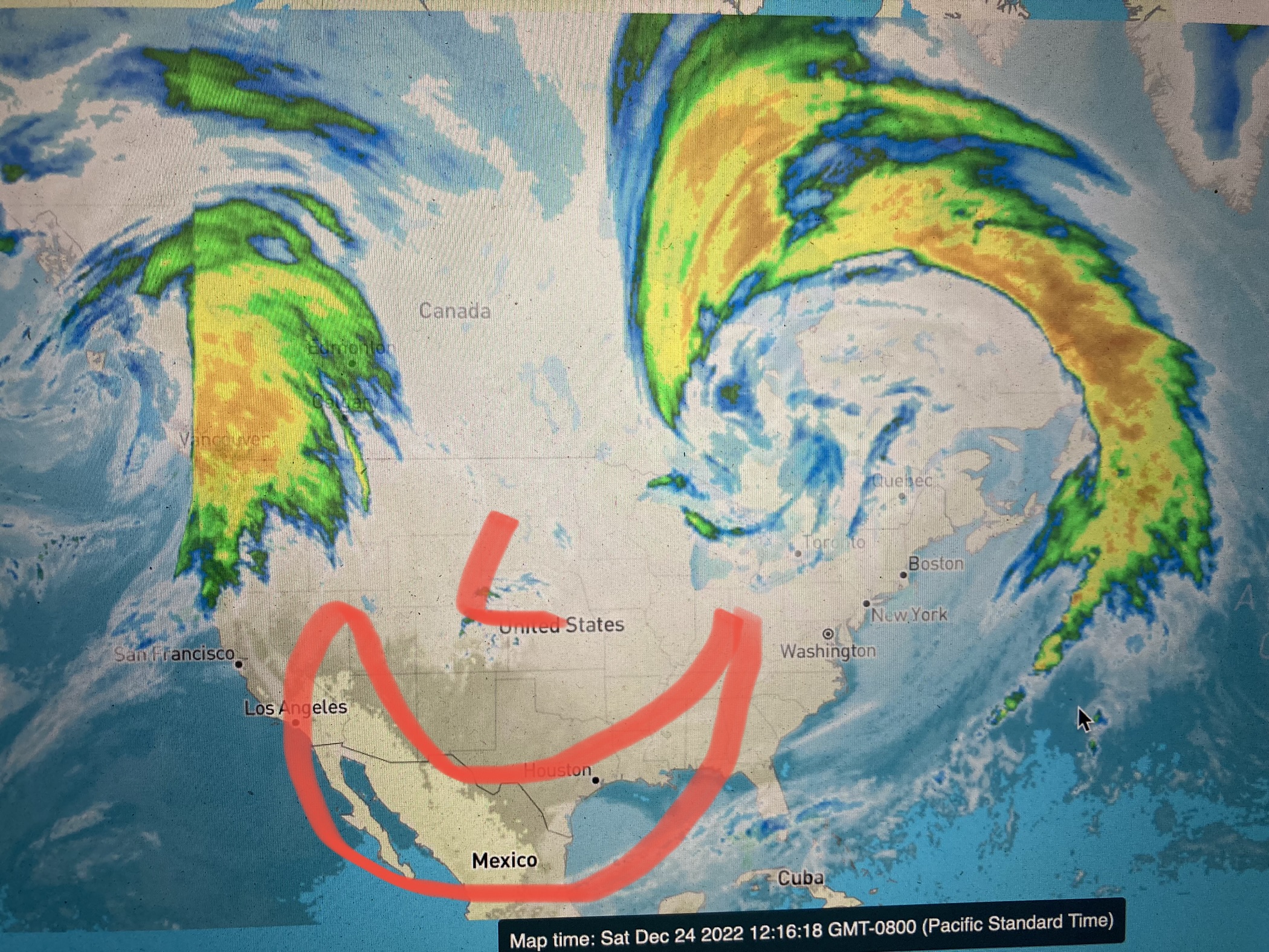
Well, climate extremes continue to escalate around the world. In late December, this satellite image captures the epic storms moving across North America. While we hunkered down for a few days of snow and ice, The Grate Lakes area received record breaking snow and blizzard conditions which killed several people caught in the weather while trying to get home from work. Our own radar reads were not too agro, but the collective patterns are growing stronger, and later in 2023, California began to experience unprecedented storm fronts that keep on coming. What does all this mean for EEC Forest Stewardship? Hold on to your hats folks, it’s going to be a bumpy ride.
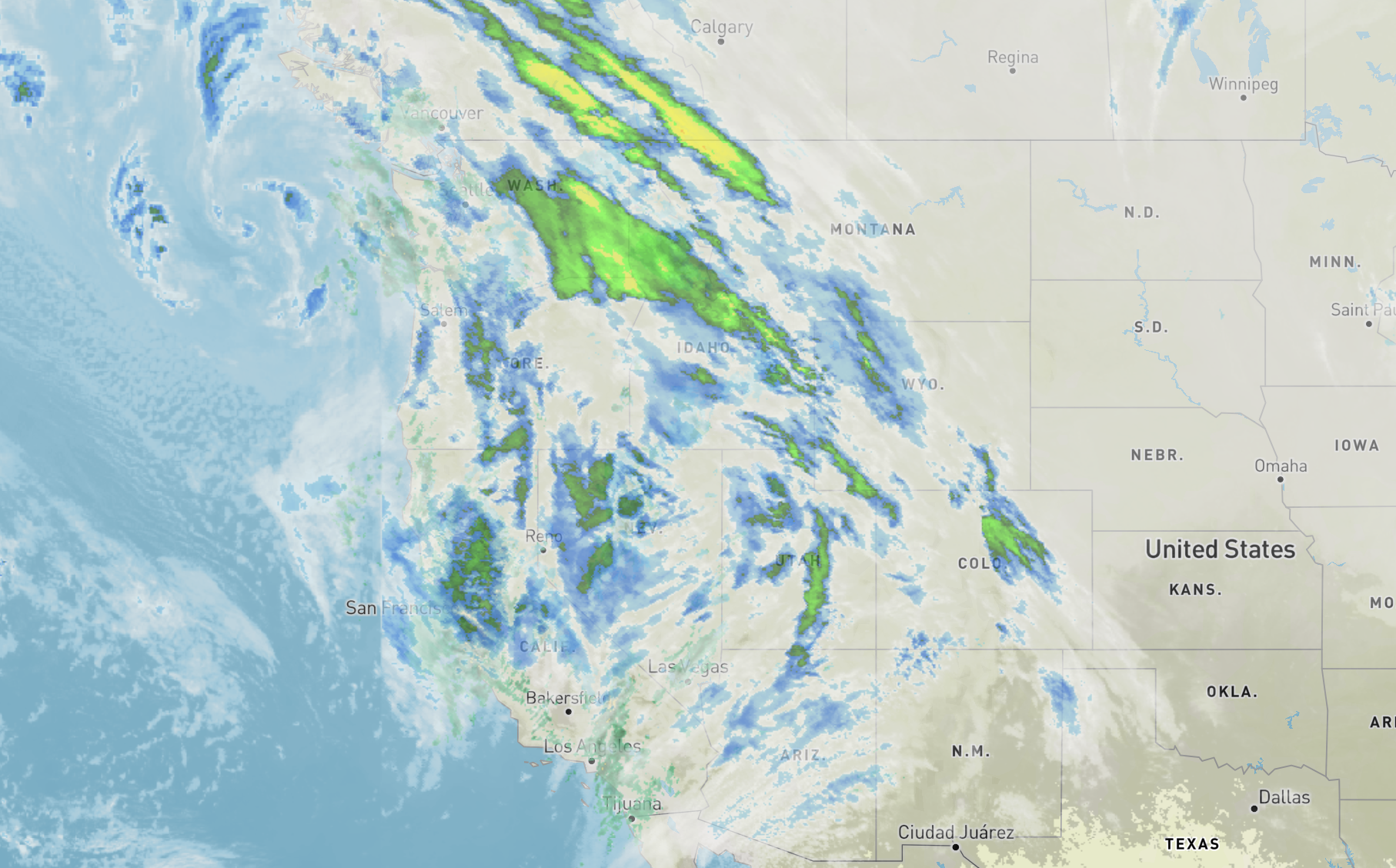
Our fruit trees were less than productive this year- drought, smoke, and grapple during flowering all played a role. Alfalfa crops were less productive because of late cold and wet spring weather, costing more and causing our reduction in flock numbers. Our chickens didn’t get broody this summer, many native plantings failed, and overall stress from environmental change effected all living things. We’re fast adapters here, but the intensifying storms will continue to erode stability across the planet. The earth is a closed loop system, so what comes our way will keep coming back around with the seasons. Right now, the rain is here, though it took its time in coming. We endured wildfire and 90F in October. November and December were colder than normal, and now we’re in a typical winter, but most of our rain is still somewhere else, and that somewhere right now is California.

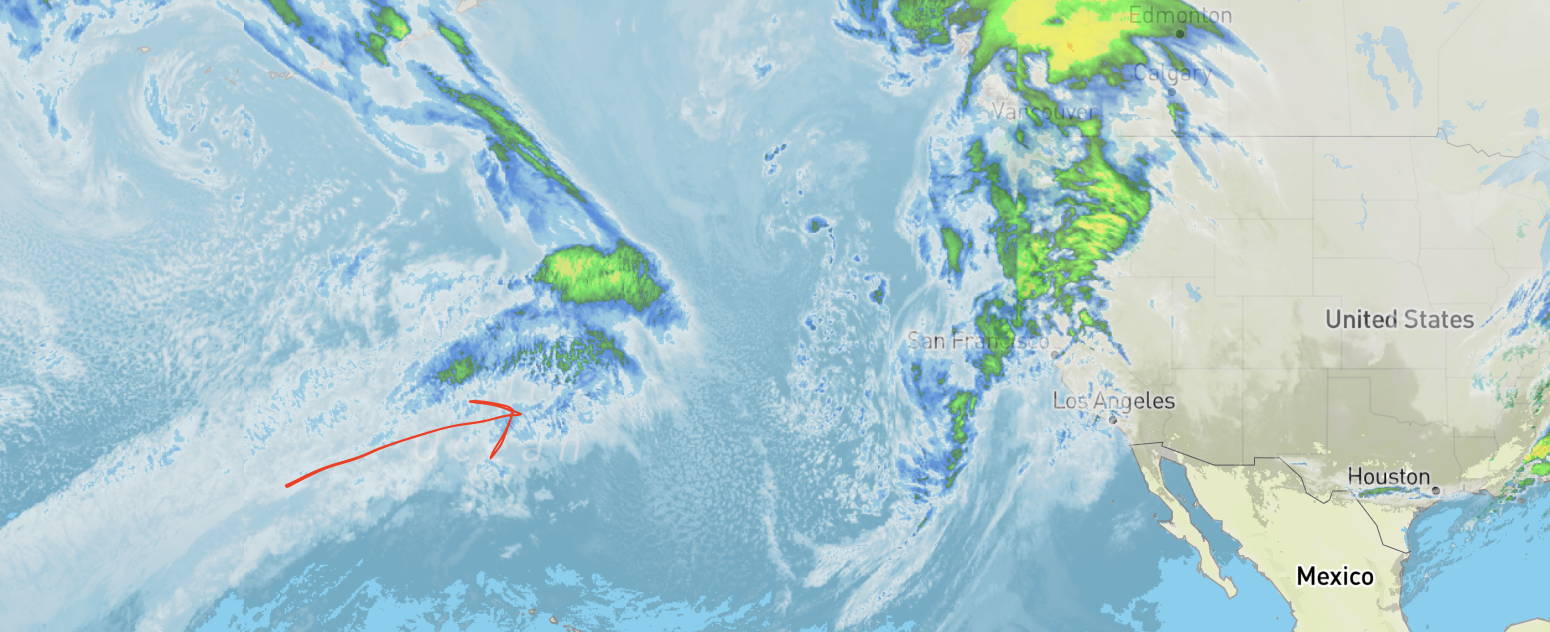
The west coast experiences atmospheric rivers in winter thanks to our neighbor, The Pacific Ocean, and her weather patterns traveling up from the tropics in what is called “The Pineapple Express“. These rain events can last for days, or weeks. Western Washington is usually ready for these rains, with a temperate rainforest eager to catch moisture and bank it in the soil. This year’s climate change pushed the rains south into Cali, and boy did the heavens open up. Though CA has been in a very bad drought for many years, the rains were more a curse than relief, as the parched land has been unable to cope with the deluge and now, whole cities are evacuating because of floods. From wildfires to raging rivers and landslides, our southern neighbors are on a rough ride. With over one billion in infrastructure damage already, and more rain on the way, you can see how the continued building in catastrophic weather events compounds to overwhelm our vulnerable civilization.
These weather events will continue to compound, and ecology cannot keep up any more than our infrastructure. What’s the plan? Apparently, throwing money at it. However, the money going into “solving” climate does not acknowledge what’s funding climate change. Our developed world will not let go of fossil fuels in time, and I’m right there in the problem, consuming like all used to ease and comfort we enjoy though the rosy glasses of prosperity. Going electric has become the answer, but it’s only another folly, without infrastructure or enough renewables to power all the future cars, homes, and businesses we continue to build and develop. Exponential growth does reach its climax, then erodes away. We are eroding- and the literal ground dropping out beneath us seems compelling, but will not change the outcome of our actions, which are already at work and unstoppable.

More mining will be needed for more solar, wind, and thermal energy development. Plastics are irreplaceable in our daily life, and plastic is fossil fuel. The microplastics are in us already, and won’t be removed. The oceans are acidifying, and currents slowing down, slowing the storms that travel across the planet, allowing rains to stall over the land and dumping those record rains. Hurricane Harvey is a great example of this catastrophic event, which caused over 100 billion in damages. Even the winner of Power Ball can’t afford that kind of expense. Though they could fund the rebuilding of California’s infrastructure from these recent floods.

There is no stopping our current global system from continuing its rampage. We’ve passed that point, so most countries are dropping the idea of curbing emissions– especially the developing ones. Other nations are starting to cry out for compensation. Pakistan was hit with monumental flooding in 2022, then argued that top developed nations emitting the most pollution should pay up for damages. Rightly so on one hand, on the other, economic progress and share holder dividends. If we reported daily cost of climate change like we do the ebb and flow of the stock market, people might better understand the impact- especially financial, this wacky weather has on us all. The markets will not outpace mother nature. It is our financial system which is destroying the earth, so why not change how we operate? Because we can’t, especially fast enough to shift the course we’re on. So why care?

Things are still heading in the right direction. We’re past denying there is climate change (for the most part). America is trying to shift the narrative away from big oil. People are less violent now than ever, and more willing to cooperate in crisis. Though I’m not wishing crisis on us to make the world a better place. We’ll keep seeing great change in consumer products available. Out little farm is shifting away from livestock in the long run, as input expenses will become unforeseeable, like hay this year. I recommend all farmers look at growing bugs as food in future. Can’t predict, but we can plan ahead and have options to pivot towards as the change ramps up. I know it’s getting hotter in summer, dryer, and colder in winter here. We’ve stopped planting hemlocks and selected oaks. The change in hardiness zones will cause ecological collapse of many species, and it’s already in progress.

Move with the change or be consumed by it. We all die in the end, so live richly while you can and be prepared for the shifts to come. Accept reality, work with it, and be grateful we’re still living in a relatively survivable world. Technology has helped us map the changes, and could offer more solutions, but it’s still based in an extraction economy. What instead? I’m not sure, but here at home, we’re planting as much diversity into the soil as we can, slowing and sinking water for drought resistance, and pitching our roof lines to shed snow. It’s the people who can’t adapt facing the real struggle in climate change. Maybe we do owe Pakistan, and should start paying for our consumption on another level. A climate tax on all luxury goods. No insurance for building in flood prone places- using current climate mapping. Though I heard an argument once by a developer who said because septic systems can now be build air tight, homes could go in on the flood planes. Such madness!

Hey, because we can- we should! No, but the problem is the solution, and flooding brings a lot of very good things to the landscape if we learn to live and work with the gifts of weather, rather than fearmongering. The news was calling Cali’s atmospheric river out like it was some king of new monster coming from the deep. The rains have been monstrous, but the development in California has been too, and the water management poor, so you get serious reactions once flooding begins. Small steps, make small changes to help prepare yourself and your community for these weather events. People in Buffalo died in the cold, many of whom were expected to stay at work or loose their jobs, but they lost their jobs anyway, because they lost their lives. It is these short sighted mistakes, which will be our end if we cannot begin to comprehend the strengthening extremes facing humanity.
Christmas Chicks 2022

Baby chicks hatched on December 25th! We had a very low success because the temperature shifts froze a lot of the eggs before they were gathered for the incubator. It’s a big winter moral booster to have chicks in the house at the darkest time of year. The sound of peeping and chirping brings smiles and a warm feeling of joy. The little flit and flight of young life scratching around brings a liveliness into the home when most needed. It’s also the best time of year to hatch out chicks for a layer flock. What?!? Yes, by the time these birds reach maturity in mid-summer, they will start laying before the fall. If you let chicks hatch out in the warmer months with a broody hen, your chicks will start laying as winter sets in, and birds slow production in line with the darker times. This means your egg production will not really expand for yet another year.

Though our farm does not work to force maximization for profit, we do find our birds have better success and development if we hatch them at this time. We’re currently incubating a second round, and have a much higher success in fertility this time. Ironically, in a way, we also received a flock of 10 birds needing a re-home. Current flock is at 30. This next hatch out will grow us to 40, and that’s a few too many, so we’ll cull and/or sell some adult birds this Spring. We also donate a few birds to a wilderness survival class at the local nature school nearby each February. EEC Forest Stewardship supports nature education, hands on learning, and slow food. Happy to supply healthy animals providing healthy food to our community.

Our in house setup is modest. We’ve been using Brinsea products, and can’t say enough about how great they are. The brooder has eliminated fire hazard caused by heat lamps- trust me, the heat lamps are serious fire hazards- we experienced this first hand. Out Brinsea brooder remains effective and safe. The incubator is great too, though I will say newer design options have improved. When we’re ready for our next investment, we’re sticking with Brinsea, as it’s worth the price for durability and reliability. Why do we not use hens to brood naturally? Sometimes we do, but to enjoy winter chicks, we use the mechanical devices to improve hatch rate and have the most control over when. This summer, 2022, we did not have a hen raised clutch. It was most likely related to the hot temperatures and smoke. The birds are sensitive to environmental change, and smoke this summer darkened our skies, changing the birds’ rhythms in subtle, but noticeable ways. Egg production this summer was a little below normal rates. I’m purposing the smoke dampening natural light played a role, but I can’t find any studies to back this statement. General stress from hindered breathing would also effect the birds.

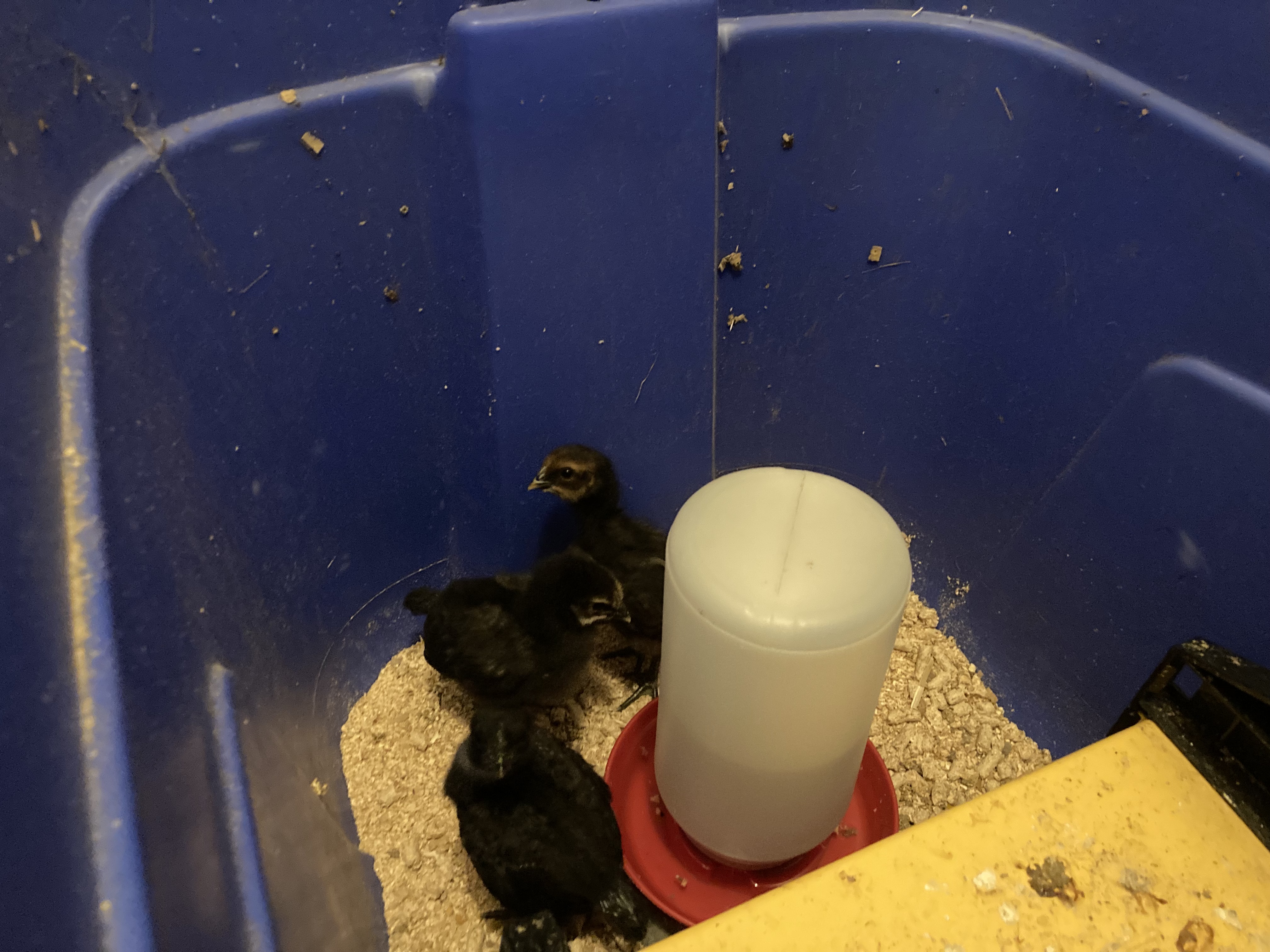
Right now, there is no smoke to hinder our flock, and the chicks are developing nicely. The next clutch to hatch will be much larger, and time in the blue bin will be limited by quick development. The three pictured below are still in the bin at this age, only because it’s only 3, and there’s enough room. In a few days, they will be moved to a larger pen in the pole barn to continue growing. At 2 1/2 weeks, they are fully feathered and have enough body mass to keep warm without the brooder. We’ll continue daily monitoring- including feeding and water refresh as they continue to develop. Moving these older chicks out makes room for the new babes to come. Different aged chicks don’t mix well, the older ones will bully and even kill younger birds, which is the nature of survival. By six weeks, the chicks are teenagers- big enough to go in with the adult birds, as long as there’s a good number of them to flock together for safety. A single young bird would be attacked if alone. This trio should be enough ‘bulk” to muster against the older gals once they reach teen hood. By then, the other clutch will need the pole barn enclosure. I’m not particularly happy about having a double clutch happening. Timing is not ideal, as the new chicks will need a lot of space and these three current babes are such a small flock to have the whole barn, but we’ll solve for that when we get there. If we need to make multiple enclosures, we will.

Crepuscular Light

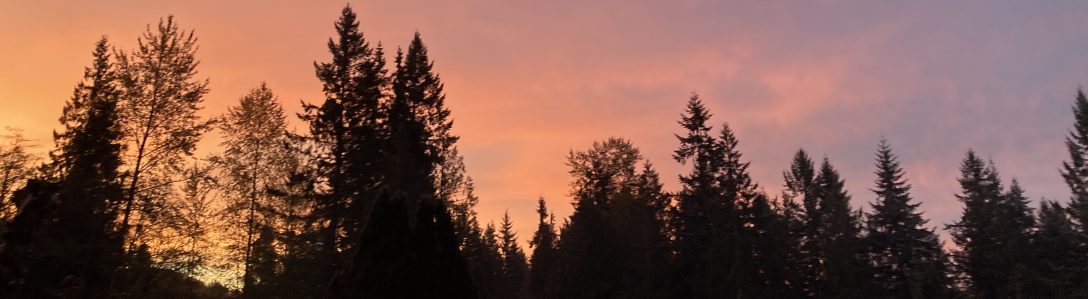
Fire lights up the sky, not like the licking flames from summer, but in that time of year when light grows scares, and the colors of dawn and dusk signal compelling transitions of life. Red alder and black cottonwood shivering in bare branches to reveal impressionistic masterpieces with every dusk and dawn. These are some of my favorite times of day, and usually correlates with animal chores on the farm. Waking and returning to dreams the transition places in life which are starkly marked by the return and removal of light. So much happens in the natural world at these two points in the cycle of our planet’s rotation. Life is compelled, yet in a state of change, vulnerable, and there are opportunities to see, to witness dawn chorus, twilight colors, so many shades within the forest too. You can see in the field, then step into the canopy returning to shadow, yet the golden light still filters through once dawn breaks into day. As night folds her wings of darkness over the land, in winter, through the skeletal frames of some trees, we can see a little more color and brightness bringing comfort in these cold times of dormancy. The heavens never rest, after a parade of stars, another dawn reveals the changing landscape with her rosy reflections. In the cold months, rising mists from moist forests and wetlands crate a tangle of sky and earth. The low clouds obfuscate reality, moving the skyline down into a lake’s reflecting surface, sipping the warm hues of morning as ducks splash down to feed.

We live 30 miles from a large body of water, and 150 miles from The Pacific Ocean to our west. This makes sunsets amazing, and the afterglow lasts after the sun drops behind the horizon, continuing to reflect form vast waters. Often, lavender tucks into peach watercolor flames. Silhouetted evergreen giants lean towards western winds, whispering evening chorus into light’s last symphony.

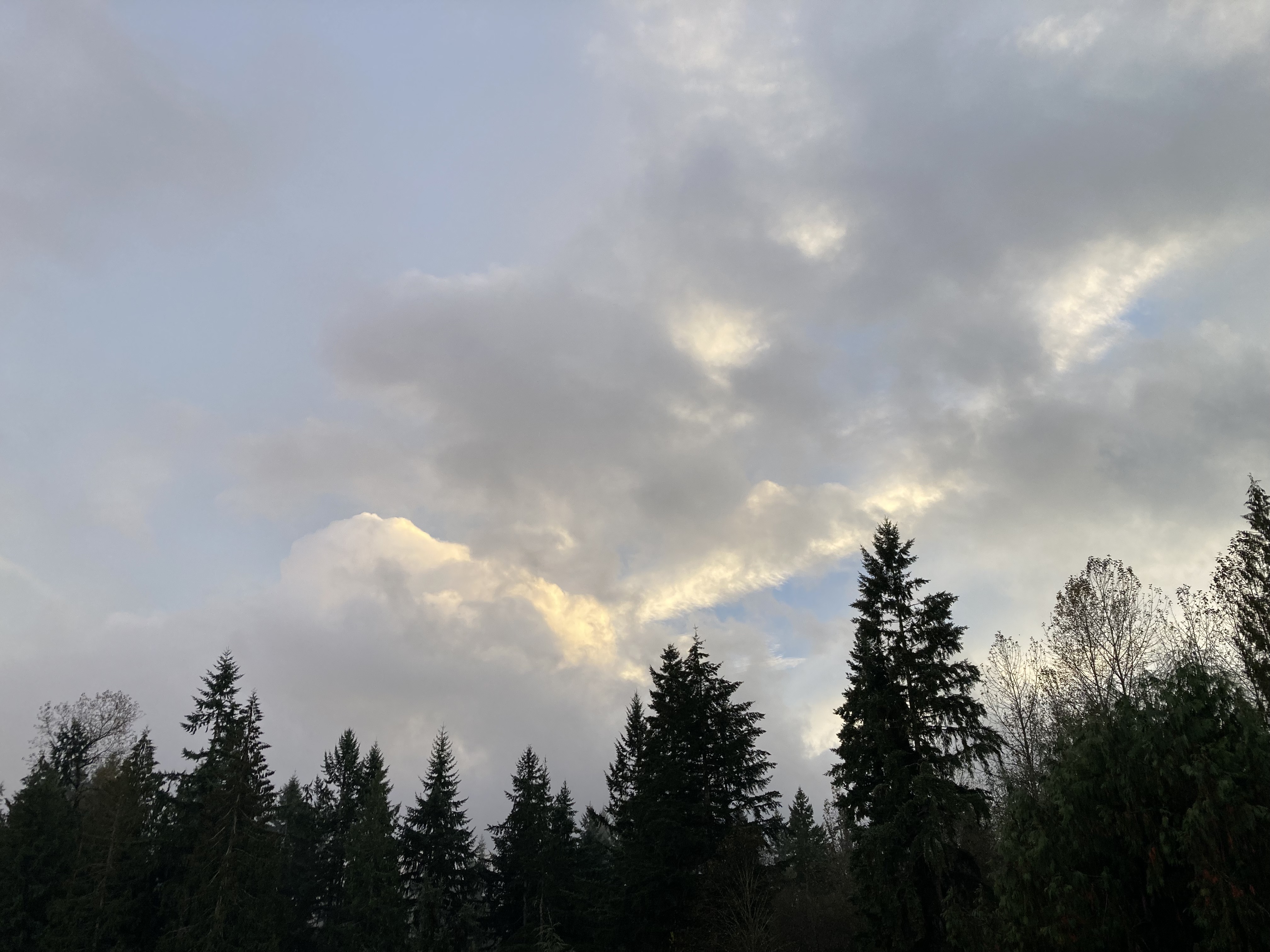
The gaze is often drawn to warm tones, especially in this place of evergreen moss and dark, wooded groves. Fleeting visions of fiery shrubs and electric green broad leafed ground covers in the garden- even the old tin roof seems to glow with the changing western sunset. Moisture in the air extends the pantomime of color. Clouds spread golden rays out of a late Turner feeling sky. Another spectacular impressionistic sky by Mother Nature. This particular landscape in Western Washington has enough open clearings to offer skyscapes. It’s surprising how often we forget to look up and appreciate the heavens. Often, throughout most of the day out skies remain overcast and grey, but when the clouds part, a cascade of pigments abounds. Dramatic cloudbursts climb over the trees chasing the winds far above. Sunset catches across billowing tops, spilling into forest crowns, gilding them majestic gold. These shows come and go quickly, so take a moment as the day opens, and another at it’s closing to appreciate and applaud natural light at its most active.

At the time of winter solstice 2022, the land is locked in ice and snow. Cold blue sky has only just begun a retreat in the face of first dawn. At it’s most southern point, the sun touches her lowest point, and still erupts in warm glow from the east. Preparing another day though even the shortest of her treks across the sky. Gratitude for each light’s return, and for the amazing color and emotion brought across this landscape with each dawn and dusk.

400 Native Plants

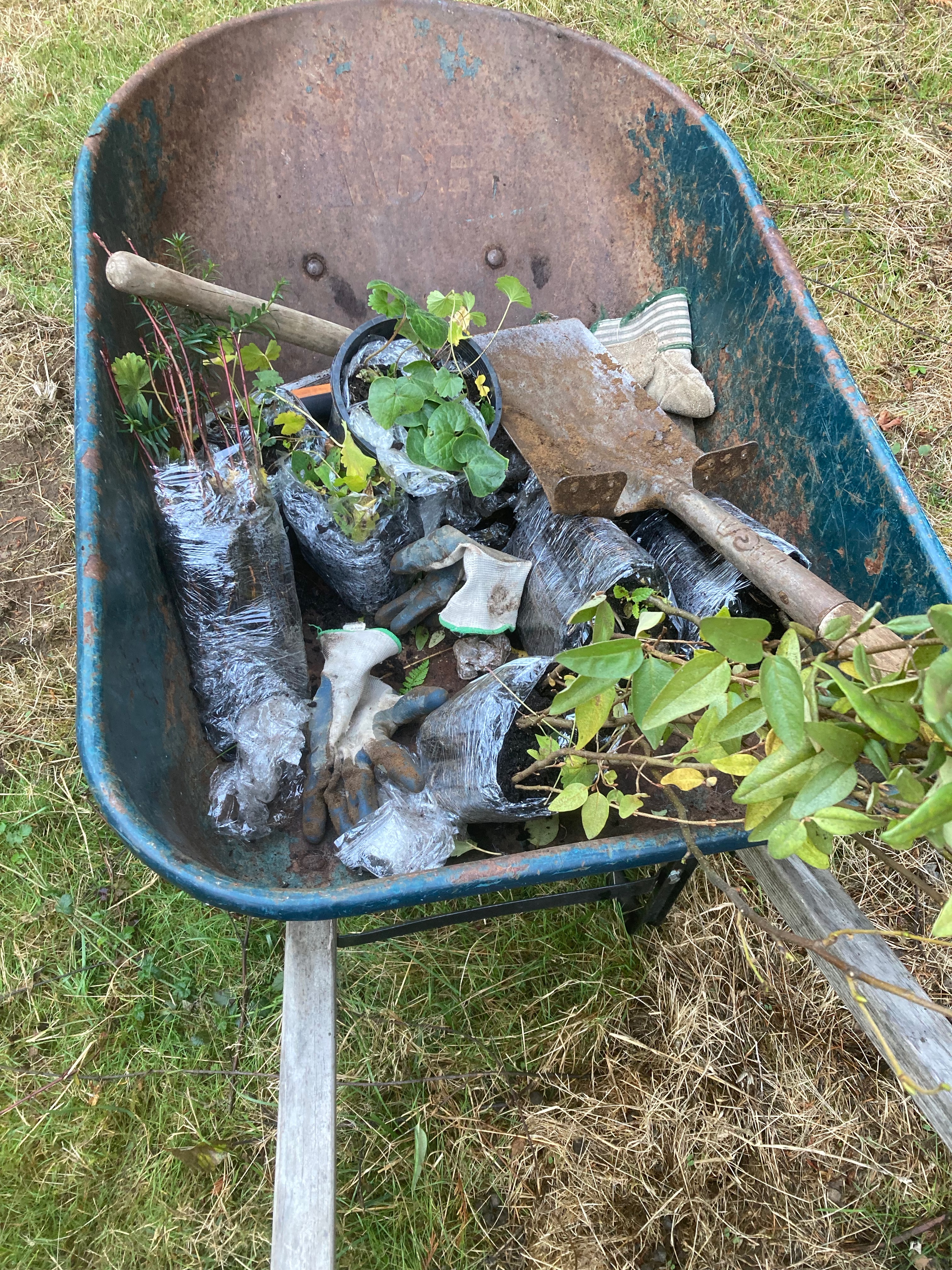
Oxbow Farm in Duvall, WA has supplied EEC Forest Stewardship with gathered wild seed of a number of native wild plants for a major fall replanting project. These babies have been carefully germinated and coaxed through the initial development into plantings stable enough to establish in the wild. There are a number of wetland specific species heading to our salmonid stream and CREP buffer, while others are more suited to savanna grasslands, and will be planted in full sun on well drained hillsides. It’s always a good idea to make sure you’re land has suitable habitat for the species you want to establish. You’ll also want to make sure where you’re planting is safe from predation. Instead of trying to keep deer and rabbits out, I try to over-plant species to create abundance where some of the plants will doge the grazers and survive. Since these species do survive in the wild, they should, en mass, be productive here on a landscape embracing restoration. Still, I did put a few plants near the house in our kitchen gardens for added protection.

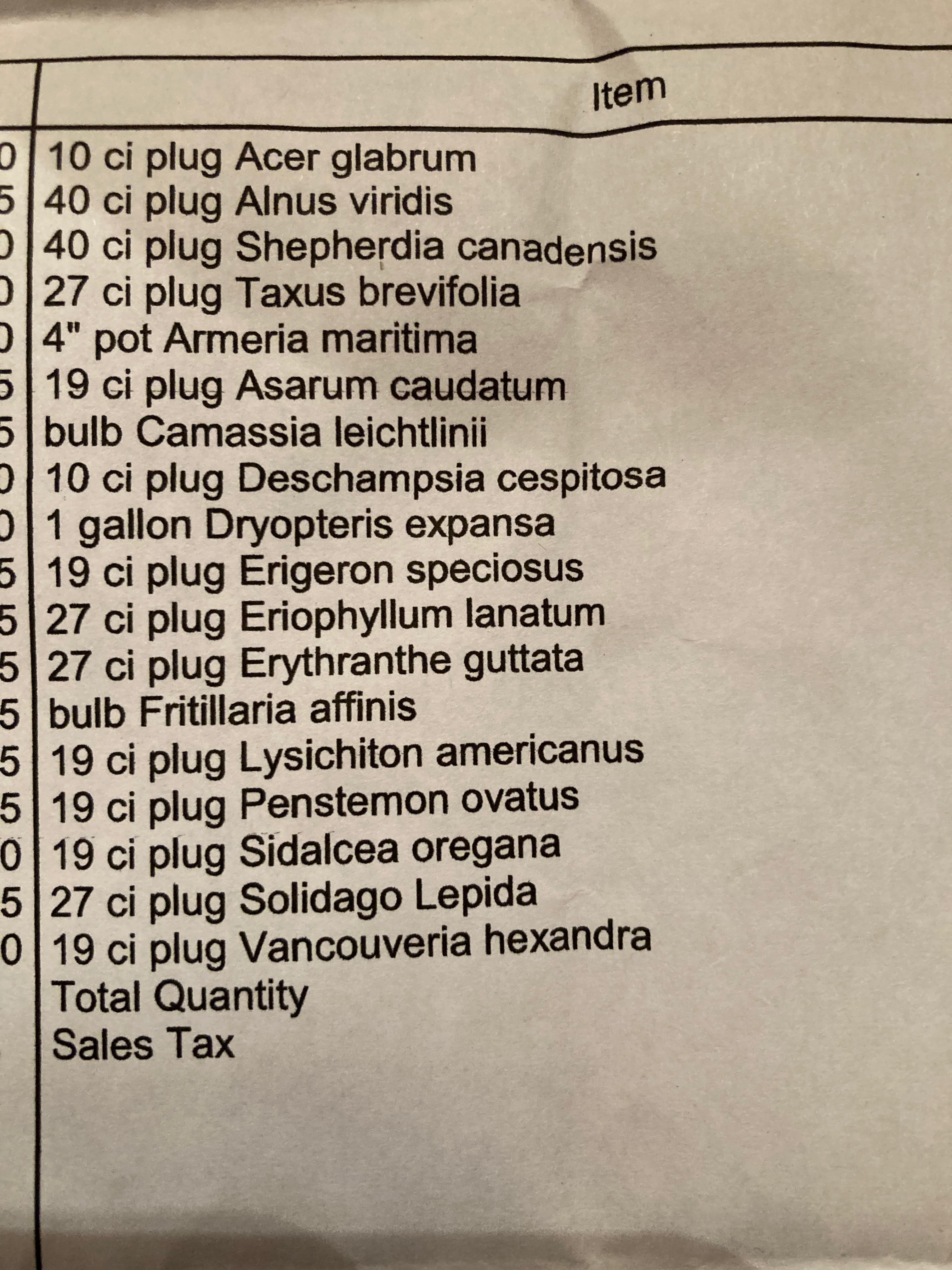
For years now, most of our native replanting stock has come from Native Plant sales- usually hosted by our local conservation organizations. But in the past few years, these sales have run out of plants early on, and not offered enough diversity for our restoration ambition. Oxbow was able to source an impressive variety of species- especially ground covers. They could also offer larger bulk numbers, which fits in with my over-planting scheme. This fall’s order was the largest, with about 400 individual plants in 18 species. What a range! Some, like Acer glabrum, Douglas Maple, should be common in our area, but you can never find them in a native plant sale. Others, like Anaphalis margaritacea, can be identified along most logging roads in clear-cuts late summer, but have been quite a challenge to establish. All are nestled safely in for winter, and hopefully we’ll have a lot of new growth at EEC come spring.

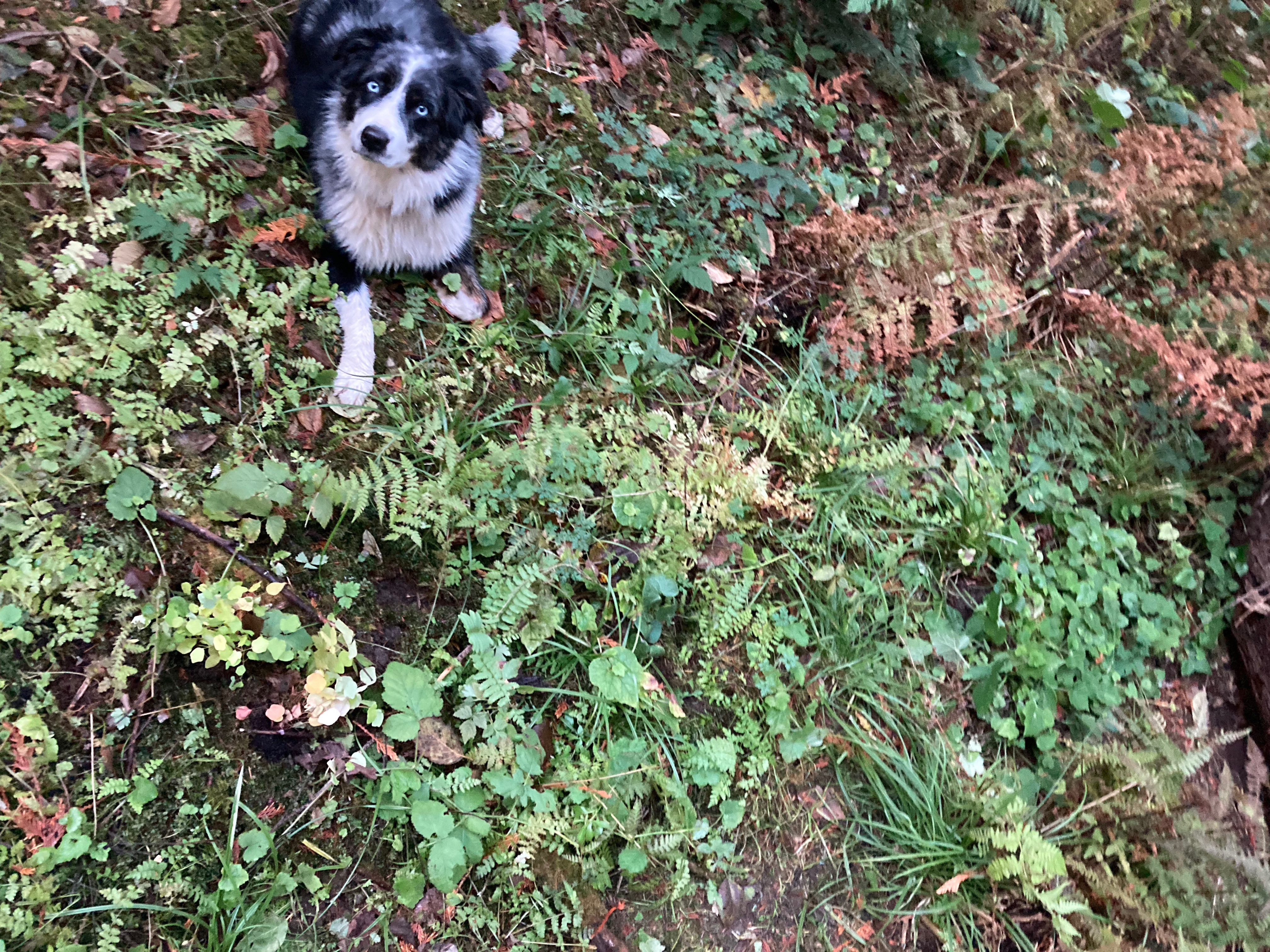
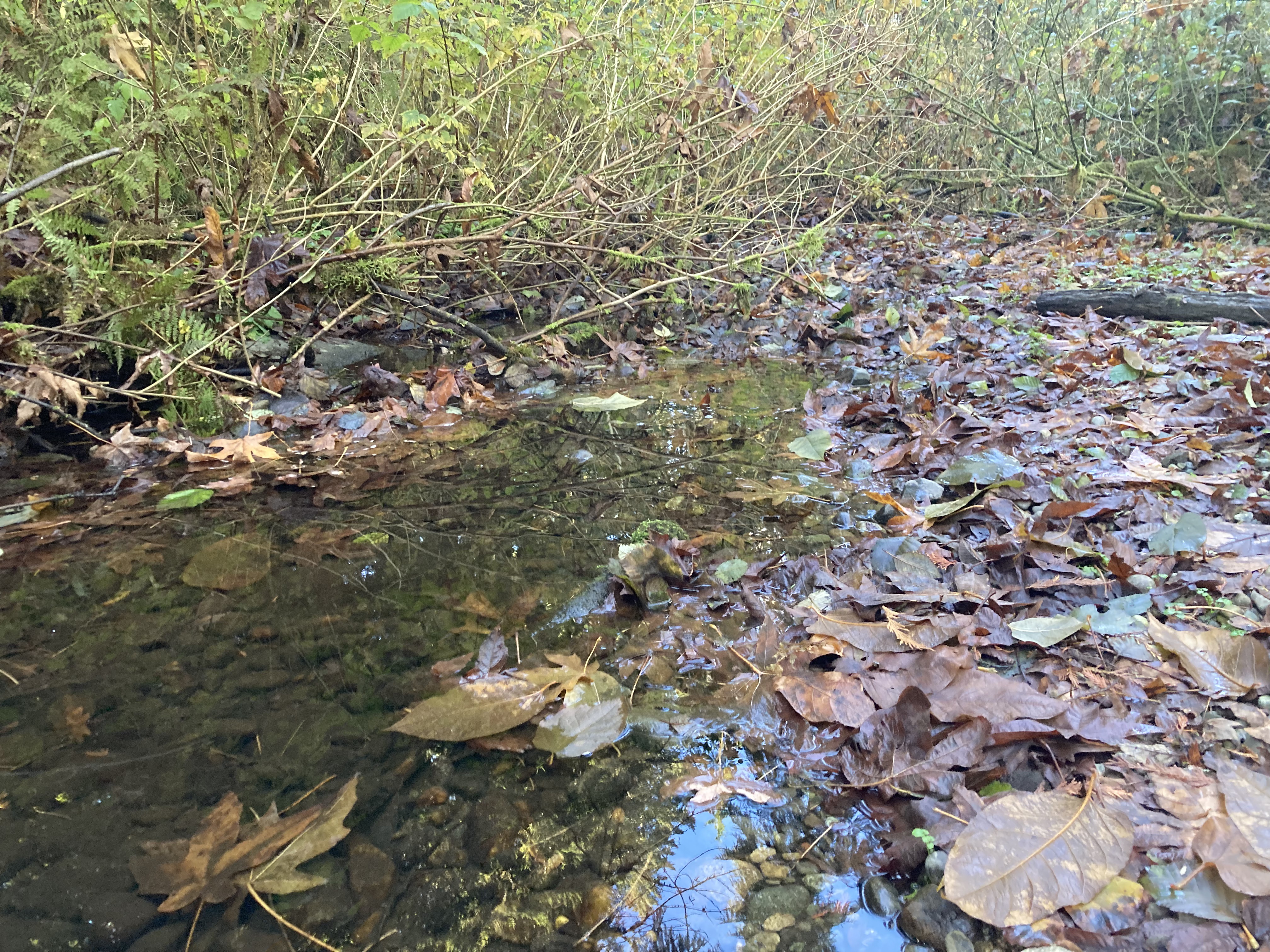
Distributing these “plugs” around the landscape took some good mapping of ecology to make sure each species had its correct climate needs. A lot of plants went into our protected CREP area by the creek- wetland species like wild ginger were tucked away in the thick bramble to protect them from deer predation. It was still very dry in the soil in early November, but established species in the wetlands helped identify where new wetland friends would best live. Valley, our Aussie cross lays at the edge of one such planting. See how many verities you can identify- including the ginger. There are three fern types too. The sedge let me know this was a wetland area. Rushes are also helpful guides in finding your wet ground.

Planting directly into stream beds is risky, as winter floods can drastically change a landscape near its banks. A few plugs went into muddy creek bed, but most were put in on seeps on higher ground. I rarely go into the creek wetlands, as that space is heavily impacted by any foot traffic. I’ll try to get back down there in spring to check the plantings, but for the next few months, plants are in and set. It’s a little challenging, not being able to measure progress immediately, but nature cannot be rushed. She’s better left to her own. With a little bit of encouragement, she can repair sooner, and that’s the plan with all the inputs of new vegetation. In ten years, there has not been a lot of diversity without bringing the species in. That’s the challenge with human induces habitat change in these forests. The forests were removed twice, sometimes three times, and bulldozed, burned, then grazed out. Seeds tried to sprout a few times, then failed, and no new seed came. Much of our forest today here in Western Washington has been reduced to mono-culture Douglas fir timber stands. What appears under the industrial lumber is of little concern, so many species are lost.

Weiss Creek, our salmon stream, was also lost during Weyerhaeuser industrialization of the landscape. Erosion filled in the creek with sediment, and it’s flow clogged up, turning the water course into swampland and erasing the fish paths to breeding grounds upland. This is a snapshot of the ecological destruction reeked upon these pristine forests, and the people thriving within them. Legacy is not always good, but can be repaired. That’s the mission at EEC. We’re bringing back lost species and offering a fresh start, in hopes that by the end of this lifetime, we can give back the land better than when we purchased it. We’ve recently contacted The Snoqualmie Tribe to learn more about the possibility of leaving our land to the tribe in trust. They have an Ancestral Lands Movement, which we’re hoping to learn more about in our quest to give land back to the people originally living- and still living there. The Snoqualmie Tribe is part of a greater Lushootseed speaking people in this region who have tended and thrived in the forests and waterways here for thousands of years.

Take a moment to think about where you are right now and who lived there before you. Think of colonial development moving in, for us in North America it’s pretty clear- 1492 onward, that European gluttony drove exploration for wealth and new land to own and exercise dominion over. This often celebrated global grab was directed by short sighted vision and perpetuated cruelty and abuse of the noble savage- both land and people. Cut the trees and burn the ground, drive out the natives and bring in the cows. But there are a lot of great historical reads out there for your education if you don’t know what I’m talking about, or wish to quest for enlightenment. Know place, history, and self. Why are you here and what did you get for it? What will you give? There are only 400 plants today, but 400 tomorrow, another 400 after that, and in a few more decades, my life is done, and another generation will inherit. But it will not be children of mine. My ancestors are back in Europe, and another trail can be followed from there back to Africa, but 40,000 years ago in my ancestry is lost. The Snoqualmie Tribe never left, and continue to thrive here, where I sit now. Land acknowledgment can be enough for some, but knowing how important land is, I cannot ignore that this place, where I sit, was taken long ago, and should be reunited with the people who have tended and celebrated here, always.

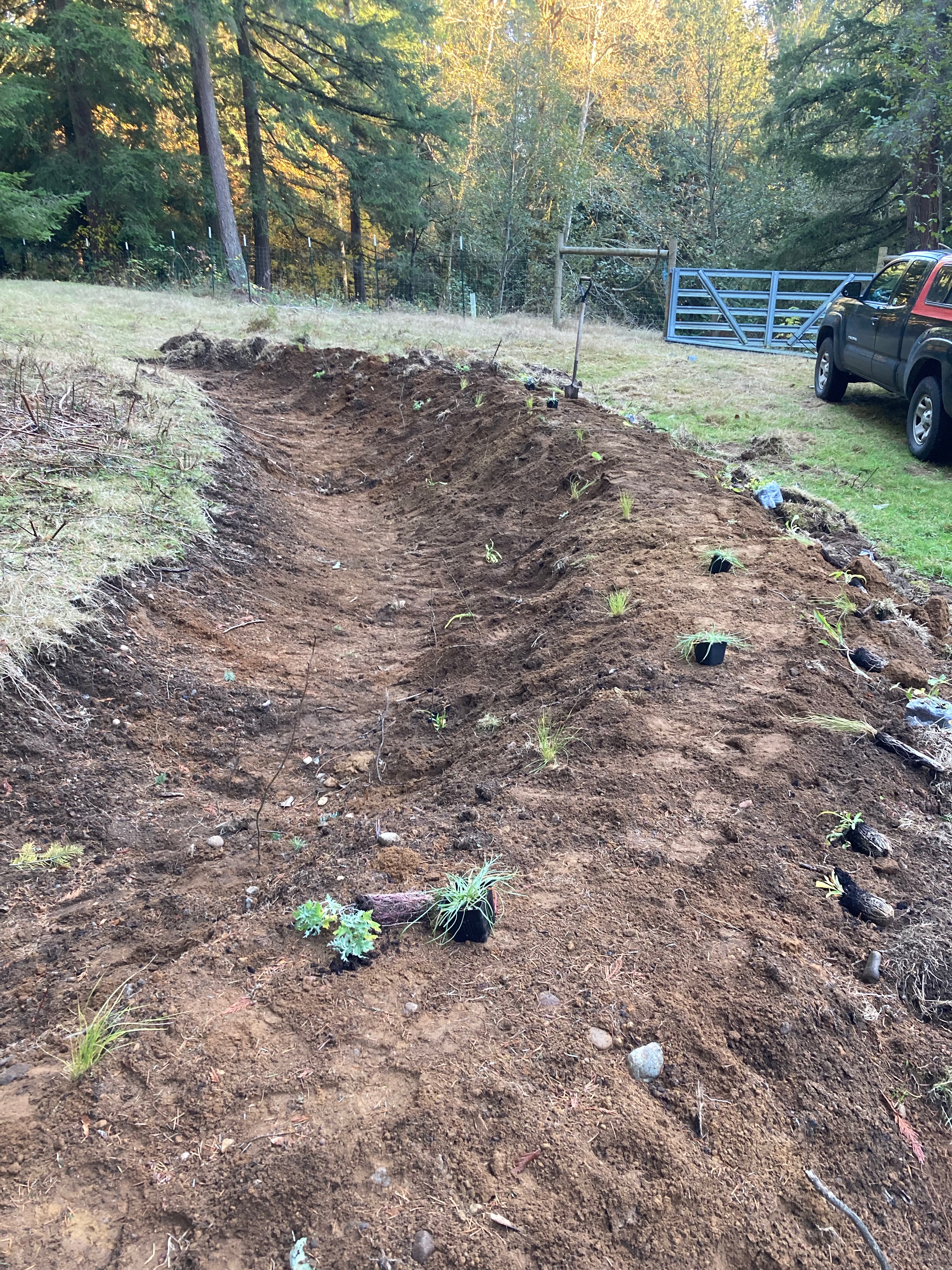
I’ll plant, plant, and plant some more. Move some earth to slow the water back into the soil. Roots go down, down, down, into the ground. My lifetime is now rooted here, what privilege, and the gifting back, returning- this is an honorable vision, a righting of wrongs. I did not cut the trees here in 1900, but others like me did, not The Snoqualmie Tribe. The Lushootseed speakers continue to weave their lineage, around all the colonial baggage coming in still. Be proud of ancestry, but also recognize the history you’re woven into so deeply. We’re all in, like the forest, full of many kinds of plants and animals form all over. But the invasives have changed this place forever, and not for the better. Please acknowledge this truth and start the healing. Plant love, seed learning, and harvest understanding through the whole process. Growth takes time. Another swale, more grasses, shoots, and leaves covering bare earth. Scars across our hearts will keep the memories of what was, and what can be again.

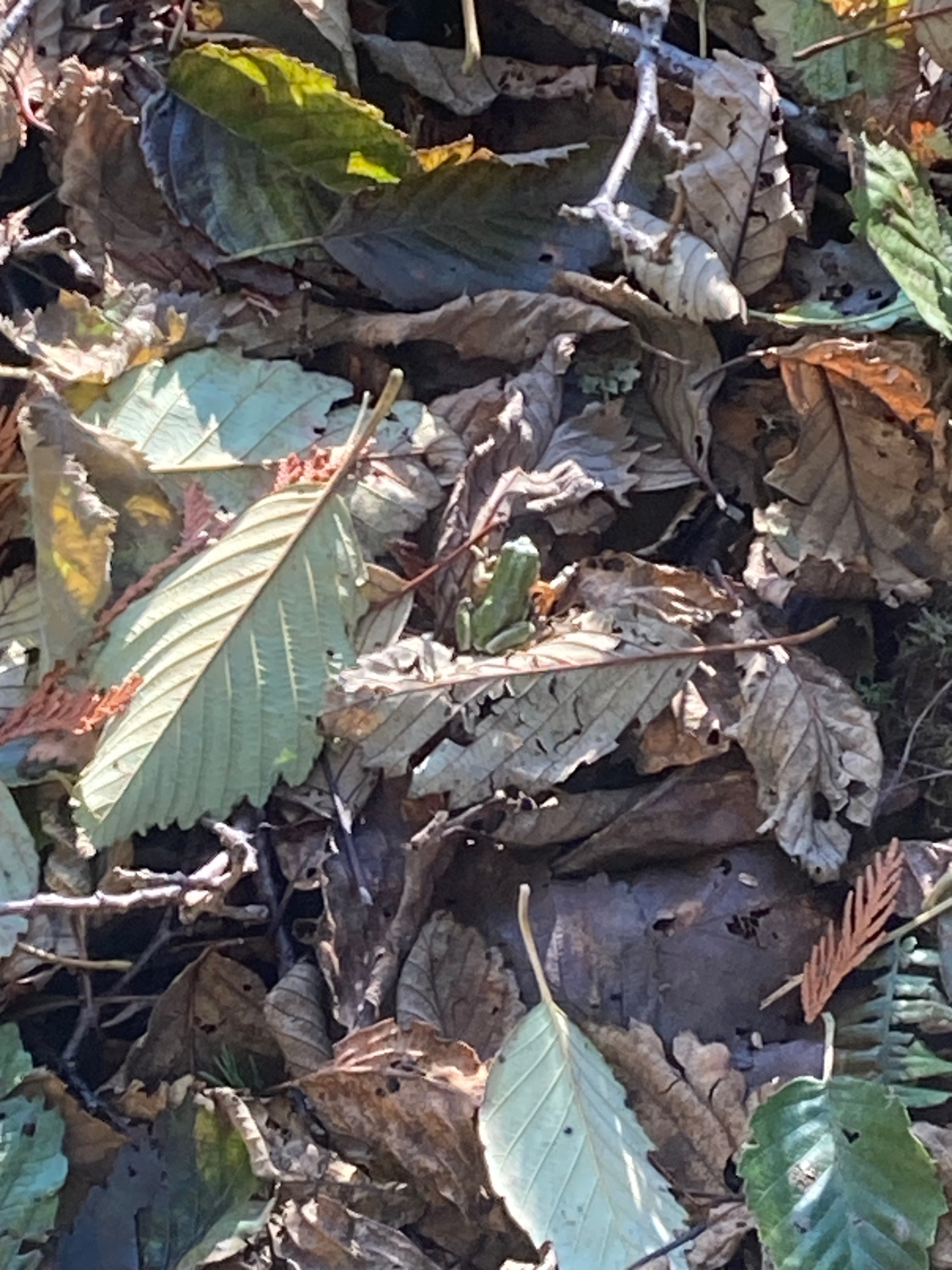
As I worked at replanting, this Pacific Tree Frog appeared. The living forest is alive, in small ways, as well as towering trunks and lofty bows. So many layers of complex ecology, with a few surfacing signs that the original people are still there, thriving, adapting, and ready to come back when invited. I plant them in invitation, thanking everything for being present. Even the Japanese Kotweed is telling us something- disturbed soil, too much sun on a ground that should be shrouded in old growth. The same with blackberry- you won’t find it in a deep, dark forest of older stands. Bring back the trees and you have layers, diversity, and balance in the intended ecology. Where the forest thrives, birds sing, bugs hum, and the joyful spirit of nature abounds. Slowly the vibrant colors of life return. Planting, planting, planting love and gratitude with every handful of soil.