Snow is always a treat here in Western Washington. Our warm ocean climate rarely delivers the right conditions in the Puget Lowlands for a winter wonderland. In November 2022, a winter weather advisory went into affect, and snow began sticking to the road and trees with enthusiasm. In just a few hours, our landscape was blanketed in gauzy white flocking. The animals were tucked away in dry barn and our cats had tucked up on the porch in comfy quilted chairs. I got out the snow shovel to monitored paths and accesses around the property keeping doors and walkways open. Snow can turn from fluff to cement in hours here, so active clearing saved hard labor later. Our driveway remained easily passable with four wheel drive, and no one missed work or play.
At the farm, chickens rebelled against the cold footing and hung out in the covered sheds and barn. The sheep lazed away at their hay and rested in fresh straw bedding. I’ve been forking loose hay from a big round bale, and refreshing my skill with a pitchfork. That same fork helps me clear ice out of the drinking troughs. Cold weather, even with beautiful snow, makes livestock systems more challenging. I could get water heaters, but we get so few truly cold snaps like this, I can handle ice breaking for now. Back in Vermont, I used an ax all winter to crack ice half a foot think. Here in Western Washington, it’s not more than an inch thick. If we drop into the teens, I carry hot water from the house to top off overnight troughs, keeping them from freezing. We’re not there yet this winter- thank goodness! Snow like this does a lot of insulating. It’s helpful for re-hydrating the soil with slow drip too.
The winter splendor of snowy days is charming, so long as you have a warm place waiting your return. Gratitude for home, wood stove heat, and the time to enjoy winter weather, rather than fighting it. There was plenty of extra work brought on by the snow, but it’s playful atmosphere was not lost on humans or furry friends. The dogs were especially frisky and light. Gill seems to use the fresh powder as a sort of bathing while basking enjoyment. He’ll lay down and rub through the snow on his sides and back, rolling and swimming through the frozen water. He could also just be playing around. Maybe a little of both. Valley does this too, only she prefers running, and goads Gill into occasional romps that end with a stalemate. Movements are a little more exaggerated and carefree, but action in snow does take more energy too. We all got a workout running and chasing around the land.
The slow watering snow brings for the ground is greatly needed. Moisture has only reached down a few inches since the fall. Frozen water sits on the surface and then drips into the soil during warmup periods of the day, refreezing in the evening to slow the saturation. It’s brilliant for ground that’s been parched by summer heat and sun. It feels like the future climate for our region will continue to shift in this direction of more extreme climate change. Winters will be colder, with more snow and ice, and summer will be hotter, with less rain and more triple digit highs. Banking water in the soil is the only way to combat these weather stresses on the landscape. Our swale designs support the slow and sink method of tending water.
Rain events here have shifted from weeks of misty sprinkles to afternoon deluges with an inch or more at once. The landscape this year was so dry, the fall rain ran right off the hillsides and into the rivers heading out to sea. At this point, snow was the only way to slow and sink water efficiently. Snow like this in November is as wild as the 90F October days with wildfire smoke this year. I can foresee, in another 5 years, smoke all summer into 90Fs October, burns continuing on the west side, and come November, snow on the ground for months, much like New England. It’s the kind of weather livestock cannot thrive in. We’re keeping that in mind as we plan through the next few years of EEC Forest Stewardship. Tree planting is becoming the next big shift, shrinking the farm production for more forestry restoration. That remains the ultimate goal of this great adventure at EEC Forest Stewardship.
Winter months offer a little more time for reflection, planning, and enjoying the moment. Cold, crisp evenings outside while flickering firelight keeps spirits warm and bright. May all who read these words carry warmth in their hearts, abundance in life, and joy in the days ahead. Happy New Year from EEC Forest Stewardship!
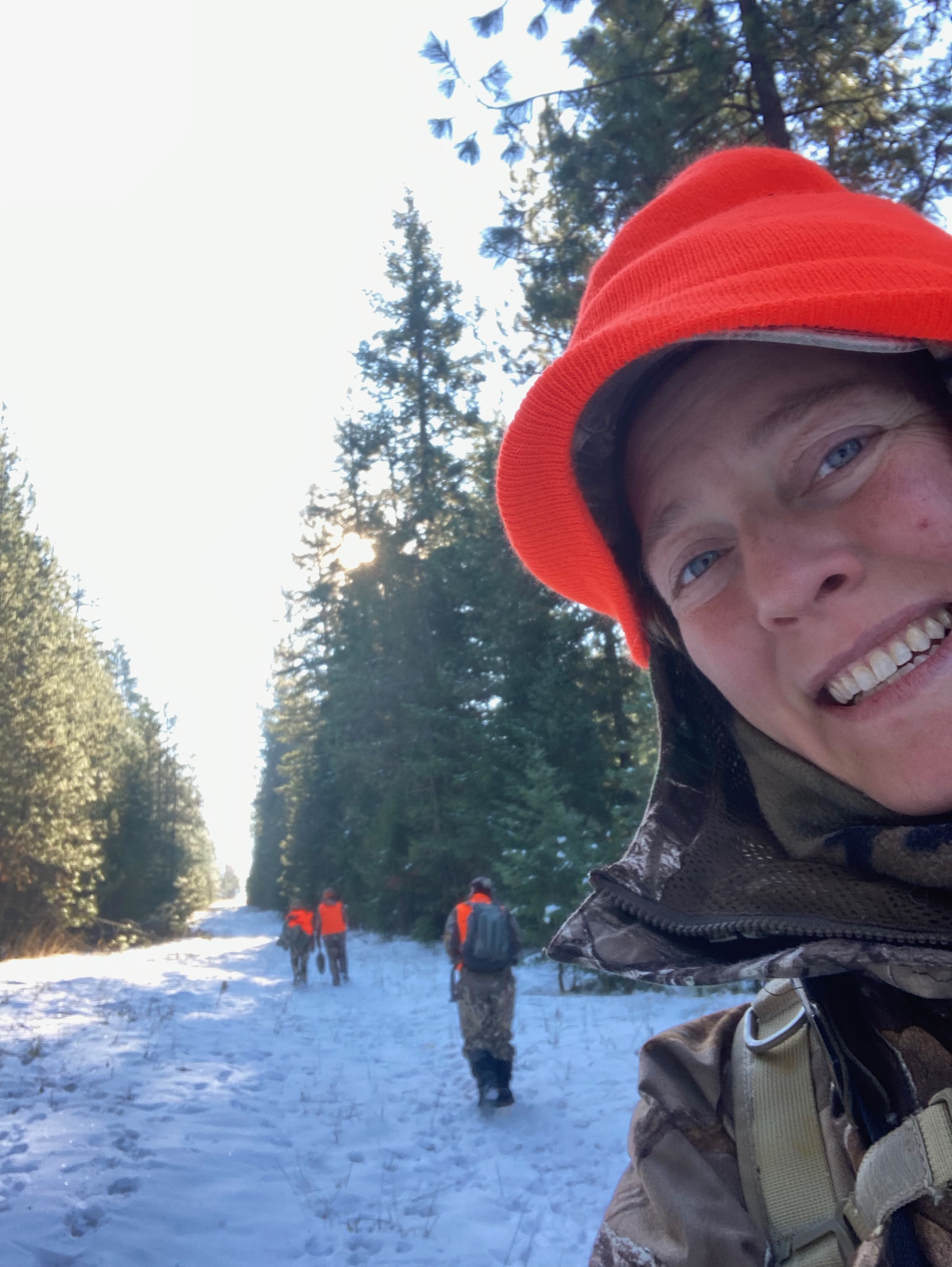
Gal’s Turkey Hunt 2022 was a great weekend of tracking and snow sitting with evening feasting, wine, and games. During the early afternoon of the first day out, I spotted a flock of Merriam’s Turkeys from the truck as we were driving to another hunting location in Northeastern Washington. Our mistress of the hunt checked her online mapping ap to make sure the land these birds wandered was public, and indeed, a square of state land surrounded our sighted quarry. We planned a two pronged approach and began a deliberate stalk towards nearby ponderosa pine grove. The trees would offer shelter and hiding from the astute birds. Turkey are difficult to sneak up on, and an ambush setup is often more successful- especially in the fall. Spring turkey season is another routine all together, but back to our hunt. Two of our party were not hunting that day, and took a walk around the power line road to block a potential escape rout for our targeted flock. Then the chaos began.
I’m an experienced deer hunter, and usually approach the hunt quietly, sitting in one spot waiting for the animal to walk by. In theory, turkey are similar, and you scout tracks in the snow during fall hunts to locate high traffic areas the birds are accustomed to. Turkeys love routine, and stick to it, if you avoid disrupting their flow. We had set down in the middle of the birds’ larder, and tracks were scattered everywhere. This was reflected in the flock’s movement, they had already circle around behind us, crossing the power-line road and out maneuvering us. I watched birds running behind our non-hunting “beaters” as they motioned to us where they were heading. We’d reached the grove of pines, but had to retreat back to the truck and road to cross over in pursuit of our flock. Birds were running all around, and it felt like total chaos. It was also the first time I was hunting with a group of people, which meant a lot more communication and distraction.
Our new grove of trees across the power-lines overlooked a hillside covered in kinnikinnick- a ground cover with evergreen leaves and red berries in the fall. The snow was still shallow enough to reveal much of the ground plants, which also invited the turkeys in to feed. Deep snow inhibits the birds’ movement, and the hunter’s. We lucked out that weekend with no fresh snow, but enough on the ground to track, and relatively warm daytime temperatures in the 20s with shining sun. It was heavenly hunting weather, and great foraging for the turkeys too. By now, the flock had regrouped in the thick forest just to our left. We took up sits against trucks and made sure to all be a safe zones of fire from one another. As we sat, my hunting partner began calling the birds in. I call using my own voice, but most people use a calling tool. The call should interest the birds and encourage them to come over and see who’s calling, but it’s no guarantee.
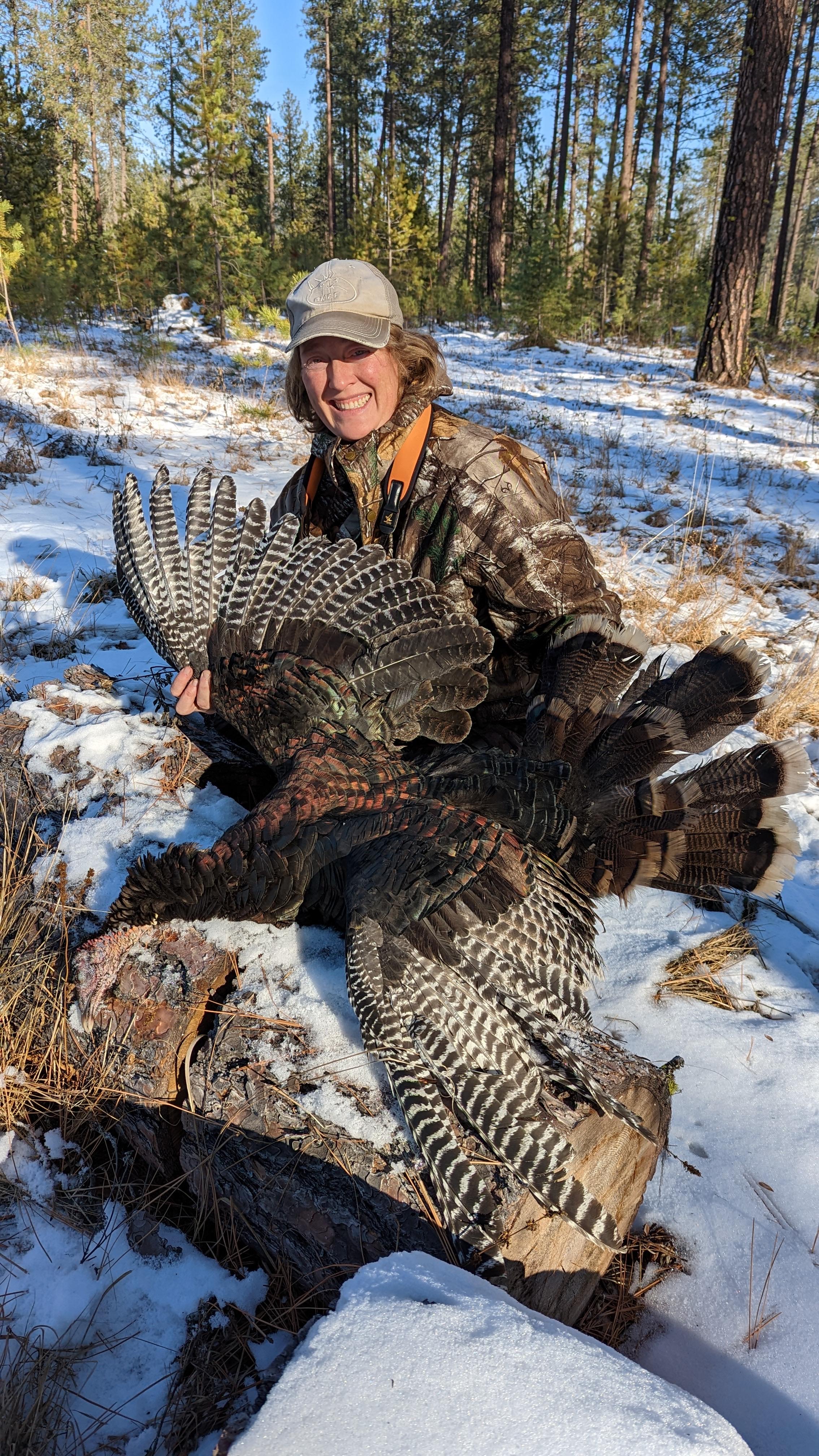
For us, the birds didn’t call back, but the began flocking towards us, seemingly indifferent to our presence. That was strange, as turkey are infamous for being shy and running away from strange changes in their routine. These birds were caught up in the feast of berries, and kept inching towards us without a care. My hunting buddy whispered- “Take the shot if you’ve got one.” Well, I saw a bird coming out of the brush and pulled the trigger. Chaos ensued. Birds exploded up in all directions. My hen popped up too, but came down again and I stood to get another shot off before she could fly. Even then, the turkey got into the air once more and took off towards the thick cover beyond. I followed her flight path with my eyes, noting trees and fallen logs as markers till she was out of sight, then I turned to check in with my hunting partner. “Should I run after it?’ I asked. “Yes.” She answered. It was an important safety check in. Never run out in front of fellow hunters- that would be in violation of your zone of fire.
With renewed tracking drive, I took off towards the direction my bird had flown. Second really did count in getting to where the animal might have landed. My shotgun was empty, so I unloaded the empty shells and picked them up out of the snow as I slowed to enter the brush. The visibility was low, but I put a new load in my gun to make ready in case I came upon my turkey unexpectedly. Approaching steps from behind told me my hunting buddy had caught up. The dense brush went for only a little bit, then I stepped out into what looked like an old logging road. Across the clearing, I could see another line of trees. Heading towards them, I saw my bird moving and raised my gun again. Pulling the trigger, nothing happened. I thought maybe I still had the safety on, no, it was off, so I took aim again- nothing. I was beside myself now, wanting to finish the hunt and claim my bird in a good way. Then my hunting partner was at my side, offering me her gun after watching my struggle from behind. I took her shotgun and took careful aim one last time. The turkey dropped, and I ran to it in gratitude.
As I stood, surrounded by other supportive women in the field, the harvest felt very special in so many ways. It was my first successful bird hunt, my first turkey, and my first ladies hunt. A group dynamic is so different, and great for turkey hunting. I would not like having a group involved with my deer hunt, but without the group support in the turkey pursuit, my success would not have happened. I ended up being the only successful harvest in that two day hunt. Turkey hunting is hard, unpredictable, but a lot of fun and good learning. Turkeys in Washington state are introduced, and out-compete many native species of ground bird like grouse. Hunting them helps to reduce this impact, and graces our table with wild meat. It meant a lot to have the additional support and expertise from my fellow hunters in the field- and an extra gun. Why had my shotgun not fired properly? Well, when I reached in my pocket to grab a new shell, I grabbed one of the empty ones I had just picked up when I unloaded. Classic mistake- and an important lesson not to repeat.
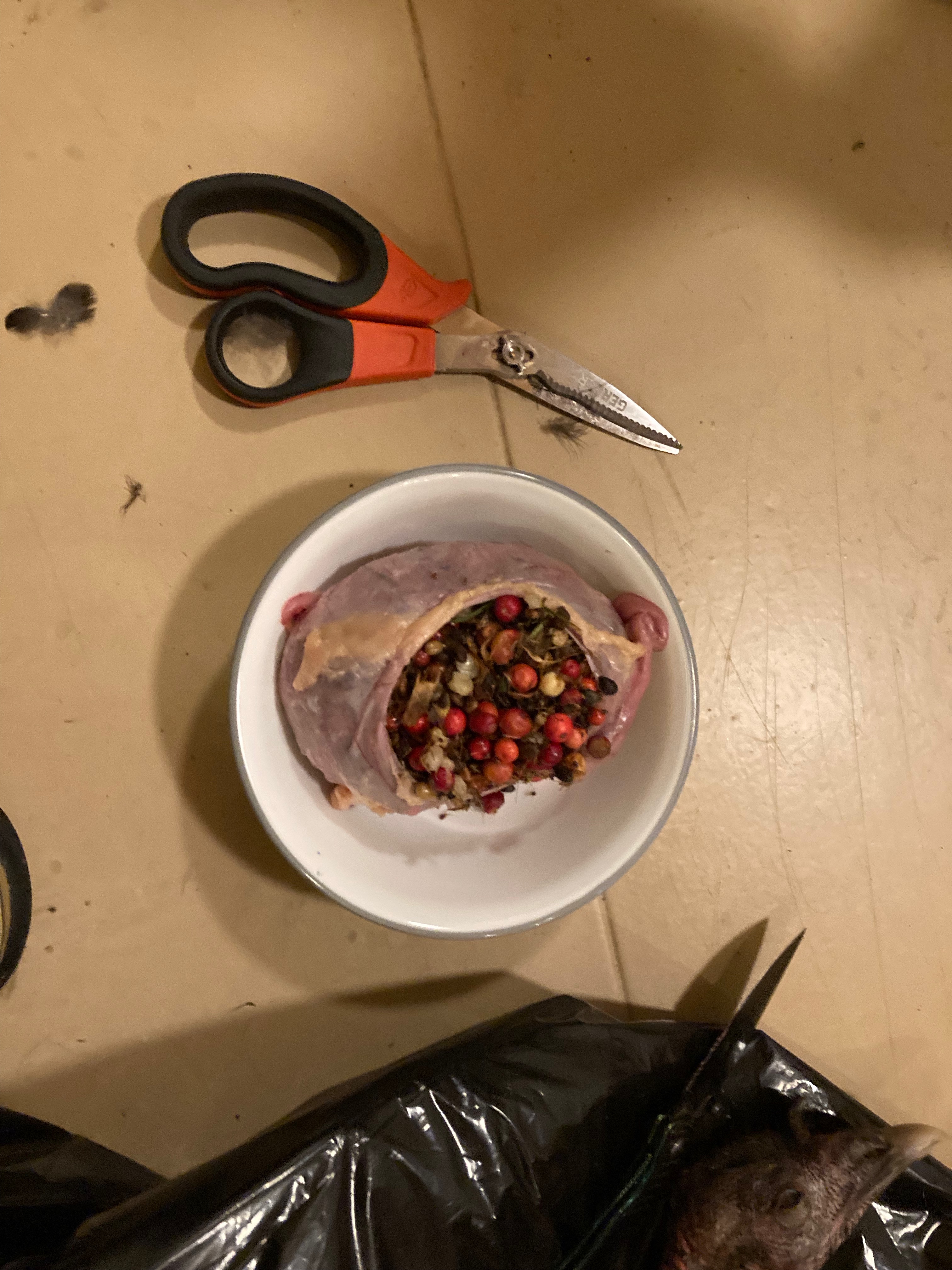
When I got back to the house and plucked the bird, I also took out the crop for a better look and what the turkey had been eating. Sure enough, the organ was full of kinnikinnick berries, which I’ve brought home and planted in my garden. The carcass weighed in at 7 1/2lbs dressed. That was the perfect size for our modest Thanksgiving. What an honor and pleasure to enjoy wild turkey! Brined and baked with so much care and gratitude, the meal was delightful and the turkey sublime. Gratitude to the bird nation and all the gifts and gentle lessons it offers. Grateful still that our hunt was safe and fun, that I received a bird for my work, and that we all shared experience in the field. We’re hoping to make this an annual tradition for women to gather and hunt together sharing love and support in harvesting wild food.
There’s a legacy here of ten years in deep relationship, perusing and learning the art of the hunt; accepting so many beautiful lessons, and reaping the rewards of hard work, focus, and vision. Sometimes my sight was clear, and the harvest successful. Other times, my sights remained empty, and I came home without wild food from a crucial source of protein, greatly appreciated in lean times. The abundance of EEC Forest Stewardship, specifically our Cascade Katahdins at Leafhopper Farm, provide additional support to our pantry, stocking the larder with enough diversity to sustain through a few years of missed fertility. This year’s challenges included a large wildfire near our home, driving the deer away for the first week of our limited two week season. Climate change is the single greatest threat to our survival right now, and the scales are tipping.
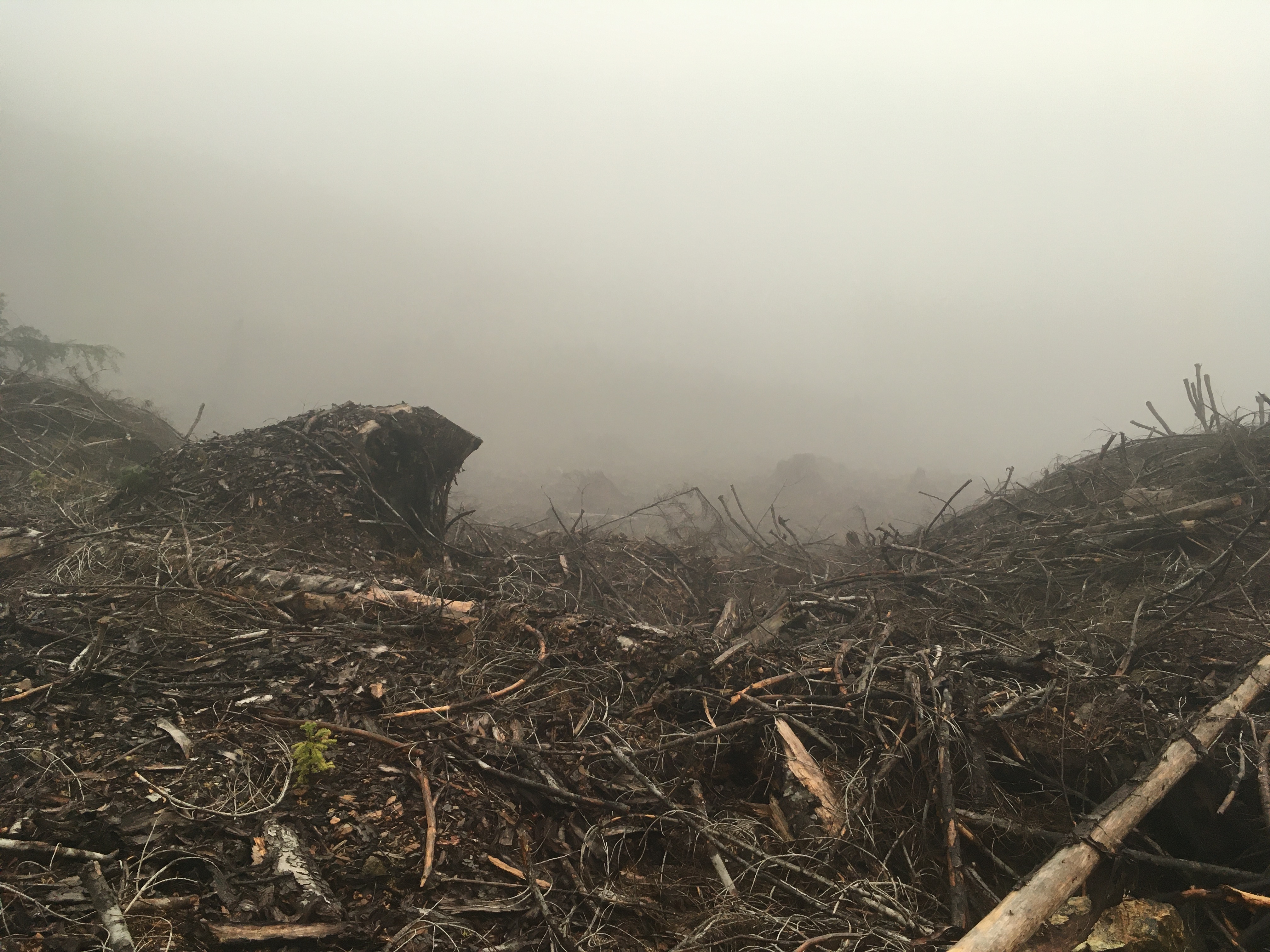
Through a decade of perusing blacktail deer in Western Washington, I’ve come to love dark, cold, wet predawn silence. Every prick of rain drop sound crashing through the leaf litter and drawing my awareness ever deeper into the edges. Clearcuts are good habitat for deer, if tended as wilderness, where native plants can collect and thrive, with water retention and diverse replanting after a commercial harvest. Repetitive logging over a forest before it ever nears climax, preventing an established ecosystem to replenish the nutrients carried away in timber tonnage, is not good for the deer, or the forest, or any ecology that is balanced and abundant. Spraying treated sewage on the land is also damaging the soil and water, adding perception drugs and heavy metals in concentrate to our hillside catchment basins where the valley rivers come from. Those valleys are full of poison now, which is tainting our crops and livestock food resources and pressuring wildlife.
My first deer hunt, I was in Snoqualmie Tree Farm with my beloved hunting mentor and deer medicine friend. He had coached me through several days of observing deer brows along the roads, then finding the heavily used trails connecting habitat resources. I’d take long sits atop slash piles, watching as still as I could, only moving my eyes along the forest edge, hoping to see a buck walk out into the clearcut. The mind will always try to see what it wants, and my spotting glass focused on many seemingly active movements that emerged as stumps when I focused the gaze. Always have your spotting scope handy, it makes sighting a great sport, and teaches the eye a lot about depth and range. On the evening of October 31st, 2013, after days of spotting, waiting, and learning to sit still, I was atop another slash pile in Snoqualmie Tree Farm, waiting for that buck to wander through before last light of the last day of blacktail season.
It was not too surprising to hear another truck beginning the long haul up from the foot of the foothill I was perched atop. After all, my mentor and I had recently driven up here for a good spot, and we did not own the mountain. It was poor timing really. The driver was road hunting, driving along the roads before dusk hoping to catch a deer on the move. It’s not the most ethical way to hunt, but more successful, and on the last day of the season, understandable, but not mindful of hunters who are having a sit. As the vehicle rounded the switchback and rose into the far right of my field position, I unloaded my gun. There was an active hazard in my field and I deemed the situation unsafe. My gun action clear, I proceeded to step out of the field, knowing the newcomer was unaware of my location. I didn’t want to call out and spook off the potential harvest for anyone. Slowly, I walked up the road and around another switchback, which took me out of firing range and back to my mentor, who was waiting at the truck looking very confused.
We both heard the shot as I reached him. “That was your deer.” he said. “I know,” I replied, “but the shot was not safe for me, I’ll take the karma this time, and hope my other hunts reward this act of kindness.” My mentor was less forgiving, and as we drove by the other hunter, who was busily gutting a nice two point on the road, he shook his head. I was thrilled for the gentleman elbow deep in his excitement. I waved and wished him congratulation on a successful hunt, and I had no other feeling but that in the moment. I could see how my joy would be, the wonder at harvesting wild food, connecting to place and an ancestral legacy. “My first hunt!” Cried the man as he awkwardly embraced the animal. “My first deer!” He announced again, looking back over his shoulder at the driver side of the vehicle where a woman sat proudly. “My wife is here with me, we’re so glad.” My mentor was still shaking his head, but I congratulated the successful hunter again and left him to the hard work still to come, in the dark. At least is was not raining.
My second hunting season was successful. I went on my own, every morning, to the same dead end clear cut where I parked my truck at the head of that dead end and walked in a mile to my sit spot. It was cold, dark, and invigorating. Most predawn times there’s so much energy building up, like a long dormant seed finally quaking to life, just before that explosion of sprouting- germination. I’d sit into first light with the binos on an enormous old growth stump that towered above the slash and muck left by the logging machines. There was a little brook and some lovely green strips on either side about 1,000 feet down the hill from my perch. That morning there had been light rain, and the does were moving in, like that had the past few days, towards the end of my window to harvest a deer. It was the last day again, and I wondered if I would experience what most hunters of this illusive ungulate species experience- an empty tag.
The relationship with this small herd of does had included several encounters at close range. They often entered the clearing from the edge just below my stump. I had chosen that spot for that reason, expecting, then confirming the flow of deer from the edge, down towards the wetland strip, which was a perfect bowl, and safe shooting field with no roads. It was just getting light enough to see down into the wetland where the does were already feeding quietly in the mists. I began spotting each individual animal with my spotting scope, one, two, three, four does, all mature and confidant in their meandering graze across the lush vegetation. It was really a wetland, and should have been part of the greater wild water setback, but with wet soil came abundant growth, and these deer were familiar with the larder zone. My attention was suddenly firmly shaken into focus, as my binoculars revealed another ungulate form emerging from behind the familiar does. A modest set of points flashed, then hid again in the brush as the animal browsed.
I’ve never harvested a deer based on the size of its antlers. The object of hunting blacktail deer for me, is wild food, nature connection, and conservation. In my hunting encounters, taking what is offered is usually a good action. If you take no action when the opportunity presents its self, you may not get another chance for the season. Personally, I also think the deer know, being in a predator/prey covenant with humans for thousands of years, knowing deep in their being, the exchange taking place. I never take a shot at a running animal. The bucks I’ve had the privilege to harvest for food have all been standing broadside, looking at me head on. It’s a magnificent scene to encounter, with powerful intention. Following through the cycle of birth and death, seeing the death of a landscape as the backdrop of this experience, there is a feeling of end, with the last of the light stretching into final harvest before the cold hard times of inward reflection begin.
That cold October morning in 2014, I looked through my scope and took aim at the buck blacktail quietly grazing a thousand feet down the hillside from my stump perch. The rifle scope was close range, and I had to take my time in setting up a good shot. The animal paused, letting the other deer pass him and move ahead. Then he looked up the hill directly at me and I began a deep breath of concentration. Inward draw and the flick of ear, flash of bright eye in the pink light of dawn. An exhale lets finger arch and a light pressure releases one of the most impactful actions a human commits- combustion. This particular explosion sends a lethal projectile at blinding speed to a roughly 4×4 inch vital organ area on the deer’s side. If the shot is correct, the animal will drop to the ground and die very quickly from loss of blood. My buck did indeed fall, collapsing under the sight of my scope, which I’d kept glued to in preparation for a second shot if needed. The buck was not moving, so I unloaded my rifle and plotted my hiked down to the awaiting quarry.
Moving through a recent clearcut is no easy feat, and I knew the real work was now about to begin. When I first approached the deer laying in the slash, my instinct was to move on in search of my deer, which must have run off on down the hillside into deeper cover, because it really could not be that successful a first shot from so far above, but it was, and I had to stop and reassure myself of this incredible moment. I’d just harvested a wild food source of great sustenance for my winter larder. This beautiful food, grown in the forests surrounding my home, this abundance to celibate and be so thankful for was the fruits of my labor and learning. Then, as I later hauled the carcass out of the clearcut, pulling from the antlers in a slow drag up the hill to the truck, the mists and rain began to close in. In a moment of resting to catch my breath, I felt a strong fulfillment in self-sufficiency and personal growth connected to a deep ancestral calling.
To hunt, to gather and harvest wild food, was a crucial part of my identity and drive. I’d come back to these same feelings and experiences with every hunt, every opportunity to connect with the living world in the cycle of life directly. My predation of the deer in line with legal hunting supports a healthy ecosystem in my immediate area, as our encroachment on wilderness de-pleats the habitat animals need to survive, including predator species, some of which have been completely exterminated from our region, thus perpetuating high birthrates in prey species like blacktail deer, which then overtakes the carry capacity of the landscape, ending with population crash and mass die off. Hunters harvest the overflow numbers within a given population of deer to reduce winter kill from starvation, and habitat degradation. Hunting regulations, including harvest limits, are determined by scientific observation and research done in the field by wildlife biologists. So far, no hunted wildlife managed in these scientific methods has gone extinct. Restoration has remained successful in hunted wildlife populations throughout the United States, with numbers continuing to rise and stabilize where carry capacity allows, but human encroachment still remains wildlife’s number one threat.
Hunting remains a personal choice in connecting to wild food, nature, conservation, and personal growth. Each lesson in tracking, sitting, listening, and connecting to place, wilderness, animals and plants forms a tighter relationship to the land and ecology I’m a part of. It’s so rewarding too- harvesting food, gathering abundance from the land in thanksgiving, this is a powerful set of original instructions I’ll continue to follow as long as the privilege allows. It’s also important to give back, and teaching hunter safety certification for my fellow citizens is a way to pass on the knowledge and experience to future generations who wish to peruse their own sacred covenant with the land. Gratitude to all the mentors, teachers, family, and friends who support my hunting journey.
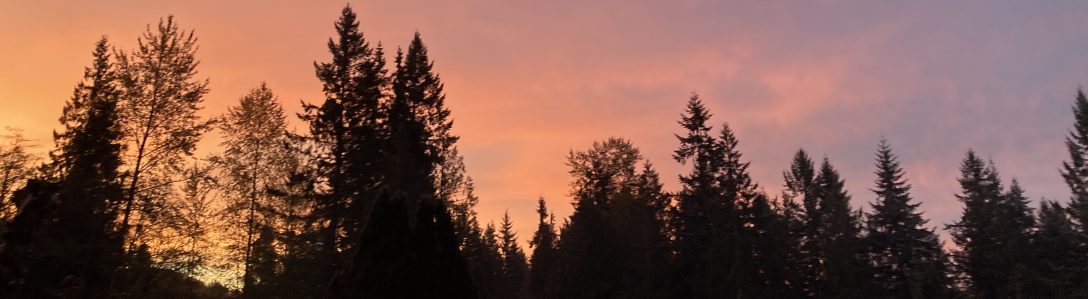
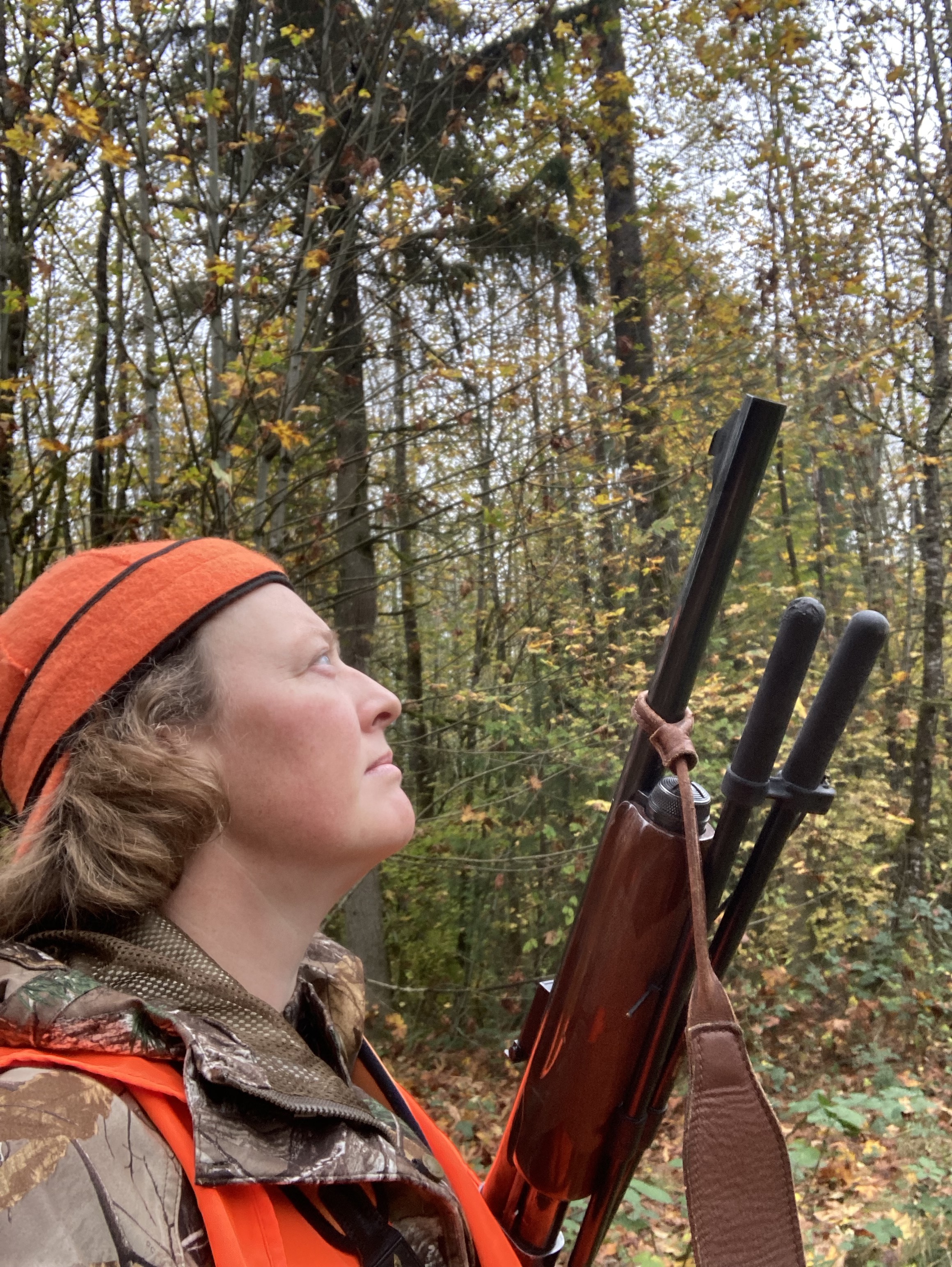
This year’s deer season was short and bittersweet, but such learning and reward in experience, no matter how brief. Opening weekend, I was at home preparing for my hunt on Monday at Snoqualmie Tree Farm. I took a walk around my own land wearing hunter orange and carrying a long gun, to avail. It was a red dawn, the sun was orange, never quite lightening to a golden white, and by Monday morning, the air was thick with smoke, and the tree farm was closed indefinitely. The cause- a wildfire between Lake Phillipa and a ridge line just above Lake Calligan. I’d spent that summer fishing trout in Calligan and scouting nearby clear-cuts for my hunt later that fall. The area abuts The Alpine Lake Wilderness, offering a large area to hunt in both private and public land. The fire started opening weekend and ended my first week of hunting season with the worst air quality on the planet for three days straight. The fire is still burning a month later, but at least the forest is now open.
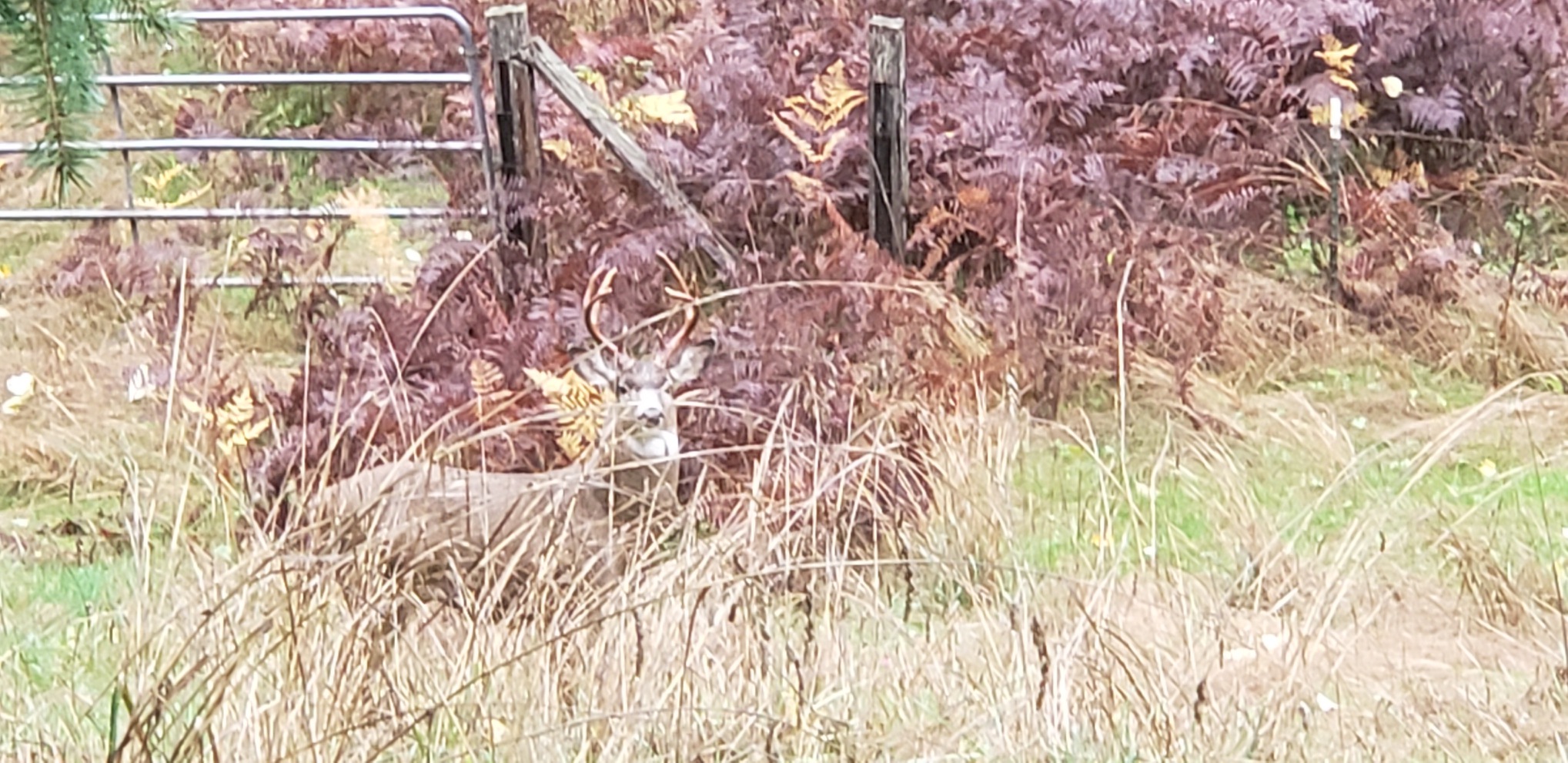
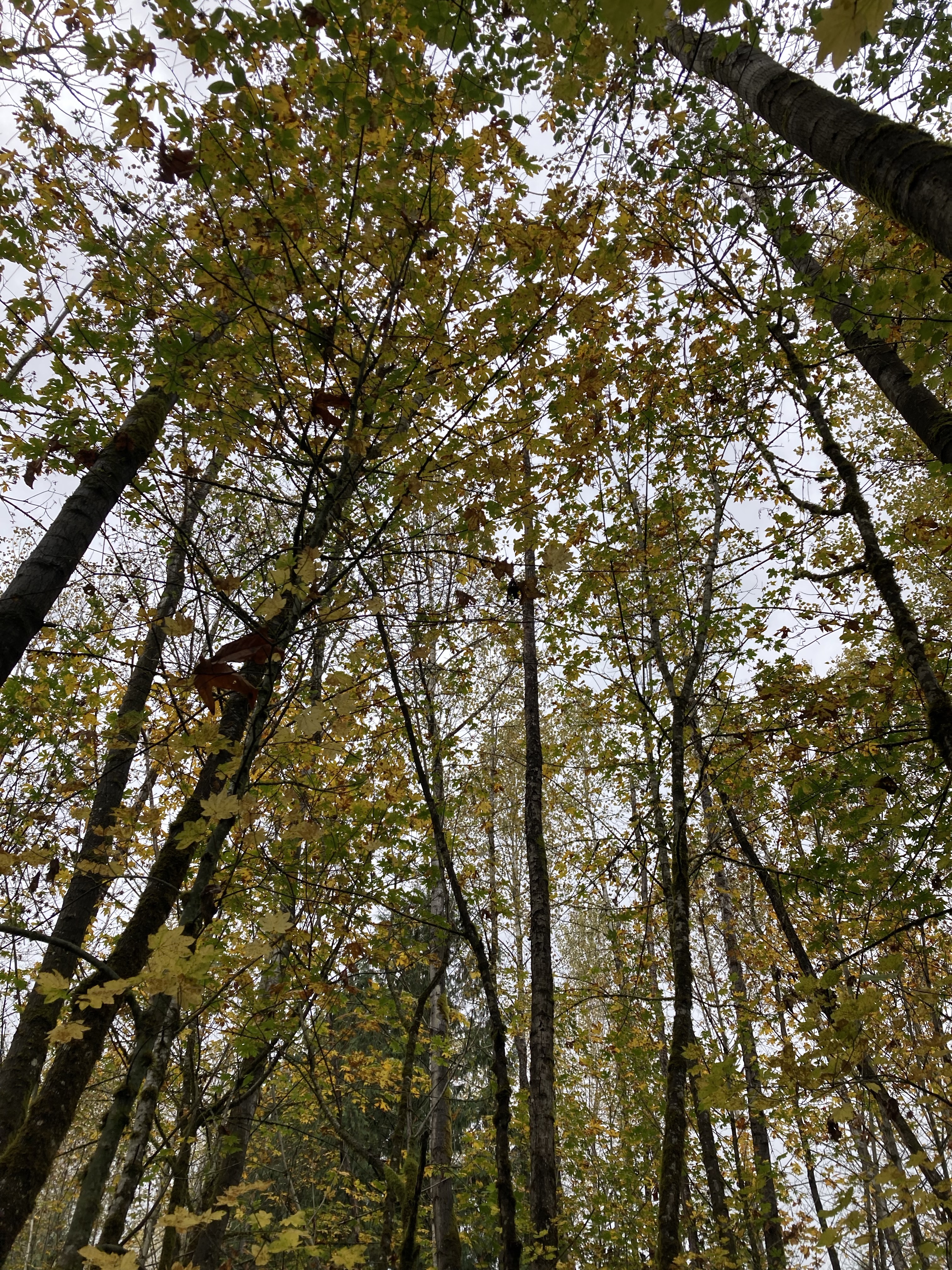
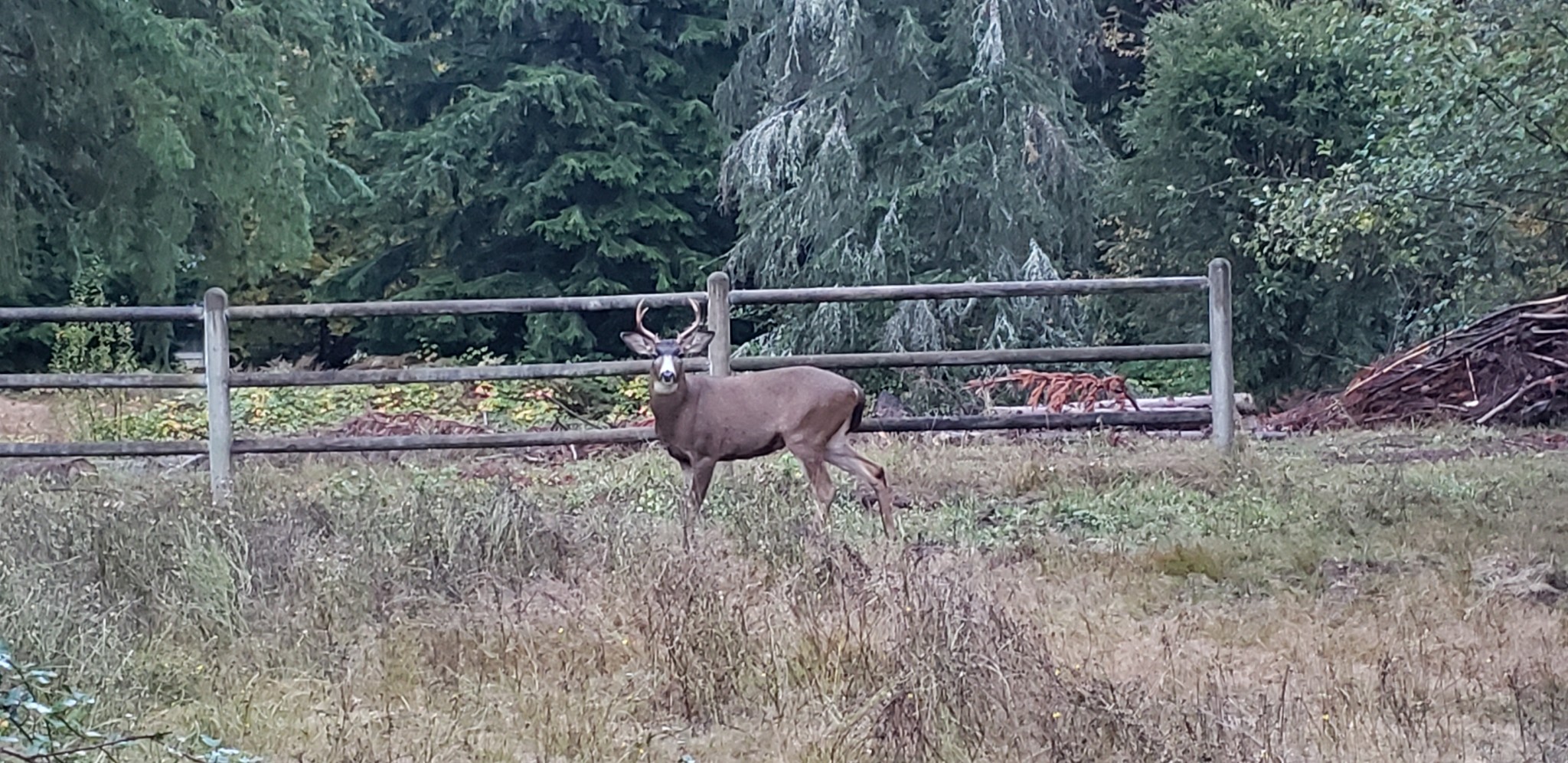
During the last day of the season, October 31st, I had a morning to hunt, and spent it at a neighbor’s property where they had sighed a most unusually marked blacktail buck. He had a white nose, which stood out as a unique identifier in the field. He was beautiful, mature, and a great candidate for harvest, but it was not meant to be. I sat listening to him walk through the woods in the falling leaves, sitting in a golden mantel of maple and cottonwood shed. The heavy rains during the night had driven everyone into shelter, and with the coming light, downpour reduced to trickle, and the deer were up moving to eat. I knew I’d catch my buck on a traverse from one larder to another, so I set up a long sit in the young deciduous grove between two pastures. I had a spot in the crossroads of several game trails. My breathing slowed as the sound of approaching hoof falls drew closer. Then, the wind shifted.
The sudden stamp of a stiff leg shattered my ambition as, in the next seconds, I listened to a new pattern of hoof beats pronking away into thicker cover. The moment of success had slipped away in my scent crossing a most attuned nostril a tip white blazed nose. I didn’t even gimps a tail flash as I stood up from the blind of fallen logs. It could have been mindset preemptively, thinking too hard about the animals movement, sending out energetic rings of pressure, alerting the prey animal’s instinct to check the air. The environment we cannot control, nor how we’re perceived within it. Beyond setting intentions and doing my best to blend in, it was merely a shift in barometric pressure which cost me the element of surprise. Standing up did not help, but I was limited for time, even in the final day of hunting deer for the season. Still, hearing the approach, knowing what caused my premature unveiling, that was a good set of lessons learned.
I also helped teach an hunter education class during the week of fire, thus certifying a few more safe hunters for the field, even if I could not be in it. I also saw a lot of bucks along roadways during the rut. We’ll keep our eyes peeled during these colder months and hope to harvest some roadkill to make up for the missed buck harvest. Late season, which is 3 days in a limited area above snow line, I’ll be with gal pals hunting turkey on the east side. It will be worth it, and a lot more good learning in new hunting pursuit. Gratitude for all the learning and opportunity in hunting this year. The deer got a year off, but next season, I’m committed to deer and elk season without interruption, and hope to have a turkey by the end of this year. Thanks to all who mentor and share the hunt.




 EEC Forest Stewardship