Blackberry Wine

We’re back into fermentation fun here at EEC Forest Stewardship. Blackberry season was off the hook, and we took full advantage of this tenacious invasive bramble to harvest some sweetness. About 20 pounds of berries has gone into the pot with more sugar than I’d care to think about. That’s how you make alcohol with yeast, and we’re glad to get a handle on such simple chemistry to produce some home made drink to enjoy during the long dark nights of winter. It’s been a real challenge to get the chemistry right for best taste. For several years of attempts, I fought to keep the sugar inputs down, and ended up with fizzy juice rather than wine. Other years I’ve tried using only the natural yeast bloom on the fruit, but those experiments also came up short on taste. A recent almost success was kept in cask for 6 years before bottling. A wine expert friend suggested I put a little additional sugar in at bottling, which I did, and that batch was the best yet. Now, following a well reviewed recipe with simple steps of multiple sugar inputs and clear days of waiting between feeding the yeast and final racking, along with some added wine yeast has brought about two batches this year which I have high hopes for.

Blackberry wine is quite a straightforward process, yet its taken almost a decade to fully embrace all the steps and timing in a way to bring out the best success in the brewing process. The biggest challenge this year is temperature. Usually, September remains warmer, thus keeping the yeast active long enough to transform a good amount of the sugar intro alcohol. This fall, things are cooling off sooner than expected, and our fermentation has slown down considerably. The air locks on our carboys have stopped percolating, which signals the lack of fermentation. To counter this issue, we put a sweater on the jug and set it in the warm sun to heat up and start again. It’s working, so we solved that issue, but will probably freeze the berries next year and wait to ferment when the wood stove is going later in the fall. Temperature is so important in any brewing process, and without regulation, your future drinks may end up missing the spike intended. This is true for all fermentation, even food. A few years ago I tried making saki in the summer, not a great idea considering it was so hot out. We ended up with rice yogurt, which was yummy, but not a rice wine.

Fermentation is a great chemistry lesson, and fun way to preserve food. You don’t have to make alcohol, but it’s nice to have some home brew to enjoy and share with others if you drink. Fruit is a great starter in learning the brewing process, though beer kits are easy to find too. Because we don’t grow grains here at EEC, and blackberries are plentiful, wine makes the most sense. Just know there’s a lot of learning curve in perfecting your recipe and we’re still a long way from winning any accolades. However, this year’s batch is decent, good taste for great friends and family to enjoy a little flavor from our land. Gratitude to the bramble nation, the black fruit that comes on in later summer, and the hands that harvest and brew. Special shout out to chemistry, and the nature of fermentation- what an important gift.
Racehorse Creek Landslide Fossil Fields

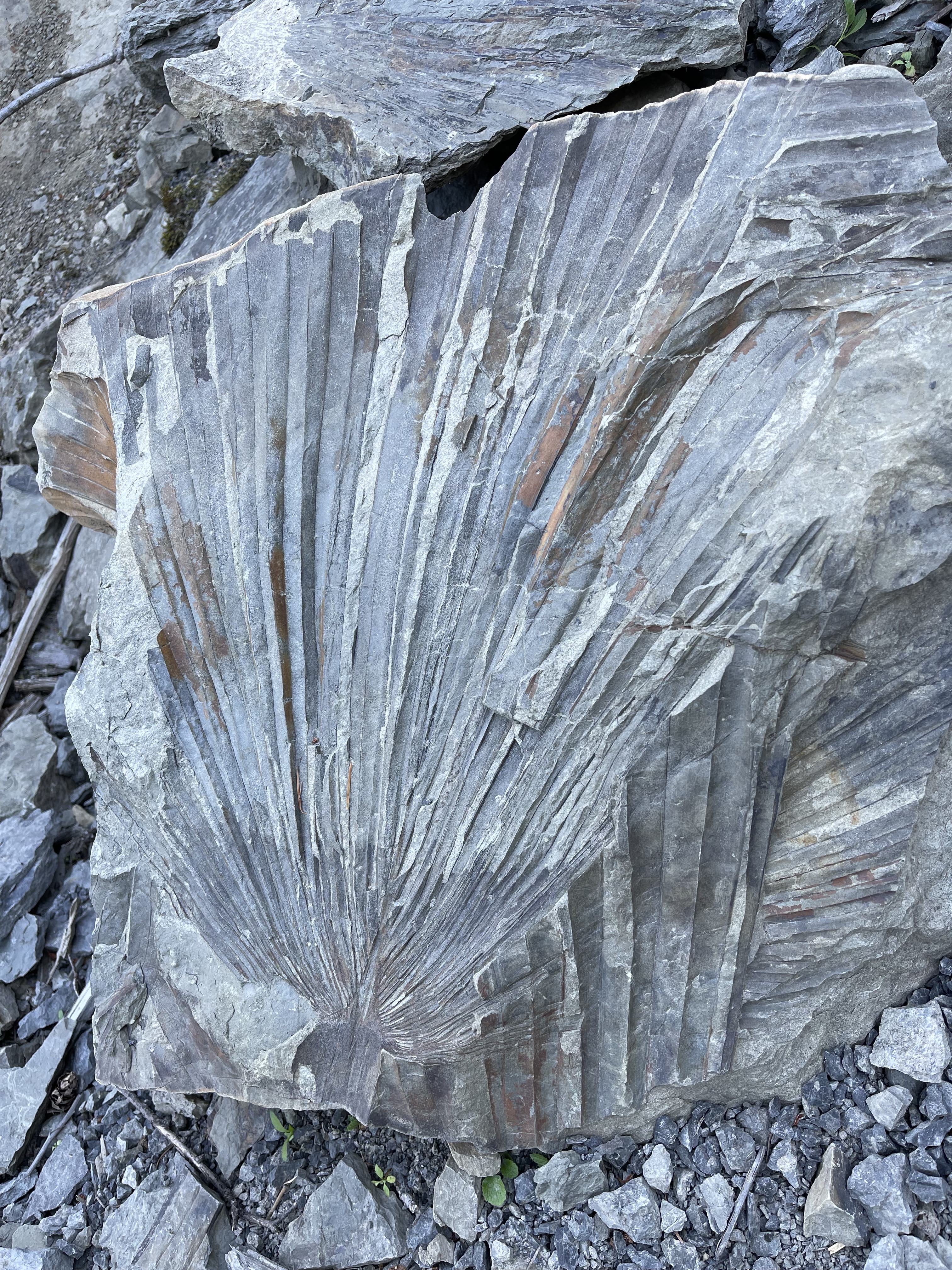
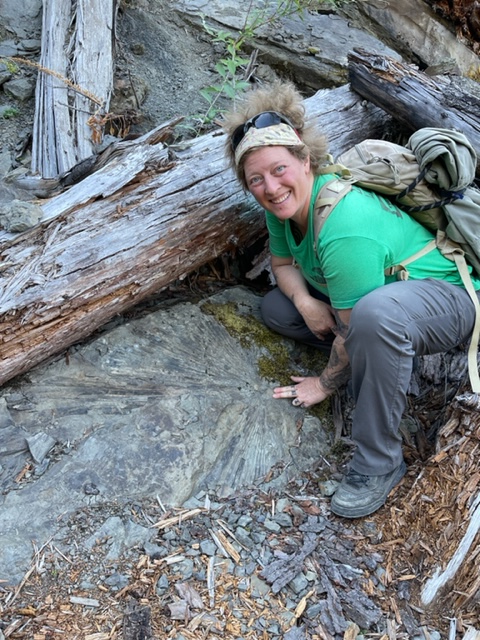
Fantastic Fern!

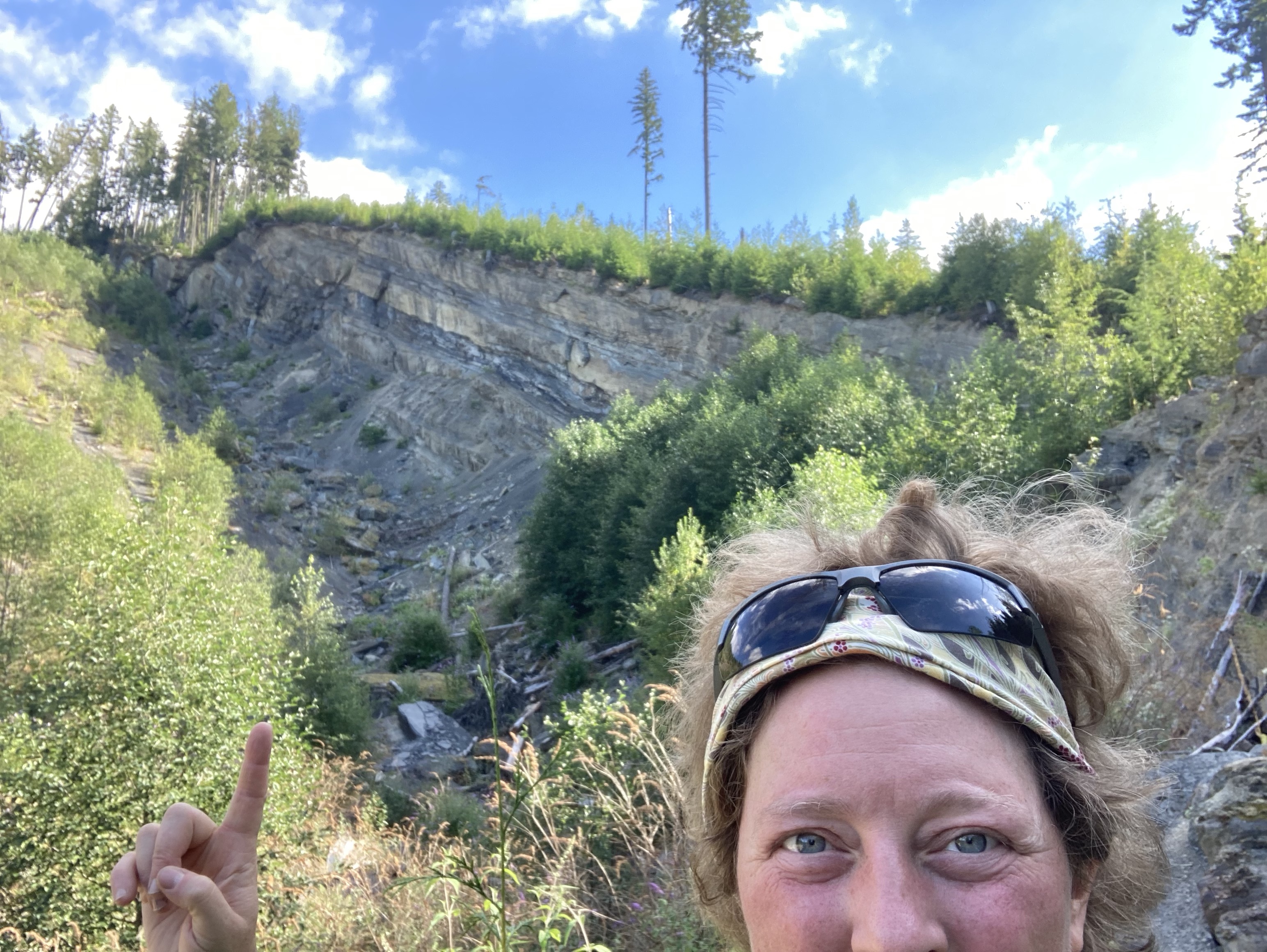
A late summer trip to Mount Baker for a fossil hunt. There’s a recent landslide that’s accessible by trail where you can find 50-80 million year old “talking rocks”. Much of the Baker area holds a treasure trove of fossils, in road cuts and flooded down creek beds, these Chuchanut Formation stone strata are revealed most dramatically just above Racehorse Creek on the north side of the mountain. There are great online maps and directions here. The hike is up steep escarpments, so be mobile and dressed to slip and slide on craggy terrain. If you not up for a hike to the slide area, you can hang out along Racehorse Creek at the base of the mountains and look carefully in the creek for fossils- you’ll find them.

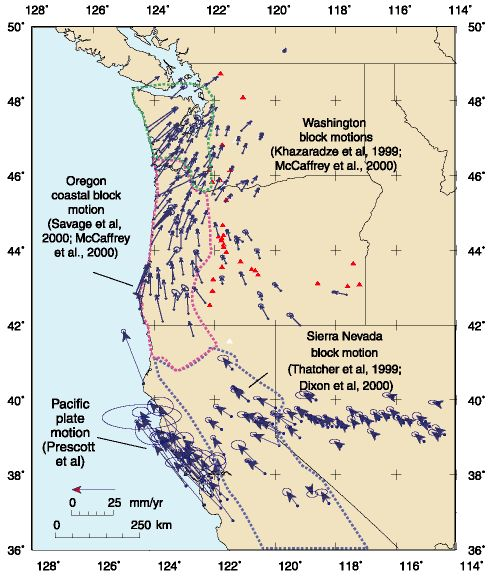
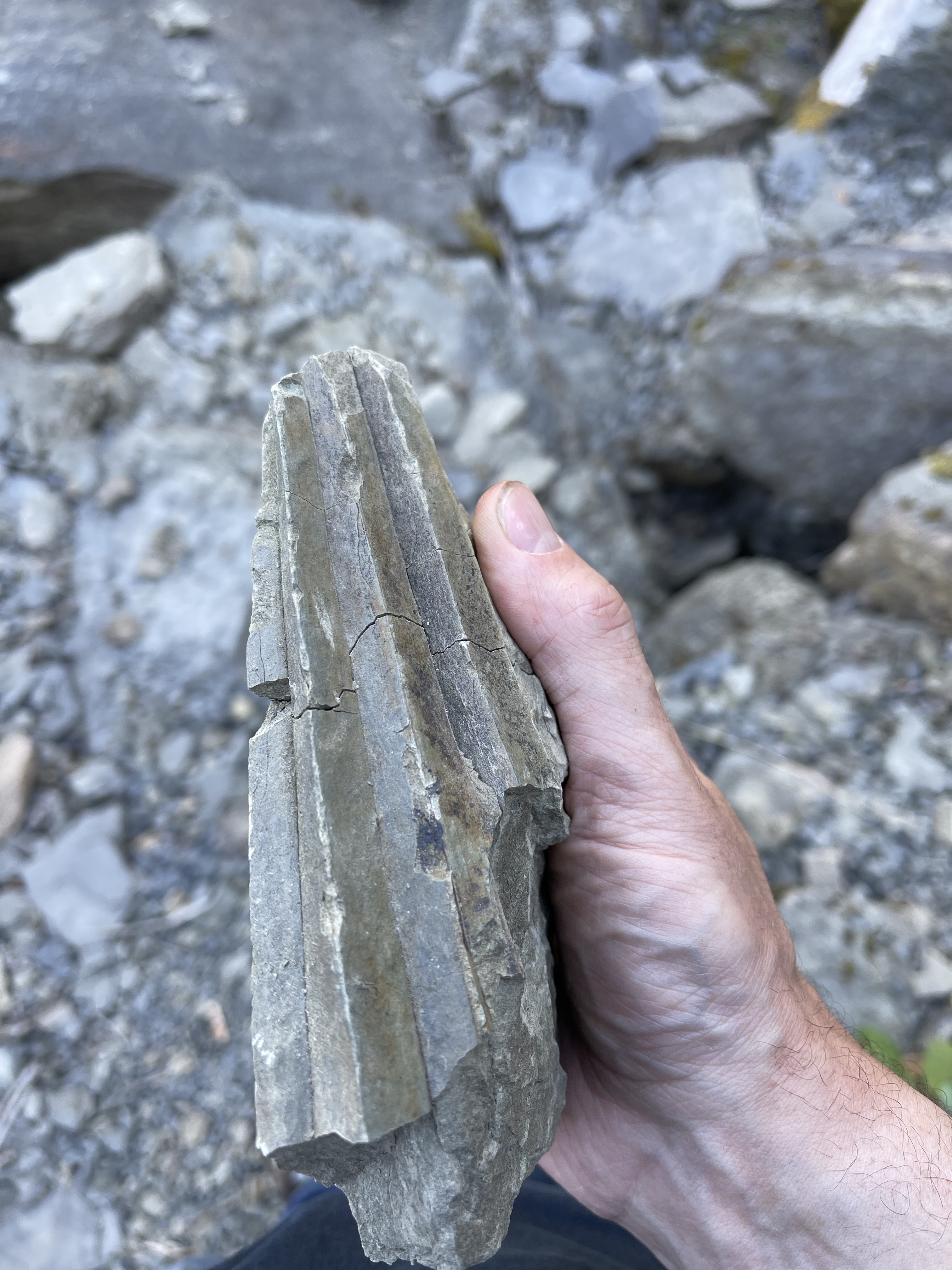
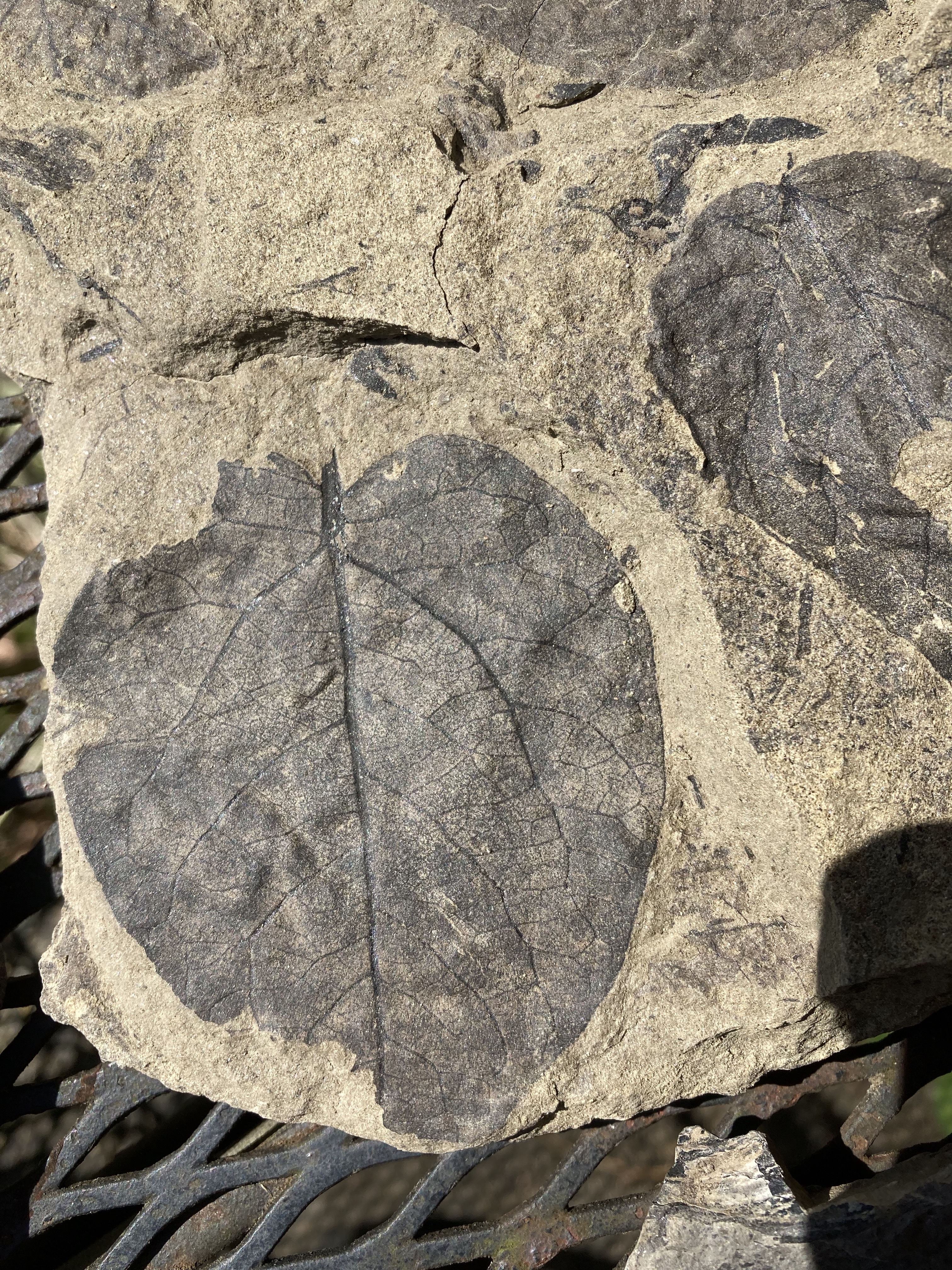
What you’ll see, with a good eye, ranged from full palm fronds unfurled several feet wide, leaves that might have just fallen from red alder trees of today, and bits of plant debris frozen in stone. No Medusa magic here, but millions of years compressed into petrified sand, mud, and fine silt. Geology is an active subject here in The Pacific Northwest. Out plate tectonics compel volcanoes and earthquakes on a grand scale. In the case of this landslide, we can visually begin to comprehend tectonic uplift from a distance, and count the layers of time all the way back to when this land was a beach, with tropical jungle located in present day Baja Mexico. That’s right folks, a lot of Western Washington has been moving up from Mexico for millions of years. That’s how tropical plants got this far north. The palms were not growing in The Pacific Northwest, millions of years ago the north west was under a mile of glacier ice. Below is a plate movement map, showing the northern push up from the south- the land from Baja continues a push north into British Colombia.

How it got here is exciting enough to understand- and the geological science is young, so stay tuned for more great evolution in the theory, for more on Washington State Geology and a lot of fun learning check out Nick Zentner of WSU. His Youtube channel is full of great lectures, in the field learning, and special guests sharing up to date theory. The Eocene fossils at Racehorse Creek help unravel the often confusing geology of our region. This area is known for being a hub of tectonic activity, and past slides of much greater magnitude have occurred in this area of Mount Baker before. Recent lidar mapping reveals an older, much greater landslide, and helps geologist forecast future instability in the landscape. It’s also opened up layers of strata to reveal eons of our past. That’s what drew me to this amazing place, and I hope some of you get a chance to head there for some awesome fossil hunting.

Chestnuts!

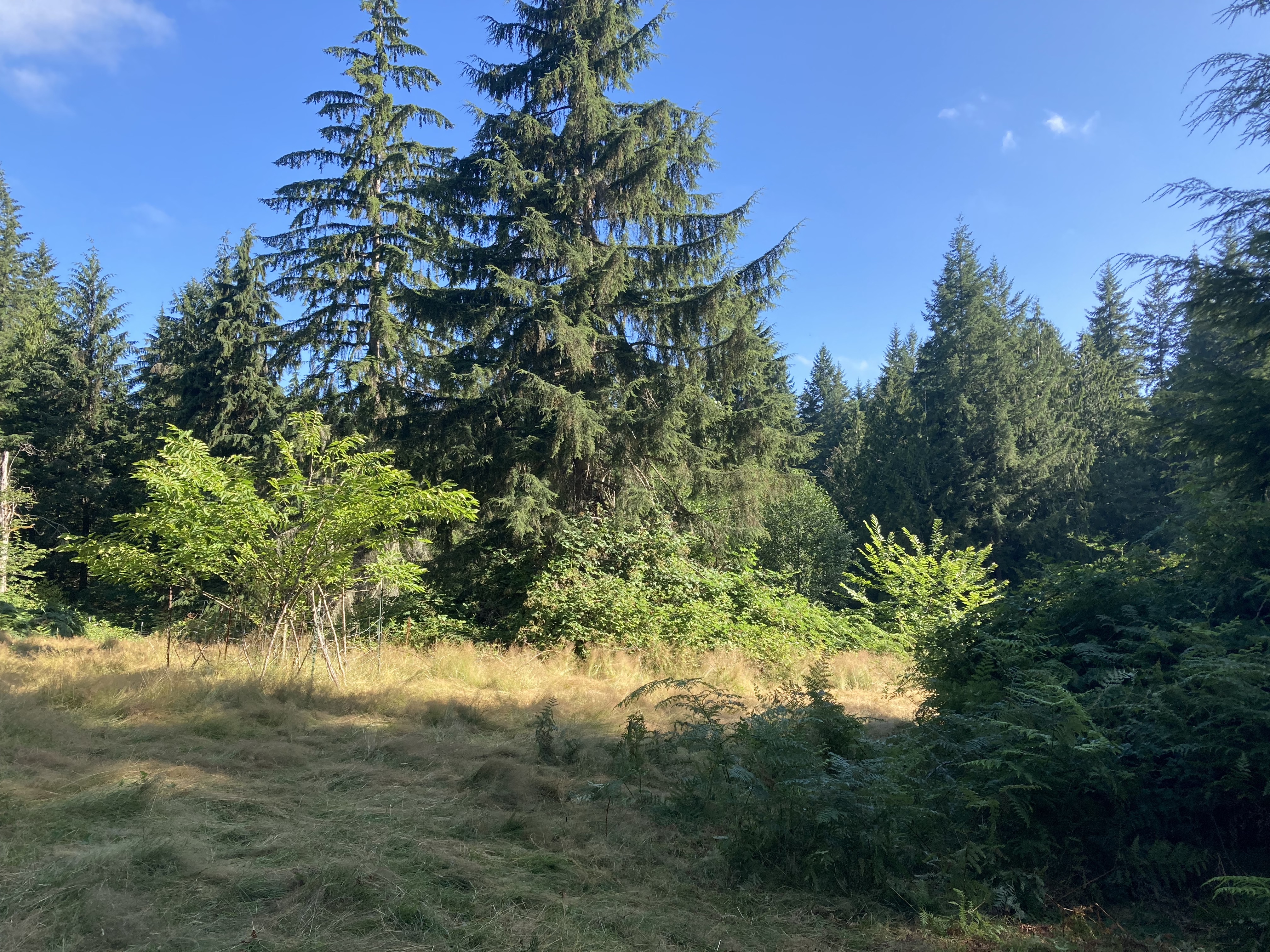
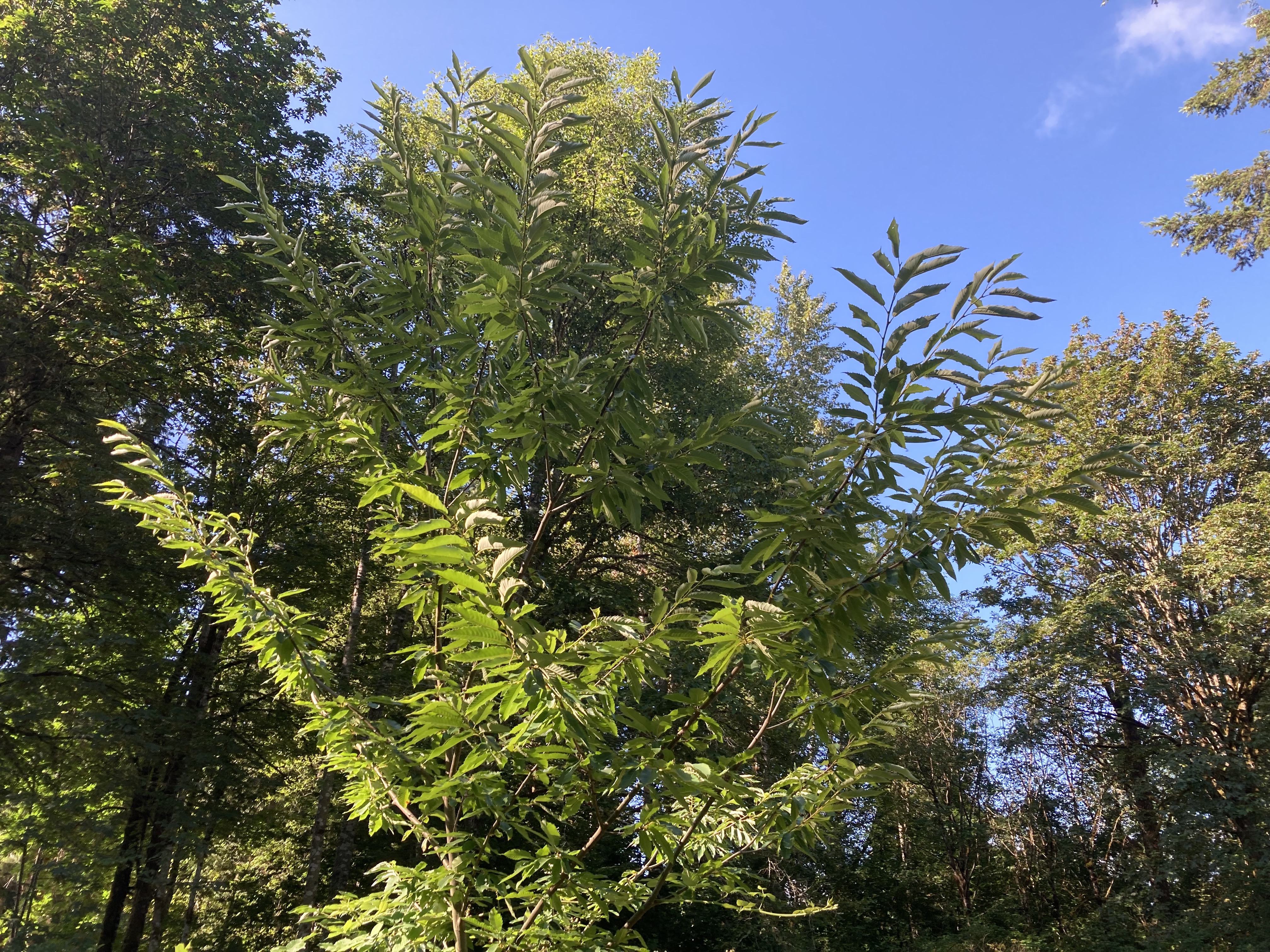
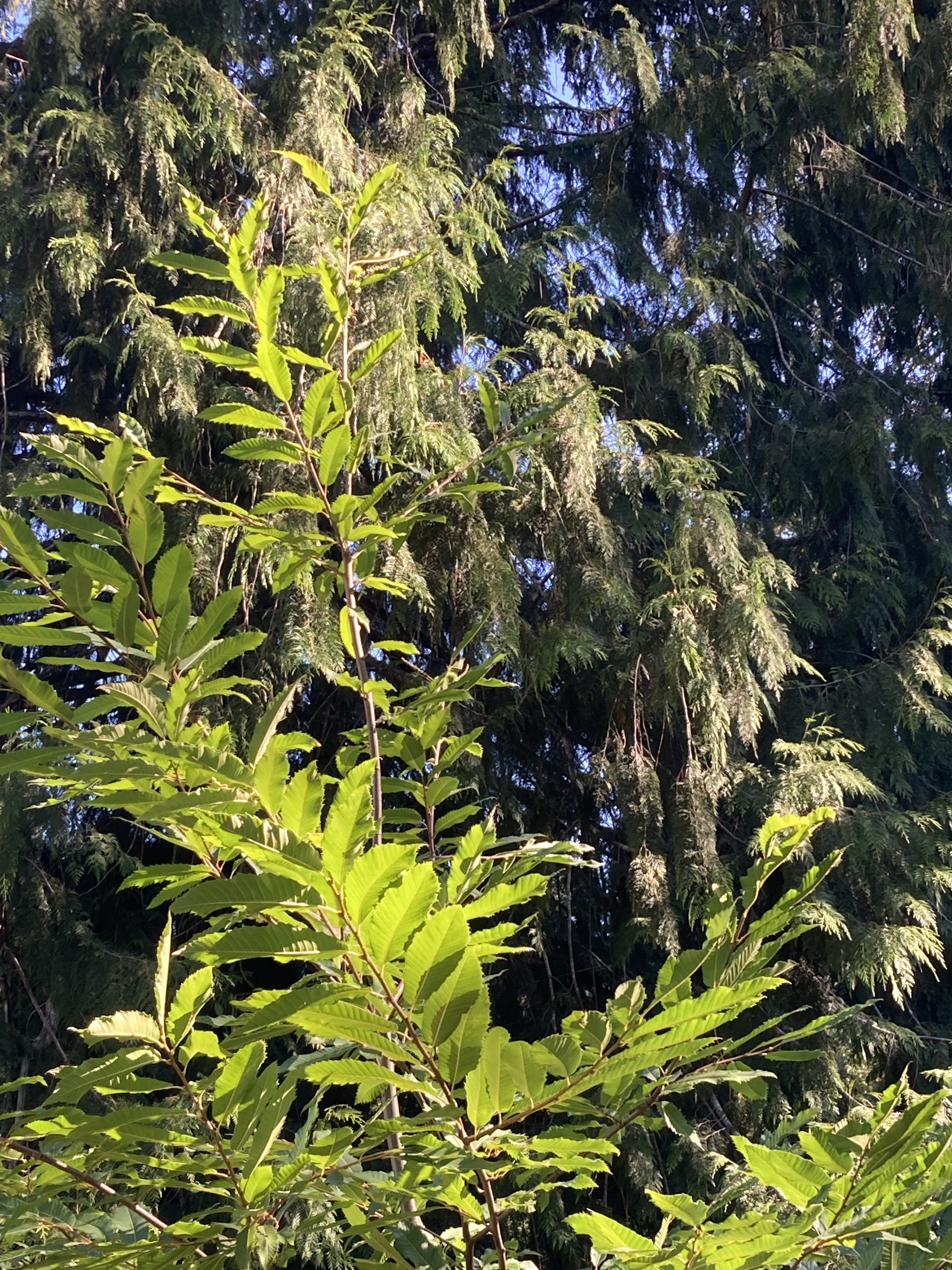
Yes, our grafted chestnuts are beginning to produce nuts at EEC Forest Stewardship. This fall, 2022, we’ll be acquiring more to complete our back field nut orchard. This deciduous initial canopy layer will offer luxurious protein and a great finishing crop for pigs. Within the next decade, more understory plantings will be implemented, and diversification of plants in our transition from field to forest will be fully established. The chestnuts will eventually be overtaken by evergreen natives and oak. But these cultivars will have a good long run beyond my lifetime. These tree islands are surviving without irrigation or pruning. The protective fencing around each tree allows sheep to graze without predating the young nut tree plantings. New plantings will also need protection, so more small fenced rounds with t-post backing will appear around each baby tree. Companion plantings should also be cultivated- and we’re already planning the transplanting of comfrey out of the established garden beds by the house. Yarrow and red flowering currant will be another good pair of understory plantings also able to out compete grasses.

The back field is our next panned replanting of forest. It’s been a great tent spot for survival enthusiasts and a wonderful back field for our sheep to graze, and will continue to be a pasture and slowly morph into shrubs to brows and a mix of trees, openings, and layered ground covers. Our Cascade Katahdin Sheep are a browsing breed. Many sheep varieties- especially the woolies, graze grass, but struggle with leafy vegetation up off the ground. It’s important to have the right tools for the task, and here in the hills of Cascadia, browsing is a must to properly prune the thick hedges and brush trees. Our Katahdins love shrubs, including blackberry, and adapt well to hot summers and cold winters, like many of the species of vegetation we’re selecting towards here at EEC Forest Stewardship.

Sheep of all kinds also love to eat young trees, so the chestnuts have survived thanks to protective fencing around each trunk. We’re going to keep fencing our young trees so they get a chance to develop into strong towers of nut producing majesty. When it’s time to plant in the native forest around these nut trees, the sheep will be retired out of this field, or at least moved to part time, as the young plantings will need years to establish. A forest does not grow overnight, but it can get a foot hold in during a single lifetime. It’s an honor to be that snapshot in time where forests were invited back home to restore canopy cover here in Western Washington.

Continued Growth

Our tilled up strip in the pan handle continues to bloom. The deer are also browsing, but our diversity of options makes it hard for them to overtake any one species. There are also many deer resistant plants like yarrow and Gaillardia pulchella planted to improve our odds at establishing pollination. By the end of August, wildflowers seeded in late spring are showing their full glory in a first bloom. The color is subtle, but new flower friends are popping up all around, adding brilliant vibrancy to the narrow pasture space.

This Fall, we’re going to add more mulch, and put in a few selective fenced spaces to protect tree roots from vehicle compaction. This panhandle is also used by two neighbors as access to their properties in an ingress egress throughway, but the land is EEC Forest Stewardship, and the land on either side of the 14 foot access is mine to plant and cultivate. I’ve been in a bit of a struggle with said neighbors about changing up the space and taking away the lawn, but it’s my legal right to till the soil and plant my crops, so long as this action does not impede the road. Rather than hindering the drive- I’ve enhanced the view, and the restoration of the soil. What a win win for everyone!

My most aggressive neighbor still feels he needs to occasionally ground up my flowers with the blade of his tractor when he’s in a bad mood (pictured above). Since it’s a minor, passive aggressive action from a sad person with no healthy outlet for his rage, I can’t do much about fixing it directly. Some nice split rail fencing will help direct firm boundaries. I’ve been learning a lot about not so graceful aging, how to keep to the high road, and what change can bring. The flowers and healthier soil will continue, and a new generation with better land connection and restoration will outlive the old machine domination of an outraged, vulnerable patriarchy in its twilight years. Gratitude for land, legal boundaries, compassion, good work, and pollination stations.