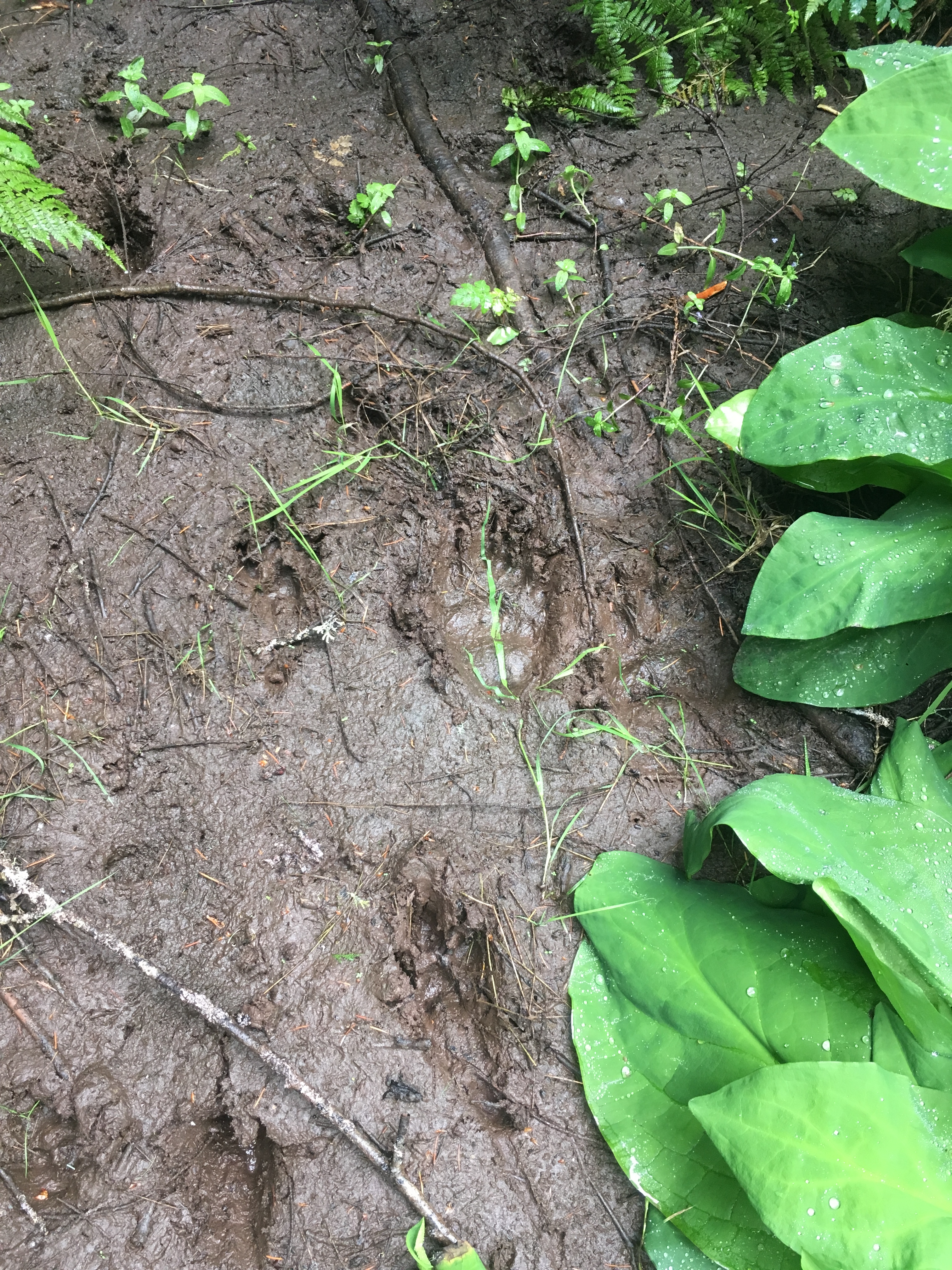
The activity in our local forests amps up during the summer months, with an abundance of wildlife moving around the landscape, including this Black Bear, who’s tracks are pictured above. A domestic dog’s tracks parallel the bear’s, and they happened the same day. Did the dog spook the bear and run after it? Or, did the dog smell the bear’s recent passing and investigate the tracks? These prints are about ten feet off a logging road that is frequented by joggers and hikers in state forest. People come to the woods more in warmer months with less rain. The age of the tracks could be roughly determined by a light rain earlier that morning. Neither track has signs of that rain, yet the undisturbed ground around them did.
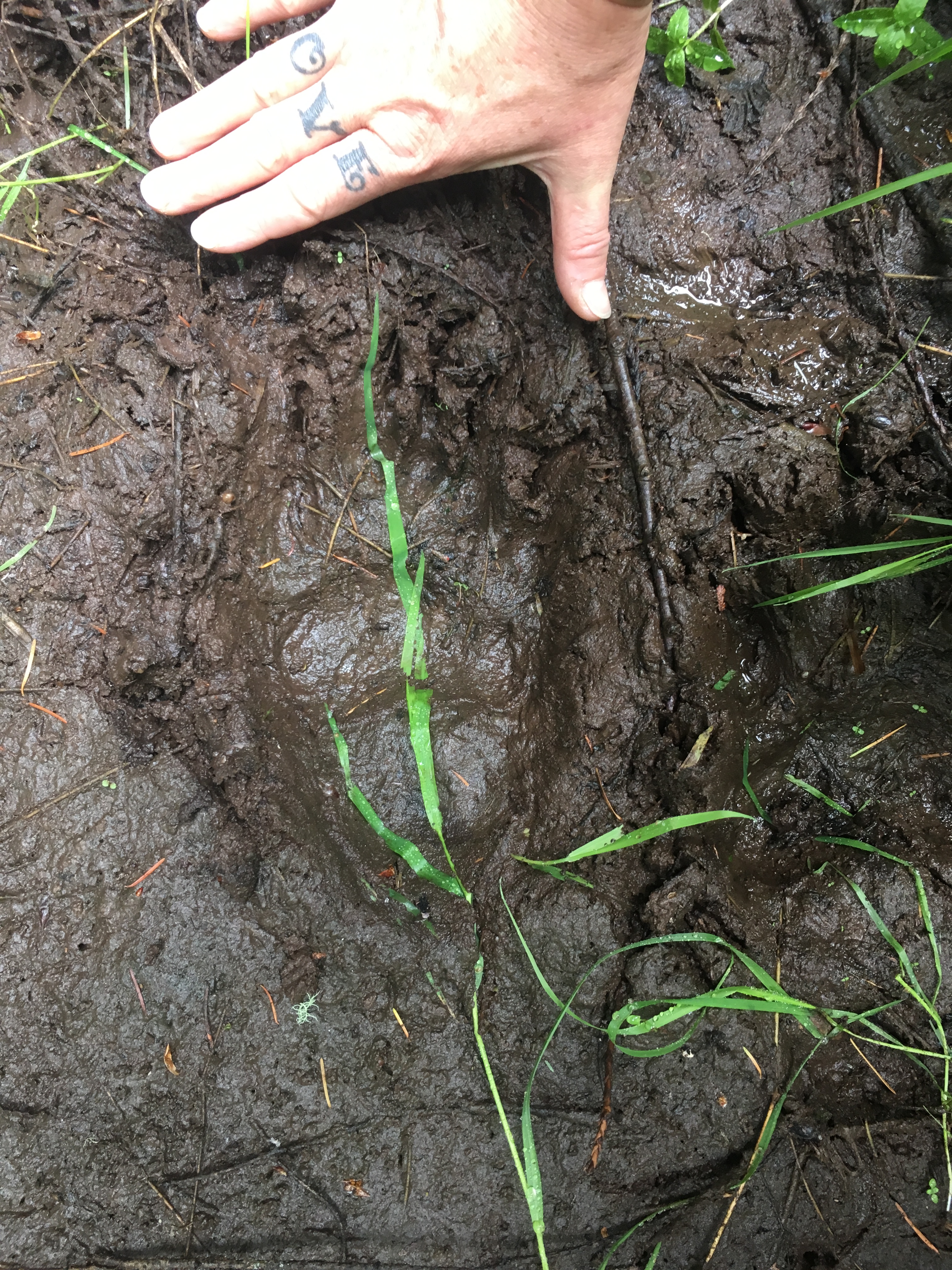
In this closer picture, with my hand as a size reference, there is a very fresh grass stalk well pressed into the mud by the animal’s broad foot. This bear’s hind foot is a medium size for a western black bear, so I would guess it’s a yearling, which is larger than a cub, but not fully mature. Looking closely at the distance between front and back feet, the bear was moving quickly, lunging across the muddy wetland towards the cover of thick brush, away from the road. Usually, wildlife is moving away from people, and having a dog helps, though it should stay leashed; for both the safety of the wildlife and the dog. An encounter with a black bear is possible, and startling them is the worst, so keep up a clear sound as well as visibility when hiking in the woods. Some people wear bells, I was talking actively with my friend as we traversed the landscape, and we were together with my young Aussie.
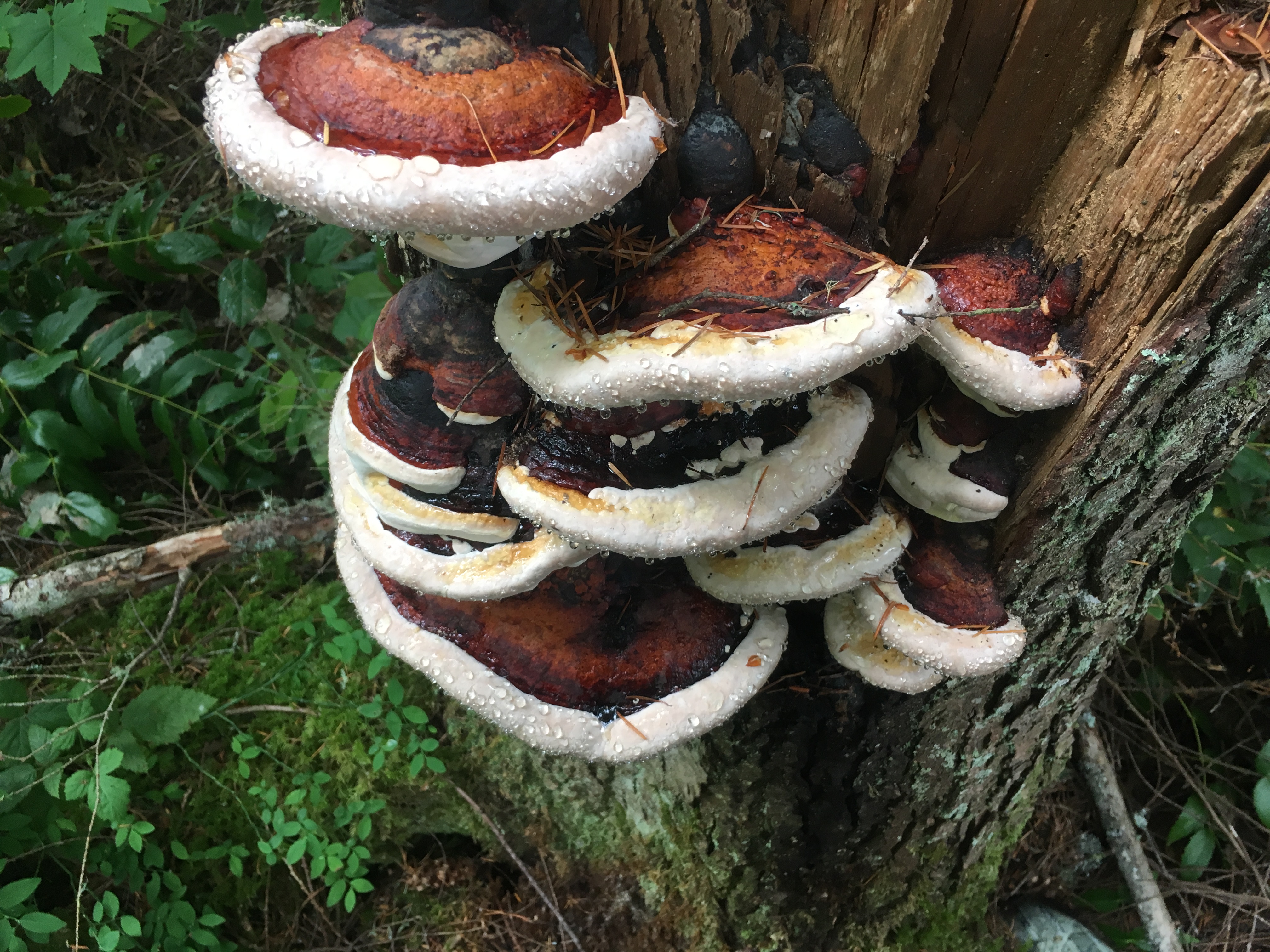
Because of our great rains, which have continued generously into July, keeping the temperatures dreamy and cool, (like a normal summer) fungus is thriving. I would be a great time to take a hike into the mountains on a shroom hunt. You can also still find a few in the lowlands, so keep your eyes open, even in planted landscape beds along sidewalks and buildings. The most diverse selections will be thriving in the forests, so take time to wander under an intact canopy if you can.

One other summer observation in the landscape- berries! Many are out early, so check your thimble berry and huckleberry patches sooner this year. I even saw blue elder fruiting out on a 4th of July visit to the east side of The Cascades. My apple trees at home are putting on fleshy fruit rapidly, and I worry for the branches of some overladen in the orchard. Peaches are ripening up fast too as our fruit year continues on epic proportion. If you know of any blueberry bushes nearby, start checking for the first fruiting flush. I’ve knabbed from my few shrubs and look forward to more. Though I’ll have to check out another secret patch in the area, an old farmstead that’s become a city park, because the sheep got to my mature bushes this year.
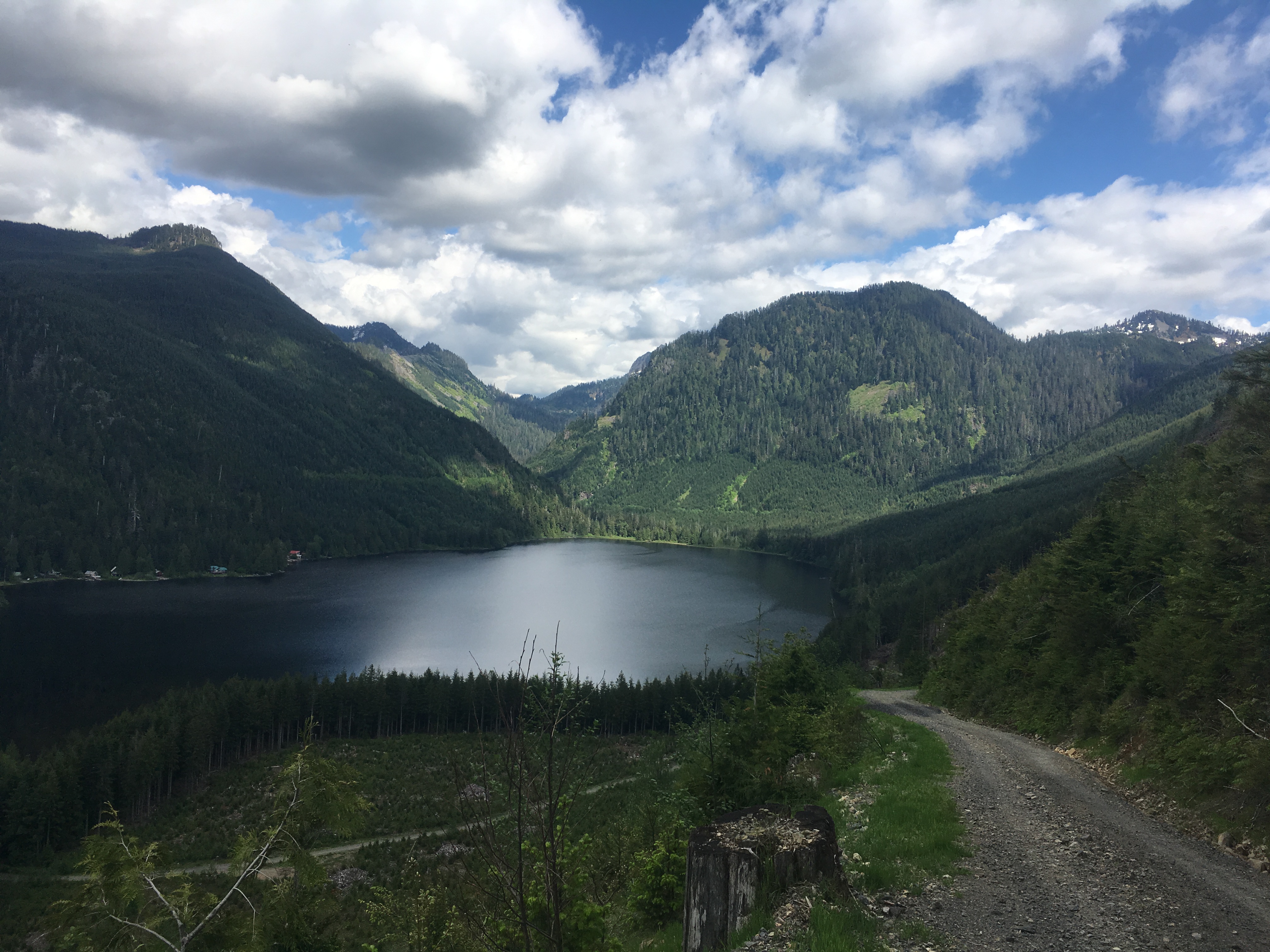
Alpine Lakes are great trout fishing hot spots. I always recommend live worms from the compost. In the elevations, you can still find minimal snow, which is a good sign for keeping the forests damp and streams flowing through the driest months of August and September. The Snoqualmie Tree Farm, where the above picture was taken, boasts two large alpine lakes, both of which I’ve caught my limit in. There is also older growth trees around these remote bodies of water, and on Lake Hancock, pictured above, old logging families have established summer cottages along its shores. This alpine wilderness offers great fishing, hiking, bird watching, and other wildlife encounters. I’ve seen loons, black bear tracks, cougar tracks, and bobcat in this area, and look forward to more adventures in the mountains this summer.


 EEC Forest Stewardship