
Another opportunity to get into the alpine wilderness for some exploring and lake swimming found me up in DNR land just outside the tree farm with an awesome mentee. We hiked in to three lakes I’ve written about before to enjoy some cold swimming and wading on an overcast day. In a wet suit, these lakes are swimable, but if you don’t have a layer on a cloudy day, it won’t be long before shaking takes you out of the water. As clouds brushed over the ridge peaks around us, the wind picked up, pulling at the surface tension to create ripples across the reflected gray sky. There was no rain coming out of those clouds, but the cover kept the hot sun away, but made it hard to keep warm in the water. Drying off soon after our aquatic attempt, the flies began to gather and we packed up fast. Moving is the best way to avoid insect encounters, and as we bushwhacked back towards the trail out, I appreciated the breeze that had been chilly, but was now overpowering the flight of small gnats and no-see-ems.
The hike out was peaceful, with swainson’s thrushes echoing across the mountainside. On the way in, it had been silent, and I wondered why the birds did not start singing until later in the afternoon. Many birds are nesting right now, and a few flushed from their nests in agitation as we went by. The other occasional vocalization from nature was a pika. The chinchilla sized dark gray rodents thrive along the scree fields in these high mountain ridges. It takes the eye a moment to find them amongst the boulders with patches of lichen in similar shades of brown, black, gray, and white. This incognito persona protects them from predators, especially those from the sky. Can you find the pika in the picture below? It’s standing full broad side, head facing right. It’s making an alarm cry, and if you look to the left of the taller slide alders in the foreground, you might see it.

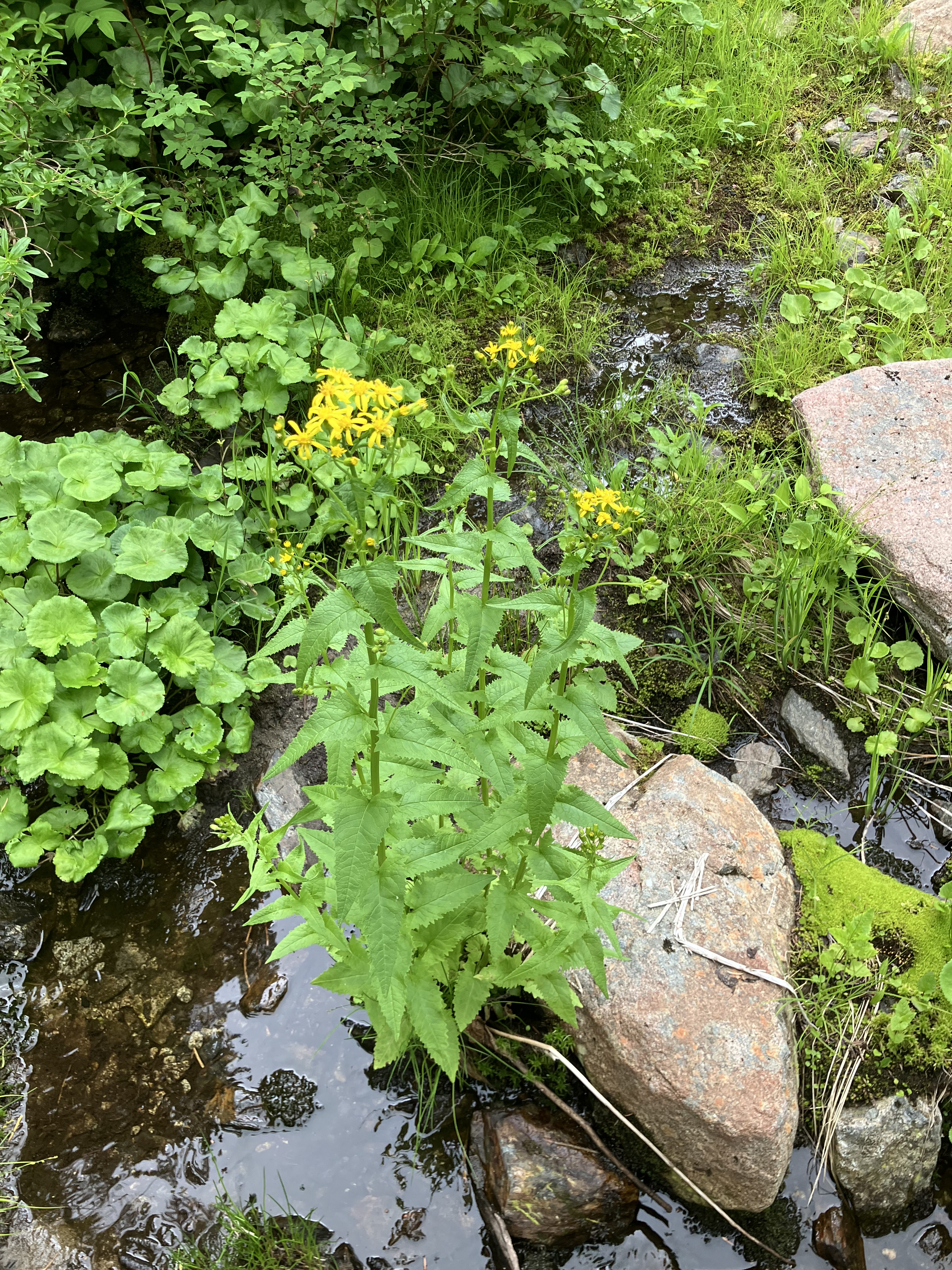
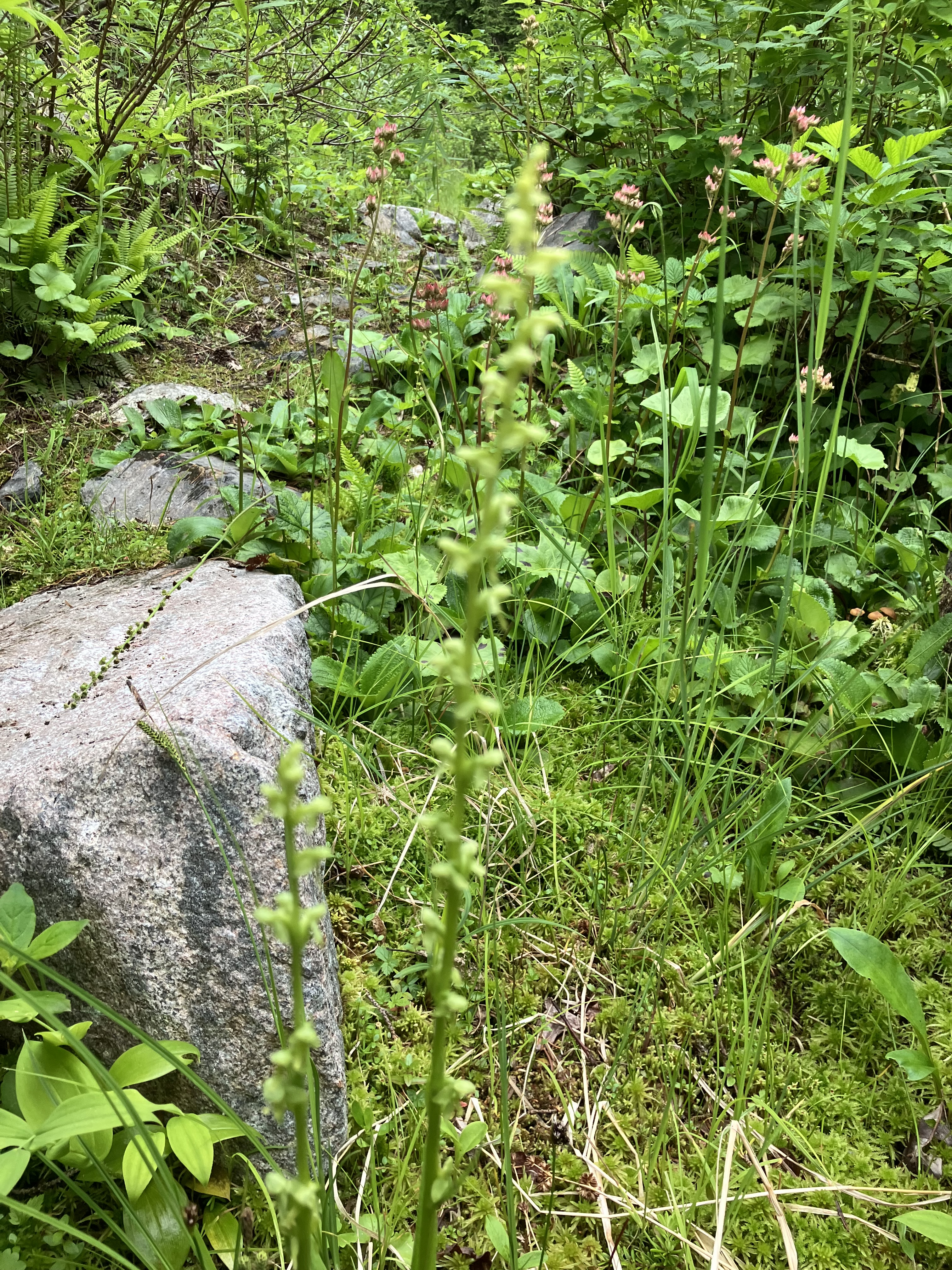
Besides the wildlife and water features, this hike goes through some rather special plant communities that specialize in rock faces and mountain seeps. From bear grass to tall bluebells, the plants are off the hook out here. My guess on why this once logged area is still so diverse has to do with allowing the original seeds of the place to germinate and return. When we clearcut, spray, replant monoculture, spray, and cut again in less than 40 years, it degrades the landscape and does not allow seeds to recover in a year or two. Once the plants are removed, only the original seeds can bring them back. In the active logging farm, none of these rarer wildflowers, herbs, and shrubs can be found. Here at elevation, the logging was not worth the trouble after a one time lesson, so the land has been left to its own recovery, and the vast native plant diversity is on show. The orchids were hard to get in focus, they are so small. Wetland plants are sensitive, and because people have been draining wetlands for so long, we often miss the beauty found in these delicate, rare ecologies.


Even through it’s a lot dryer this year in Western Washington, the Pacific Ocean still banks it’s evaporated moisture up in The Cascade Mountains, where this wetland, and most of my mountain adventures take place. The water then cascades down the slopes of these rising peaks, lifted by the tectonic activity of subduction along The Ring of Fire. This complex geology and dynamic landscape are often out of mind in our more recent timeline of human settlement, but the oral history of native tribes often tell of great upheaval in recent past. Geologists studying the layers of sand and plate movement confirm these vast changes caused by the plate movements. I am grateful for the mountains that form out of these tectonics, but also have the threat of earthquakes in the back of my mind.
A spring trip in May 2025, took me to a recent erupted strata volcano in our state that you know might know as Mt. St. Helens. Loowit, as she’s know by the locals- aka, tribal people who have lived in the area for over ten thousand years, had an eruption that was considered minor, but did a heck of a lot of damage which you can still see evidence of today. Mt. Tahoma is my closest strata volcano, and no, it’s not about to blow, at least not yet, but rumblings do come and go, and our understanding of eruptions and predicting them is still evolving. The Central Cascades, where I was hiking on this adventure, is not volcanically active, but is in an area of dramatic uplift.
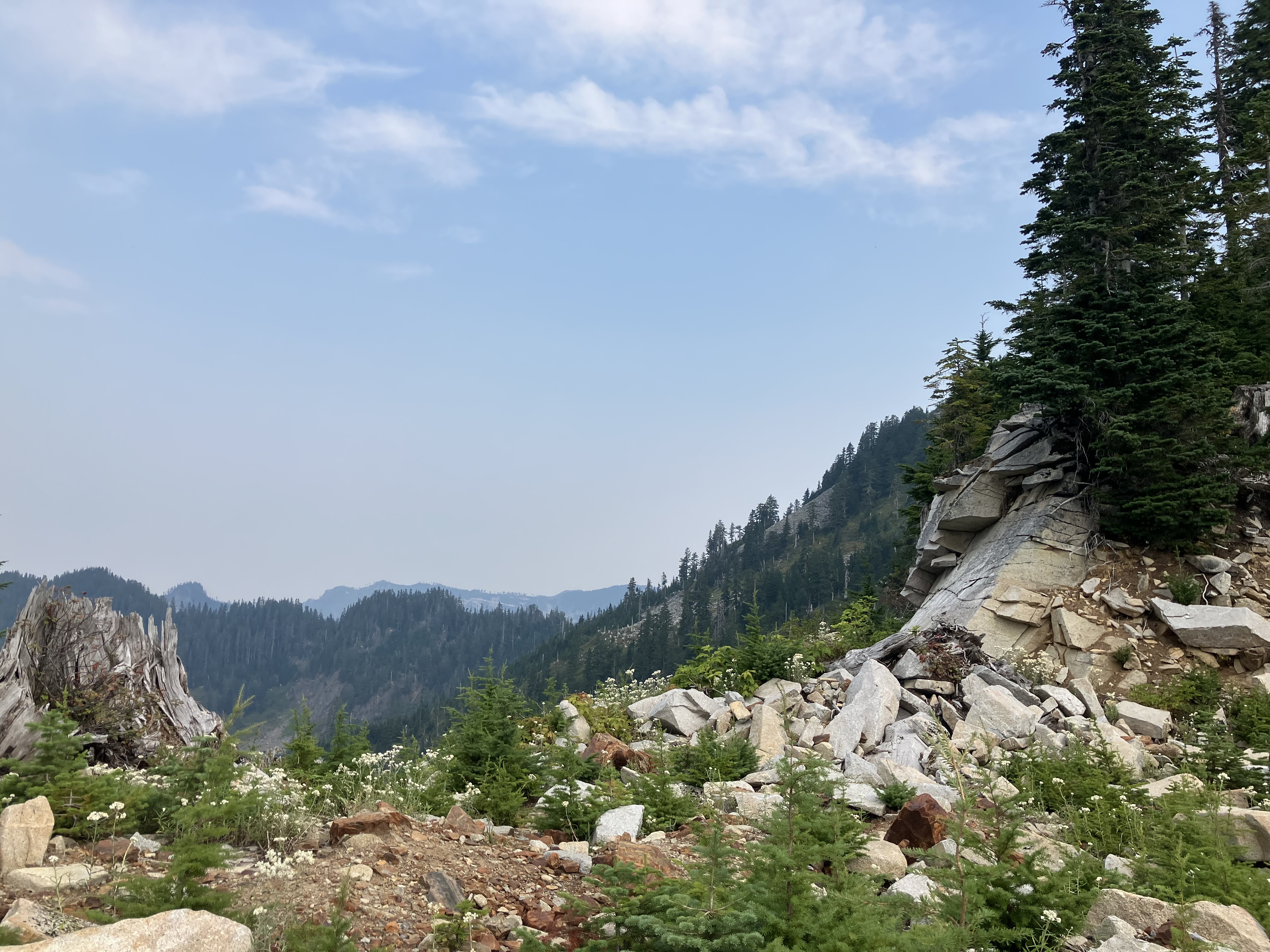
These impressive granite ridges were once melted magma deep under the earth’s crust. The amalgamation of magma chambers cooled in time as the ground continued its uplift, and after a few million years of glaciers grinding and retreating back and forth along the northern part of the continent, magma chambers, now granite, remain the backbones of much of these nearby peaks. Back down a few hundred feet, towards where I park to hike into these cooler elevations, the landscape is dominated by basalt cliffs of lava that cooled and formed on the exposed surface. I’m still trying to wrap my head around the formations and timelines- and I think a lot of professionals are still debating and forming their own theories too, but the point here is, this rock is old, and the exposed granite can best be found by climbing up into the elevations. The rock is cool to the touch, even on a warm day, and seems to lock in the cooler temperatures that remain at elevation. When the clouds come in, wrapping the whole place in mist and wonder, I am so thankful for the chance to get up into these mountains to bathe in 10-20 degree cooler temperatures that the mountains provide.

 EEC Forest Stewardship